True Colors, Reprise
So we do not lose heart. Though outwardly we are wasting away, yet inwardly we are being renewed day by day.
2 Corinthians 4:16
Leafy Lesson
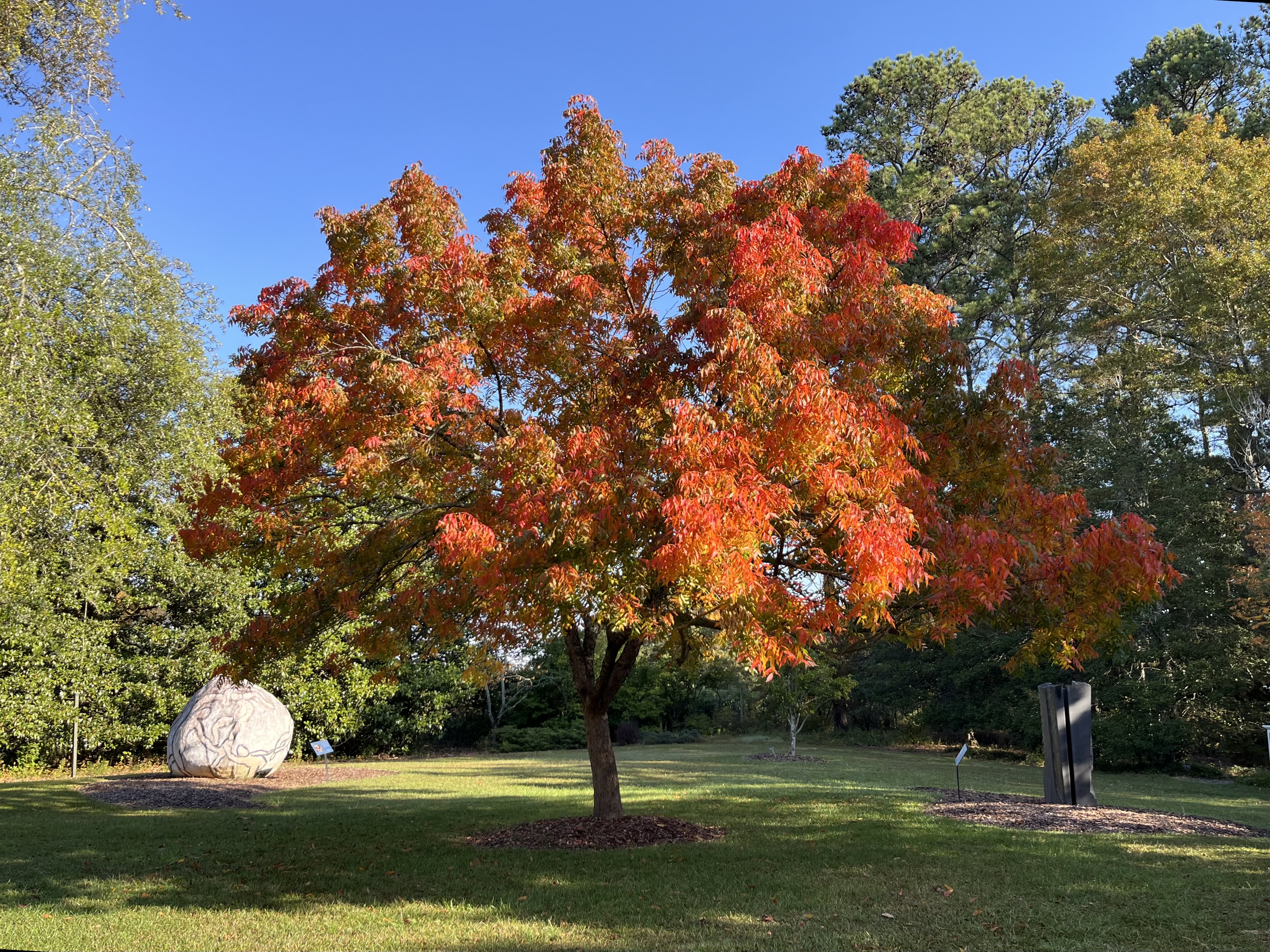
Granddaughter Lyla and I were out for a walk one sunny afternoon. I commented on the beautiful trees, resplendent in their fall colors. Lyla replied, “Grammie, did you know the fall colors are the true colors of the leaves?” You would think I’d remember that factoid from my horticultural studies, but I didn’t.
Intrigued, I later spent some time researching the topic. As with most fascinating tidbits of information my bright, inquisitive grandchildren share with me, Lyla’s comment was correct:
“During the warmer growing seasons, leaves produce chlorophyll to help plants create energy from light. The green pigment becomes dominant and masks the other pigments . . . trees prepare for winter and the next growing season by blocking off flow to and from a leaf’s stem. This process stops green chlorophyll from being replenished and causes the leaf’s green color to fade. The fading green allows a leaf’s true colors to emerge, producing the dazzling array of orange, yellow, red, and purple pigments we refer to as fall foliage.”[1]
Wasting Away or Renewed?
This idea resonates with me. Having lived nearly seven decades, I’ve watched my outer self change significantly over the years, but some changes have been more than skin-deep.
I will soon celebrate my 52nd spiritual birthday. Thinking back to the day I was baptized and made a public profession of faith on that long-ago November afternoon, I realize I’ve changed as much on the inside as I have on the outside. Maybe even more so. Because God has faithfully kept His promise to transform me more and more into the image of His Son (Romans 8:29).
First, God replaced my heart of stone with a heart of flesh capable of responding in faith, obedience, and gratitude to my heavenly Father (Ezekiel 36:26). Then, He applied the balm of forgiveness and restoration and provided His word and Spirit as trustworthy guides for life as a pilgrim in this world.
I cringe to think of what my insides looked like before God began the process. Even my best intentions and kindest deeds were like filthy rags apart from Him (Isaiah 64:6).
Over the past 52 years, I’ve faced fiery trials, experienced great joy, and lived through many mundane moments. The Lord sovereignly ordained every detail to bring about the necessary transformation and will continue to do so until He calls me Home.
Radiant

Have you ever noticed that even after the leaves change colors, they’re pretty but not truly radiant unless the sun is shining on them? Oh, but when the sun is out, the leaves are so vibrant the trees look like they’re ablaze. On days like that, I repeatedly exclaim, sometimes to myself and sometimes out loud, “The trees are so beautiful! Thank You, Lord!”
Likewise, our beauty is more radiant when we walk in the Light of the One who called us out of darkness (1 Peter 2:9). As we behold the glory of the Lord and the beauty of the Gospel, we are being transformed into the same image from one degree of glory to another (2 Corinthians 3:18), enabling us to be lights in this world, shining before others for the Lord’s glory (Matthew 5:14-16). How amazing!
Hanging On
While their deciduous relatives are busy putting on a colorful fall display, some oak trees hold on to their old, brown leaves all winter. The emergence of new leaves the following year finally nudges them off, as life replaces death. And so it will be with me. No matter how brightly my true colors shine in this life, vestiges of the old, sinful me will remain until I’m called Home. There are times when, like the Apostle Paul, I lament my inability to do the good I desire to do, despite my best intentions (Romans 7:14-25).
Yet even now, God considers me His child, though my full potential and future glory haven’t been revealed. And so it is with all His children. We rest in the assurance that when Jesus appears, we will be like Him because we will see Him as He is (1 John 3:2).
Creased and Crinkled, Yet Confident and Convinced
Some mornings, I gaze at my reflection in the mirror and wonder whether the wrinkle gremlin visited overnight and left a few more folds on my face. There are days when I look at photos of myself and realize my eyes almost disappear into the creases around them when I smile. It can be disheartening.
And then I remember that charm is deceptive and beauty fleeting, but a woman who fears the LORD is to be praised (Proverbs 31:30); that the Lord does not see as man sees, but looks on the heart (1 Samuel 16:7b); and that we’re to cultivate the imperishable beauty of a gentle and quiet spirit, which is precious in God’s sight (1 Peter 3:3-4).
My heart overflows with gratitude. I marvel that God chose me before the foundation of the world to be His child (Ephesians 1:4), called me to Himself 52 years ago, and has given me ample reasons and opportunities to testify to His faithfulness in my life.
I look forward to the day when the transformation is complete. Until then, I pray He will help the true Christ-like colors He’s painted within me to grow increasingly radiant, even as my outer self is wasting away.
I will greatly rejoice in the Lord;
my soul shall exult in my God,
for he has clothed me with the garments of salvation;
he has covered me with the robe of righteousness,
as a bridegroom decks himself like a priest with a beautiful headdress,
and as a bride adorns herself with her jewels.
Isaiah 61:10
[1] “Cool autumn weather reveals nature’s true hues,” noaa.gov, October 1, 2014.