I bet it’s happened to you. You’ll read a passage of Scripture, one you’ve scanned countless times before, and the Spirit will point out something you hadn’t noticed previously. Not surprising, since God’s Word is living and active, sharper than any two-edged sword.[1]
Such was the case when I was asked to prepare a devotion on Philippians 4:11. I suppose I’d always focused on Paul’s ability to be content in whatever situation he found himself in, but this time, “I have learned” caught my attention. The fact Paul had to learn how to be content implies contentment isn’t a natural state for us.
If we have any doubt about that, we need look no further than our children. Even if I’d forgotten the clashes and complaints of my own dear, now-adult daughters, I spend time with my beloved grandchildren, ages 2, 4 and 6, on a regular basis. Just the other day, all three were howling over the same orange ball. Said item held no interest whatsoever until one chose to play with it, whereupon it became the only toy worth having. This, even though there were dozens of other options to choose from.
Likewise, protests can erupt over perceived parental partiality, different foods touching on the dinner plate and being asked to come inside on a pretty day. As they get older, our offspring often chafe under our rules. Stakes are higher as peer pressure sets in and they become more aware of status associated with material belongings.
To be sure, I’m not saying dissatisfaction is only an issue for the young. We know contentment is just as tenuous and elusive for adults, if not more so. Frequently, we strive to fulfill not only our own needs, desires and expectations, but also those of our significant others – spouses, parents, children, friends. Too often we seek fulfillment in circumstances, relationships, accomplishments and/or possessions. But circumstances change, sometimes quickly, possessions lose their luster as the next best thing comes along and relationships can be stressful, especially if we’re people pleasers.
If we think of contentment as a first cousin to joy and peace, which are fruits of the Spirit,[2] we begin to see it isn’t a result of externals at all, but a reflection of our internal state. Neither is contentment an emotion. In one of his sermons on Philippians, our pastor declared, “Contentment is a state of being, anchored firmly in the confidence that God is sovereignly working out the details of our lives, moment by moment from beginning to end.”[3] That’s why Paul could say he’d learned to be content in any and every situation – the reason for his hope and the guarantee of his well-being, both temporal and eternal, rested in One who never changes.[4]
 Faced with the orange-ball debacle, I decided no one would get to play with it. This, of course, resulted in more sobbing and anguished pleas. Eventually my three charges turned their attention to other things and peace prevailed, at least for a while. Mustering all her 2-year-old earnestness, Emma confided something to me. A smile accompanied my comprehension of what I’d missed the first time when she repeated, “No fit pitchin’, Gammie.” “That’s right, Emma. We don’t pitch fits when we don’t get what we want!”
“No fit pitchin’”, a phrase I’ve used innumerable times over the years, first with my daughters and now with my grandchildren. As I thought about the rounds of peace-followed-by-protest we’d cycled through several times that day, I wondered if I try my Father’s patience as much as my little ones try mine. No doubt I do, though my fits take a different form. Regardless of our stage of life, we have times of grumbling, fear and doubt because we’re still in the flesh.[5] That’s one reason we need each other – to remind our fellow sojourners of God’s promises. Indeed, being able to recount more and more examples of God’s faithfulness in my life and the lives of my friends is one of the best benefits of getting older. And it’s a great antidote to fit pitchin’!
Lord, please help us to say with Paul, “I’ve learned in whatever situation I am to be content”, knowing that no matter how many changes or challenges we’re faced with, You never change. You are the same from beginning to end, the Alpha and the Omega,[6] and your promises are trustworthy and true.[7]
For further study
The fourth chapter of Philippians holds many clues to the building blocks of the contentment Paul attests to:
- In verses 4 thru 7 we’re told to rejoice ALWAYS, not to be anxious, to pray with thankfulness, with the promise that in so doing, the peace of God will guard our hearts and minds in Christ Jesus. Thankfulness is a key component of contentment, as we recognize and acknowledge all God has already done for us.
- In verses 8 and 9 Paul encourages his readers to think on things that are true, honorable, just, pure, lovely, commendable, excellent, and praiseworthy. Once again with the attendant benefit, “the God of peace will be with you.” Similarly, 2 Corinthians 10:5 tells us to take every thought captive to make it obedient to Christ, while 2 Corinthians 4:18 reminds us to keep our eyes fixed not on what is seen, but what is unseen, for the former is passing away and the latter is eternal.
- When Paul says he’s learned to be content in whatever situation he finds himself, we know his life as an apostle wasn’t an easy one (major understatement). His second letter to the Corinthians details many of the hardships he endured for the Gospel, including beatings, shipwrecks and lack of adequate food and shelter.[8]
- Nonetheless, in Philippians 4:12 Paul goes on to say, “I know how to be brought low and I know how to abound. In any and every circumstance, I have learned the secret of facing plenty and hunger, abundance and need.” And in verse 13, a favorite of many Christians, Paul shares the “secret”: “I can do all things through him who strengthens me.” Note his use of absolutes: every circumstance, all things.
- Then finally in verse 19, the assurance that “God will supply every need of yours according to his riches in glory in Christ Jesus.” Our loving heavenly Father, who owns the cattle on a thousand hills and sent his precious Son to die for us has promised to meet all our needs.
[1] Hebrews 4:12
[2] Galatians 5:22-23
[3] Pastor Ben Duncan, Grace Covenant PCA, Dallas, GA, sermon “The Secret of Contentment, July, 17, 2016
[4] Hebrews 13:8
[5] Psalm 103:13-14
[6] Revelation 22:13
[7] Revelation 21:5
[8] 2 Corinthians 11:24-27
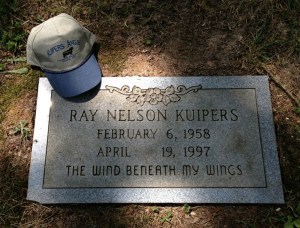 When I visit the cemetery where Ray is laid to rest, I usually sit on the coping surrounding my grandparents’ graves. There I contemplate what it will be like when Jesus returns. In addition to Ray and my much-loved Murve and Papa, my baby sister, several aunts and uncles and a pair of great-grandparents are sleeping there, awaiting the call to arise. We can be assured that glorious day will come to pass, because God keeps His promises.
 Two weeks later I returned to find the slopes bedecked with such a vast array of wildflowers I could barely take it in. I asked my companion if someone had planted the wondrous variety. “No”, he explained. “The soils and conditions here are such that it developed naturally.” From that moment on, I’ve thought of The Pocket as “God’s Garden”, a little bit of heaven on earth, where the Creator’s ingenuity is on magnificent display.
 rom the tiniest of flowers to massive tree trunks toppled long ago, the latter now moss-covered works of art. All tucked away, far from the traffic zipping by heedlessly on the interstate, waiting to be discovered, pondered and appreciated.
 I stroll the woods almost daily in the early months of the year, gently moving leaves, searching for signs of life. I sense God’s peace and presence as I meander and I pray that my joyful exclamations of delight upon finding the treasures He’s brought through another winter reach his ears as songs of praise and thanksgiving.
 Of all the fruits and gifts of the Spirit, love reigns supreme.


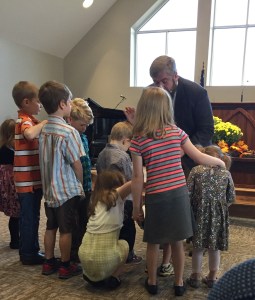 As I watched, the reason for her change in demeanor became obvious. One of the slightly-older girls had taken Lyla under her wing. She welcomed her into the circle and draped her arm around her shoulders as they bowed their heads.
 He loved animals and even thought about going to veterinary school, though I, somewhat selfishly, am glad he chose horticulture instead. Not only did his decision eventually lead him to study in Delaware, where our paths crossed, but it contributed significantly to my own passion for plants years later.
 After several months of persistent pursuit by this handsome young man, I was won over by his gift of a single red rose on my birthday in December and we began dating in earnest.
 Ever-supportive, Ray was all-in when it came to our relocation to Georgia in 1992, a move precipitated by my employer. We were partners, working demanding jobs and raising our girls, teaming up to tackle the to-dos required to keep our household running. Until April 19, 1997 when it all came to an end.
 Sure, I might have married someone else and even had two girls. But they wouldn’t be Mary with Ray’s beautiful brown eyes, or Jessie with his sense of humor. Furthermore, Ray’s unconditional love changed how I viewed myself, his steadying influence kept me grounded in truth and his death caused me to depend on God like never before. They still do.
 After several days of near-average weather, a cold front blew in late yesterday, resulting in another brisker-than-usual day today. Nonetheless the sky was that brilliant blue that beckons me outside so I bundled up and went for a stroll through my neighborhood, praising God for the warm sun and glorious cerulean canopy. When I returned home, I just had to walk the property. Even though we’ve had an extra-cold couple of months, I wanted to see what signs of life I might be able
 to find. I wasn’t disappointed. My witch hazel is in full bloom, buds are ready to open any day on a number of Lenten roses and foliage of early daffodils has poked up through the soil.
 enough, they would have overheard several exclamations of, “Oh, yay! Thanks, Lord!!”, as I discovered the tiniest evidence of returning trilliums and trout lilies, their miniscule leaves barely protruding above the soil. I gently replaced their leafy blanket, buoyed by the anticipation of seeing them in all their glory in a few weeks.


 Mom’s procedure the following day went flawlessly. By the time she was out of recovery, the horrific pain was gone. When I appeared the subsequent afternoon to take her home, she and Gail had exchanged their hospital gowns for real clothes and the newly-minted pals were discharged within the same hour.
 Back 2 the Garden