Eating apples

I don’t have many distinct memories of my grandfather since I was in first grade when he passed away. Yet I cherish the recollections I do have. Details provided by my mom as she’s spoken lovingly of her father over the years complete my mental portrait of this kind and gentle man.

Born July 31, 1890, James Alton Phillips was a short fellow, about 5’ 3”, who weighed in at 125 pounds, give or take a few. No doubt genetics played a part in his slight build, but a lifetime of hard work farming his land surely contributed to his wiry physique. My mom was the baby of her family, the youngest of eight siblings and her father’s darling. He called her “Babe” and warmed her clothes by the fire for her before she went off to school on cold mornings. Occasionally my grandmother, a bit more stern in her demeanor, would delegate the task of disciplining a wayward child to my grandfather. He would take the offending party outside beyond her view and tell the child to cry out while he used the switch on some inanimate object instead of their legs.

As for me, I recall walking hand in hand with him to the small general store, stopping by the post office to check Box 73 for mail, and waiting for the train to come by so we could wave to the conductor and count the cars. But my favorite activity was eating apples with him. “Papa” as I called him, would sit me on his lap, produce an apple in one hand and his pocket knife in the other. He’d cut a slice for me, then a slice for himself. Back and forth the ritual would continue until the tasty fruit had been consumed. For as long as I can remember, I’ve eaten an apple almost every day. And when I do, I always think of my grandfather.
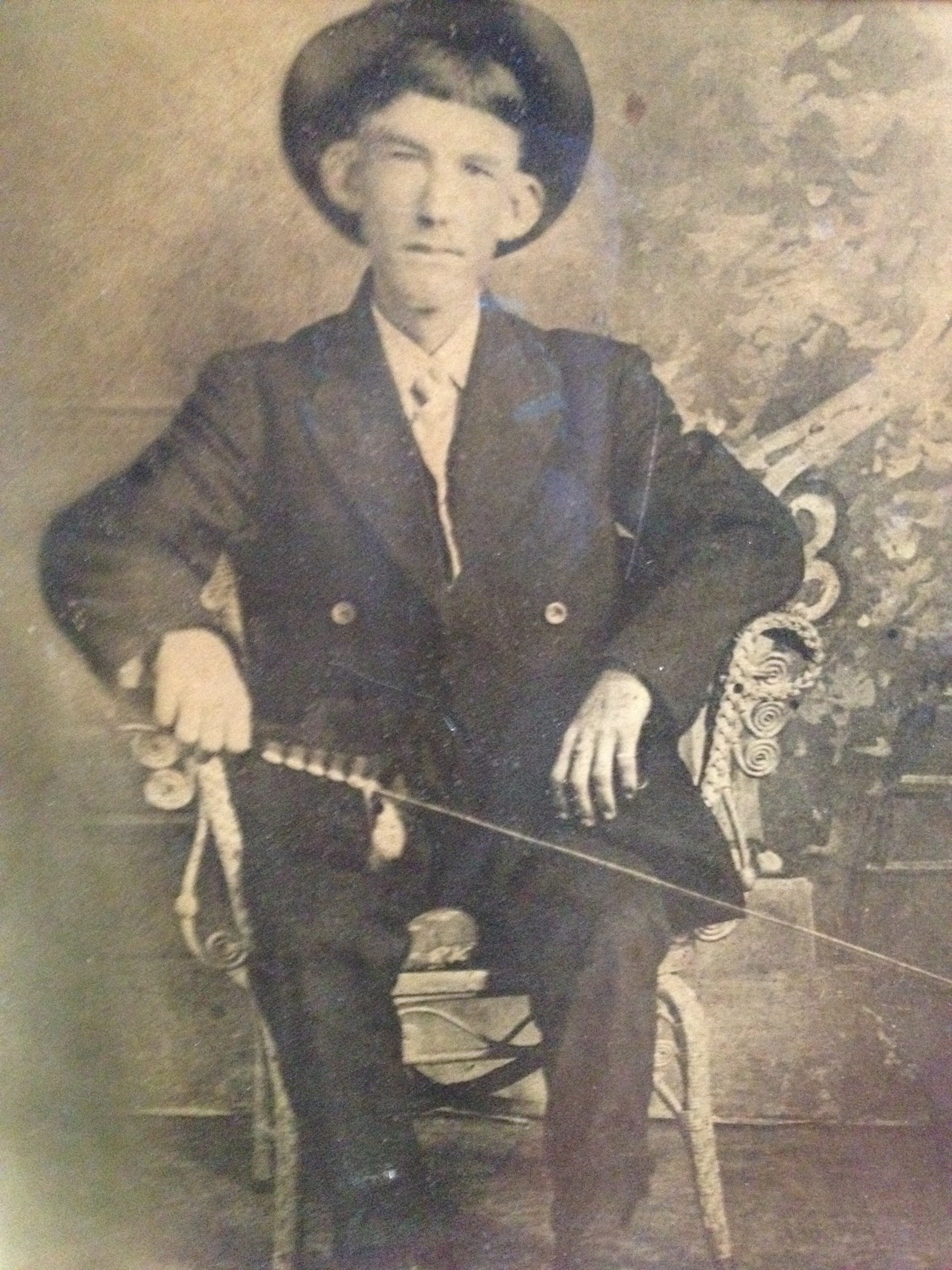
This photograph was taken on July 4th, 1910, three weeks before my grandfather's 20th birthday. It sat on the mantle in my grandparents' bedroom until my grandmother's death in 1974. It was then passed on to me as my grandfather had requested many years earlier. Now prominently displayed on my mantle, it is one of my most treasured possessions.

This photograph was taken on July 4th, 1910, three weeks before my grandfather’s 20th birthday. It sat on the mantle in my grandparents’ bedroom until my grandmother’s death in 1974. It was then passed on to me as my grandfather had requested many years earlier. Now prominently displayed on my mantle, it is one of my most treasured possessions.

“Mr. Jim”, as the people around town knew him, was a man of faith, a deacon in the tiny country church where he worshiped. He embodied the fruits of the Spirit – love, joy, peace, patience, goodness, kindness, faithfulness, gentleness, self-control. When he suffered a heart attack a few months before he died, the doctor told him he had to limit his physical activities. For a man who loved his garden and was used to being outside, it was like a death sentence. He’d sit in the kitchen of the home he shared with my grandmother, his wife of 55 years, turn his gaze toward the little church and comment he’d rather be in the cemetery than just sitting around. Fifty years ago today, on October 25, 1965, he was called Home. He had gone outside to check on some work being done for him, work he would much rather have done himself. In a fitting end to his earthly life, he died in his garden. I can still hear my mother’s anguished cry, “No, not Daddy!”, when she received the phone call telling her of his passing.

Although our relationship was brief in terms of time, Papa’s love impacts me to this day. Years after his death, the large corporation I worked for sent me to a training course, one of many I attended during my career. But this one, a self-awareness workshop, was different. It was facilitated by a team of psychologists and it was intense. One of our first exercises involved closing our eyes and imagining a safe place. I immediately envisioned myself in my grandfather’s lap, sharing an apple with him. The physical nourishment we’d partaken of paled by comparison to the bonds of unconditional love and acceptance that were formed.

Today I’m privileged to be a grandparent to two precious children with another one on the way. Sharing snacks, especially apples, while snuggled close, is one of my favorite things to do with them. It connects me to them and them to my grandfather.

It’s been much too long since I last visited the small graveyard where my grandparents and a number of other maternal relatives are laid to rest. My husband is resting there too, alongside my sister who died in infancy. But when I worked, my job frequently took me to that area of North Carolina and I’d visit the cemetery as often as I could. As I gazed at the tombstones, each representing someone I love and miss, I’d think about how glorious it will be when we all rise to new life, a life that will never end. For the love we share now is but a shadow of the Love that awaits when the Everlasting Arms reach out to embrace us and welcome us Home.

Until then, I’ll remain thankful for little rituals and rock-solid faith, lovingly shared, that can reach across the decades, blessing one generation after another.
A time to heal

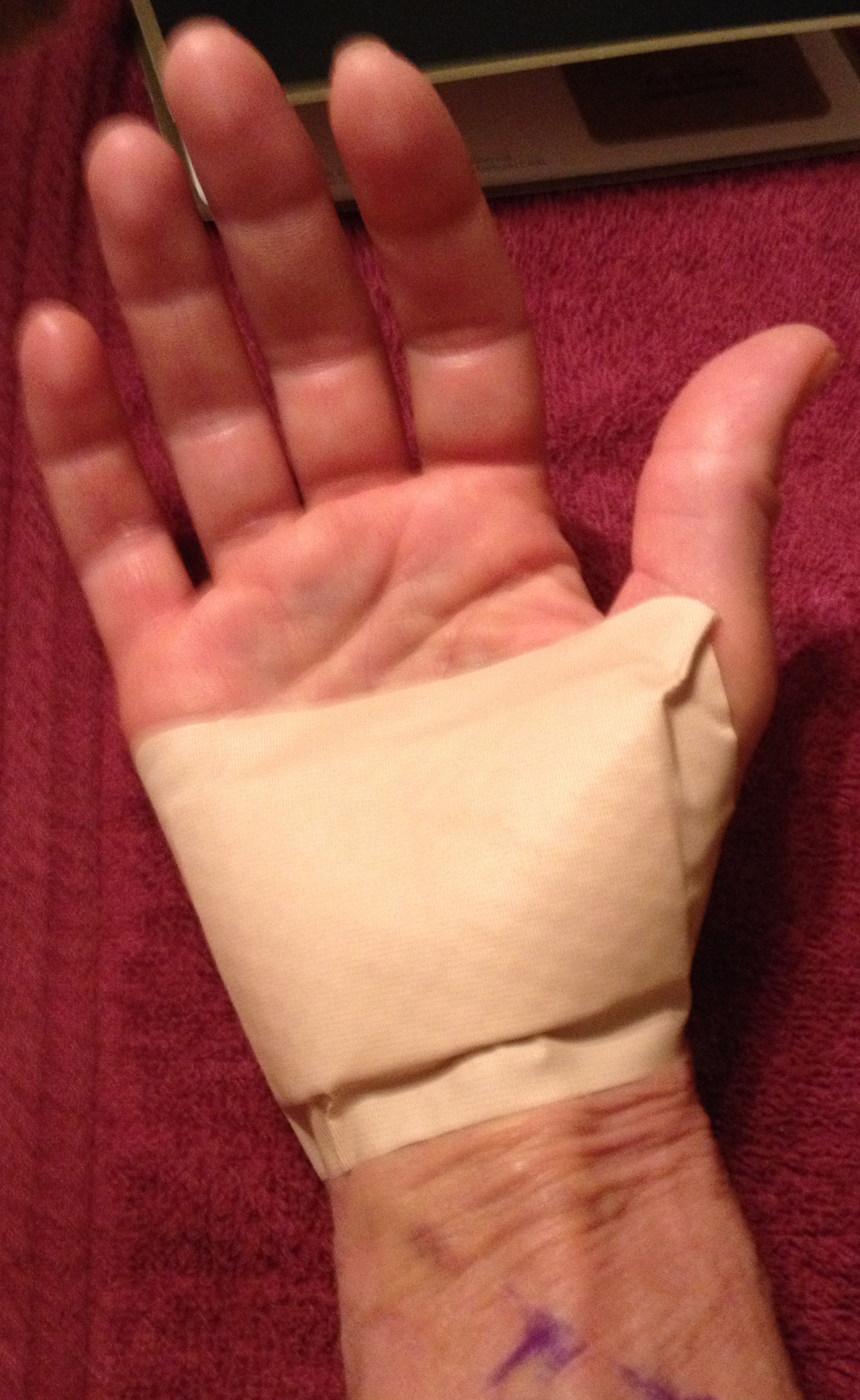
Watching my hand heal from carpal tunnel surgery has been a fascinating experience, a daily reminder of the truth of Psalm 139:14: we are fearfully and wonderfully made.

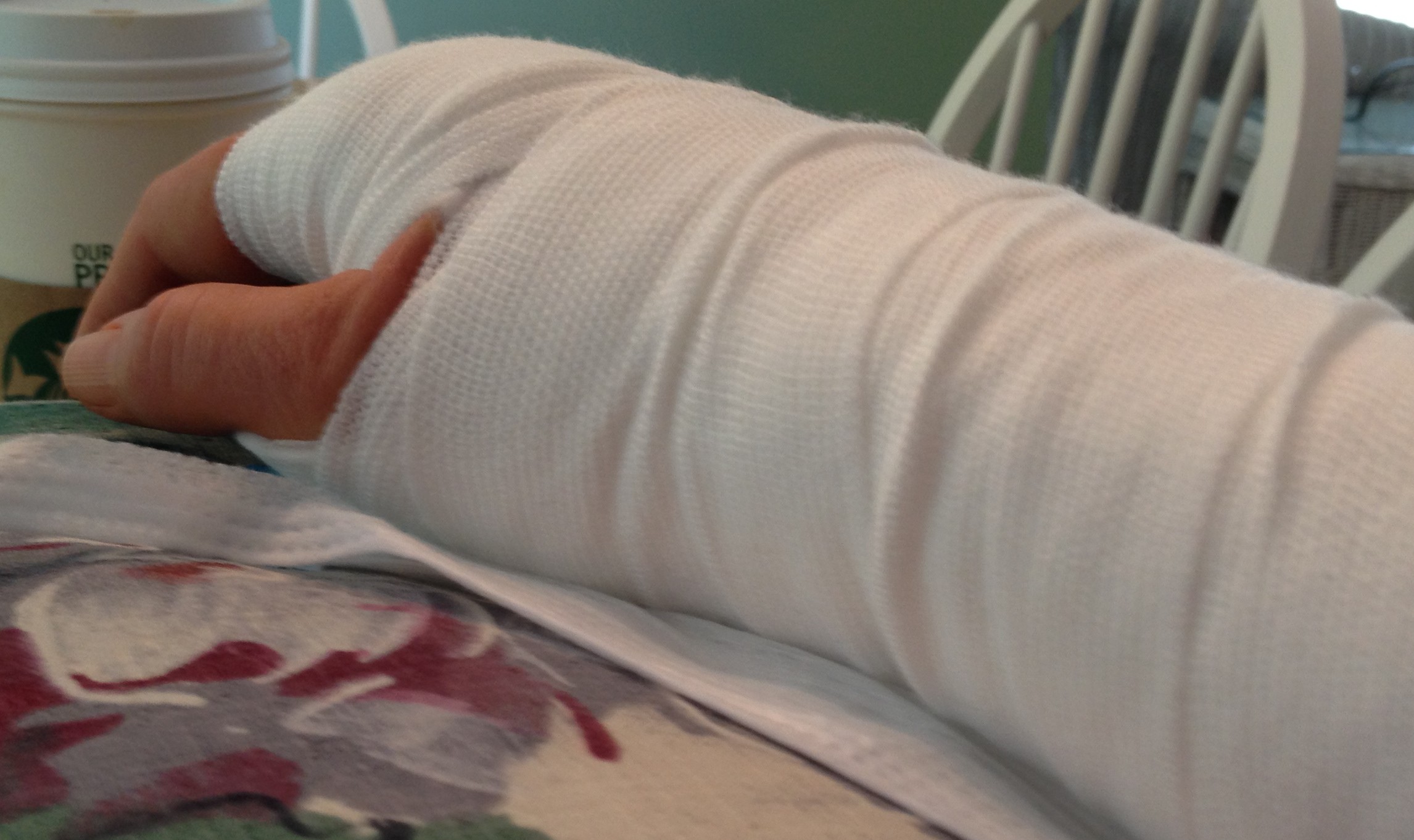
When I left the hospital my hand was swathed in an impressive bandage that made my appendage look like a soft white club. 8-20-2015, A BIG hand!Judging by the size of the dressing you would have thought I’d had my hand replaced! Three days later, my daughter Jessie carefully unwrapped the massive bandage as my mom watched, none of us quite sure what to expect when my hand was finally revealed. I, not liking the sight of blood or incisions especially when they’re on me, averted my gaze. Mom’s, “Oh, that’s not bad at all”, was quickly followed by Jessie’s, “It looks a bit gruesome though.” The latter comment kept me from looking . . . for days! Instead, Mom faithfully changed the small-by-comparison Band-Aide® each night, offering more encouraging commentary which was enough to assure me progress was being made.

When my daughter Mary first saw my hand without the post-surgery dressing she remarked, “I bet it feels good to have your hand unwrapped.” 8-23-2015, Unwrapped 1 It was certainly more comfortable, but without the enormous bandage I felt quite vulnerable and became very protective of my hand. In her self-titled role of “Nurse Jane”, Mom not only checked my incision nightly, but admonished me multiple times a day not to overdo it or hurt my hand. I assured her (repeatedly) that I’d be very careful since I’d be the one to suffer if I hurt myself. Indeed, I was so focused on recovering well, I followed the surgeon’s instructions to the letter and did my best to protect my incision, which I looked at frequently AFTER the stitches were removed. I even forsook working in my beloved garden for a whole month!

Bit by bit, my strength and range of motion improved as I tried to do a little more each day and let my hand tell me when I was asking it to do too much. One morning, several weeks after surgery, my hand felt almost normal. “Yes! I’m well!” . . . Nope! The next day, and for several days afterwards, I experienced cramping and occasional shooting pain in my hand. Healing had progressed to a deeper level. A week or so after that first almost-normal day, I experienced another day with little to no surgery-related discomfort. I expect there will be more good days and less pain as the recovery process continues to completion and am confident the final outcome will be positive.

The pain of loss can be every bit as sharp and piercing as any surgeon’s scalpel. Though the wounds are invisible, it’s just as important and appropriate to take care of ourselves when we’re hurting emotionally. Resting, receiving encouragement and assistance from supportive people, and protecting ourselves from further harm are critical components of healing, whether the injuries are physical or emotional.

And don’t underestimate the value of time . . .

Grieving is a process as individual as physical healing and every bit as back and forth. There are days when a new normal starts to feel comfortable, followed by a return to hours marked by profound sadness upon realizing all over again that things won’t ever be the way they were. Two steps forward, one back. Three steps forward, two back. But gradually, in time, healing takes place because the One who made us, fearfully and wonderfully, is the same One who never lets us go. He has compassion on us, remembering we’re dust and knowing what it’s like to experience the sorrows of this life because the Word became flesh and dwelt among us.

So let us be gentle and patient with ourselves and with each other, following the example of He who took up our pain and bore our sorrows that we might be healed.


Family matters

Week before last, a friend from church and I made similar journeys. She and her husband drove to Texas with their two small sons while my daughters and I flew to South Dakota. We were traveling to be with our extended families – she to say goodbye to a much-loved grandmother; me to help lay to rest a cherished brother-in-law. Back in our home state of Georgia last Tuesday, we hugged and tearfully shared details of our bittersweet treks. We affirmed to each other the assurance our loved ones are safely Home and agreed the tears we shed weren’t for them, but for ourselves, the ones temporarily left behind.

And then my friend said something that resonated with me just as deeply: “When I’m with my family, I remember who I really am.” Yes! The world uses myriad criteria to judge us, each with an implied worth – income, education, appearance, occupation, and so many more. But in my family I’m valued simply because I’m one of them. I belong. Not that we don’t encourage each other to do our best and celebrate our successes, but they aren’t the cost of entry. And our calamities, even when self-induced, aren’t reason for dismissal. I’m thankful for the unconditional love I’ve experienced in my family of origin. I’m equally blessed to have married into a family whose members are there for each other. They accepted me into their fold when Ray first introduced me to them over 30 years ago and have welcomed me ever since.

As I listened to the prayers that punctuated many of our gatherings while we were in South Dakota, I was reminded of the heritage of faith undergirding my daughters and grandchildren. There are generations of faithful believers on both sides of our family, many now part of the great cloud of witnesses. Because of the boundless love the Father has lavished upon us in sending his Son, we’re part of his forever family – chosen, unconditionally accepted, destined for another Home. No matter how the world chooses to judge us, when we’re in the presence of our Father, we remember who we really are.

Fixing our eyes

A while back, a friend asked if I’d ever heard the adage, “Heaven may be my home, but I’m not homesick yet.” No, somehow I made it through over half a century of living without hearing that one, in spite of being a believer for the vast majority of those years. Since becoming acquainted with it, however, I’ve had a number of occasions which have brought it to mind, but with a twist: “Heaven is my Home and I’m so very Homesick” . . . like the news I received a few days ago.

I was feeling a bit sorry for myself, stuck inside on such a lovely day when I would rather have been outside playing in the dirt. But, not wanting to risk injury or infection to my recently-operated-on hand, I opened a bunch of windows and enjoyed the breeze. A phone call from one of my sisters-in-law broke the afternoon silence. Even before I answered, I knew it was unlikely she’d call me in the middle of a weekday just to say hello. Sure enough, the tidings weren’t good. My youngest brother-in-law had died the day before, felled by a heart attack at a much-too-early age as were his father and brother (my husband) before him.

I’m all too familiar with phone calls that bring such life-changing news. The report that another loved one has suddenly been called Home puts everything else into perspective. The disappointment I was feeling about not being able to go outside was quickly eclipsed by the more pressing reality I’d been made aware of. I’m convinced no matter how many such life-altering phone calls I receive, they’ll never get easier. My tears are quickly followed by numbness and denial – Not again, Lord! How can this be happening? – Yet death is one of life’s certainties. And those of us left behind grieve, but not as those who have no hope.

God has great compassion on us, remembering we’re dust. He reminds us through the Apostle Paul that our present troubles, which are described as light and momentary, are achieving for us an eternal glory that far outweighs them all. He encourages us to fix our eyes not on what is seen, but on what is unseen, since what is seen is temporary, while what is unseen is eternal. Similarly, Jesus tells us to store up our treasure in heaven, not on earth. Commenting on Jesus’ directive in light of loss, Elisabeth Elliot states,

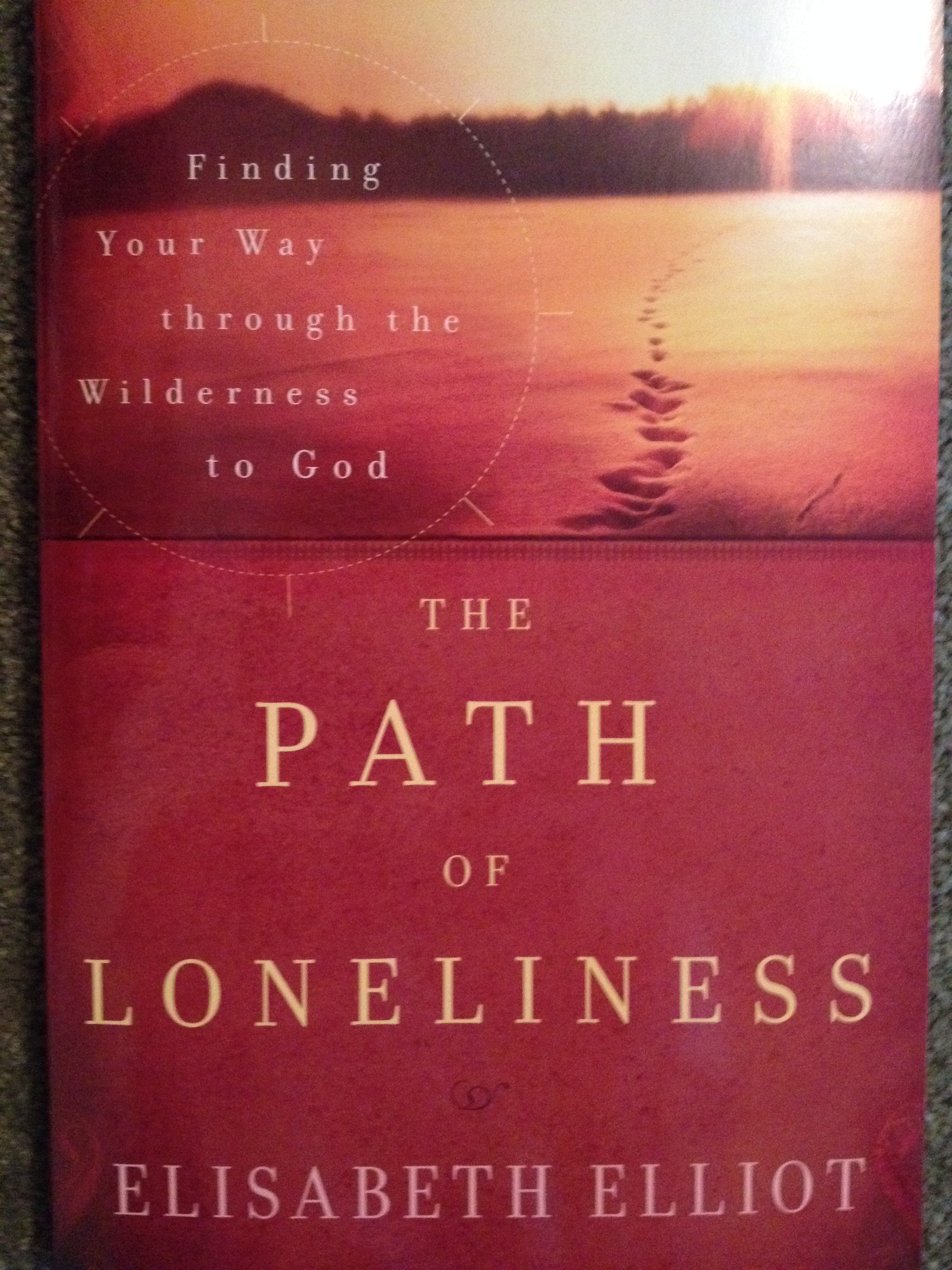
“The loss of someone we love, whether by death or otherwise, brings us to the brink of the abyss of mystery. If we wrestle, as most of us are forced to do, with the question of God in the matter, we are bound to ask why He found it necessary to withdraw such a good gift. Cover "The Path of Loneliness"We will not get the whole answer, but certainly one answer is the necessity of being reminded that wherever our treasure is there will our hearts be also. If we have put all our eggs in the basket of earthly life and earthly affections we haven’t much left when the basket falls. Christians, being citizens of Another Country, subjects of a Heavenly King, are supposed to set their affections there rather than here – a lesson few learn without mortal anguish.”[i]

Later this week we’ll gather in a tiny South Dakota town to remember Phil, a quiet, gentle man. He never married but cherished his family and endeavored to attend most all of the weddings of his numerous nieces and nephews. As we stand in the windswept cemetery just outside of town, I’ll strive to fix my eyes on the unseen. For then I’ll see two brothers, eternally reunited and I’ll rejoice in the assurance that our treasured family circle will one day be completely restored in a Home where there will be no more tears or death or pain.

Phil Kuipers. a kind and gentle man 1-9-1961 to 8-26-2015

Phil Kuipers, 1-9-1961 to 8-26-2015

[i] Elisabeth Elliot, “The Path of Loneliness”, (Grand Rapids, Revell, 2001) pg. 59

Letting go

Over the years Ray and I were married, I saw him pull up perfectly good plants to make way for the next season’s annuals. I was always a bit appalled since I’m one of those people who doesn’t like to waste anything. Yet he knew the next season’s plants needed time to establish their roots and get acclimated before the harsher temperatures of the upcoming season arrived, be they summer’s highs or winter’s lows.

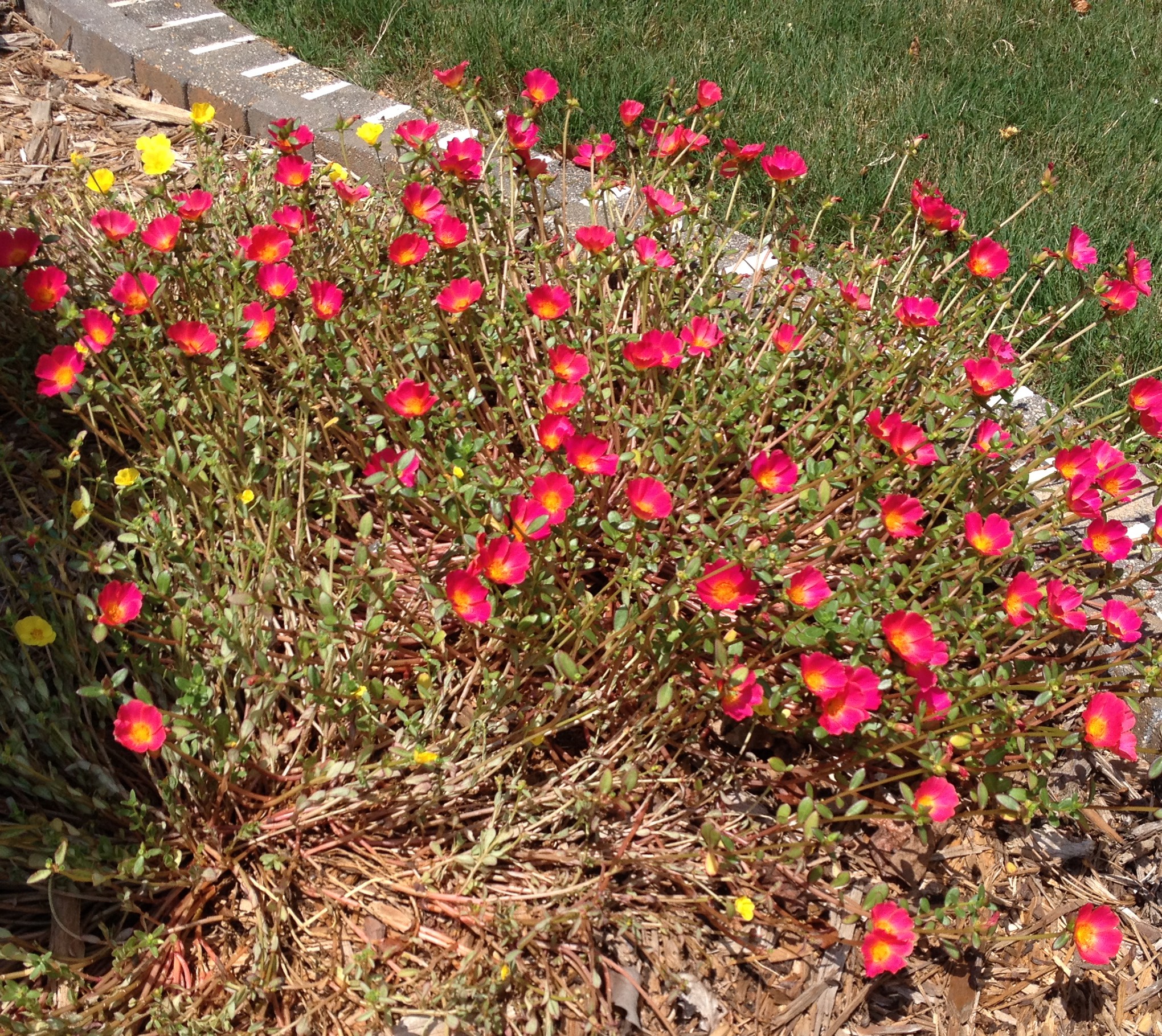
Purslane, Portulaca oleracea

Purslane (Portulaca oleracea) is a dependable sun-loving, drought tolerant summer annual. Mine has bloomed enthusiastically since I planted it in May, but is starting to look a bit tired and leggy. Soon it will be replaced by mums which will in time be replaced by violas.

As I’ve become more knowledgeable horticulturally, I’ve realized Ray was right and I try to get my cool-season annuals placed in their beds at a reasonable time even if it means pulling up still-blooming warm-season plants and vice versa. (I do, however, usually apologize to the plants I’m pulling up and thank them for providing so much enjoyment across their respective season.)

A wise friend recently pointed out that our strengths become weaknesses when pushed to their extremes. I’m loyal and dedicated, a consummate Golden Retriever for those of you familiar with Gary Smalley’s animal-based personality profiles. Just as I hesitate to remove still-flowering plants from my garden, I find it difficult to let go of people or situations, even when it would be best to do so – loyal and dedicated . . . to a fault. I’ve said on many occasions since losing my job four and a half years ago I’d still be sitting in my cube, working away, if God hadn’t made it abundantly clear that chapter of my life was over. And what an amazing adventure I would have missed had He not (lovingly) slammed that door and sent me on my way. After all, I went back to school to study horticulture and became a first-time grandmother within six months of losing my job. What a joyful, and somewhat humorous, combination of events!

Becoming gainfully unemployed is just one of many positive life-changing examples I can look back on. So you’d think I’d be better at letting go by now. Sadly, that’s not the case. Probably because letting go feels too much like giving up or losing. Plus there’s the fear of the unknown. Yet I firmly believe God always knows what’s next. He encourages us, saying, “Forget the former things; do not dwell on the past. See, I am doing a new thing! Now it springs up; do you not perceive it?” (Isaiah 43:18-19a) There are times when I’m so focused on the known and the now I can’t perceive anything beyond an underlying sense of disquiet beckoning me to move forward. Tentatively, I’ll let go with one hand while keeping a tight grip with the other. But God is able to do far more than I can ask or imagine so isn’t it likely I’ll need both hands to receive whatever it is He wants to give? Being a patient and compassionate Father, He works to loosen my grip and enable me to embrace His plan – His good and perfect plan.

Even though it’s only mid-August, a few leaves are starting to fall, early harbingers of the major leaf-drop to come in a couple of months . . . signaling another chapter, another season, reminding me letting go isn’t giving up or losing.  It’s making way for the new.

Are you contagious?

As part of my horticultural studies, I spent several months interning at a botanical garden near my home. Each day was different as I and another intern assisted the Head Gardener with whatever he needed to get done. I found the majority of our activities to be interesting, educational and, for the most part, enjoyable. However, one activity repeated every couple of weeks throughout the summer wasn’t much fun. That task? Removing leaves affected with early blight from the tomato plants. It was a rather tedious process which required us to dip the blades of our pruners into alcohol after every snip of an infected leaf. Why? To decrease the possibility of spreading the disease to other areas of the plant or to other plants entirely. In addition, we bagged up the diseased leaves and put them in the trash, not the compost bin, since blight spores can survive on plant debris, causing more problems later. Even though following the procedure took more time than clipping a succession of leaves with no dipping in between, it was worth it. It slowed the progression of the blight, enabling the tomatoes to survive and bear fruit.

Removing diseased leaves from a coneflower one evening this week reminded me of the great lengths we went to in our quest to protect the tomato plants. As is often the case when I’m working in my garden, my thoughts turned to spiritual parallels. Criticism, anger, gossip, complaining. They can be as contagious as any disease and every bit as deadly when it comes to relationships. How are we to keep from spreading the spores of negativity? Just as the alcohol cleansed the blades of the pruners, immersing ourselves in God’s Word can purify our thoughts and refine our intentions. In Philippians 4:8, Paul encourages us to think on things that are excellent and praiseworthy; whatever is noble, right, pure, lovely and admirable. And in 2 Corinthians 10:5 he says we are to take captive every thought to make it obedient to Christ. Difficult? Absolutely! But the One who is making all things new took our infirmities upon Himself and heals us by His wounds that we might bear abundant fruit for His glory . . . love, joy, peace, patience, kindness, goodness, faithfulness, gentleness, self-control . . . conditions others won’t mind catching.

Listen!

As usual, I over-packed for a recent vacation. Nonetheless, I somehow managed to forget my mascara. Not wanting to appear eyelash-less for an entire week, I put “buy mascara” at the top of my to do list when I started out on my first field trip. Shortly after leaving my home-away-from-home I came upon a CVS, but it was on the other side of the street and I would have had to cross traffic to get to it. “Surely there will be another, more conveniently-located drug store before I reach my destination”, I told myself. Alas, there was no such drug store and I ended up stopping at a Walmart. Not only was it busier than the CVS would have been, it also required crossing traffic plus I got turned around in its convoluted parking lot both entering AND exiting.

A couple of days later I was heading off on another adventure. It was almost, but not quite, time for my afternoon tea. I passed a Starbucks soon after getting underway. Knowing I had at least an hour’s drive ahead of me I thought, “I bet I’ll pass another Starbucks soon.” Nope! This time I ended up backtracking to a Target which Siri indicated was home to the closest Starbucks. I had to endure the busyness of the store itself, its parking area AND the traffic on the mall access road leading to said parking lot. All told I added at least 20 minutes to my trip.

When would I learn? . . .

As most travelers know, it’s best to return rental cars with a full tank of gas to avoid excess refueling charges so finding a gas station was top priority as I started to the airport. I didn’t have to look far; there were two within a stone’s throw of the hotel where I spent my last night of vacation. Knowing I had a 35-mile drive I thought, “There will be more gas stations along the way.” (Cue internal conversation.) “Whoa! You’re not going to follow that logic again are you?! Do you really want to risk having to go off course to find another gas station and make yourself late for your flight?” (Anyone else out there have these conversations with themselves?) I’m happy to report I had learned my lesson. I pulled into one of the stations, refueled, and went blissfully on my needle-past-full, stress-free way to the airport.

As I drove I couldn’t help but think about other times when I don’t listen, times when I choose not to heed obvious directions when it comes to my spiritual journey. God promises to instruct us in the way we should go. He speaks clearly through Scripture, sermon messages, the godly advice of believing friends. Even so, there are instances when I’m slow to obey or I decide to take a different route altogether. And my detours often result in frustration and lead to needless sorrow. Yet God is compassionate, slow to anger and abounding in steadfast love toward me, his sometimes wayward daughter. He tenderly draws me back to himself and leads me on the sure pathway Home.

Healing

I was hungry when I finally arrived at home after our longer-than-usual church service. My first inclination was to go inside and fix lunch, but we’d gotten a much-needed shower overnight and I wanted to check the rain gauge. My front walk was still wet, though not terribly slippery. Nonetheless, I was careful as I made my way to the rain gauge and noted its contents. As I was returning it to its place, my neighbors pulled into their driveway so I waved to them as they got out of the car.

And then it happened. As I turned back, I caught the toe of my shoe on the edge of the walk. Before I knew it I was falling – not one of those slow motion kind of falls, but a rapid, slam-into-the-pavement plunge. In the second or two it took to unceremoniously reach the ground, all I could think was “Don’t hit your face!!!” (I’d recently re-read a friend’s account of hitting the floor face-first when he was younger, cracking both front teeth in the process, and was praying I wouldn’t meet a similar fate.) Bam! I came to an abrupt halt, but sprang up just as quickly. I didn’t wait to see if I’d hurt myself, wanting instead to avoid the embarrassment of being seen sprawled out on my front walk by the neighbors I’d cheerfully greeted just moments before.

Within seconds I realized my right hand had taken the brunt of the fall. The edge of the walk opened up a deep gash approximately an inch long in the flesh beneath my thumb. The shock of falling quickly combined with my low blood sugar, making me woozy as I saw the blood seeping out of my palm. I walked unsteadily to my neighbor’s house for assistance bandaging the wound then returned home and lay down. I don’t remember when I finally felt like eating.

The good news: no broken bones (or teeth!) In addition to the gash on my hand there were only some scratches across my nose and a small cut on my upper lip. I can’t imagine how I managed to plummet without sustaining any other injuries – nary a scratch or bruise anywhere else!

The next day I told Joshua about my fall. As I showed him my various injuries, I asked if he’d kiss them and make them better for me like I always do for him. He carefully considered my request then replied, “No Grammie, that’s too many boo-boos.” Later in the week I lifted the bandage on my hand and let him take a peek at the wound. After briefly contemplating the sight, he said, “Don’t worry, Grammie, God will give you new skin to cover up the hole.” And so He has. Slowly, steadily over the weeks since I nearly face-planted on my front walk, the gash has closed and new skin has appeared.  Truly we are fearfully and wonderfully made.

Several weeks after my fall, Joshua suffered an unpleasant injury of his own. He and June, the family dog, were both interested in a prized turkey feather. When Joshua reached for it June showed her displeasure by nipping him under his left eye. Wincing in pain, Joshua started wailing. When I got to him moments later, there was a trickle of blood on his face. I attempted to remain calm so I could comfort my little buddy, but my anxiety increased as his sobbing continued. Then my phone chimed. Justin, alerted by Mary as to the drama unfolding at home, requested to FaceTime with Joshua. Upon seeing his father’s face, Joshua quieted enough to hear what Justin had to say. In a calm, steady voice he reassured Joshua, reminding him of other times he’d been hurt, how things had subsequently gotten better and that this time would be no different. As Joshua’s tears subsided into intermittent sniffling, tears sprang to my eyes and spilled down my cheeks. In allowing me to witness this affectionate act of reassurance by an earthly father toward his distraught child, God reminded me of His love for me. Justin’s words echoed a message I needed to hear, “You’re hurting, but you’ve been hurt before. Remember, Patsy, it will get better. I’ve never left or forsaken you and I never will.”

Suffering comes in many forms. Some of the most painful injuries aren’t physical ones. Disappointments and losses can pierce our hearts and threaten to crush our spirits. But they don’t have the final say . . .

There’s now a scar at the base of my right thumb. It reminds me of the One whose wounds bring ultimate healing. Who is faithful to all His promises.  Who assures His children that a day will come when He’ll wipe away every tear.

In Remembrance

“Death leaves a heartache no one can heal. Love leaves a memory no one can steal.” (Unknown)

Eighteen years ago today my beloved husband was laid to rest in a tiny cemetery in North Carolina. The part of my heart that belonged to Ray went into the grave with him that sunny, late-April afternoon. Several weeks later I placed a call to “Focus on the Family” to request materials on dealing with grief. In the midst of my conversation with the kind person who answered I said, “I feel like part of me is missing.” I’ll never forget her reply, both compassionate and oh-so-insightful: “During the time you were married you and your husband became one. Part of you is missing.”

Months passed and I was having yet another day where I was struggling with the pain of losing someone so dear. Sensing my sadness, the woman I was meeting with inquired about how I was coping. When I confessed how difficult some days were she introduced me to a concept I’ve held onto ever since. She suggested I envision a beautiful piece of furniture, a chest with many drawers, each containing memories and their associated emotions. She went on with the analogy saying, “When memories of your husband’s death arise at a time when you feel you aren’t able to deal with them, imagine tucking them into one of the drawers, closing it gently and re-opening it when you’re ready to do so.” I’ll admit there have been times when a drawer has sprung open and caught me off guard. Times when a memory has overwhelmed me and I’ve struggled to shut the drawer. But more often the mental image has served me well.

The week before and the week after the anniversary of Ray’s death I’m quite intentional about opening the drawer. I think about how we spent our last few days, oblivious to the fact our time together was winding down. I remember the day of his passing with such clarity it could have happened recently, not so long ago. And I recollect the days following, when I had to make decisions I never expected, much less wanted to make at such an early age. My reminiscences are deliberate and purposeful, a way to honor Ray as well as remind myself of lessons learned and affirmed by losing him, such as:

  • The importance of numbering our days aright and keeping current in our relationships with those we hold dear.
  • The need to keep things in perspective, saving emotional distress for things that can’t be “fixed,” no matter how much money or time you invest. (And its corollary: things can be replaced, people can’t be.)
  • The ability of prayer to strengthen and support when raised up by myriad family members and friends on one’s behalf.

I’ve kept a journal for ages. On the night I returned home from the hospital, dazed and in a mild state of shock, I penned these words: “This is the worst day of my life up to this point – Ray, my dear, dear husband and friend died tonight. Even as I write it I don’t believe it. It will probably take time for the numbness to wear off, but when it does, Lord, please enfold Mary, Jessie and me in your love. I don’t understand this and I can’t even begin to imagine what my life will be like without him.” I was right. I couldn’t imagine what life would be like and to this day I don’t understand. But God heard my cry that night and many nights since. He’s been so faithful to me and my family, loving and sustaining us all the years we’ve been without Ray.

Which brings me to another point regarding the imaginary chest: it contains numerous drawers. Although some hold remembrances that evoke sadness, there are many more containing memories associated with great joy. I open those on a regular basis, reliving and savoring the moments, praising God for His goodness and grace. And each year when April 19th comes around, I remind myself I’m another year closer to once again seeing the man I was blessed to call my husband. The reunion is guaranteed because of the broken body and spilled blood of the One who instructed His followers to remember Him, His sacrifice, His promises. And so we wait in hope and assurance.

He is Risen!

For me, Easter is the best day of the year. I wake up thinking, “He is Risen!”, and my heart continues to sing that joyful refrain throughout the day as it celebrates the assurance that death has been swallowed up in victory. I rejoice over the certainty of life eternal in the presence of God where the most beautiful of earthly days will dim by comparison.

Yet God, in His goodness, has blessed us with much beauty in this world. I can’t help but believe spring gives us a glimpse of what awaits when we get Home. In this glorious season of rebirth, creation not only reflects God’s glory, but shouts as well as whispers praise to the Creator in myriad ways, from flower-laden branches to the tiniest of wild flowers. And so I offer the following photos, most taken around my garden, as my contribution to the chorus of thanksgiving to the One who is most worthy of praise.