The Land of the Living

I would have despaired had I not believed that I would see the goodness of the Lord in the land of the living. Wait for and confidently expect the Lord. Be strong and let your heart take courage. Yes, wait for and confidently expect the Lord.
Psalm 27:13-14 Amplified Bible

Flash Freeze

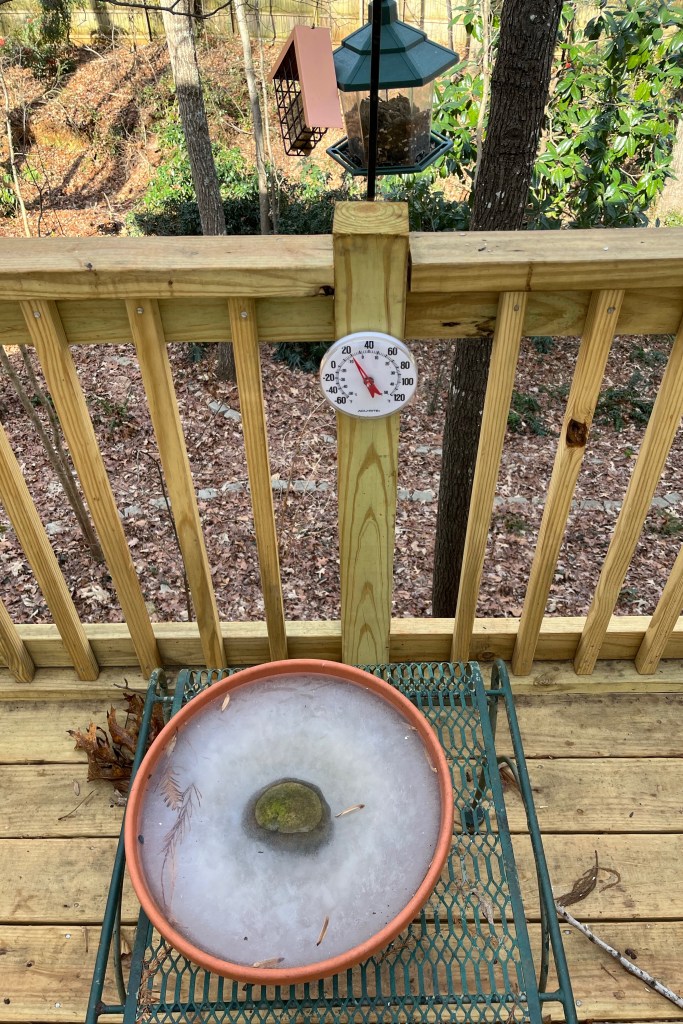
The week before Christmas found us experiencing normal temperatures here in metro Atlanta – highs in the mid-50s, lows in the upper-30s – but that changed abruptly on December 23rd. Temperatures plummeted overnight from a high of 52 to a low of 19, dropping even further to a frigid 8 degrees the next day. Daytime highs returned to above freezing on the third day, but nighttime lows remained well below freezing as we experienced one of the coldest Christmases on record.

The lingering lows, accompanied by blustery, bone-chilling winds wreaked havoc on the plants, most of which hadn’t gone dormant yet due to our moderate weather. I compared notes with fellow gardening enthusiasts. Most of our annuals were a total loss. The arctic blast burned the foliage of the cheerful violas and pansies, staples of our winter gardens, while the ornamental kale was nothing more than mush when it thawed out.

 One friend, a longtime Master Gardener, shared a video that addressed our “what now?” questions. The speaker used the term “flash freeze” to describe what happened to the plants when the temperature dropped precipitously. The water in their cells froze instantly. When the temperatures rose above freezing, some of the cells burst, no longer able to contain the water required for life.

Despite this grim description, the speaker affirmed what my gardening friends and I had been encouraging ourselves with: it was too soon to judge how the perennials, shrubs, and trees had fared. Given our cumulative experience, we were hopeful more plant friends would survive than wouldn’t.

Only time would tell.

Sudden Loss

After watching the video and contemplating what my garden might look like come spring, I pondered how sudden loss is akin to a flash freeze. Even though nearly 26 years have passed since my husband’s sudden death, I distinctly remember driving to work a few days before his passing. Stopped at an intersection, waiting for the light to turn green, I was soaking up the beauty of the day. I thanked God for the warm weather and springtime blossoms and that things were going smoothly for my little family.

Less than a week later, I received the life-changing news that my 39-year-old husband had not survived a heart attack that felled him while he was at work. My 7- and 10-year-old daughters heard the nurse’s somber pronouncement at the same time I did. In a moment, life as we knew it stopped.

Days passed. My daughters went back to school, and I returned to work as we tried to recreate some semblance of normalcy. But many nights, tears flowed from one, two, or all three of us. Even though I clung to my faith, knowing I would experience joy when God called me Home, I wondered if I would ever experience joy again in this life.

One evening, that question was running through my mind yet again when I sat down with my Bible. The reading schedule brought me to Psalm 27, where I found encouragement in the introductory passage above. The Lord used it to assure me I could wait with confidence, counting on His goodness. I trusted that joy would indeed return in this life, even though I wasn’t sure what it would look like or how long it would take.

Only time would tell.

Joy for Mourning

Ray had a horticulture degree and was an accomplished gardener whose legacy includes the plants he chose for our yard. In those early days of loss, I could never have imagined what a tremendous role those plants would play in restoring my joy.

In a journal entry dated 3-1-98, I recorded the following: I spent the whole afternoon outside yesterday, cleaning up the front beds and going through the many pots Ray kept. It was a bittersweet experience. I couldn’t believe all the little plants that are coming back to life. I cried several times as I dug, raked, clipped, and discovered new growth. The beauty and hope are there. I just miss having Ray to share it with. Several times I stopped and said a silent thank you to him for planting so many beautiful things and to God for sustaining it all.

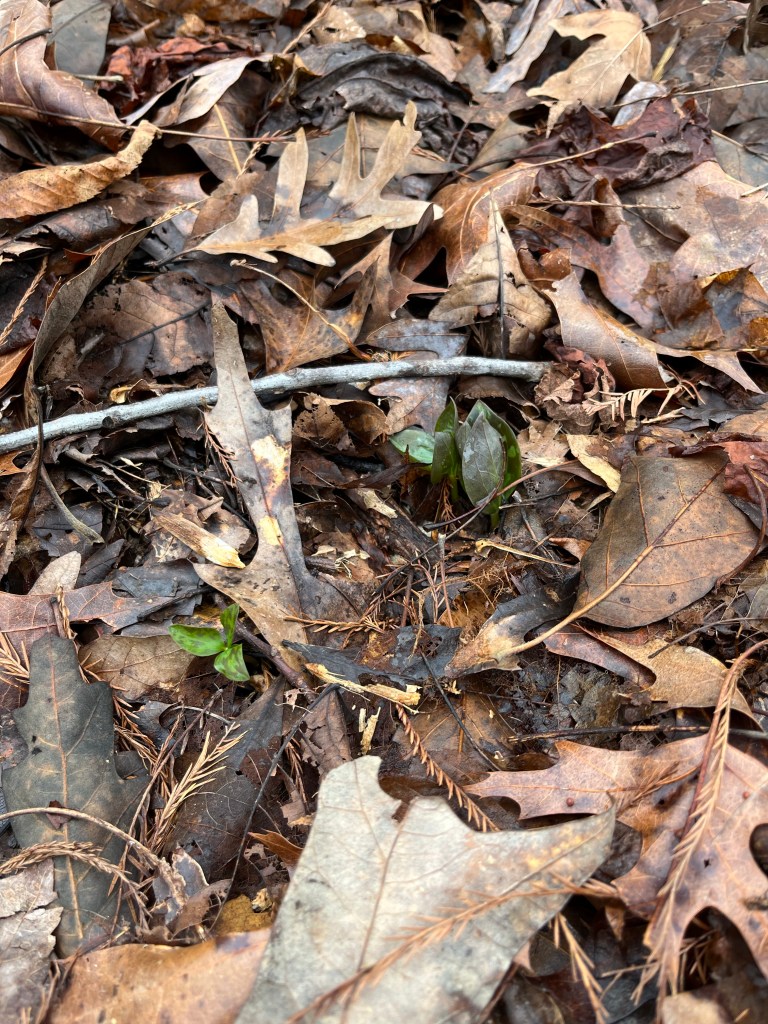
That, my friends, was the first of countless sessions of what I refer to as “garden therapy.” Seeing the tiny shoots popping up through the leaf litter gave me great hope. If they could survive their cold, dark winter, then maybe I could survive my season of loss.

Sustained by God’s grace and His steadfast love, I’ve done more than survive. I’ve flourished – and so has the garden He’s entrusted to my care. It nourishes me spiritually as I see scriptural principles come to life and provides a tangible connection to Ray until we’re reunited.

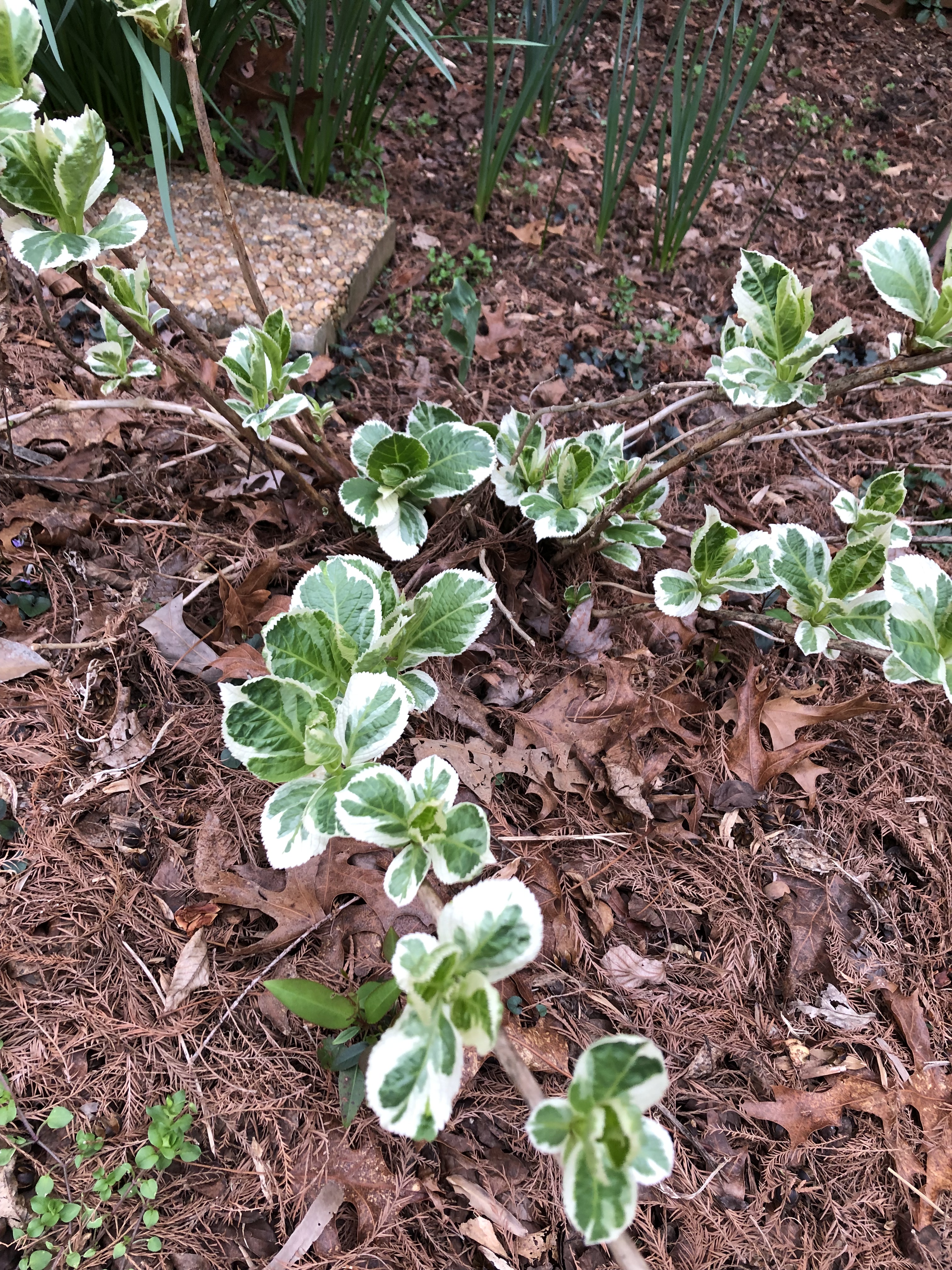
You might be wondering how my plants are doing now, two months after the deep freeze. There are some indications that a few didn’t make it, just as there were some things in my life that didn’t survive Ray’s passing. However, I’m pleased to report that the plants are exhibiting the same perseverance I observed 25 years ago. Signs of life are popping out everywhere, and, just as my fellow plant lovers and I expected, far more of our leafy friends survived than didn’t.
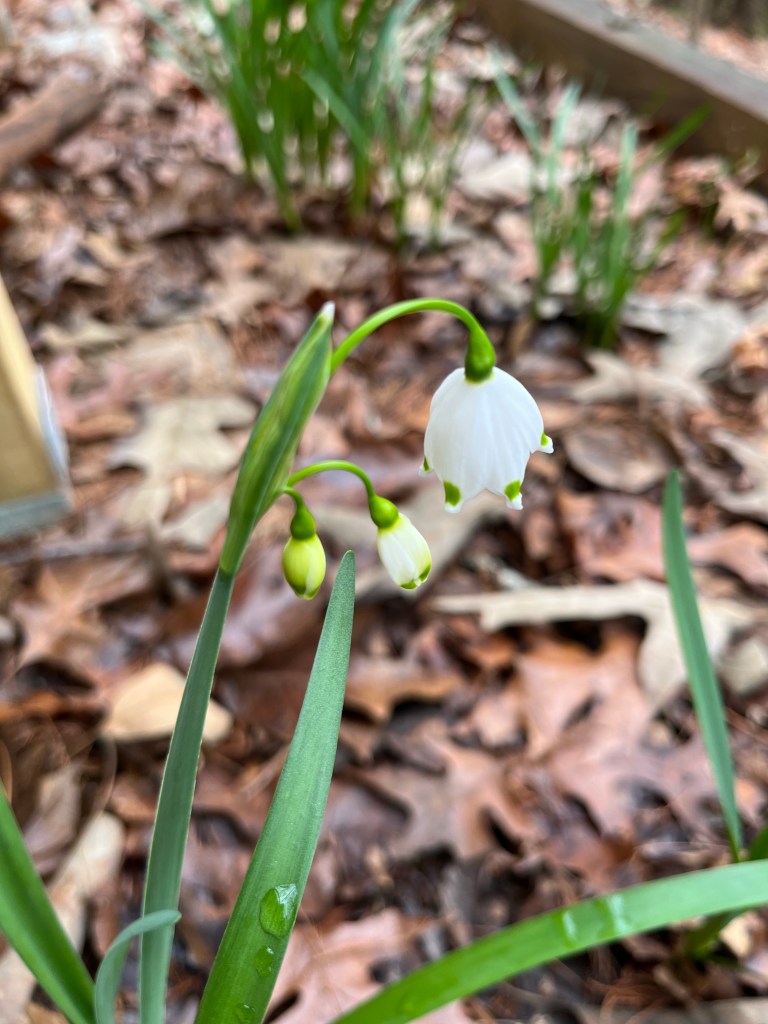
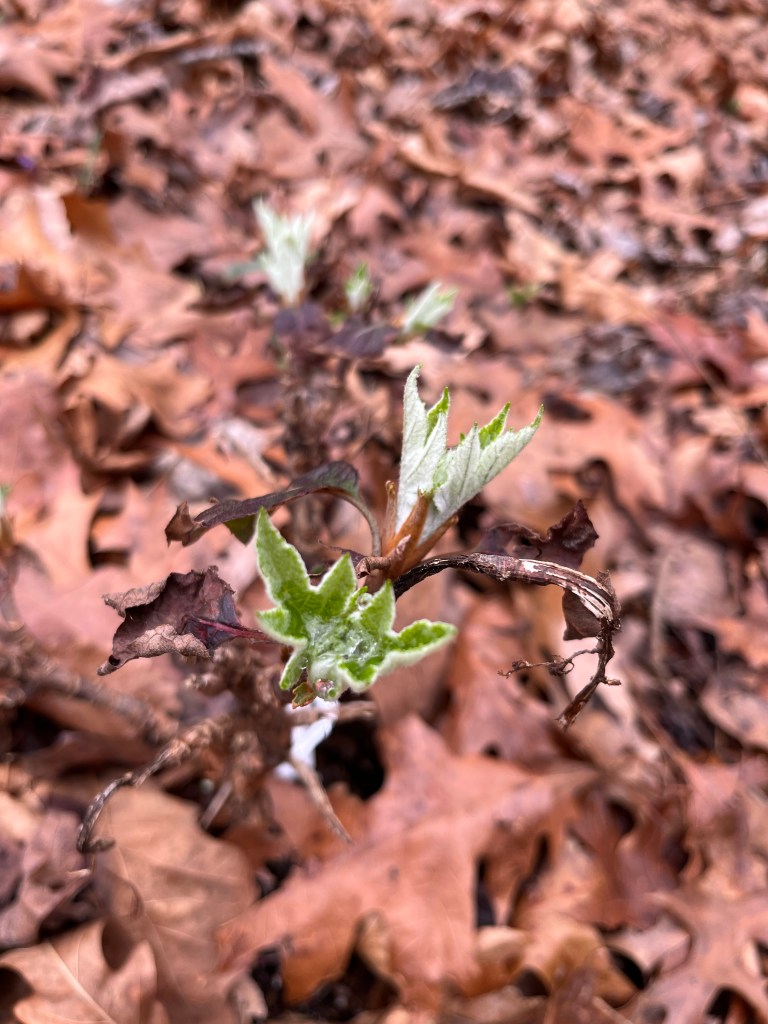
Life in this world is challenging. As pilgrims on our way Home, we can be buffeted by all sorts of ill winds. Yet there is joy in the journey because our joy rests in a Person. Jesus, the One Who came to give us abundant life now and eternal life in His presence, is also the One Who’s promised never to leave or forsake us. He will give us strength for the journey and see us safely Home.

Dear Lord, thank You for lovingly sustaining all You’ve made, from the plants and animals to Your beloved children created in Your image. Though this world bears the effects of sin, You’ve filled it with examples of Your great love and care for us. Please help us to have eyes to see those gifts even as we long for Your return.
God’s Ambassadors

“You are the light of the world. A city set on a hill cannot be hidden. Nor do people light a lamp and put it under a basket, but on a stand, and it gives light to all in the house. In the same way, let your light shine before others, so that they may see your good works and give glory to your Father who is in heaven.”
Matthew 5:14-16

A Brief Encounter

One of the first things I do each day is to check the weather. I suppose it’s the gardener in me. The week before Christmas, I noticed an alarming trend in temperatures forecasted for the holiday weekend. Even though I know our single-digit lows would be welcome in other parts of the country where temperatures plunged well below zero, they can cause problems for pipes, plants, and pets here in Georgia.

As many of you know, I count the birds that frequent my feeders as my outside pets. Thus, wanting to make sure I had plenty of food on hand and knowing I wouldn’t have time to make it to Home Depot, I opted to pick up a bag of mixed seeds when I got my groceries.

While I was perusing the choices, another woman joined me in front of the birdseed shelves. Detecting a kindred spirit, I commented, “I hope the birds will be ok when the deep freeze gets here.”

She replied, “Me too! They have downy feathers to keep warm, right?”

Trying to reassure her, I said, “They fluff up too to provide extra insulation.” (My 11-year-old grandson Joshua, a treasury of animal facts, and I had a conversation about that a few days before my trek to the grocery store, so I felt confident in my assertion.)

Still troubled, she said, “But what about their little feet and legs?”

That one stumped me, though if Joshua had been there, I have no doubt he would have had an explanation for why birds’ feet don’t freeze. Instead, in an attempt to ease our concerns, I stated something I knew to be true. “The Bible says God watches over the birds, so we’ll trust Him to do that.”

She smiled. “You’re right. It does.”

I added, “And we’ll do our part to make sure they have food.”

Another smile, “Yes, we will.”

We each selected a bag of seeds, wished each other Merry Christmas, and went our separate ways.

Deep Freeze

The forecast proved to be correct. Temperatures plummeted, lows were below 10 degrees, and three days passed with highs in the teens and 20s. When we finally made it above freezing, it felt like a heat wave!

As is my custom, I refilled the feeders each morning and returned them to their hooks on my deck. The first frigid morning, I peered expectantly out the kitchen window, awaiting the arrival of my bird friends.

I didn’t have to wait long. Soon a steady stream of customers was coming and going, consuming seeds even more rapidly than usual. The birds, including their tiny feet and legs, made it through the wintry blast. But I knew they would because I’ve seen God protect them through other unfavorable conditions. Their calm during those times, happily feeding, unphased by the adverse circumstances, reminds me that the One who watches over the birds and flowers also watches over me (Matthew 6:26-33). [1]

Shining the Light

Christmas is about God meeting our greatest need, our need for a Savior. The Apostle Paul, writing to the believers in Rome, assured them that if God didn’t withhold His only Son, He surely wouldn’t withhold any lesser thing (Romans 8:32).

As children of the King, we know our Father will meet all our needs and will never forsake us. Even so, there are times we need someone to remind us. As I told my fellow bird lover, we can do our part to care for those God places in our circle. Sometimes it looks like making sure the bird feeders are full. At others, it means sharing a word of truth in a brief encounter with a stranger to help turn their eyes toward Jesus. Then again, it involves consistently being life-givers to close family and friends, those we know best.[2]

Regardless of the situation, we’re God’s ambassadors, called to be light in a world filled with darkness because we belong to the Light that darkness cannot overcome (John 1:4-5).

Each week, our pastor encourages us to embrace, embody, and extend the love and grace we’ve received in Christ. I pray you’ll consider that to be part of your mission, too, as we begin a new year. May we always endeavor to shine for God’s glory.

Dear Lord, how blessed we are to be called Your children, and what a privilege You’ve bestowed upon us to be Your representatives. Please help us to care for Your creation and our fellow image-bearers with humble, grateful hearts, acknowledging all You’ve done for us.  


[1] Please see “Through the Storm,” Archives, September 2017.

[2] If you’re unfamiliar with the concept of being a life-giver, please see the “Give Life” tab and “Bucket-fillers” in Archives, November 2018.

When We Least Expect It, Reprise

For the Lord himself will descend from heaven with a cry of command, with the voice of an archangel, and with the sound of the trumpet of God. And the dead in Christ will rise first.
1 Thessalonians 4:16

Surprise!

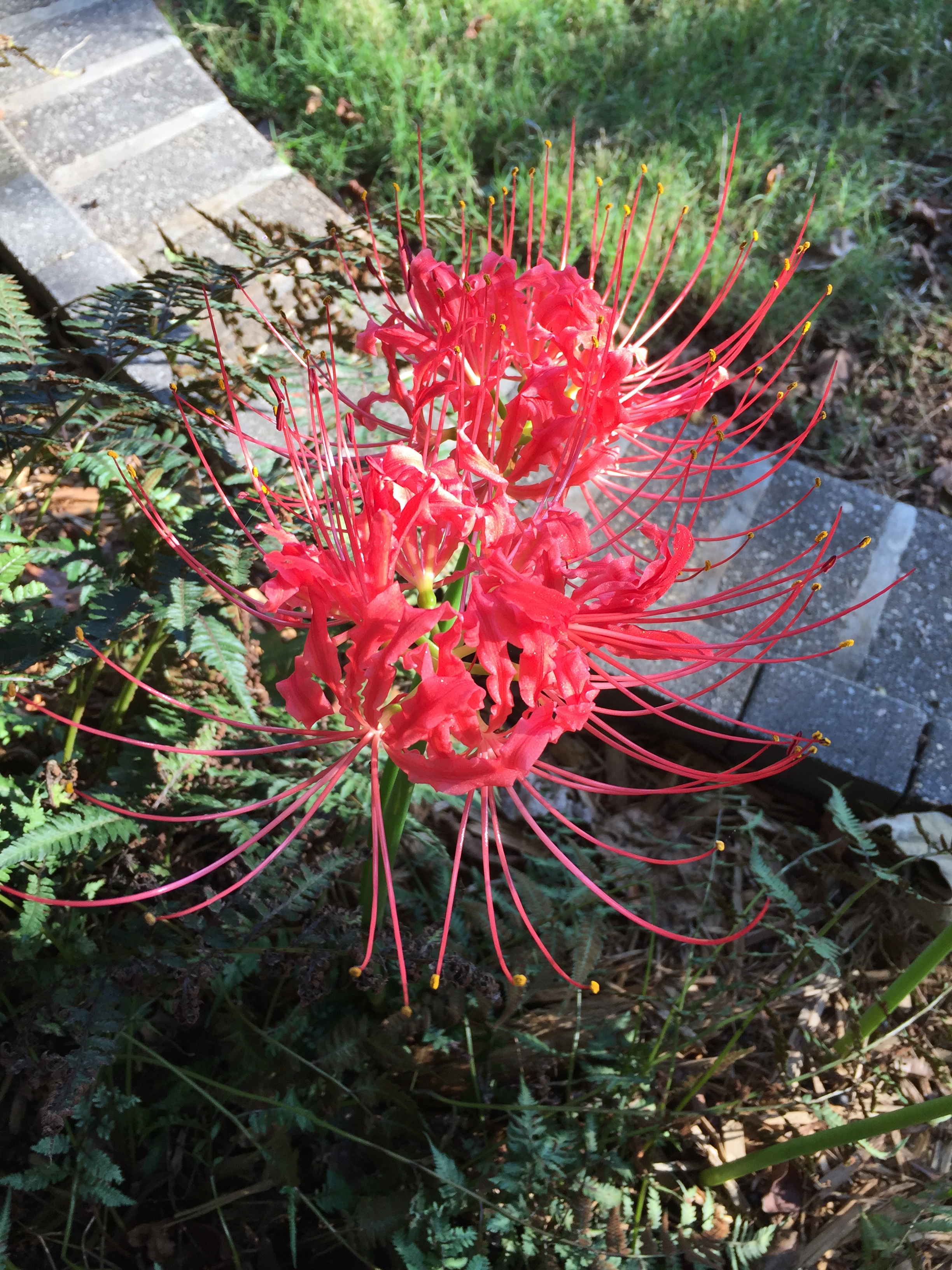
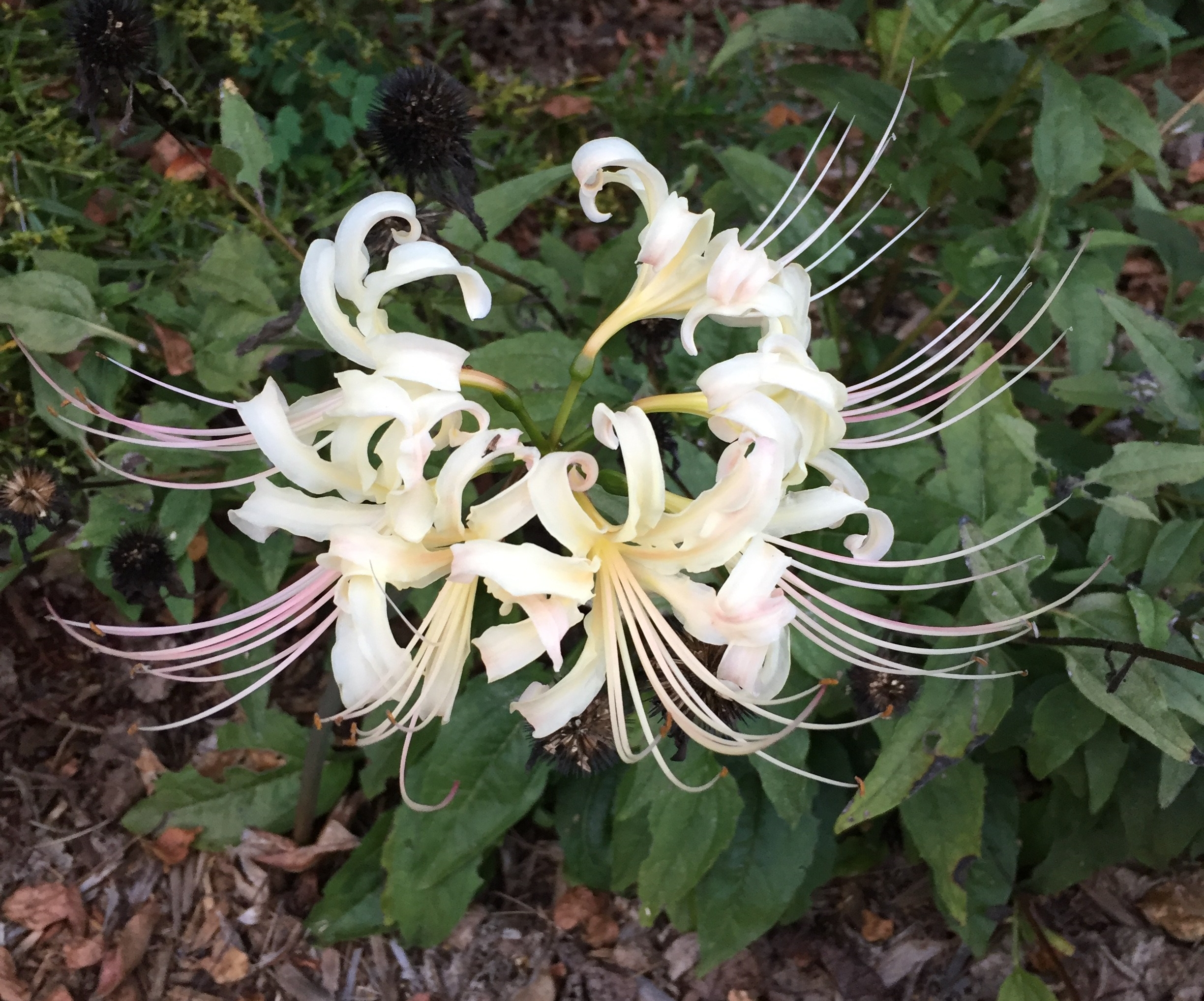
It caught my eye as soon as I pulled into the driveway, weary from a long drive home after a week at the beach. So much time had passed since the cream-colored Lycoris last bloomed, I didn’t even remember it was there. Yet despite its long absence, in a perfectly-timed reappearance, it provided a cheerful, “Welcome home!”

Its return was even sweeter because my late husband, Ray, planted the bulb from which it sprouted over two decades ago. The intriguing inflorescence has shown up each year since, accompanied by additional specimens in adjacent flower beds.

One of the common names for Lycoris albiflora and its more common red-flowered cousin, Lycoris radiata, is “surprise lily”[1] because its foliage disappears weeks before the bloom spike appears, thus allowing time for you to forget it’s there.

Be Prepared!

Jesus said His promised return will be a surprise. In fact, He said no one knows the day or hour except the Father (Matthew 24:36). After making this statement, Jesus went on to tell several parables emphasizing the importance of being watchful and ready:

  • First, there’s the tale of the master of the house who would have stayed awake to protect his dwelling from a break-in had he known when the thief would arrive (Matthew 24:43-44).
  • Then there’s the story contrasting the behavior of faithful and wicked servants (Matthew 24:45-51).
  • And finally, the tale of the ten virgins, five wise and five foolish (Matthew 25:1-14).

All three have the same warning: be prepared! Our Master may return at any moment.

Telling Future Generations

The Old Testament is full of prophecies regarding Jesus’ incarnation, yet 400 years passed from the time of the last one until His appearance – more than enough time for people to forget or doubt. Nonetheless, God preserved the memory of His covenant promises across all those centuries, as exemplified by Simeon and Anna. Both were devout. Both watched hopefully for the coming of the Savior. Enlightened by the Spirit, they exulted over weeks-old Jesus when He was presented at the Temple, knowing the long-awaited One was before them (Luke 2:22-36).

The wait for Jesus’ return is nearing 2,000 years. I rejoice that I am one of those expectantly waiting because generations before me told their children, who in turn told their children so the marvelous message of God’s glorious deeds would not be forgotten (Psalm 78:1-4). Likewise, we must tell our children and grandchildren of His great love and faithfulness and instruct them in His commandments (Deuteronomy 6:4-7).

Called Home  

When my mom was a little girl, talk of the end of the world scared her. In her wisdom, my grandmother told her, “Honey, the end of the world comes for someone every day.” And so it does, sometimes when we least expect it. My husband, barely 39 years old, went to work on a beautiful spring day, suffered a fatal heart attack, and never returned home.

Whether we remain until Jesus returns or He calls us Home before, may we be found ready and watchful, faithfully going about our Father’s business. Though the timing is unknown, His second coming is as certain as His first, and our eternal destiny is secure.

But we do not want you to be uninformed, brothers, about those who are asleep, that you may not grieve as others do who have no hope. For since we believe that Jesus died and rose again, even so, through Jesus, God will bring with him those who have fallen asleep. For this we declare to you by a word from the Lord, that we who are alive, who are left until the coming of the Lord, will not precede those who have fallen asleep. For the Lord himself will descend from heaven with a cry of command, with the voice of an archangel, and with the sound of the trumpet of God. And the dead in Christ will rise first. Then we who are alive, who are left, will be caught up together with them in the clouds to meet the Lord in the air, and so we will always be with the Lord. Therefore encourage one another with these words.
(1 Thessalonians 4:13-18)

Dear Lord, thank You that even though present circumstances sometimes cause us to forget we’re merely pilgrims in this world, we can look forward to arriving safely Home. We may not be able to pencil in the day of Your return on our calendars, but it’s a surprise we can anticipate with joy and certainty.


[1] Common names for Lycoris radiata include surprise lily, hurricane lily, and spider lily.

Benevolent Dominion

The Lord God took the man and put him in the garden of Eden to work it and keep it.
Genesis 2:15

Tree Hugger

Several years ago, then-seven-year-old grandson Joshua made a derogatory comment about tree huggers. Guessing he was mimicking something he’d heard, I smiled and replied, “Careful there, Joshua! One of your favorite people might be a tree hugger.”

He looked at me sheepishly as he realized I was referring to myself, his plant-loving Grammie.

Since that light-hearted exchange, we’ve had many conversations regarding invasive species of plants and insects, the effects of pesticides on pollinators, and our part in caring for God’s beautiful creation. Though neither of us is likely to chain ourselves to a tree in an attempt to save it, we both prefer protecting rather than pillaging our earthly home.

Rebellious Co-Regents

In the beginning, God created man in His image, male and female He created them. God blessed Adam and Eve, saying, “Be fruitful and multiply and fill the earth and subdue it and have dominion over the fish of the sea and over the birds of the heavens and over every living thing that moves on the earth.” (Genesis 1:28)

How amazing that Almighty God, Creator and Ruler of everything, would allow His creatures to participate in ruling over all He had created. As His representatives, they were to extend the beauty and peace that existed in Eden to the whole earth.

Alas, they weren’t content with their position. When Satan tempted Eve, she exchanged the desire to glorify God for self-exaltation. Her eyes were opened, just as Satan promised, but her disobedience brought death and dismay, not equality with God.

The keeping of the garden that was to be pleasant work in the presence of God became onerous as God cursed the ground, and thistles and thorns sprang up to impede man’s attempt to cultivate crops. I often think of the curse when I struggle to free my azaleas and hydrangeas from the prickly vines that ensnare them or labor to rid my woods of poison ivy.

Relationships also suffered. No longer was there peace between God and man or between husband and wife. It wasn’t long before brother turned on brother. Strife became the norm, as God’s rebellious image-bearers were led astray by their deceitful hearts, each doing what was right in their own eyes. Even the creation groaned under the burden of sin (Romans 8:19-23).

Be Fruitful

Another, more recent, lunchtime conversation with my grandkids found us discussing pets. Since my 19-year-old cat, Willie, died several years ago, I haven’t had a pet, so I offered up, “The birds are my outdoor pets.”

Emma replied, “Those aren’t your birds, Grammie! Those are the world’s birds.”

“You’re right, Emma. They’re God’s birds, but He lets me feed them.”

And so He does.

Despite Adam and Eve’s rebellion, God didn’t give up on His original design or consign His wayward children to eternal exile. Before He banished them from the garden, God promised there would be a way back, a perfect plan developed before the foundation of the world (Genesis 3:15; Ephesians 1:4).

In the fullness of time, Jesus, the only begotten Son, was born, lived a sinless life, and died a brutal death, exchanging His spotless garments of perfect righteousness for our filthy rags of wretched sinfulness.

When it came time for Him to return to His Father, Jesus gave His disciples instructions that hearkened back to those God gave Adam and Eve, “All authority in heaven and on earth has been given to me. Go therefore and make disciples of all nations, baptizing them in the name of the Father and of the Son and of the Holy Spirit, teaching them to observe all that I have commanded you. And behold, I am with you always, to the end of the age.” (Matthew 28:18-20)

Righteous Rule

Too often, when we hear words like authority, dominion, and subdue, we think of harsh force, one side crushing the other and subjecting them to cruel treatment. But that’s not the way God deals with His creatures. He provides and cares for them so they might flourish under His watchful eye (Psalm 145:15-16). As His children who’ve been given authority to rule in His stead, we’re to do the same.

The Apostle Paul tells us we’ve been entrusted with the ministry of reconciliation. Jesus’ followers are to be fruitful and multiply spiritually. We’re to be peacemakers, sharing the Gospel message of how to be reconciled to God and each other (2 Corinthians 5:17-21).

Thus, God still calls us to extend the peace and beauty of Eden to the world in our homes, gardens, communities, and relationships – a foretaste of heaven. Though we won’t be able to do it perfectly until Jesus returns, we are empowered by the Spirit, enabled to bring the sweet aroma of Christ and the light of His love to a world in desperate need of both.

Enemies Vanquished

There will come a time when God displays the force we typically associate with dominion. When Jesus returns, it will be as the conquering King, the One Who will abolish all remaining enemies, including death (Revelation 19:11-16). Everything will be redeemed and made new, yet better than Eden because there will be no place for sin or evil in the new Jerusalem (Revelation 22:3-4).

Christ is currently seated at the Father’s right hand, possessing all authority in heaven and on earth (Luke 22:69). However, at the consummation of all things, He will assume His visible, eternal rule when every knee will bow and every tongue confesses His Lordship (Isaiah 45:22-24).

And we will rule with Him forever (Revelation 3:21)! How amazing!

Dear Lord, what a privilege it is to be allowed to rule with You even now though sin continues to influence our thoughts and behavior. Whether we’re caring for birds and plants or each other, please help us extend Your grace to all You place in our sphere of influence as we endeavor to be fruitful and multiply, all for Your glory.

Perseverance Personified

Perseverance Personified

Therefore, since we are surrounded by so great a cloud of witnesses, let us also lay aside every weight, and sin which clings so closely, and let us run with endurance the race that is set before us, looking to Jesus, the founder and perfecter of our faith, who for the joy that was set before him endured the cross, despising the shame, and is seated at the right hand of the throne of God.
Hebrews 12:1-2

Set Backs

After growing up in Delaware, one of the things I like best about living in Georgia is the relatively mild winters dotted with spring-like interludes. But sometimes, early hints of spring stretch into several days of balmy temperatures, enough to coax plants out of their winter hibernation early. Inevitably, the temperatures return to a more normal range. Every few years, though, they plummet to well below freezing, jeopardizing new foliage, early flowers, and buds on the verge of opening.

Such was the case last month. I watched as tender green shoots and spring ephemerals began popping out, hoping the unseasonable highs wouldn’t give way to record-breaking cold. Nearly a week of days passed with temperatures in the 70s, well above average for March. Flower buds swelled, and some burst open, overcome by the welcoming warmth. The exuberant plants just couldn’t contain themselves!

Seeing the forecast for nighttime temps in the lower 20s, I strolled my property, took some photos, and whispered encouragement to the young sprouts, “Hunker down, guys, you can make it!”

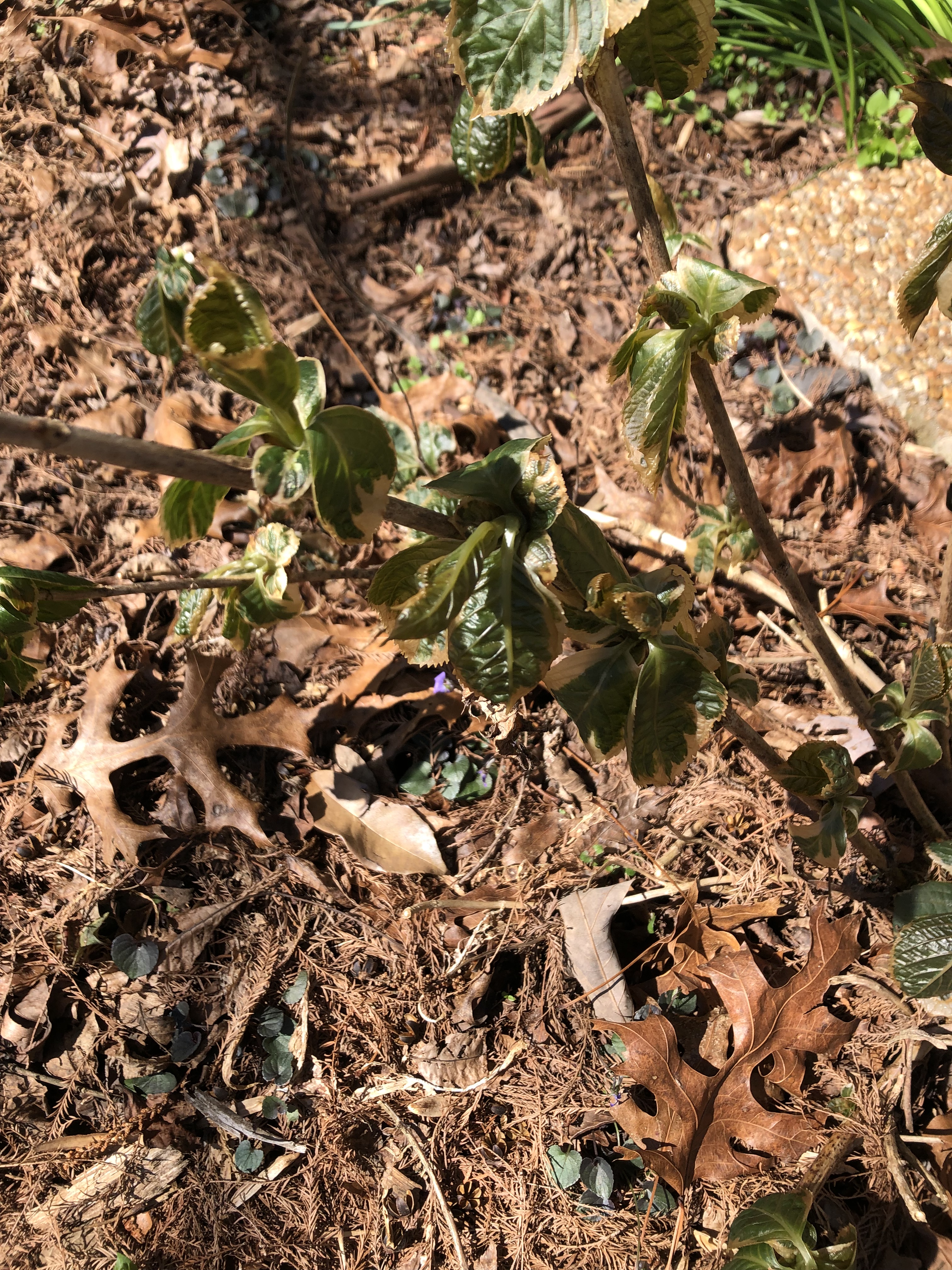
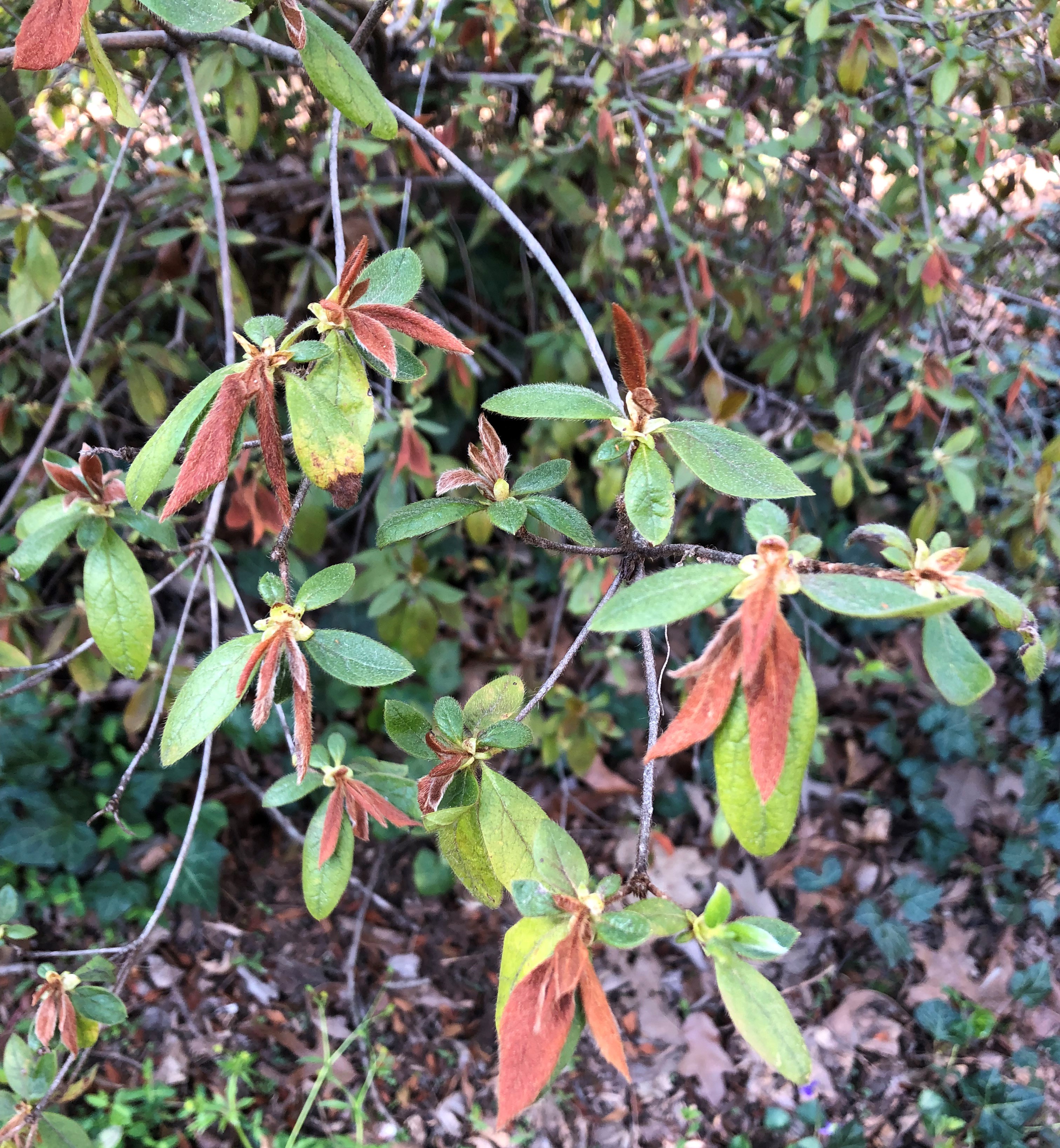
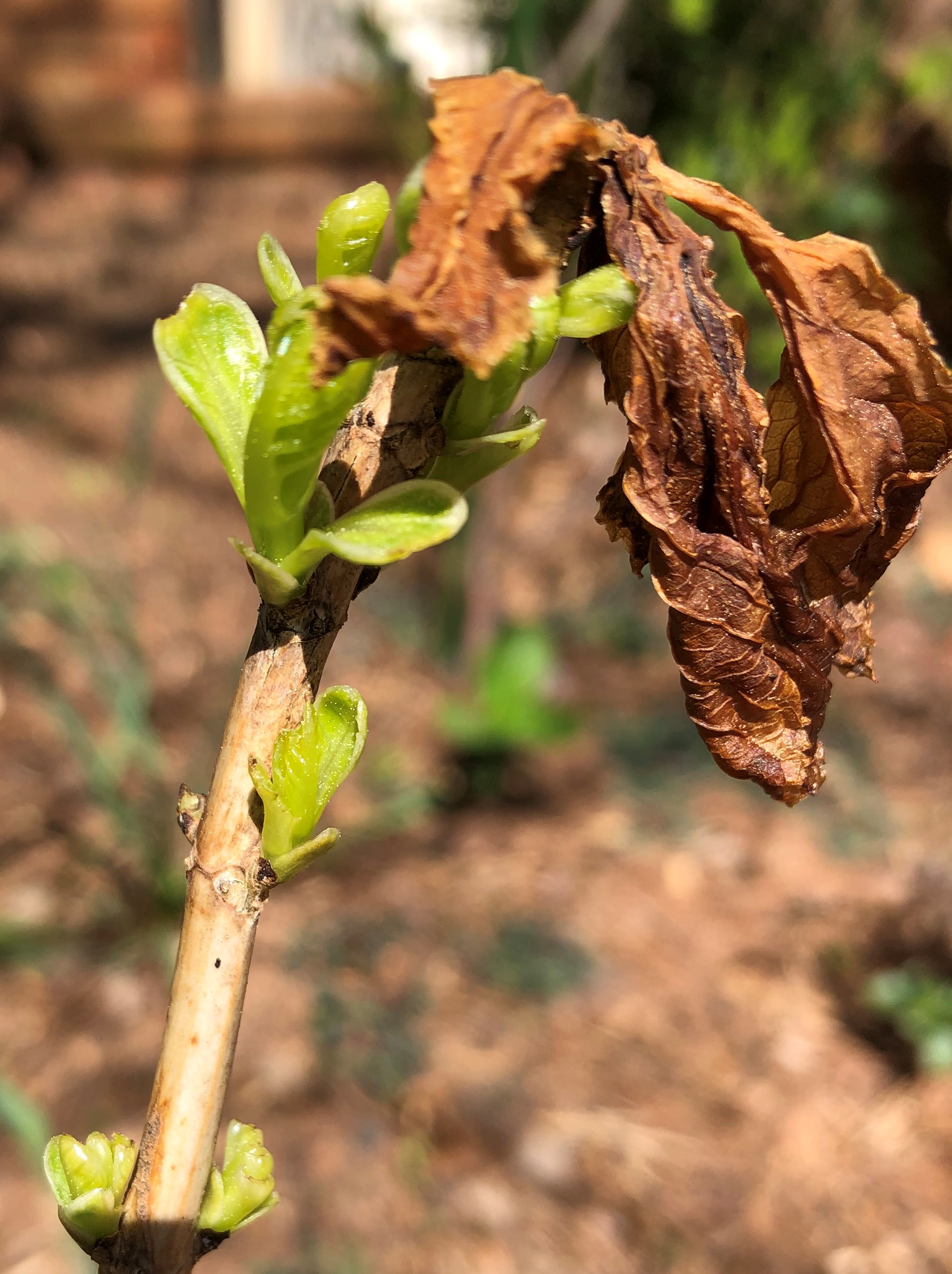
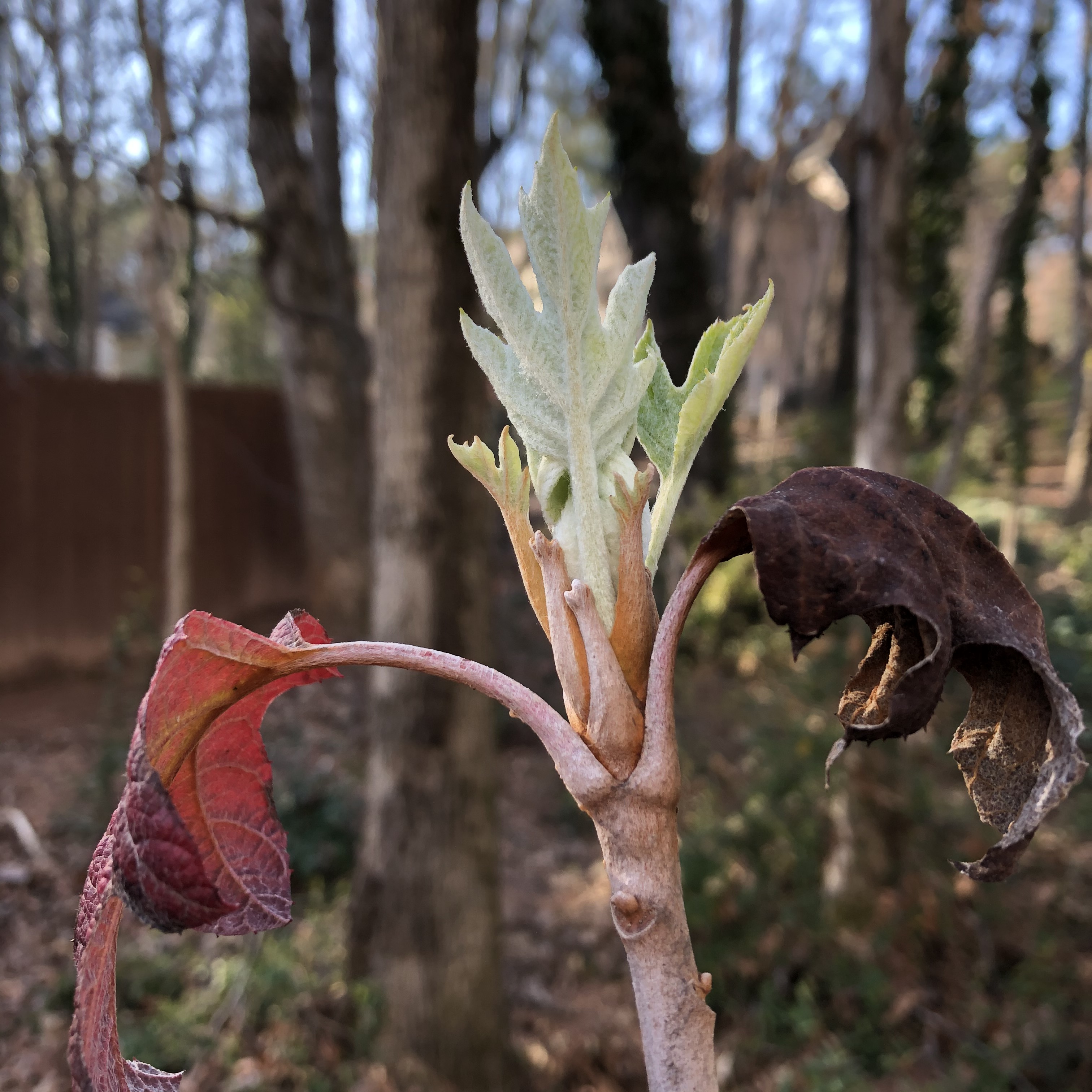
After successive nights of such cold, I walked my garden again to assess the damage. Some of my plant friends survived unscathed, while others bore significant evidence of the relentless cold. New leaves, bright green a few days before, hung brown and limp from branches. The first courageous flowers, zapped by the deep freeze, bore the same appearance.

Persistence

I’ve watched my plants undergo various hardships over the years – drought, hail, temperature extremes, both high and low – and am inspired by their will to live. Their perseverance is one of the things I like best about gardening, the thing that makes it such a hope-filled endeavor.

Despite my sorrow at seeing their injuries, I expect most will persist and begin to flourish again when more typical spring weather settles in. Some have already started to produce new leaves to replace the brown, lifeless ones. Even those that won’t be able to bear flowers this year will have the hope of doing so next year.

I’ve learned that as long as the roots and crown of perennials haven’t been damaged, the plants will survive.

Our Example

Scripture likewise praises perseverance, telling us that our suffering produces endurance, which in turn produces character, which then yields hope (Romans 5:3-4). James even goes so far as to counsel us to count it all joy when we encounter trials of various kinds because the testing of our faith produces steadfastness (James 1:2-3).

Jesus is our ultimate example of perseverance. He knew from before the foundation of the world what it would cost Him to save God’s chosen ones. Still, He came, humbling Himself by taking on flesh, enduring the punishment and mistreatment due to us, and remaining obedient to the point of death on the cross.

Why? For the joy set before Him. And what was that joy? Spending eternity with us in the presence of His Father! Think about that, dear readers. Marvel and wonder at it! Jesus, the spotless Lamb of God, endured far more than any of us will ever have to bear so we can be with Him forever. The writer of Hebrews urges us to consider him who endured from sinners such hostility against himself, so that (we) may not grow weary or fainthearted. In (our) struggle against sin, (we) have not yet resisted to the point of shedding (our) blood (Hebrews 12:3-4).

Though we’ll never have to bear the weight of God’s wrath because of Jesus’ sacrifice on our behalf, we will have troubles in this broken world, even times when we wonder how we’ll endure and if we’ll remain steadfast. But we’re never alone (John 16:33). Just like the plants whose outward appearance is alarming but whose roots are strong and healthy, those of us who are rooted and built up in Jesus will draw on His living water and bear much fruit for His glory despite setbacks, daunting conditions, and seasons of dormancy (Jeremiah 17:8). And one day, He’ll call us Home where we’ll flourish forever.

Thank You, Lord, for loving us unconditionally and sacrificially. You lived a sinless life yet became sin for us that we might be robed in Your righteousness, enduring unimaginable pain and separation from the Father so we’ll never have to (2 Corinthians 5:21). As we go through this Easter season, please help us take time to meditate on all it cost You to save us. May we follow Your example of perseverance so our faith roots grow strong and deep in the nourishing soil of Your presence.

Signs of Life

I have been crucified with Christ. It is no longer I who live, but Christ who lives in me. And the life I now live in the flesh I live by faith in the Son of God, who loved me and gave himself for me.
Galatians 2:20

Let All Creation Sing

Some years ago, I attended a horticulture conference where one of the speakers began her talk by saying, “Summer, fall, and winter are seasons. Spring is a miracle!”

I often think of her comment when we’re on the cusp of spring, anticipating the glorious bursting forth of foliage and flowers when all creation joins in a chorus of praise to the Creator, pointing us to Jesus’ resurrection.

Yet, even when I stroll my garden in the winter, weeks before the magnificent display of new life, I find signs of what will be. Leafless branches sport tiny buds, which will become the next season’s greenery. Flowering shrubs often set their buds months before they bloom. They sit patiently, awaiting the time of their awakening. After years of watching the cycle repeat, I look forward with confidence to the beauty to come.

I find bulbs and seeds to be equally remarkable. They don’t look like much, but each holds the promise of what it will become. Given time and the proper conditions, even the tiniest of seeds will produce a towering tree with branches to provide shelter for nesting birds (Mark 40:30-32).

His Life in Us

The introductory verse above from Galatians affirms the status of those who believe in Christ as Savior. We are alive in Him. And though we will continue to struggle with sin as long as we’re in the flesh, God already counts us righteous because of Jesus’ sacrifice. The Spirit is at work within us, with the same power that raised Jesus from the dead (Ephesians 1:19-20), transforming us more and more into the image of the Son.

Just as the promise of what will be resides in buds and bulbs and seeds, we have the assurance that He who began a good work in us will see it through to completion (Philippians 1:6).

Aspirations

The first half of Acts chapter 4 describes an occasion when Jewish religious leaders arrested Peter and John, then summoned them to give an account of healing a crippled man (Acts 4:1-22). No matter how much the leaders threatened them, they boldly proclaimed the power of Jesus and His resurrection, giving Him full credit for their ability to heal.

Verse 13 has always inspired me:  Now when they saw the boldness of Peter and John, and perceived that they were uneducated, common men, they were astonished. And they recognized that they had been with Jesus. (Emphasis mine.)

That’s me, common and ordinary, nothing of my own to boast about (Ephesians 2:8-9), but I want to look different – to captivate others with the beauty and aroma of Christ – because I’ve been with Him.  

Blessed to Be a Blessing

Both the current sermon series at our church[1] and a Bible study[2] I’m in have included the message that God chose a people for Himself, not to take them out of the world immediately, but to join Him in reconciling the nations to Himself.

While we live as sojourners between the now and not yet, we’re called to manifest signs of the life of Christ in us, always ready to give a reason for our hope (1 Peter 3:15). Paul tells us we’re God’s workmanship in Christ and that He prepared good works for us to carry out (Ephesians 2:10). According to James, good works provide evidence of a faith that’s alive and well (James 2:14-26).

Likewise, the fruit of the Spirit – love, joy, peace, patience, kindness, goodness, faithfulness, gentleness, and self-control –  reflects our abiding dependence on the One who makes all things new, including us.

So, dear readers, won’t you join me in endeavoring to embrace and embody who we are in Christ, that our lives might bear much fruit for Him?

Dear Lord, what a gift You give us in the beauty of springtime when reminders of Jesus’ resurrection are all around us. Thank You for the assurance we have in Him that we too will be raised to eternal life. Until then, please help us to exhibit unmistakable signs of His life in us to a watching world.


[1] “Our Shared Life and Mission in the Peacemaking Christ, A Sermon Series in Ephesians,” Pastor David Donovan, Grace Covenant Church.

[2] “From Garden to Glory,” Courtney Doctor, Committee on Discipleship Ministries, 2016.

Inside Job

Do not let your adorning be external—the braiding of hair and the putting on of gold jewelry, or the clothing you wear— but let your adorning be the hidden person of the heart with the imperishable beauty of a gentle and quiet spirit, which in God’s sight is very precious.
1Peter 3:3-4

A Reasonable Request

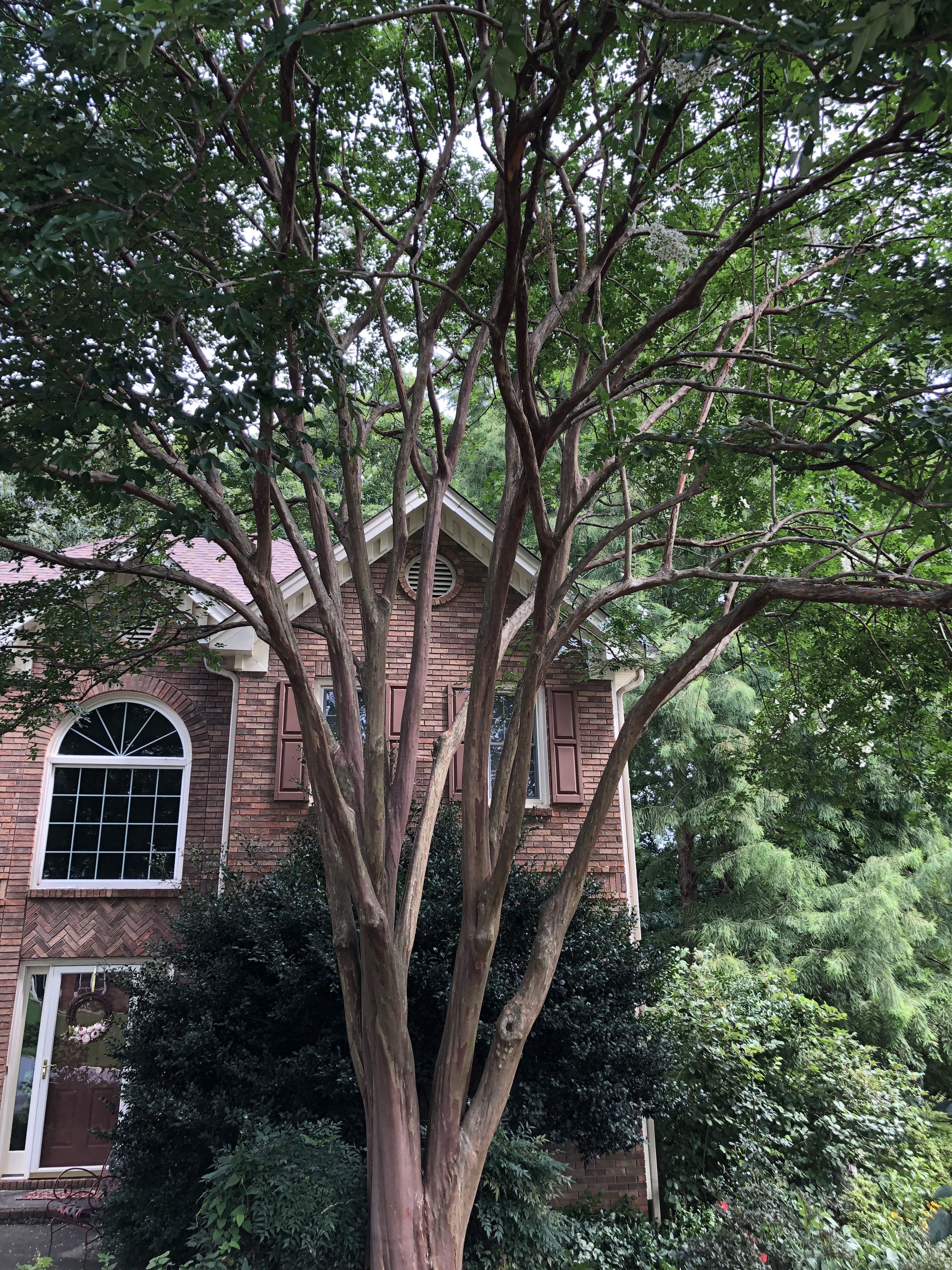
As longtime readers of my blog know, I have a number of treasured plants on my small suburban property, many of which were planted by my late husband, Ray. Although it’s impossible for me to pick a favorite, my beautiful crape myrtle ranks high on the list. This isn’t the first post inspired by the beloved plant and probably won’t be the last.[1]

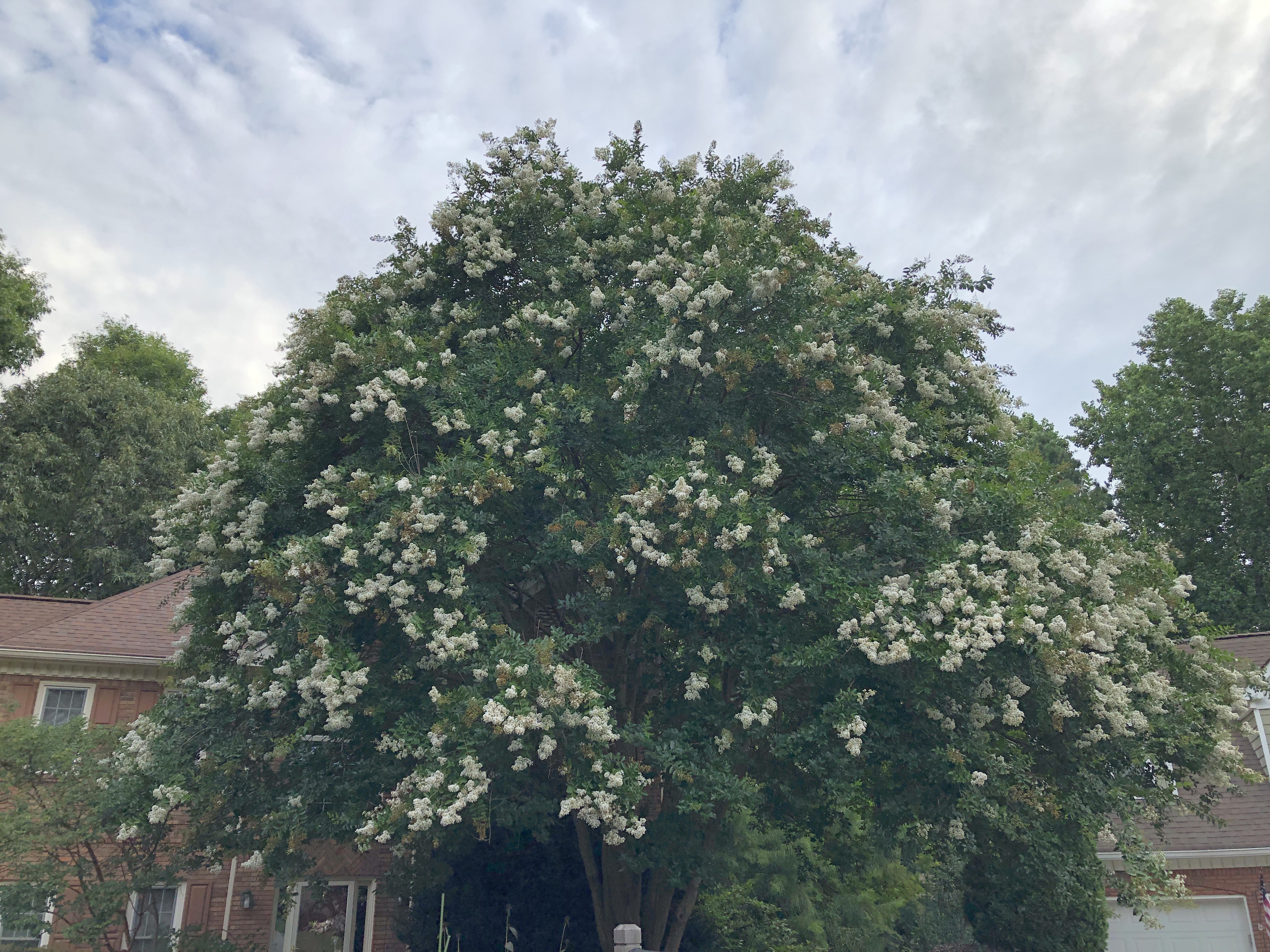
The stately ‘Natchez’[2] was a mere toddler when Ray planted it over 25 years ago. It now reaches the roofline of my two-story house, and its canopy is almost as wide as the tree is tall. My neighbors have been patient with branches that grew over the property line, only to drop tiny white blossoms on their driveway each summer. But, alas, they received a letter from our HOA about a related matter, which led them to kindly request that I have the offending limbs removed.

As one who’s known far and wide for my annual late-winter plea, “No crape murder!”, I could feel panic rising within me upon hearing my neighbor’s request.  I calmly assured him I would take care of it, but my thoughts were churning. Who could I trust to do the necessary work without maiming my beautiful tree? I had to find someone who would respect the tree and understand its intrinsic value. I needed an arborist.

Professional Help

I called a reputable company whose client list includes the Atlanta Botanical Garden. The first thing their associate said as he exited his vehicle and strode toward me boosted my confidence. Surveying the array of plants in my front garden, he declared approvingly, “I can see you don’t have a typical neighborhood property.” When he proceeded to call one of my unique specimen plants by its proper name, I knew I’d contacted the right people.

Even though our subsequent conversations further allayed my fears, an undercurrent of anxiety developed as pruning day approached. The 3-person crew arrived promptly at 8 a.m. My cheerful greeting belied the angst I was feeling, but it was evident the young man carrying the chain saw had been briefed not only on the work to be done but also on the tree’s significance.

I went inside, leaving the arborist and his helpers to their work. Even though they labored for nearly three hours, I resisted the urge to go back outside. I occasionally peeked out windows instead to check on their progress. I prayed for their safety – and that I’d still recognize my tree when they were finished.

I finally ventured out, preparing myself for whatever I might encounter. The sight of my tree left me speechless. It was gorgeous. I imagined the majestic tree, relieved of its extra weight and ragged branches, sighing in relief, much as I did after my first post-Covid-shutdown haircut.

As I stood next to the sturdy trunk, gazing up into the magnificent canopy, I realized much of the work had taken place on the inside. Before the pruning, anyone viewing the crape myrtle from the street would have seen its lush, flower-laden canopy. But what they couldn’t see were the dead branches, crossed limbs, and water shoots[3], which were neither attractive nor beneficial.

In the Master’s Hands

As frequently happens when I’m working in my garden, the Lord brought to mind a spiritual connection – in this case, the type of beauty we’re called to cultivate. It’s right to care for our bodies and be good stewards of our physical selves. Yet we often spend an excessive amount of time and money making sure our outsides are beautiful while neglecting the seat of true beauty, our hearts.

Sometimes we’re blind to the ugliness within. Then again, we recognize it and attempt to cover it up. Or,  we may apply pitiful bandaids to our deep heart wounds, seeking to heal ourselves in ways that are temporary at best or harmful at worst. But, just as the crape myrtle outgrew me long ago, making it impossible for me to do the necessary pruning, there’s no way for us to cultivate the beauty of the soul that’s precious in the Lord’s sight without the sanctifying power of the Spirit.

Praise God for blessing believers with that very power! First, the Spirit enlightens the eyes of our hearts that we might see aright (Ephesians 1:16-18). Then the same power that raised Jesus from the dead continues to work in us (Ephesians 1:19-20) to will and do His good pleasure (Philippians 2:13). Though our outer selves decline with age, our inner selves are renewed day by day (2 Corinthians 4:16), becoming increasingly beautiful as we are transformed more and more into the image of Jesus (2 Corinthians 3:18).

Though the transformation process may be rigorous at times and require significant pruning (John 15:1-2), we can trust the One Who loves us more than we can comprehend (Ephesians 3:18-19). He knows what it will take to bring out the beauty He already sees in us and will be faithful to finish what He’s begun (Philippians 1:6).

Dear Lord, thank You for the gift of Your Spirit at work within us to create imperishable beauty. May that beauty be evident in quiet, gentle spirits that bless others and draw them to You.  


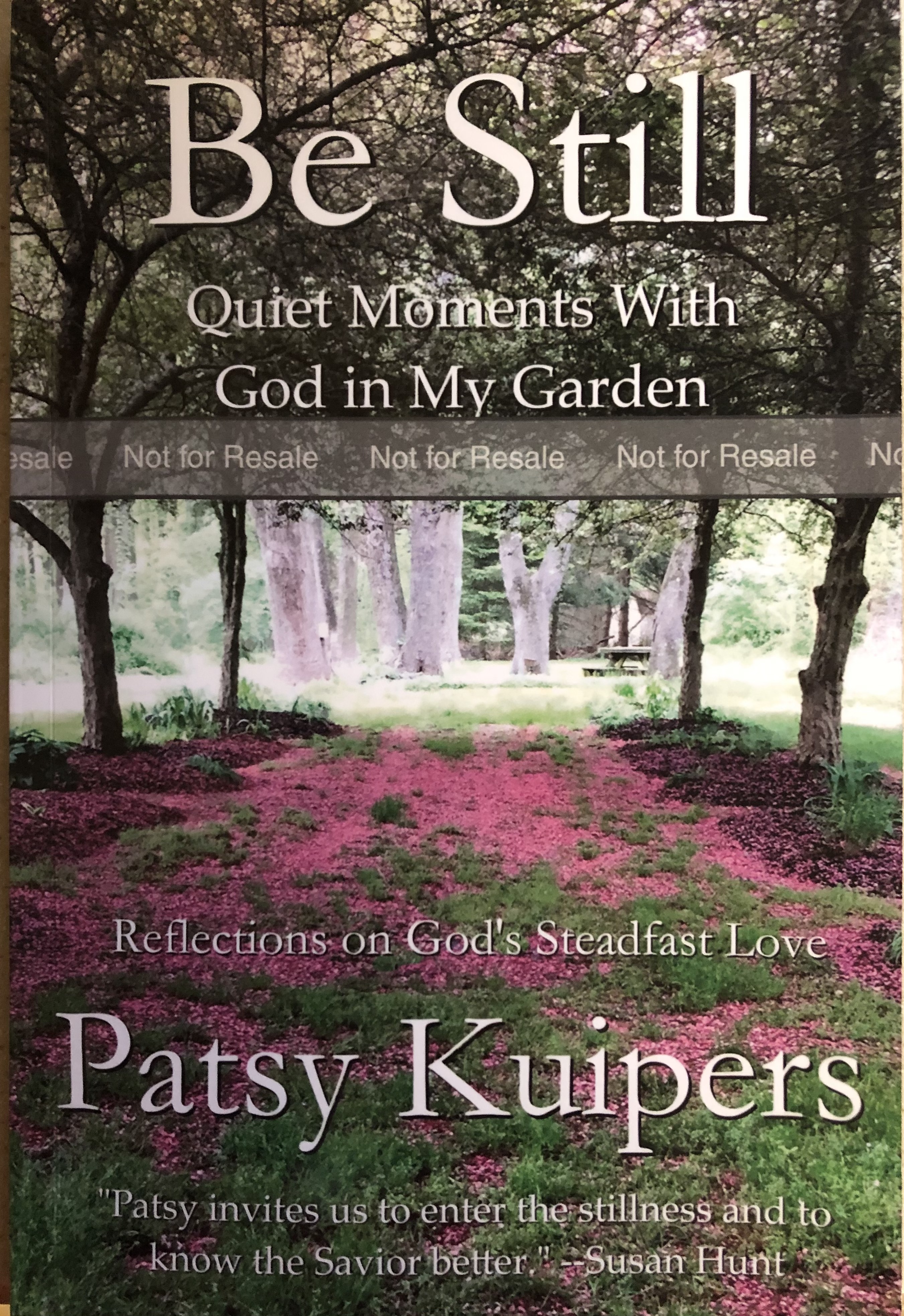
[1] I included several as devotions in my book, Be Still, Quiet Moments With God in My Garden. See for example, “Prudent Pruning” (Archives, October 2020), “Exfoliation – Reprise” (Archives, September 2020), and “Bearing All Things” (Archives, February 2017).

[2] Lagerstroemia indica x fauriei ‘Natchez’

[3] Water sprouts or water shoots are shoots that arise from the trunk of a tree or from branches that are several years old, from latent buds.

A Book Is Born

094

Dear Readers,

It is with great joy that I announce my first book, Be Still, Quiet Moments With God in My Garden, went live on Amazon this morning. I want to write something profound about the process and journey of getting to this point, but I’m feeling so overwhelmed with wonder and gratitude that God has allowed me to fulfill this dream that I can’t get the words to line up in my mind or on the page. There’s just a happy jumble of thoughts and emotions tumbling around in my heart as tears of amazement well up repeatedly and blur my vision.

So, for now, I’ll share the author’s note from the book and say a sincere, “Thank you!” to all of you who’ve read my blog posts, encouraged me to keep writing, and prayed for me as I labored over Be Still. I pray the Lord will use my stories and my efforts for His glory.

Blessings to you and yours as we enter into this Advent season.

Author’s Note

Come to me, all who labor and are heavy laden, and I will give you rest. Take my yoke upon you, and learn from me, for I am gentle and lowly in heart, and you will find rest for your souls.
Matthew 11:28-29

Scattered. A word I often use to describe my thoughts, my activities, and my days. Numerous distractions and responsibilities vie for attention. They scramble my mind and weary my soul. But there’s a place I can turn to for solace, a place where I spend some of my sweetest times with the Lord – my garden. There I’m reminded of the first garden and the promise of a new, redeemed garden. I see Jesus’ parables come to life as I observe the flowers and birds, the seasons and soils. My spirit soars as I behold God’s tremendous power, yet is quieted by the assurance that the One who cares for all creation also cares for me.

Several years ago, the lessons I’ve learned in my garden met up with my love of writing, and I began a blog, Back 2 the Garden (patsykuipers.com). I longed to share what God had been teaching me and to tell others of His great love and faithfulness.

As my portfolio of stories grew, so did the dream to compile them into a book, something that will be around for my children and grandchildren even after my blog and I are not.  Five years in the making, Be Still is the fulfillment of that dream.

I’ve arranged the 35 devotional readings in Be Still in five categories, with distinct yet intertwined themes:

  • Glimpses of Glory – evidence of God’s love all around us
  • The Benevolent Gardener – God’s protection and provision
  • Planted Together – principles for life-giving relationships
  • Cultivating Holiness – disciplines of spiritual growth
  • Transformation – God’s work of sanctification

Each entry begins with a passage from the Bible and ends with a brief prayer. In between, you’ll find the timeless truths of Scripture wrapped in simple stories. I pray they will encourage you to slow down and open your eyes to the wonders all around us, to be still and draw near to God.

Bearing Fruit

For no good tree bears bad fruit, nor again does a bad tree bear good fruit, for each tree is known by its own fruit. For figs are not gathered from thornbushes, nor are grapes picked from a bramble bush. The good person out of the good treasure of his heart produces good, and the evil person out of his evil treasure produces evil, for out of the abundance of the heart his mouth speaks.
Luke 6:43-45

Identifying Features

Before I studied horticulture, I tried to identify trees by their leaves. Don’t get me wrong, leaves are important identifiers for many species, but they can be misleading in others. When botanists classify plants, they look instead at their reproductive structures –  flowers, fruit, and seeds.

Although oak leaves come in different shapes, all oaks sprout from acorns. Likewise, there are numerous forms of maple leaves, not just the classic silhouette that appears on the Canadian flag. But all maple seeds are borne in samaras, those little winged carriers that float to the ground like tiny helicopters.

Once I learned this, it became a fun game to see if I could spot similarities between plants at the botanical garden where I volunteered. I first noted the flowers on  Abutilon with their crepe paper-like petals resemble dwarf hibiscus blossoms. Despite the shape of its leaves, which leads to one of its common names, flowering maple, Abutilon is part of the Malvaceae family, as are hibiscus and okra.

Next, I noticed the tiny white bell-shaped flowers on  Pieris japonica look like those on a small tree, known as farkleberry, and both resemble those on blueberry bushes. Those three belong to the Ericaceae family.

The more I studied, the easier it became to see the distinguishing characteristics and successfully match plants with their relatives. I wondered why I found it to be so gratifying, musing that it must be because family, both biological and spiritual, is so important to me.

Family Resemblance

Just like we can recognize plants by their fruit, Jesus taught that members of His family would bear distinguishing fruit as well, and He made it clear the only way to bear abundant spiritual fruit was to abide in Him:

Abide in me, and I in you. As the branch cannot bear fruit by itself, unless it abides in the vine, neither can you, unless you abide in me.  I am the vine; you are the branches. Whoever abides in me and I in him, he it is that bears much fruit, for apart from me you can do nothing. John 15:4-5

I’m frequently reminded of His statement when I’m pruning. I sometimes leave piles of discarded branches on the ground and then go back to collect them after I finish cutting. Inevitably, the leaves on the severed limbs are already beginning to wilt. The longer the time apart from their source of nourishment and the hotter the day, the quicker their demise. They can no longer live, much less produce fruit.

When I think of abiding, I think of peace – no striving or struggling. The word appears ten times in verses 4 to 10 of John 15, emphasizing the permanence of our relationship with Christ as well as the eternal significance of the fruit we bear. Securely connected to the Giver of Life, His life flows through us to bless and benefit others, all to the praise of His glory.

Distinctive Fruit

And what kind of distinct fruit do we produce when we abide in Him? Love, joy, peace, patience, goodness, kindness, gentleness, faithfulness, self-control (Galatians 5:22-23). All are marks of God’s children, but one outshines them all – love. Jesus prayed that the love He and the Father shared would dwell richly in His followers (John 17:26). That singular mark of distinction would allow all people to identify them as being part of God’s family (John 13:35).

He also warned against false prophets, those seeking to deceive. Like leaves that mimic those of other plants, their outward appearance may initially camouflage their deceit. But closer inspection of the fruit borne of the evil intent in their hearts will give them away, ultimately leading to their destruction (Matthew 7:15-20).

Not so the children of God who bear fruit in keeping with repentance and shine as lights in this dark world (Ephesians 5:8-11).

O Lord, what a privilege it is to be a branch on Your family tree. We bear the imprint of the true Vine, Whose life in us allows us to bear abundant fruit of eternal value.

Superfood for the Soul

But Jesus answered, “It is written, ‘Man shall not live by bread alone, but by every word that comes from the mouth of God’”
Matthew 4:4

Unequal  Options

From the time he was big enough to sit in his highchair, grandson Joshua and I have enjoyed watching the birds flock to the feeder his dad had hung from their deck. Not wanting to be left out of the fun, I added “birdfeeder” to my Christmas list several years ago. My dad fulfilled my wish, launching a pastime that’s given me hours of enjoyment since.

Being a novice faced with multiple options, I didn’t know what kind of food to buy. I settled on a bag of Southern Regional Blend. The tagline on the bag declared, “blended to attract Southern songbirds,” while another statement promised “25% sunflower plus safflower” seeds. However, a closer look at the ingredients list revealed millet to be the predominant component.

I chose a location for the feeder where I could keep an eye on it from two key vantage points: the window above the kitchen sink and my seat at the table. I filled the feeder and awaited the birds’ arrival with joyful expectancy. It took a couple of days for them to notice the new food source, but one morning a red-bellied woodpecker arrived, followed by several tiny chickadees and some tufted titmice.

I mentioned my new hobby to a fellow bird-feeding friend who promptly shared some of his stash of many birds’ favorite food: black oil sunflower seed. I gradually transitioned the contents of the feeder from the original blend until it contained only that delicacy. The changeover led to increased activity around the feeder and attracted a wider variety of birds.

In the years since, I’ve become more knowledgeable about the preferences of different birds. I’ve added suet, thistle seeds, and a premium blend containing peanuts and striped sunflower seeds to the bird buffet.

Soul Food

Observing my feathered visitors, I’ve reflected on the options available to us when it comes to nourishing our souls. We’re blessed to live at a time when technology allows us to access spiritual teaching in many different ways – podcasts, blogs, and books, both printed and electronic. Yet, with such an assortment of choices available, we need to be discerning consumers.

Just like the components in the blend of seeds I originally purchased varied dramatically in nutritional value, some lessons are little more than filler. We must be careful not to feast on snack food when we require a diet of sound teaching instead. The Apostle Peter confirmed the importance of feeding our souls with the proper nourishment. He urged those who received his letter to crave pure spiritual milk, like infants hungering for their mothers’ milk, that they would grow strong in their faith (1 Peter 2:2).

Praise God for providing His inerrant Word, the standard against which all other instruction is to be measured. Scripture is

  • profitable for teaching, rebuking, correcting, and training in righteousness, capable of equipping us for every good work (2 Timothy 3:16-17).
  • living and active, sharper than any two-edged sword, piercing to the division of soul and spirit, of joints and marrow, and discerning the thoughts and intentions of the heart (Hebrews 4:12).
  • able to accomplish the purposes of God and never return to Him void (Isaiah 55:11).

Given the power of this spiritual superfood, it’s no wonder Jesus deflected Satan’s temptation to turn stones into bread by affirming the real source of our sustenance – every word that comes from the mouth of God.

In his second letter to Timothy, the Apostle Paul warned that a time would come when people would no longer listen to the truth but instead turn to teachers who told them what they wanted to hear (2 Timothy 4:3-4). Like my friend who enlightened me when it came to feeding the birds, may we faithfully point fellow believers to the supreme soul food found in the Word of God.

O Lord, how blessed we are to have Your Word to guide and sustain us! Thank You for providing many ways for us to receive spiritual nourishment. Please help us to make Your Word the benchmark against which we evaluate the nutritional value of all other sources.