For everything there is a season, and a time for every matter under heaven: a time to be born, and a time to die; a time to plant, and a time to pluck up what is planted; a time to kill, and a time to heal; a time to break down, and a time to build up; a time to weep, and a time to laugh a time to mourn, and a time to dance; a time to cast away stones, and a time to gather stones together; a time to embrace, and a time to refrain from embracing; a time to seek, and a time to lose; a time to keep, and a time to cast away; a time to tear, and a time to sew; a time to keep silence, and a time to speak; a time to love, and a time to hate; a time for war, and a time for peace. Ecclesiastes 3:1-8
Nature’s Seasons
I once attended a presentation where the speaker began with, “Summer, fall, and winter are seasons – spring is a miracle.” I’ve thought about her comment every spring since. Early warm spells begin to nudge plants from their winter slumber in January here in the South. Witchhazel, Lenten roses, and paperbush start the floral parade that continues for multiple weeks as plants take turns in the spotlight. Trees, flowers, baby birds – all embody the joyful message of rebirth, which in turn stimulates hope and rejuvenation in us.
But spring gives way to summer, and tender ephemerals disappear for another year as heat-loving specimens flourish. Summer annuals and perennials bloom, then set and disperse their seeds before beginning their decline. Fall arrives. Crops are ripe for harvest, the fruit of spring planting and summer tending. Soon daylight hours decrease, as does the temperature, and autumnal leaves create a riotous display of color – one last hurrah before they let go and blanket the ground for the winter.
Ah, winter. Based on my observations, I’ve concluded it is the most misunderstood, under-appreciated season, at least from a gardening standpoint. Those unfamiliar with the ways of plants scan the leafless, apparently lifeless landscape and pronounce, “everything’s dead.” I used to think that too, but my horticulture studies dissuaded me from that notion. For instance, some seeds won’t germinate without scarification, some bulbs won’t bloom without adequate chill time, and many plants depend on the decreased daylight and increased darkness that accompany winter to flower at the appropriate time.
My newfound knowledge has given me a different perspective. Now when I contemplate winter vistas, I prefer to think the plants are resting while building reserves for the next season of fruitfulness.
Seasons of the Soul
Contemplating the bedraggled state of my summer annuals one early-September day reminded me of a book I’d been reading. Instead of equating the aging process with seasons as is often done, author Mark Buchanan explores what he’s deemed “cycles in our hearts.” In Spiritual Rhythm, Being with Jesus Every Season of Your Soul, he describes different periods in our lives in terms of the four seasons, each with its own set of challenges and blessings, each necessary if we’re to bear fruit.
The friends who gave me the book thought the analogy would resonate with me because of my love of gardening. And so it does. Year after year, I’ve observed and anticipated the changes, as one season follows another, each dependent on the ones that precede.
Sometimes I think it would be nice to live in a constant state of springtime, emotionally and spiritually speaking – productive, energetic, surrounded by resurgent, hope-producing, joy-filled circumstances. But like the plants, God knows we need all the seasons to produce abundant fruit and to become more like Jesus.
We need to slow down and be still, to rest and draw near to God in all seasons, but we’re most likely to do so during the winters of our souls – times of loss and suffering. For it’s then we realize our utter reliance upon God, a dependence present every moment, but most evident when we come to the end of our supposed self-sufficiency.
My own winters have convinced me of the veracity of Elisabeth Elliot’s declaration, “The deepest things that I have learned in my own life have come from the deepest suffering. And out of the deepest waters and the hottest fires have come the deepest things that I know about God.” (1)
Yet, like the trees and flowers, I’ve emerged able to bear more fruit, because I know my Father and His ways more intimately (Romans 5:3-5). Signs of life return, as our winter gives way to another cycle of spring planting, summer tending, fall harvesting, a cycle that will continue in us and the natural world until our final winter. Our bodies will rest in the ground, waiting for reunion with our souls when we’re called Home, glorified, and welcomed into the joy of eternal spring (1 Thessalonians 4:13-16).
Dear Lord, just as we savor the changing of the seasons in the natural world, please help us to embrace the seasons of our souls, knowing that You have a purpose and plan for each as the cycles of our lives continue until Jesus’ return.
(1) Elisabeth Elliot, “Suffering is Never for Nothing”, lecture series, 1989.
 Last year, my daughter, Mary, helped start an American Heritage Girls troop at her church and serves as one of the leaders. Each week, Mary and my granddaughters, Lyla and Emma, look forward to meeting with their friends. They engage in a variety of activities as they work toward the organization’s goal of developing Christ-like character and leadership skills.
 After a long period of separation related to coronavirus restrictions, the troop began meeting again last month. Though always vital, the skills they’re learning to earn their Emergency Preparedness badge seem especially appropriate during this time of uncertainty. They’ve talked about stranger danger, paid a virtual visit to a local fire station, and got an up-close look at an ambulance, all while discussing how to help themselves and others during emergency situations.
 My maternal grandfather was born 130 years ago today. This post, in honor of his birthday, is a meditation on enduring love and includes some reflections published in previous posts.
 During a recent reconnaissance walk through my woods, I discovered a patch of passionflower vine. Though it chose to pop up on its own, I was delighted to see it since it’s the food source for caterpillars of Gulf Fritillary butterflies. The petite vine was already sprouting tendrils and reaching out for support. I smiled and shook my head when I found one tiny green appendage wrapped around a leaf lying on the ground. Even though the tendril had a stranglehold on the leaf, the latter could never help the passionflower rise above the ground.
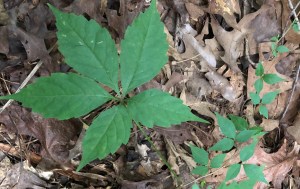 Virginia creeper, a native vine with 5-leaved adult foliage, is sometimes mistaken for poison ivy, because its juvenile foliage frequently has three leaves, like the pesky purveyor of itch-producing oil. Its ability to scale walls and tree trunks thanks to holdfasts that act like sticky toes, reminds me of the tiny lizards I see scampering up the bricks on the front of my house. Though both plant and critter are capable of ascending considerable heights, they’re easy to dislodge.
 Multiple members of my generation love tending plants, as do a number of our children and grandchildren. Recognizing our shared passion, I smile when cousins post pictures of their gardens, sometimes with young offspring sampling produce fresh from the vine.
 I launched Back 2 the Garden six years ago today with “Consider It Pure Joy”. (July 2014 Archives) My venture into the world of blogging was fueled by a desire to use my God-given writing ability to tell whoever would read my words of His great love and faithfulness. I wanted to encourage others with the promises and assurances God has brought to my mind as I’ve dealt with challenges stemming from widowhood, job loss, family illnesses, the deaths of beloved friends and family members, and world events.
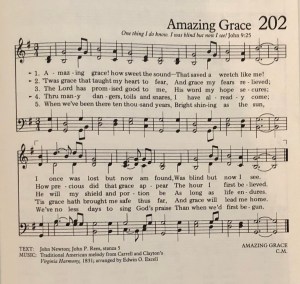 When my grandchildren were born, I continued the tradition their grandfather and I began with their mother, soothing them to sleep with Amazing Grace, planting seeds of faith from their earliest days. Six-year-old granddaughter Lyla is prone to humming as she works on a craft project or tackles one of her small household chores. I believe it’s an overflow of her happy heart. Occasionally she’ll sigh, “I’ve got this song stuck in my head!”
 My curiosity piqued, I had to look. After all, I hadn’t officially settled into my quiet time. The glance confirmed my hunch. Daughter Jessie sent a photo to me and her older sister, Mary, with the comment, “Fun game! Let me know when you spot it.”
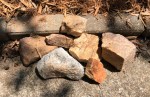 And then there were rocks to deal with, some too big to dig up, others temporary yet annoying obstacles. The distinct clank of the shovel hitting their unyielding surfaces accompanied Ray’s efforts to install carefully-chosen plants.
 Born and raised in South Dakota farm country, Ray was accustomed to soil so rich it’s nearly black. When we lived in Delaware we would occasionally get a load of mushroom compost to top dress the yard – smelly, but effective when it came to adding nutrients to the soil. These experiences plus his horticulture degree informed Ray there would be no shortcut when it came to improving the hardpan he’d been left with. Thus he began the tedious process of amending the clay by tilling in top soil and compost.
 Back 2 the Garden