For everything there is a season, and a time for every matter under heaven: a time to be born, and a time to die; a time to plant, and a time to pluck up what is planted; a time to kill, and a time to heal; a time to break down, and a time to build up; a time to weep, and a time to laugh a time to mourn, and a time to dance; a time to cast away stones, and a time to gather stones together; a time to embrace, and a time to refrain from embracing; a time to seek, and a time to lose; a time to keep, and a time to cast away; a time to tear, and a time to sew; a time to keep silence, and a time to speak; a time to love, and a time to hate; a time for war, and a time for peace. Ecclesiastes 3:1-8
Nature’s Seasons
I once attended a presentation where the speaker began with, “Summer, fall, and winter are seasons – spring is a miracle.” I’ve thought about her comment every spring since. Early warm spells begin to nudge plants from their winter slumber in January here in the South. Witchhazel, Lenten roses, and paperbush start the floral parade that continues for multiple weeks as plants take turns in the spotlight. Trees, flowers, baby birds – all embody the joyful message of rebirth, which in turn stimulates hope and rejuvenation in us.
But spring gives way to summer, and tender ephemerals disappear for another year as heat-loving specimens flourish. Summer annuals and perennials bloom, then set and disperse their seeds before beginning their decline. Fall arrives. Crops are ripe for harvest, the fruit of spring planting and summer tending. Soon daylight hours decrease, as does the temperature, and autumnal leaves create a riotous display of color – one last hurrah before they let go and blanket the ground for the winter.
Ah, winter. Based on my observations, I’ve concluded it is the most misunderstood, under-appreciated season, at least from a gardening standpoint. Those unfamiliar with the ways of plants scan the leafless, apparently lifeless landscape and pronounce, “everything’s dead.” I used to think that too, but my horticulture studies dissuaded me from that notion. For instance, some seeds won’t germinate without scarification, some bulbs won’t bloom without adequate chill time, and many plants depend on the decreased daylight and increased darkness that accompany winter to flower at the appropriate time.
My newfound knowledge has given me a different perspective. Now when I contemplate winter vistas, I prefer to think the plants are resting while building reserves for the next season of fruitfulness.
Seasons of the Soul
Contemplating the bedraggled state of my summer annuals one early-September day reminded me of a book I’d been reading. Instead of equating the aging process with seasons as is often done, author Mark Buchanan explores what he’s deemed “cycles in our hearts.” In Spiritual Rhythm, Being with Jesus Every Season of Your Soul, he describes different periods in our lives in terms of the four seasons, each with its own set of challenges and blessings, each necessary if we’re to bear fruit.
The friends who gave me the book thought the analogy would resonate with me because of my love of gardening. And so it does. Year after year, I’ve observed and anticipated the changes, as one season follows another, each dependent on the ones that precede.
Sometimes I think it would be nice to live in a constant state of springtime, emotionally and spiritually speaking – productive, energetic, surrounded by resurgent, hope-producing, joy-filled circumstances. But like the plants, God knows we need all the seasons to produce abundant fruit and to become more like Jesus.
We need to slow down and be still, to rest and draw near to God in all seasons, but we’re most likely to do so during the winters of our souls – times of loss and suffering. For it’s then we realize our utter reliance upon God, a dependence present every moment, but most evident when we come to the end of our supposed self-sufficiency.
My own winters have convinced me of the veracity of Elisabeth Elliot’s declaration, “The deepest things that I have learned in my own life have come from the deepest suffering. And out of the deepest waters and the hottest fires have come the deepest things that I know about God.” (1)
Yet, like the trees and flowers, I’ve emerged able to bear more fruit, because I know my Father and His ways more intimately (Romans 5:3-5). Signs of life return, as our winter gives way to another cycle of spring planting, summer tending, fall harvesting, a cycle that will continue in us and the natural world until our final winter. Our bodies will rest in the ground, waiting for reunion with our souls when we’re called Home, glorified, and welcomed into the joy of eternal spring (1 Thessalonians 4:13-16).
Dear Lord, just as we savor the changing of the seasons in the natural world, please help us to embrace the seasons of our souls, knowing that You have a purpose and plan for each as the cycles of our lives continue until Jesus’ return.
(1) Elisabeth Elliot, “Suffering is Never for Nothing”, lecture series, 1989.
 Multiple members of my generation love tending plants, as do a number of our children and grandchildren. Recognizing our shared passion, I smile when cousins post pictures of their gardens, sometimes with young offspring sampling produce fresh from the vine.
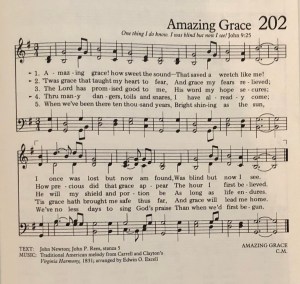 When my grandchildren were born, I continued the tradition their grandfather and I began with their mother, soothing them to sleep with Amazing Grace, planting seeds of faith from their earliest days. Six-year-old granddaughter Lyla is prone to humming as she works on a craft project or tackles one of her small household chores. I believe it’s an overflow of her happy heart. Occasionally she’ll sigh, “I’ve got this song stuck in my head!”
 My curiosity piqued, I had to look. After all, I hadn’t officially settled into my quiet time. The glance confirmed my hunch. Daughter Jessie sent a photo to me and her older sister, Mary, with the comment, “Fun game! Let me know when you spot it.”
 I placed one handful of leaves after another into the big brown yard debris bag. Then, Wait! What’s that? I detected flecks of green amidst the weathered leaf litter. Perennials Ray planted were beginning to emerge from the soil. Seeing those tiny-but-determined plants sparked hope within me. If they could make it through the cold, stark winter, maybe I would survive my season of darkness.
 Last week, when I wrote “It is Well”, I figured everything that was going to suspend operations and activities had done so. Wrong! Notices of closings and cancellations continued to mount up, though at a slower pace. I found myself turning repeatedly to the passages I included in that post, truth to combat fear and quell anxious thoughts.
 I’ve also been outside more, strolling through my neighborhood, working in my garden. I’ve seen sidewalks chalked with cheerful messages. Encouraging posts fill my Facebook feed. And earlier today I joined my neighbors for a hymn sing as we gathered, socially-distanced, outside our piano-playing neighbor’s home. God is working difficult circumstances for good. He always does. (Romans 8:28)
 In the midst of the uncertainty surrounding COVID-19, spring is here, full of hope and visible reminders of God’s goodness. I’ll let photos, scripture passages, and hymn lyrics do the talking for the rest of this post – my offering of praise to the One who lovingly sustains us, my contribution to the thread of encouragement weaving its way through social media.
 “Fairest Lord Jesus, Ruler of all nature, O Thou of God and man the Son; Thee will I cherish, Thee will I honor, Thou my soul’s glory, joy, and crown. Fair are the meadows, Fairer still the woodlands, Robed in the blooming garb of spring: Jesus is fairer, Jesus is purer, Who makes the woeful heart to sing.”
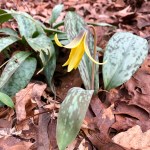 Consider the lilies of the field, how they grow: they neither toil nor spin, yet I tell you, even Solomon in all his glory was not arrayed like one of these. (Matthew 6:28a-29)
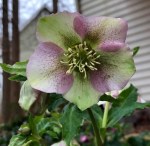 Why are you cast down, O my soul, and why are you in turmoil within me? Hope in God; for I shall again praise him, my salvation and my God. (Psalm 42:11)
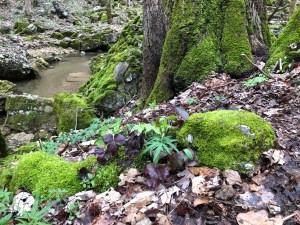 “O Lord my God, when I in awesome wonder Consider all the words They hands have made, I see the stars, I hear the rolling thunder, Thy pow’r throughout the universe displayed. When thro’ the woods and forest glades I wander And hear the birds sing sweetly in the trees, When I look down from lofty mountain grandeur, And hear the brook and feel the gentle breeze. Then sings my soul, my Saviour God, to Thee; How great Thou art, how great Thou art! Then sings my soul, my Savior God, to Thee: How great Thou art, how great Thou art!”
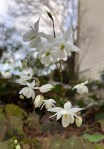 I will praise the name of God with a song; I will magnify him with thanksgiving . . . Let heaven and earth praise him, the seas and everything that moves in them. (Psalm 69:30, 34)
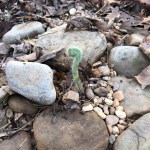 “This is my Father’s world, And to my listening ears All nature sings, and round me rings The music of the spheres. This is my Father’s world: I rest me in the thought Of rocks and trees, of skies and seas – His hands the wonders wrought. This is my Father’s world, The birds their carols raise, The morning light, the lily white, Declare their Maker’s praise. This is my Father’s world: He shines in all that’s fair; In the rustling grass I hear Him pass, He speaks to me everywhere.”
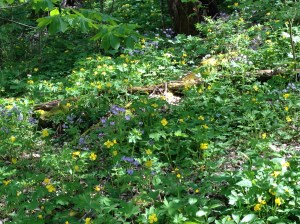 For you, O Lord, have made me glad by your work; at the works of your hands I sing for joy. (Psalm 92:4)


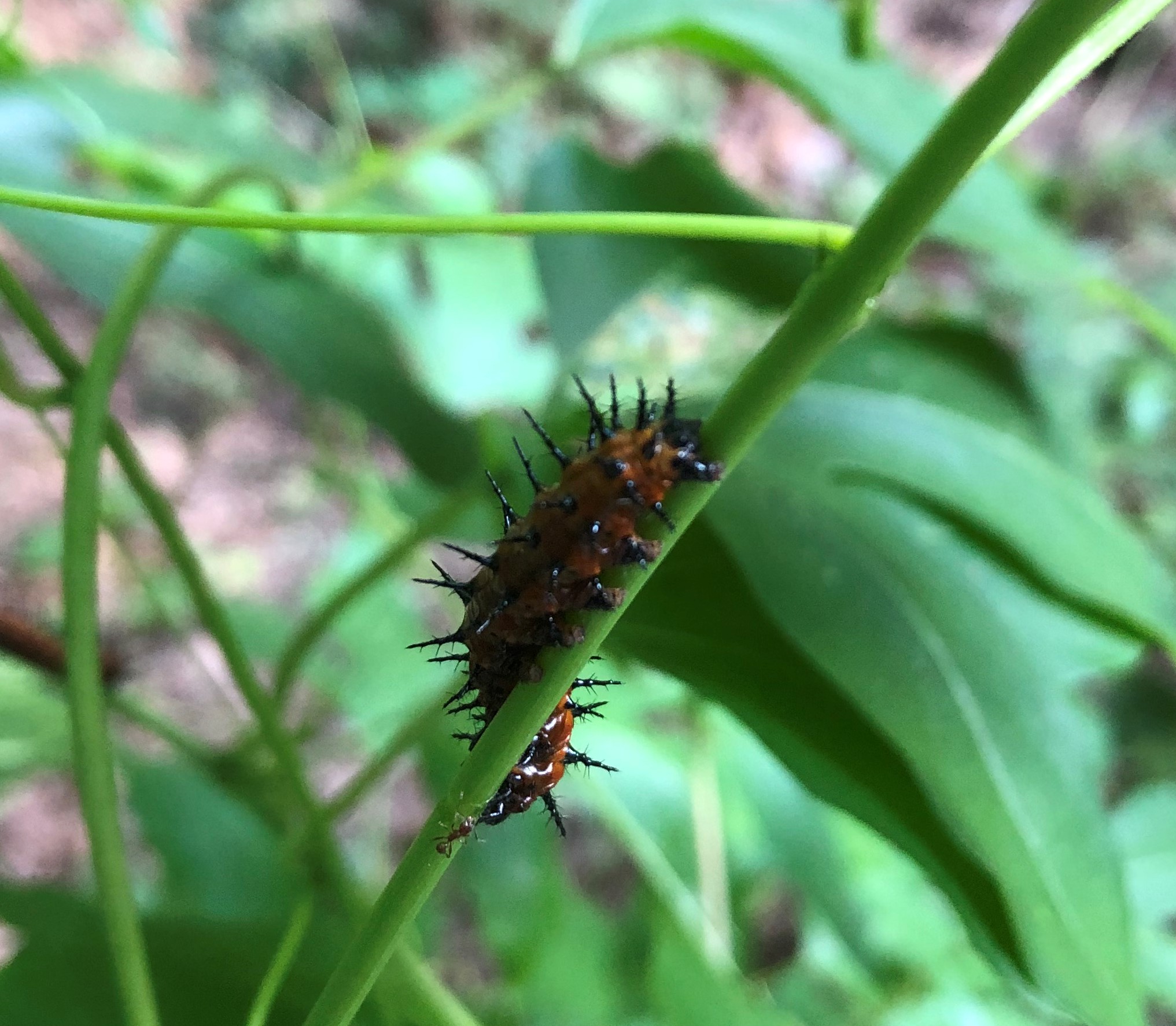
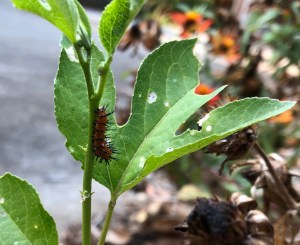 My time outside was drawing to a close when I pulled up a spent summer annual, revealing a spindly bit of passionflower vine with a solitary gulf fritillary caterpillar munching intently on a bedraggled leaf. My heart soared! I’d been hugged.


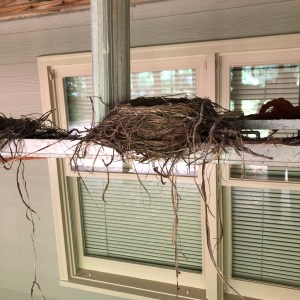 Uh oh! As they prepared to clean the deck, they found a lovingly-crafted nest containing four tiny blue eggs. Under normal circumstances, the location selected by the mama bird – perched on a ladder stored horizontally under the deck – would have been ideal – out of sight of predators and protected from the elements. But these were not normal circumstances. Knowing the commotion of scouring and staining the deck would most likely scare the mother away and that the high-powered stream of water might damage the tiny home, the painters carefully moved the ladder out of their work zone.
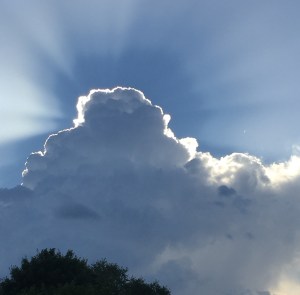 Fluffy white masses towering in a blue summer sky. Busy bees with full pollen baskets. Birds singing their praises to the One who assures us if He cares for the lilies and sparrows, He’ll certainly care for His children.
 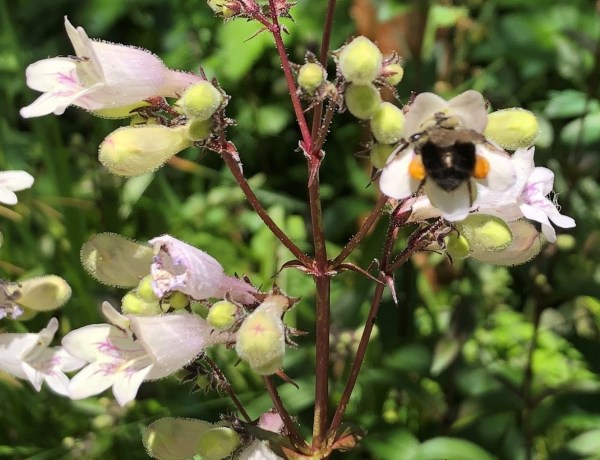 (Matthew 6:25-34) Your list will look different, my friend, but make that list. Look. For glimpses of what the new earth will be like. Listen. For whispers of love from our Father who attends to every detail of our lives. Taste and see that the Lord is good, His love endures forever! (Psalm 34; 1 Chronicles 16:34; Psalm 106:1)
 Back 2 the Garden