Fixing our eyes

A while back, a friend asked if I’d ever heard the adage, “Heaven may be my home, but I’m not homesick yet.” No, somehow I made it through over half a century of living without hearing that one, in spite of being a believer for the vast majority of those years. Since becoming acquainted with it, however, I’ve had a number of occasions which have brought it to mind, but with a twist: “Heaven is my Home and I’m so very Homesick” . . . like the news I received a few days ago.

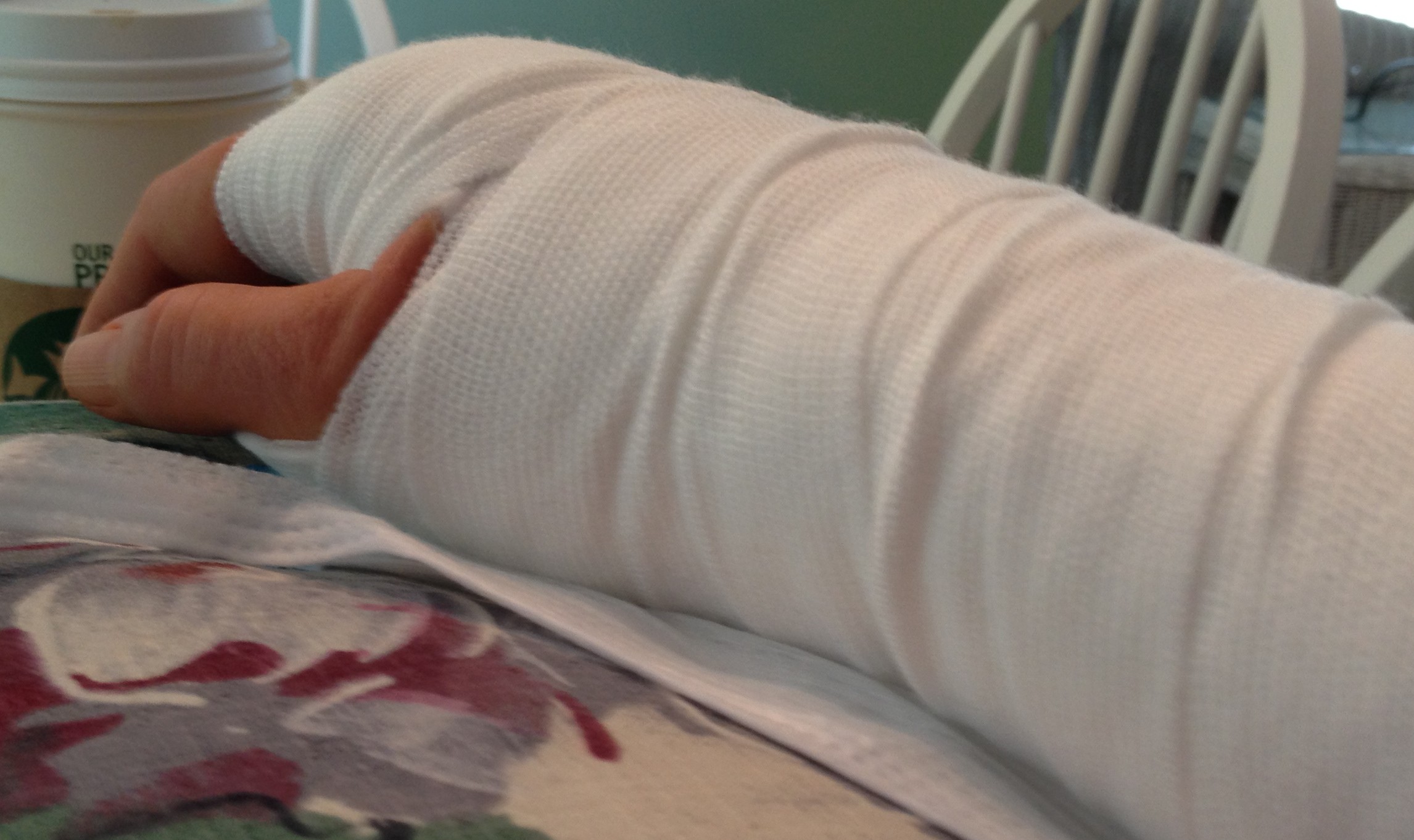
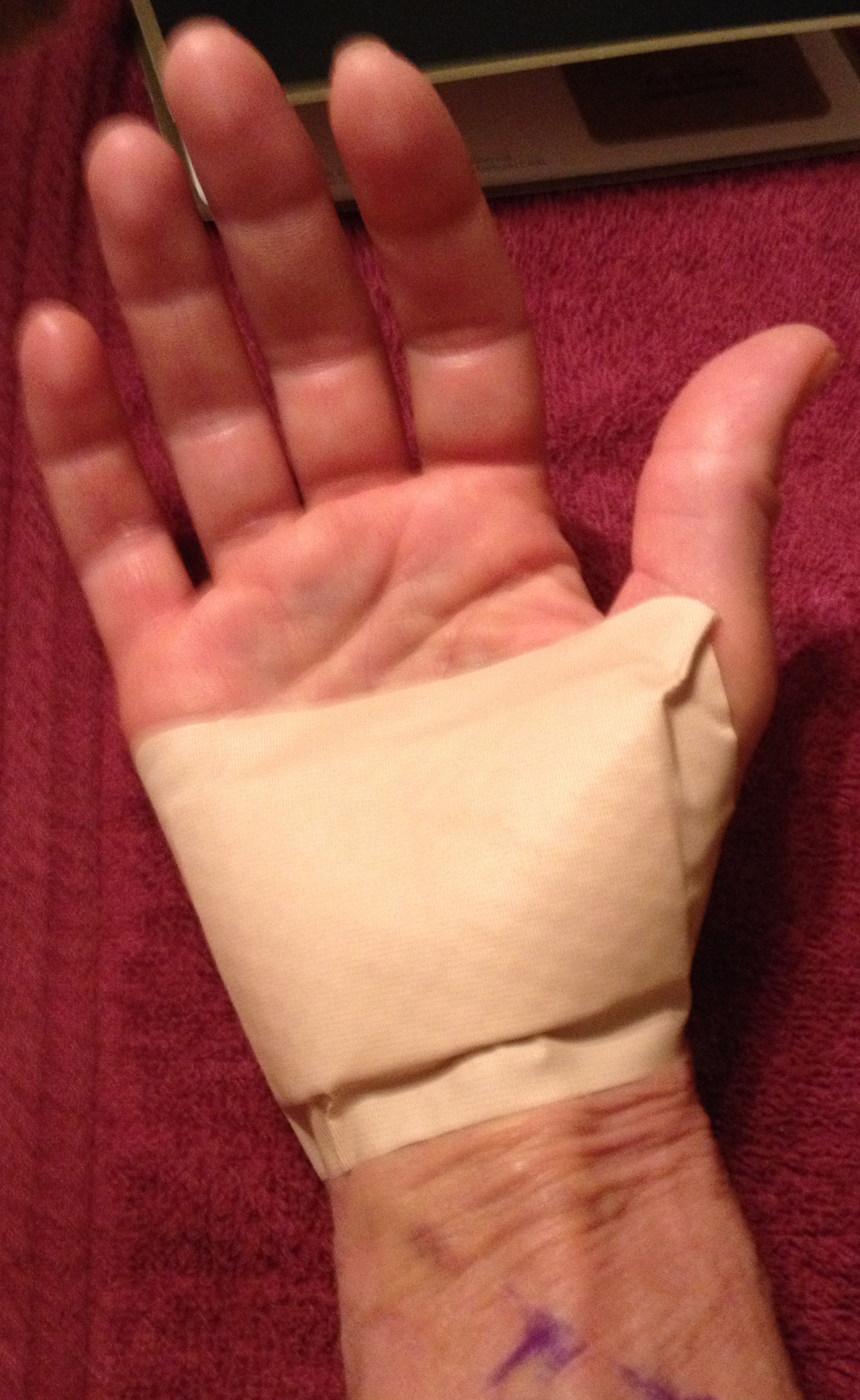
I was feeling a bit sorry for myself, stuck inside on such a lovely day when I would rather have been outside playing in the dirt. But, not wanting to risk injury or infection to my recently-operated-on hand, I opened a bunch of windows and enjoyed the breeze. A phone call from one of my sisters-in-law broke the afternoon silence. Even before I answered, I knew it was unlikely she’d call me in the middle of a weekday just to say hello. Sure enough, the tidings weren’t good. My youngest brother-in-law had died the day before, felled by a heart attack at a much-too-early age as were his father and brother (my husband) before him.

I’m all too familiar with phone calls that bring such life-changing news. The report that another loved one has suddenly been called Home puts everything else into perspective. The disappointment I was feeling about not being able to go outside was quickly eclipsed by the more pressing reality I’d been made aware of. I’m convinced no matter how many such life-altering phone calls I receive, they’ll never get easier. My tears are quickly followed by numbness and denial – Not again, Lord! How can this be happening? – Yet death is one of life’s certainties. And those of us left behind grieve, but not as those who have no hope.

God has great compassion on us, remembering we’re dust. He reminds us through the Apostle Paul that our present troubles, which are described as light and momentary, are achieving for us an eternal glory that far outweighs them all. He encourages us to fix our eyes not on what is seen, but on what is unseen, since what is seen is temporary, while what is unseen is eternal. Similarly, Jesus tells us to store up our treasure in heaven, not on earth. Commenting on Jesus’ directive in light of loss, Elisabeth Elliot states,

“The loss of someone we love, whether by death or otherwise, brings us to the brink of the abyss of mystery. If we wrestle, as most of us are forced to do, with the question of God in the matter, we are bound to ask why He found it necessary to withdraw such a good gift. Cover "The Path of Loneliness"We will not get the whole answer, but certainly one answer is the necessity of being reminded that wherever our treasure is there will our hearts be also. If we have put all our eggs in the basket of earthly life and earthly affections we haven’t much left when the basket falls. Christians, being citizens of Another Country, subjects of a Heavenly King, are supposed to set their affections there rather than here – a lesson few learn without mortal anguish.”[i]

Later this week we’ll gather in a tiny South Dakota town to remember Phil, a quiet, gentle man. He never married but cherished his family and endeavored to attend most all of the weddings of his numerous nieces and nephews. As we stand in the windswept cemetery just outside of town, I’ll strive to fix my eyes on the unseen. For then I’ll see two brothers, eternally reunited and I’ll rejoice in the assurance that our treasured family circle will one day be completely restored in a Home where there will be no more tears or death or pain.

Phil Kuipers. a kind and gentle man 1-9-1961 to 8-26-2015

Phil Kuipers, 1-9-1961 to 8-26-2015

[i] Elisabeth Elliot, “The Path of Loneliness”, (Grand Rapids, Revell, 2001) pg. 59

In Remembrance

“Death leaves a heartache no one can heal. Love leaves a memory no one can steal.” (Unknown)

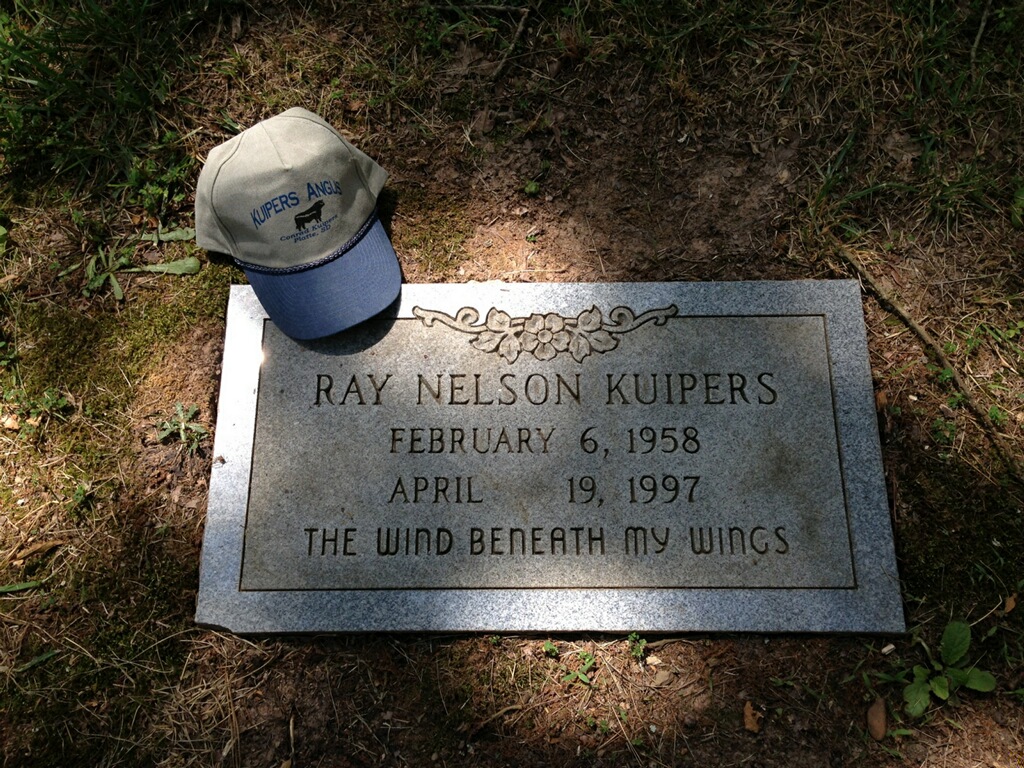
Eighteen years ago today my beloved husband was laid to rest in a tiny cemetery in North Carolina. The part of my heart that belonged to Ray went into the grave with him that sunny, late-April afternoon. Several weeks later I placed a call to “Focus on the Family” to request materials on dealing with grief. In the midst of my conversation with the kind person who answered I said, “I feel like part of me is missing.” I’ll never forget her reply, both compassionate and oh-so-insightful: “During the time you were married you and your husband became one. Part of you is missing.”

Months passed and I was having yet another day where I was struggling with the pain of losing someone so dear. Sensing my sadness, the woman I was meeting with inquired about how I was coping. When I confessed how difficult some days were she introduced me to a concept I’ve held onto ever since. She suggested I envision a beautiful piece of furniture, a chest with many drawers, each containing memories and their associated emotions. She went on with the analogy saying, “When memories of your husband’s death arise at a time when you feel you aren’t able to deal with them, imagine tucking them into one of the drawers, closing it gently and re-opening it when you’re ready to do so.” I’ll admit there have been times when a drawer has sprung open and caught me off guard. Times when a memory has overwhelmed me and I’ve struggled to shut the drawer. But more often the mental image has served me well.

The week before and the week after the anniversary of Ray’s death I’m quite intentional about opening the drawer. I think about how we spent our last few days, oblivious to the fact our time together was winding down. I remember the day of his passing with such clarity it could have happened recently, not so long ago. And I recollect the days following, when I had to make decisions I never expected, much less wanted to make at such an early age. My reminiscences are deliberate and purposeful, a way to honor Ray as well as remind myself of lessons learned and affirmed by losing him, such as:

  • The importance of numbering our days aright and keeping current in our relationships with those we hold dear.
  • The need to keep things in perspective, saving emotional distress for things that can’t be “fixed,” no matter how much money or time you invest. (And its corollary: things can be replaced, people can’t be.)
  • The ability of prayer to strengthen and support when raised up by myriad family members and friends on one’s behalf.

I’ve kept a journal for ages. On the night I returned home from the hospital, dazed and in a mild state of shock, I penned these words: “This is the worst day of my life up to this point – Ray, my dear, dear husband and friend died tonight. Even as I write it I don’t believe it. It will probably take time for the numbness to wear off, but when it does, Lord, please enfold Mary, Jessie and me in your love. I don’t understand this and I can’t even begin to imagine what my life will be like without him.” I was right. I couldn’t imagine what life would be like and to this day I don’t understand. But God heard my cry that night and many nights since. He’s been so faithful to me and my family, loving and sustaining us all the years we’ve been without Ray.

Which brings me to another point regarding the imaginary chest: it contains numerous drawers. Although some hold remembrances that evoke sadness, there are many more containing memories associated with great joy. I open those on a regular basis, reliving and savoring the moments, praising God for His goodness and grace. And each year when April 19th comes around, I remind myself I’m another year closer to once again seeing the man I was blessed to call my husband. The reunion is guaranteed because of the broken body and spilled blood of the One who instructed His followers to remember Him, His sacrifice, His promises. And so we wait in hope and assurance.

The gift of remembrance

“And I heard a loud voice from the throne saying, ‘Now the dwelling of God is with men, and he will live with them. They will be his people, and God himself will be with them and be their God. He will wipe every tear from their eyes. There will be no more death or mourning or crying or pain, for the old order of things has passed away.’” Revelation 21:3-4

Each year when October comes around, Mom and I reflect on the fact that three of my four grandparents died during the last week of the month, in different years – 1965, 1966 and 1974 to be exact. Many years have passed, but I know my mom, now in her early 80’s, still misses her parents. Likewise, there are days when I long to talk to Ray, though it’s been 17 years since I last held his hand and shared the details of my day with him. And then I have several friends who are in the early stages of grief, having lost their much-loved spouses within the past few months. I assure them it will get better, that the pain won’t always be so raw, but I also tell them they won’t ever “get over” the loss. There will always be a tender spot, a place only the beloved can fill. Yet, would we want it any other way?

And so, to all those who are missing someone dear, no matter how long the separation has been, I offer up this quote from Dietrich Bonhoeffer. It eloquently describes how precious the memories are that link us to our departed loved ones until the day when we’re finally reunited:

“Nothing can make up for the absence of someone we love . . . it is nonsense to say that God fills the gap; God doesn’t fill it, but on the contrary, God keeps it empty and so helps us keep alive our former communion with each other, even at the cost of pain . . . the dearer and richer the memories, the more difficult the separation. But gratitude changes the pangs of memory into tranquil joy. The beauties of the past are borne, not as a thorn in the flesh, but as a precious gift in themselves.”

055

In a moment

“In a moment things can change. One look behind and it’s never the same.” These words from the song “All Kinds of People” by Susan Ashton are simple yet profound. I’ve had moments in my life that were truly life-changing; moments that caused me to quote the lyrics from this song; moments like the one seventeen years ago when I was told my husband was no longer alive . . .

It was April 19, 1997. We were having an early spring and the warmer-than-usual weather had my young daughters, Mary, 10, and Jessie, 7, clamoring for new swim suits. Even though I knew we’d  likely  have another cold snap or two before the warm weather settled in for good, I agreed to take them shopping. My husband, Ray, department head of inside gardening at a local Home Depot store, was scheduled to work from 1pm to 10pm so, after we finished lunch, we headed off to the mall. Several hours later, having acquired the swim suits (and most likely some other new clothes), stopping for dinner and picking up bread and milk, we were on our way back home. Picking up bread and milk may seem like a terribly trivial thing to remember after so many years, but Ray would often stop on his way home from work to pick up any essentials we were lacking. He took good care of his girls – all three of us – so I was looking forward to surprising him with the news he could come straight home that night.

Strong thunderstorms moved into the area as we made our way home.  When we arrived we went directly upstairs to watch the “Local on the 8’s” on the Weather Channel to make sure no tornados were headed our way. Our focus on the weather resulted in us bypassing the answering machine which held multiple messages from someone named Chris from Kennestone Hospital. We hadn’t been home five minutes when the phone rang. It was Chris, calling again from the emergency room to tell me Ray had been taken there from work and asking if I had anyone who could bring me to the hospital. I assured her I could drive myself and asked what was wrong. She wouldn’t give me any details, just asked me to get there as soon as possible.  It wasn’t until I was half-way there that I realized her asking if someone could bring me probably wasn’t a good sign. I prayed all the way to the hospital, fervently hoping Ray wasn’t dead and attempting to console Mary and Jessie who were trying to be brave, but were terribly concerned about their much-loved father.

When we reached the hospital, Chris, the patient care specialist, met us in the emergency area and led us to a private room. As we walked down the corridor, she calmly asked me questions: Did Ray have a history of heart problems?; Was he on any medications?; Was he under a doctor’s care? Her composure and questions renewed my hope that Ray was, indeed, alive. When we got to the room, she told me the doctor would be in to talk to me. I asked tentatively, “Can’t you at least tell me if he’s alive?” She paused, oh so briefly, before saying, “I’m sorry, honey, he isn’t.” A massive heart attack had felled my life partner a little over two months after his 39th birthday. And with that, my life changed forever. I cried out, “God, no!” and sank to the sofa as Mary and Jessie dissolved into tears of their own, all of us incredulous. Hadn’t we seen our beloved husband and father a few short hours before, alive and well? He just went to work. How could it be he’d never return to us?

Then, just as suddenly, it was as if a giant door slammed shut. I couldn’t take the news in all at once or it would have crushed me. Instead the truth gradually penetrated my soul, drop by drop, over a period of weeks and months as I was able to accept it.

Yet somehow I had to deal with the unwanted reality that had been thrust upon me. There were immediate needs to be tended to: phone calls to family members and our pastor, decisions regarding the visitation and funeral services, picking a final resting place. Details of that week are burned into my memory: being surrounded by family and friends; being upheld by prayers so ardent they were tangible; speaking at Ray’s funeral; saying a final goodbye to him in a little cemetery in North Carolina.

It was a time of great sorrow, yet I felt the love and concern of so many who comforted and helped out in very practical ways. Some provided lodging for out-of-town relatives; others prepared and served lunch after the funeral. Our children’s minister took Mary and Jessie to Wednesday night activities at church so they could have a bit of normalcy amidst the upheaval. Then there was the friend who arrived the day after Ray’s death and quietly asked if I’d contacted a funeral home yet. When I, still in a mild state of shock, replied “No”, he spent the next couple of hours calling funeral homes for me and gathering necessary information.

Through the turmoil, grief, and tears, God was my refuge and strength.  He was my ever present help that week and has remained so to this day. I’ve said many times since Ray’s all-too-soon-for-me death,  had there been a sign-up sheet at church with the heading “Get to Know God Better by Losing Your Husband”, I never would have put my name on the list, but God, in His providence, saw fit to do so. I can testify to the fact He’s been a defender of this widow and a Father to my fatherless girls, faithfully providing and protecting, all the years we’ve been without our earthly husband and father.

There have been other life-changing moments since, one fairly recent, though none has been as devastating as the one when I learned of Ray’s death.  Each time I’ve gone back to the garden for solace. I know I’ll find my loving Father there, for He’s promised to never leave me or forsake me.