Dear Readers,
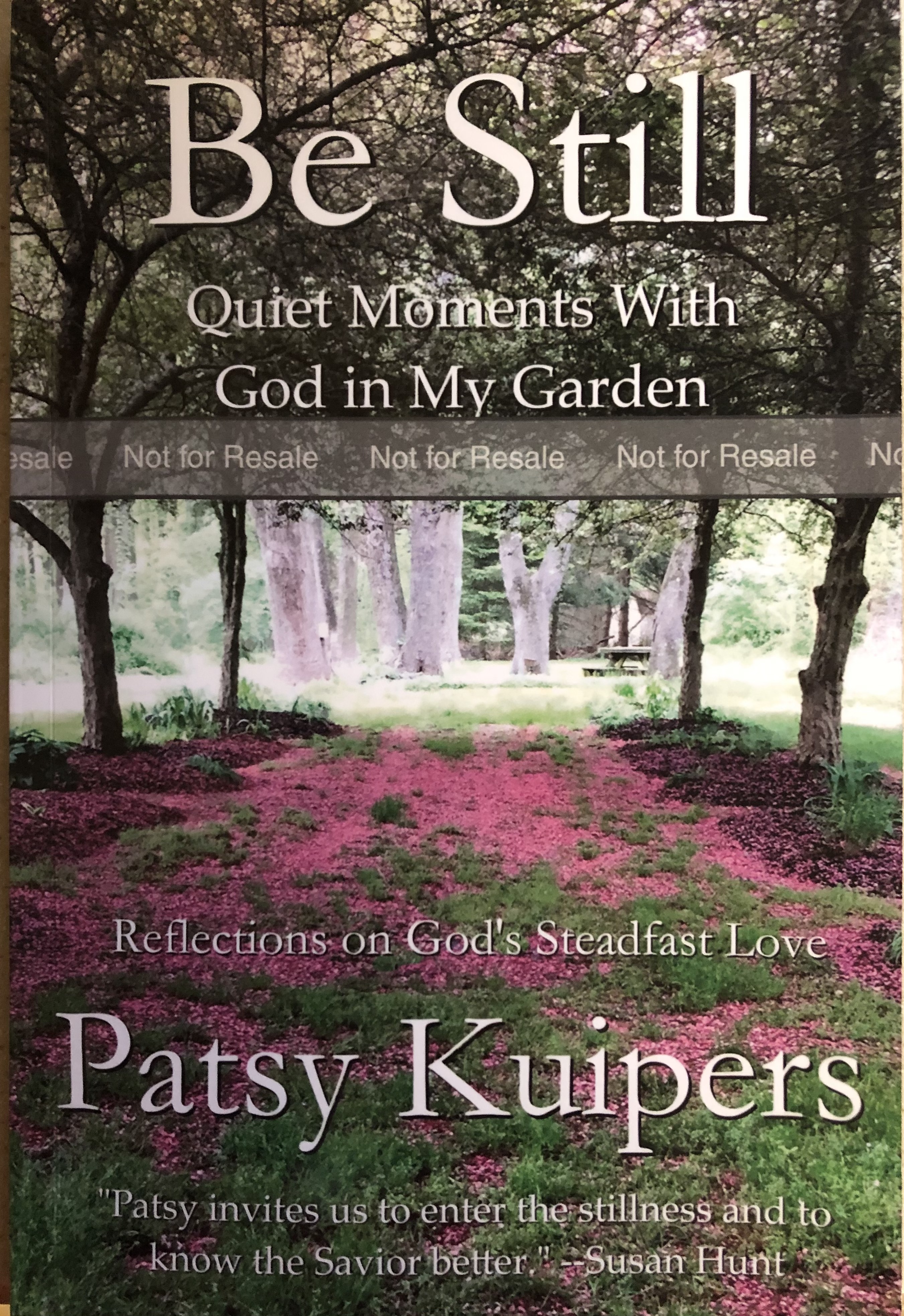
It is with great joy that I announce my first book, Be Still, Quiet Moments With God in My Garden, went live on Amazon this morning. I want to write something profound about the process and journey of getting to this point, but I’m feeling so overwhelmed with wonder and gratitude that God has allowed me to fulfill this dream that I can’t get the words to line up in my mind or on the page. There’s just a happy jumble of thoughts and emotions tumbling around in my heart as tears of amazement well up repeatedly and blur my vision.
So, for now, I’ll share the author’s note from the book and say a sincere, “Thank you!” to all of you who’ve read my blog posts, encouraged me to keep writing, and prayed for me as I labored over Be Still. I pray the Lord will use my stories and my efforts for His glory.
Blessings to you and yours as we enter into this Advent season.
Author’s Note
Come to me, all who labor and are heavy laden, and I will give you rest. Take my yoke upon you, and learn from me, for I am gentle and lowly in heart, and you will find rest for your souls.
Matthew 11:28-29
Scattered. A word I often use to describe my thoughts, my activities, and my days. Numerous distractions and responsibilities vie for attention. They scramble my mind and weary my soul. But there’s a place I can turn to for solace, a place where I spend some of my sweetest times with the Lord – my garden. There I’m reminded of the first garden and the promise of a new, redeemed garden. I see Jesus’ parables come to life as I observe the flowers and birds, the seasons and soils. My spirit soars as I behold God’s tremendous power, yet is quieted by the assurance that the One who cares for all creation also cares for me.
Several years ago, the lessons I’ve learned in my garden met up with my love of writing, and I began a blog, Back 2 the Garden (patsykuipers.com). I longed to share what God had been teaching me and to tell others of His great love and faithfulness.
As my portfolio of stories grew, so did the dream to compile them into a book, something that will be around for my children and grandchildren even after my blog and I are not. Five years in the making, Be Still is the fulfillment of that dream.
I’ve arranged the 35 devotional readings in Be Still in five categories, with distinct yet intertwined themes:
- Glimpses of Glory – evidence of God’s love all around us
- The Benevolent Gardener – God’s protection and provision
- Planted Together – principles for life-giving relationships
- Cultivating Holiness – disciplines of spiritual growth
- Transformation – God’s work of sanctification
Each entry begins with a passage from the Bible and ends with a brief prayer. In between, you’ll find the timeless truths of Scripture wrapped in simple stories. I pray they will encourage you to slow down and open your eyes to the wonders all around us, to be still and draw near to God.
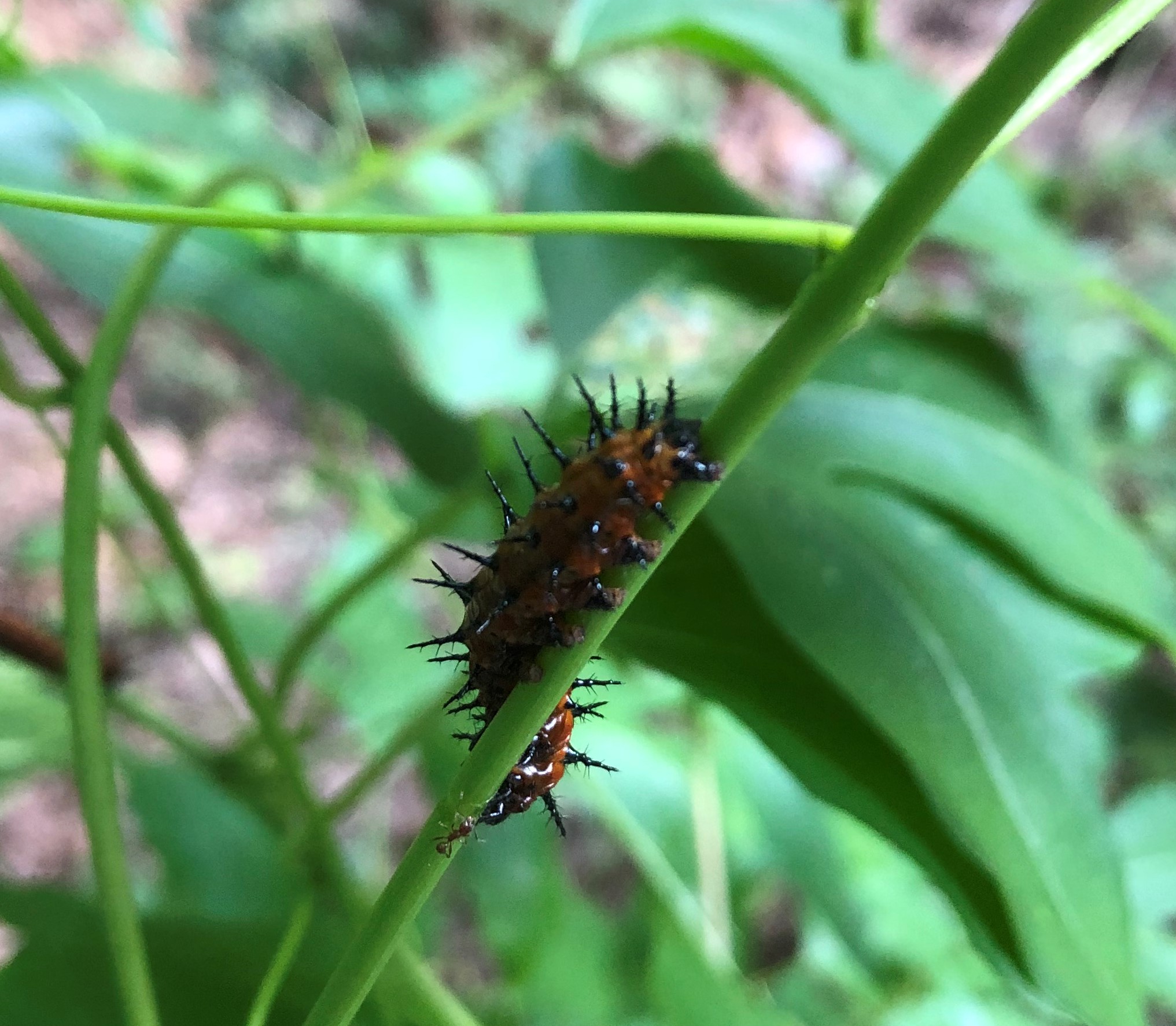
 Multiple members of my generation love tending plants, as do a number of our children and grandchildren. Recognizing our shared passion, I smile when cousins post pictures of their gardens, sometimes with young offspring sampling produce fresh from the vine.
 I launched Back 2 the Garden six years ago today with “Consider It Pure Joy”. (July 2014 Archives) My venture into the world of blogging was fueled by a desire to use my God-given writing ability to tell whoever would read my words of His great love and faithfulness. I wanted to encourage others with the promises and assurances God has brought to my mind as I’ve dealt with challenges stemming from widowhood, job loss, family illnesses, the deaths of beloved friends and family members, and world events.
 When my grandchildren were born, I continued the tradition their grandfather and I began with their mother, soothing them to sleep with Amazing Grace, planting seeds of faith from their earliest days. Six-year-old granddaughter Lyla is prone to humming as she works on a craft project or tackles one of her small household chores. I believe it’s an overflow of her happy heart. Occasionally she’ll sigh, “I’ve got this song stuck in my head!”
 I never would have imagined all the times I’d reach for my trusty Pink Pearl eraser the past several weeks. One by one, activities came off my calendar – appointments of various kinds, lunch with friends, 5k races, garden tours, even Grammie days
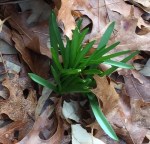 I placed one handful of leaves after another into the big brown yard debris bag. Then, Wait! What’s that? I detected flecks of green amidst the weathered leaf litter. Perennials Ray planted were beginning to emerge from the soil. Seeing those tiny-but-determined plants sparked hope within me. If they could make it through the cold, stark winter, maybe I would survive my season of darkness.
 I suppose I should begin with a confession: I’m an equal-opportunity crier. My eyes are just as likely to well up in moments of joy as in sorrow – while reading sweet sentiments in Hallmark cards, watching heartbreaking news stories, attending weddings or funerals, even when leading Bible study as the magnitude of God’s grace and mercy floods over me. Yes, from a barely-there trickle to gut-wrenching sobs, I’ve shed my share of tears and expect to shed plenty more.
 Last week, when I wrote “It is Well”, I figured everything that was going to suspend operations and activities had done so. Wrong! Notices of closings and cancellations continued to mount up, though at a slower pace. I found myself turning repeatedly to the passages I included in that post, truth to combat fear and quell anxious thoughts.
 I’ve also been outside more, strolling through my neighborhood, working in my garden. I’ve seen sidewalks chalked with cheerful messages. Encouraging posts fill my Facebook feed. And earlier today I joined my neighbors for a hymn sing as we gathered, socially-distanced, outside our piano-playing neighbor’s home. God is working difficult circumstances for good. He always does. (Romans 8:28)
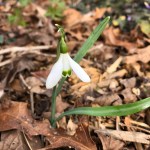 In the midst of the uncertainty surrounding COVID-19, spring is here, full of hope and visible reminders of God’s goodness. I’ll let photos, scripture passages, and hymn lyrics do the talking for the rest of this post – my offering of praise to the One who lovingly sustains us, my contribution to the thread of encouragement weaving its way through social media.
 “Fairest Lord Jesus, Ruler of all nature, O Thou of God and man the Son; Thee will I cherish, Thee will I honor, Thou my soul’s glory, joy, and crown. Fair are the meadows, Fairer still the woodlands, Robed in the blooming garb of spring: Jesus is fairer, Jesus is purer, Who makes the woeful heart to sing.”
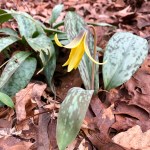 Consider the lilies of the field, how they grow: they neither toil nor spin, yet I tell you, even Solomon in all his glory was not arrayed like one of these. (Matthew 6:28a-29)
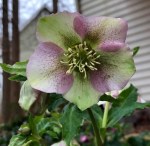 Why are you cast down, O my soul, and why are you in turmoil within me? Hope in God; for I shall again praise him, my salvation and my God. (Psalm 42:11)
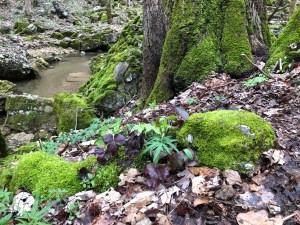 “O Lord my God, when I in awesome wonder Consider all the words They hands have made, I see the stars, I hear the rolling thunder, Thy pow’r throughout the universe displayed. When thro’ the woods and forest glades I wander And hear the birds sing sweetly in the trees, When I look down from lofty mountain grandeur, And hear the brook and feel the gentle breeze. Then sings my soul, my Saviour God, to Thee; How great Thou art, how great Thou art! Then sings my soul, my Savior God, to Thee: How great Thou art, how great Thou art!”
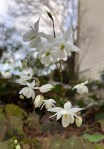 I will praise the name of God with a song; I will magnify him with thanksgiving . . . Let heaven and earth praise him, the seas and everything that moves in them. (Psalm 69:30, 34)
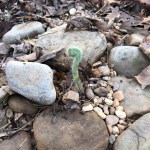 “This is my Father’s world, And to my listening ears All nature sings, and round me rings The music of the spheres. This is my Father’s world: I rest me in the thought Of rocks and trees, of skies and seas – His hands the wonders wrought. This is my Father’s world, The birds their carols raise, The morning light, the lily white, Declare their Maker’s praise. This is my Father’s world: He shines in all that’s fair; In the rustling grass I hear Him pass, He speaks to me everywhere.”
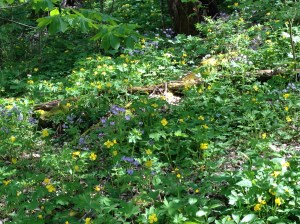 For you, O Lord, have made me glad by your work; at the works of your hands I sing for joy. (Psalm 92:4)


 Similar thoughts accompanied me as I strolled my woods exclaiming over the latest plant finds. Jesus’ declaration that we need not worry because the God who cares for the birds and the lilies will watch over His beloved children, who are much more precious, is among my most cherished (Matthew 6:25-34). It’s also one of the reasons I find so much solace in my garden since I see the truth of His statement played out repeatedly.
 You may argue that the birds and flowers aren’t capable of worrying since they don’t know what we know or reason as we reason. But God says the same about us. Even though we’re created in His image, His ways and His thoughts are higher than ours, beyond our finite minds (Isaiah 55:8-9). He is Sovereign. We aren’t. And it often takes events that are obviously out of our control to remind us, even though every breath we take is a gift from God.
 Back 2 the Garden