Honor your father and your mother.
Exodus 20:12a
Baby Critters

Here in NW Georgia, it’s baby bird season – and baby deer, squirrels, chipmunks – you get the idea. Juvenile squirrels are relentlessly trying to figure out how to breach the bird feeder, an hours-old fawn traversed my daughter’s front yard on wobbly legs, and birds are devouring cakes of suet at the rate of one to two per day.[1] The wonder, joy, and occasional irritations associated with new life are everywhere.
Recently I’d opened a few windows to enjoy the breeze before summer’s impending humidity arrives and forces me to turn on the air conditioning for months to come. Suddenly, I heard such a riotous twittering coming from the back deck, I stopped what I was doing to investigate. Instead of finding one of the neighborhood cats threatening the birds, I observed a mother finch surrounded by three offspring almost as big as she was. The frantic chirping emanated from her little brood, each member demanding, “Feed me, Mommy, feed ME!”
Always a Mother
My mind has replayed the scene over the past few weeks as I’ve contemplated my own dear mother’s care for me. Like the mama bird faithfully feeding her babies even though they were nearly grown, Mom’s nurturing didn’t end when I left her nest. She respected my adult independence, yet I knew I could count on her for unwavering support, be it a home-cooked meal, attentive listening, or fervent prayer. Mom nourished me both physically and spiritually for 62 years.
When my 39-year-old husband died suddenly, leaving me to raise my 7-and-10-year-old daughters, my parents graciously moved to Georgia to help us. For the next 24 years, Mom lavished the same love and care on Mary and Jessie that she’d shown me.
Sometimes when I’d thank her for her steadfast devotion, she’d quip, “Once a mother, always a mother!”
Unwelcome Changes
If we live long enough, the effects of aging will bring about unwanted changes in our bodies, our minds, and our abilities. Such is life in this world marred by sin.
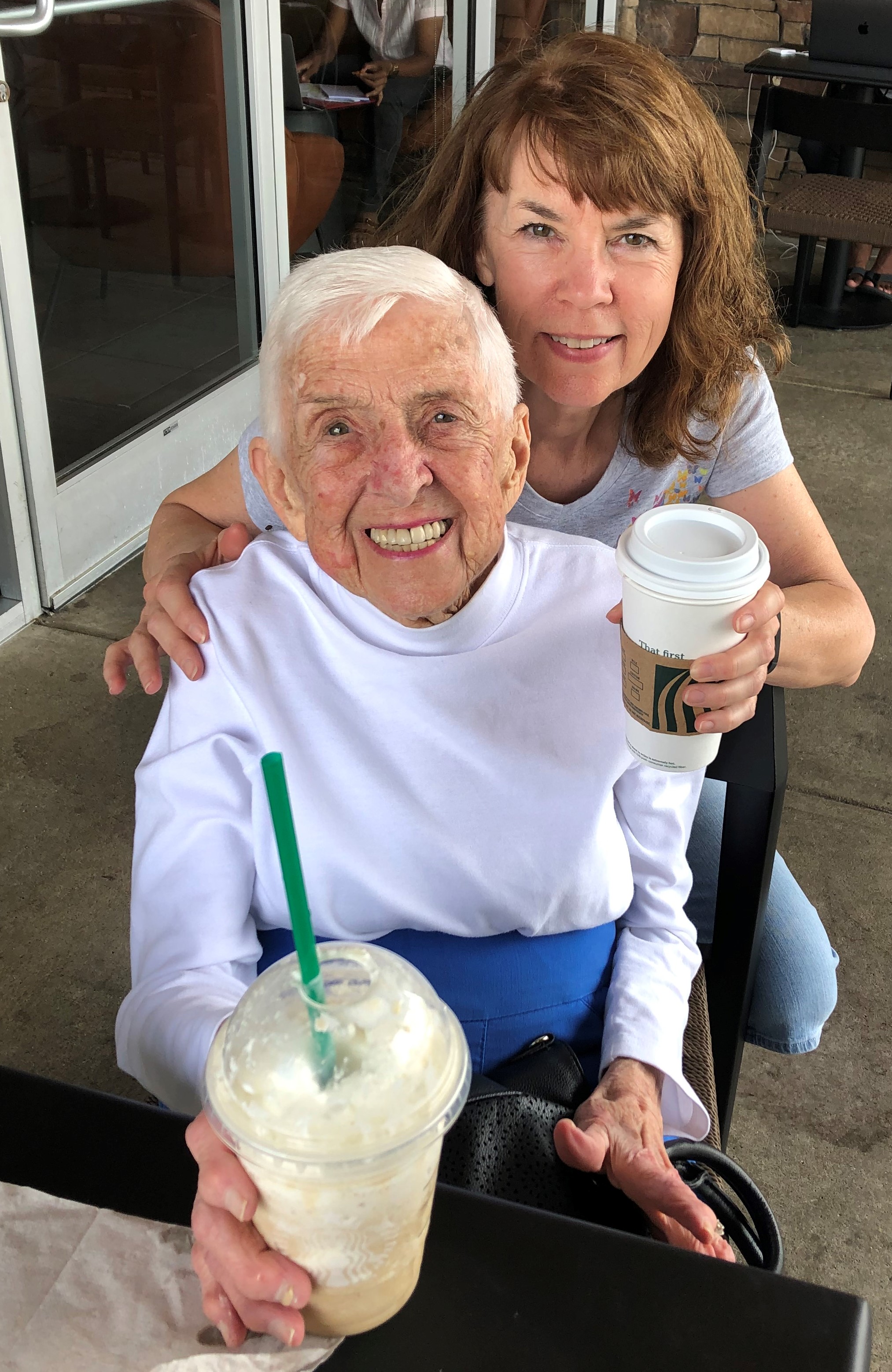
It was no different for Mom. Though her spirit and determination were as strong as ever, her physical self declined. Relinquishing her driver’s license was the most significant single blow as it made her dependent on others for transportation. She lamented imposing on me whenever I took her to a medical appointment regardless of how many times I tried to assure her it wasn’t a bother. (Besides, we’d often find a way to fit in a stop at Starbucks for our favorite beverages!)
Gradually I began providing more help with banking, household chores, and toward the end, personal care. Mom thanked me constantly, often apologizing for taking up my time. She told others I’d become the mother and she didn’t know what she’d do without me.
As our roles reversed, something inside each of us withered a bit, and a sad acceptance entered our relationship, not because I resented helping Mom, but because I knew how much it hurt her not to be able to do for herself and her loved ones. No amount of reassurance on my part could convince Mom it was alright. Our recurring conversation went something like this:
“I’ll never be able to repay you for all your help.”
“Mom! If we start keeping accounts, you know it’s me who’ll never be able to repay you! You’ve helped me far more than I’ve ever helped you!!”
“That doesn’t count. You’re mine, and I did it because I love you.”
“Well, you’re mine, and I love you. It’s a privilege to help you. You’re not a burden!”
In a moment of frustration a few days before she broke her hip, Mom exclaimed, “I’d hoped you’d never have to deal with this!” (“This” being providing so much practical help.)
Scriptural Mandates
Though I usually didn’t try to refute Mom’s protests with Scripture, there are several passages I could have quoted. Consider, for example:
- But if anyone does not provide for his relatives, and especially for members of his household, he has denied the faith and is worse than an unbeliever (Timothy 5:8). Providing for relatives includes practical help, not just financial assistance.
- Listen to your father who gave you life, and do not despise your mother when she is old (Proverbs 23:22). This verse is closely aligned with the fifth commandment to honor father and mother.
- Love is patient and kind (1 Corinthians 13:4). Mom’s love for me abounded in patience and kindness. I endeavored to show her the same, though sometimes I grew weary and my efforts fell short.
- So whatever you wish that others would do to you, do also to them (Matthew 7:12). I have no idea how my end-of-life scenario will play out, but I know I would like to be treated with love and respect. I pray Mom felt that despite her misgivings about needing help.
Motivated by Love and Gratitude
The hours I spent assisting Mom weren’t burdensome because my efforts were inspired by my love for her and gratitude for all she’d done for my daughters and me. If we had been keeping accounts, I knew of no better way to pay down my debt.
Likewise, I recognize I owed an unpayable debt to the One who loved me so much that He sent His Son to die for me (John 3:16). Yet, when God credited Jesus’ righteousness to my account, He stamped it “paid in full.” How amazing!
Scripture states that salvation comes by faith alone as we depend on Jesus’ atoning sacrifice on our behalf. However, James declared that faith without works is dead. In fact, our faith is made evident by our good works (James 2:14-26) and the good fruit we bear (Matthew 7:17-20).
Just as I was motivated by love and gratitude to help my dear little mother, may our actions be motivated by love for God and gratitude for all He’s done. Let us gladly serve others well and love our neighbors as ourselves as we manifest the grace He’s shown us so abundantly.
Dear Lord, thank You for the blessing of a godly mother who showed me Your unconditional love. I praise You for the privilege of serving her in her time of need. And Lord, how I thank You for Jesus’ willingness to reverse roles with me, to take on the punishment for my sin, that I might be redeemed (2 Corinthians 5:21).
[1] A cake of suet usually lasts up to five days other times of the year. I surmise birds are feeding the soft, easy-to-digest treat to their babies.
 I never would have imagined all the times I’d reach for my trusty Pink Pearl eraser the past several weeks. One by one, activities came off my calendar – appointments of various kinds, lunch with friends, 5k races, garden tours, even Grammie days
 I placed one handful of leaves after another into the big brown yard debris bag. Then, Wait! What’s that? I detected flecks of green amidst the weathered leaf litter. Perennials Ray planted were beginning to emerge from the soil. Seeing those tiny-but-determined plants sparked hope within me. If they could make it through the cold, stark winter, maybe I would survive my season of darkness.
 I’m thankful for the time Ray and I spent together. I’d rather have been married to him for 13 years than not at all. The last card he gave me was a Valentine card. Unlike other memorabilia tucked away in various boxes and file folders, it resides in a special spot on my bookshelf. Lost in my reverie, I retrieved it from its slot and reverently removed it from its well-worn envelope. After savoring the sentiments within, I placed it on the edge of my dining room table which also serves as my desk. There, alongside other tangible reminders of loved ones, it radiated a message of glowing encouragement.
 I grieved, not as a sports fan, but as a widow who knows what it’s like to bid your beloved husband goodbye on an ordinary day, never to see him alive again. Because Ray was called Home at age 39, long before most of the relatives whose loss we anticipated grieving together.
 But there is hope, dear reader, now and eternally. Having found comfort in the promises of the One who’s vowed to never leave or forsake us (Deuteronomy 31:8), I dispatched my erstwhile visitor. Furthermore, I can reaffirm all I said in the podcast and wrote in my last post. The bottom is good.
 I gazed in wonder at the rings and bittersweet tears filled my eyes. Gratitude for having my precious rings restored as close as possible to the originals mingled with sorrow. It took a little time and money, but I was able to replace my rings. Yet I knew if I sold all my belongings and scraped together every cent of the proceeds, I couldn’t ever pay anyone enough to get Ray back. One day, I will go to him. But he will never return to me. (2 Samuel 12:23)
