Sixty Years

Love never ends.
So now faith, hope, and love abide, these three; but the greatest of these is love.
1 Corinthians 13:8, 13

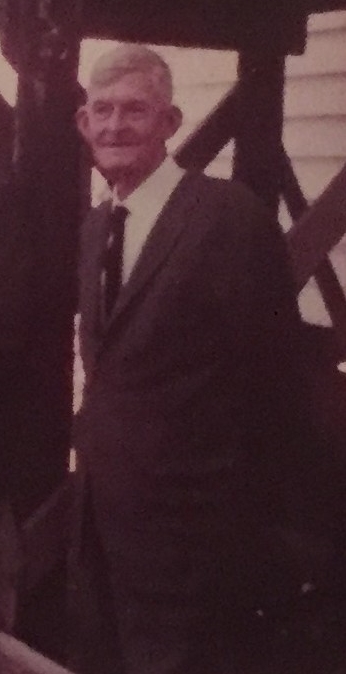
October 25th marked sixty years since my beloved maternal grandfather, PaPa, went to be with the Lord. Even though I was only six at the time, I clearly remember the moment Mom received the news. We were watching an after-school TV show while she ironed. The phone rang, Mom answered, listened briefly, and then wailed, “No, not Daddy!”

Across the intervening decades, I’ve often marveled at the fact that I still feel PaPa’s love so deeply. Remembering his kind, gentle demeanor and the acceptance and security I  felt in his presence moves me to tears. Such emotion, despite the fact I didn’t get to spend lots of time with him in the not-quite seven years we were on this earth together.

Since becoming a grandmother fourteen years ago, a desire to love my grandchildren equally well has joined my wonder at the loving bond between PaPa and me, which has transcended the grave.

Cherished Memories

Although I don’t have many distinct memories of time spent with PaPa, I cherish the ones I do have. I recall walking hand in hand with him to the small general store, stopping by the post office to check Box 73 for mail, and waiting for the train to come by so we could wave to the conductor and count the cars.

But my favorite activity was eating apples with him. PaPa would sit me on his lap, producing an apple in one hand and his pocketknife in the other. He’d cut a slice for me, then a slice for himself. The process would continue back and forth until we finished the tasty fruit. For as long as I can remember, I’ve eaten an apple almost every day. And when I do, I always think of my grandfather.

Shared Memories

My mom’s recollections and those of several of my cousins, who were blessed to live in the same community as my grandfather, supplement and reinforce mine.

Mom was the baby of her family, the youngest of eight siblings, and her father’s darling. He called her “Babe,” warmed her clothes by the fire before she went to school on cold mornings, and waited for the bus to drop her off in the afternoons.

Mom recounted how her mother, sterner in her demeanor, would occasionally delegate the task of disciplining a wayward child to my grandfather. He would take the offending party outside, beyond her view, and tell the child to cry out while he used the switch on some inanimate object instead of their legs.

One cousin shared how PaPa would bring her paper dolls from the general store, while another recalled how he reveled in helping PaPa in his garden. Still another has memories similar to mine of sharing apples, slice by slice, sitting in his lap.

The common denominator in all our reminiscences? The unconditional love we felt in PaPa’s presence.

Building Memories

As I reflect on our shared memories, it’s clear that none of them involve grand events, expensive vacations, or exotic destinations. Sharing life and simple rituals – like eating apples, counting train cars, and working together in the garden – feeling safe and accepted, have connected generations of our family.

I’m blessed and thankful that my grandchildren live close by and that I’ve seen them several days most weeks since they were born. Even though we have made memories during beach trips and other wonderful vacations, we treasure our own little rituals, including sharing apples and gardening. I pray that they, too, feel safe and accepted in my presence and will be able to feel my love long after I’m gone.

Shared Faith

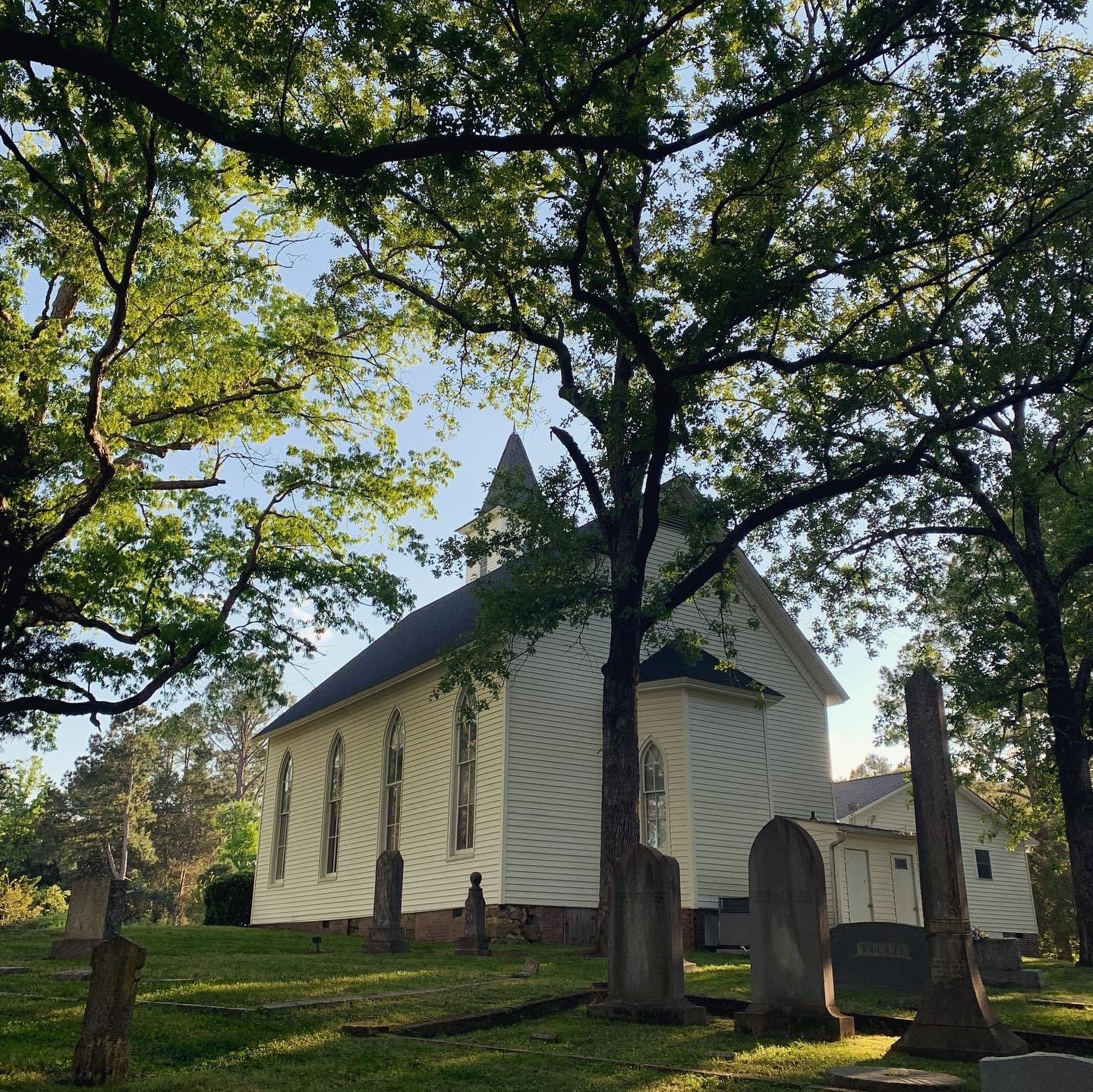
The most significant gift PaPa shared was his faith. I’ve wondered whether he was the first in his family to trust in Jesus, or whether he was following in the footsteps of his forefathers. Regardless, PaPa was a faithful member of the small rural church within sight of his house, where he served as a deacon. Memories of attending church with him, going to Sunday school in the same room Mom did when she was a child, and visiting with relatives in the churchyard after the service are lovingly tucked in my mind beside those I shared earlier.

Carrying on our family’s legacy of faith is my highest calling as a grandmother. I endeavor to weave God into our conversations and experiences (Deuteronomy 6:6-7), pointing my grandchildren to the One Who created this great big, beautiful world and loved them enough to send His Son to die for them (John 3:16). It is a blessing and a privilege to come alongside their parents as they raise them in the discipline and instruction of the Lord (Ephesians 6:4). And what a joy to worship side-by-side on Sunday mornings, our voices united in prayer and song!

Promised Reunion

I don’t get to visit the humble graveyard where my grandparents and many other maternal relatives are laid to rest nearly as often as I’d like. My husband, Ray, is resting there, too, near my sister, Mary Jeannette, who died in infancy. Mom took her place between them three years ago, leaving a space for me. Dad joined them most recently.

When I do visit the cemetery, I gaze at the tombstones, each representing someone I love and long to see again, pondering how glorious it will be when we all rise to new life, a life that will never end (1 Thessalonians 4:13-18). For the love we share now is but a shadow of the Love that awaits when the Everlasting Arms reach out to embrace us and welcome us Home (1 Corinthians 13:4-13).

Until then, I’ll remain thankful for familiar rituals, like eating apples with my grandchildren, and rock-solid faith, lovingly shared, that can reach across the decades, blessing one generation after another.

O Lord, how great are the gifts of familial love and a heritage of faith! And what a privilege it is to tell the younger generations about Your ceaseless love and faithfulness (Psalm 78:1-4). Please help us to be steadfast in doing so, so that they, too, may know the joy and peace of belonging to Your family.

The Whole Truth

Make me to know your ways, O Lord;
    teach me your paths.
Lead me in your truth and teach me,
    for you are the God of my salvation;
    for you I wait all the day long.
Psalm 25:4-5

Assuming the Worst

I removed the receipt from the gas pump and gave it a quick glance before putting it in my wallet. 18 gallons? It seemed like a lot, since I can only fit 11 gallons in my similarly sized CR-V when it’s nearly empty. Maybe the rental car had a bigger tank? Regardless, I needed to get ready to meet relatives for dinner in less than an hour, so I let it go.

Two days later, I was back at home reviewing the receipts from my trip, including the rental car statement. I’d added more gas a few miles before reaching the airport and returned the car with a full tank, which was duly noted – 11 gallons upon leaving and 11 gallons upon return.

Woah! How had I managed to put 18 gallons of gas in a car with an 11-gallon tank? Was the pump wrong? Had I been taken advantage of?

Incensed at the possibility, I tried calling the station – no answer. Then I tried calling my brother-in-law to see if he knew the owners since I’d been visiting a small town where everyone knows pretty much everyone. No answer there either.

I turned to Google to find out the tank capacity of the rental car’s make and model – 14.5 gallons maximum. I spent a considerable amount of time trying to make sense of the situation, time that I could have devoted to other post-vacation chores.

Fuming, I went for a walk, thinking the worst. Had no one else in the tiny town fallen prey to the faulty pump? I decided I would try calling another of my brothers-in-law, one with years of car experience. Hopefully, he would have an explanation for the discrepancy. Then again, it was “only” $20. Perhaps I should just let it go instead of bothering anyone. But it was the principle of it, as Mom used to say. Right is right!

After my walk, I focused on more productive activities and didn’t get around to making the call to my other brother-in-law. I’m thankful I didn’t and equally thankful that no one answered my previous calls either.

Pertinent Details

Why? Because later that evening, I re-examined the receipt. The total gallons weren’t the only thing that didn’t add up. The timestamp was earlier than I’d stopped at the station, and the credit card listed wasn’t mine. Armed with all the details, I sheepishly realized that the person who used the pump before me hadn’t taken their receipt, leaving it for me to grab, which meant I left mine to flap in the stiff South Dakota breeze.

When the correct charge showed up on my credit card statement the next day, a simple calculation confirmed my suspicions. The rental car took 11.8 gallons of gas. The pump was accurate. No one had tried to take advantage of me.

If only I hadn’t gotten fixated on one puzzling detail and been consumed by negative thoughts, I would have saved myself a lot of time and worry.

Doubting Others

But this was just a gas station receipt. What about times when I’ve made a snap judgment about a relationship or an individual, based on incomplete information? I let my imagination run wild, assuming the worst instead of giving them the benefit of the doubt. As chastened as I was about the receipt, thinking about instances where I haven’t shown others the grace I would like to receive leaves me truly remorseful. I wish I had expressed confidence in their character, admitting I didn’t know the whole story, instead.

Doubting God

Let’s take it a step further. As bad as it is to waste time fretting about a receipt that was correct all along, or maligning a fellow image-bearer, it’s even worse when I let an event or circumstance sway my perception of God or lead me to doubt His goodness. Sadly, Scripture provides ample examples that I’m not the first of God’s children to do so. Consider these three scenarios:

  • Exodus 16 tells us that in the second month after God freed the Israelites from slavery in Egypt, they were hangry, so hangry in fact that they wished He’d left them in Egypt to die by their pots full of meat instead of dying of starvation in the wilderness (Exodus 16:3). As someone who deals with hypoglycemia, I understand getting irritable when your blood sugar drops, but God’s people allowed the rumbling of their empty stomachs to eclipse their memories of His miraculous deliverance. Despite their grumbling, God provided them with abundant food (Exodus 16:35), though not before disciplining them for their complaining (Numbers 11).
  • After two years of traveling and experiencing God’s provision, His people neared the Promised Land. Instead of trusting God’s pledge to give the land over to them, they decided to send spies, one from each tribe, into the land to scope things out first. When they returned from their mission, the spies confirmed that the land was indeed flowing with milk and honey. Still, ten of the twelve emphasized the size and strength of the inhabitants instead of the land’s bounty and God’s promise, swaying the decision of the assembly, which refused to proceed. The fateful decision and its dire consequences are recorded in Numbers, chapters 13 and 14.  
  • 1 Samuel 17 recounts another instance of God’s people cowering because of a giant. This time, it was Goliath, champion of the Philistines, who was parading around taunting King Saul and the members of his army. Then a young shepherd boy arrived on the scene. Unlike Saul and his men, David had unwavering faith in God’s ability to deliver them (1 Samuel 17:37). Moreover, he knew God would avenge His name (1 Samuel 17:46-47).

The Bigger Picture

So, dear readers, are you fixated on a detail, believing a partial story, or listening to someone’s subjective account of a situation, allowing it to influence your opinion of a fellow believer or draw you away from what you know to be true about God?

If so, endeavor to look at the whole story recorded in the Bible, the one that tells us God loved us so much that He sent His only Son to save us from our sins by paying the penalty we owed (John 3:16). Having done that, He will work everything else out for our good and not withhold any lesser thing from us (Romans 8:28,32).

Remembering all God has done for us, may we extend the same grace and compassion to others, withholding judgment when we’re not fully informed or qualified to evaluate the situation.

Dear Lord, it’s so easy for us to get waylaid by details that draw our attention away from the great big story of Your love and care for us. Please help us to dismiss the distractions that threaten to derail us. Instead, may we keep our hearts and minds focused on all we know to be true about Your goodness and faithfulness.

Joys and Sorrows, Past and Present

The Lord is near to the brokenhearted and saves the crushed in spirit.
Psalm 34:18

Missing Mom

I’m never sure how anniversaries and special occasions associated with now-departed loved ones will affect me. For some reason, the sorrow of facing another Mother’s Day, my fifth, without my beloved mother weighed heavily on me this year.

The floral shop is one of the first things I see when I enter the grocery store I frequent each week. I usually stroll by casually, perusing the pretty flowers and checking out the clearance section. After all, a bedraggled houseplant might need a home. However, on my shopping expedition a few days before Mother’s Day, I walked by briskly, trying not to gaze too long at the department overflowing with beautiful bouquets and cheerful balloons. I concentrated on my list instead of the fact that I wouldn’t be picking out anything for Mom. My heart ached knowing her sweet little self would have loved anything and everything I selected.

Timely Reminders

I returned home, put away my groceries, and opened my laptop to check email while I sipped the Starbucks tea I’d treated myself to. Fortunately, before I slipped any further into my melancholy musings, Tim Challies’ post, “Proud of Her on Mother’s Day,” caught my eye. Tim’s recounting of how his wife has graciously and faithfully carried on since the sudden death of their oldest child several years ago served as a gentle exhortation from the Lord. These lines, in particular, resonated with me: 

(S)he doesn’t allow herself to sink into her grief and become incapacitated by it. She has just one life to live and only the present moment to live it. She has determined she will not allow the sorrow of the sorrows to overwhelm the joy of the joys . . . Why miss the joys for grief? Why allow one great sorrow to overwhelm so many blessings great and small?[1]

His statement reminded me, in turn, of a favorite Elisabeth Elliot quote, “Teach me never to let the joy of what has been pale the joy of what is.”

Refocusing

Grief is too complicated to reduce to a glass-half-full or half-empty mindset. Still, instead of allowing myself to focus on Mom’s absence, I endeavored to focus on the blessing of having a godly mother whose presence graced my life for 62 years, whose steadfast faith and ardent prayers shaped my existence, whose love I still feel every day, and whose mottos come to mind daily as well.

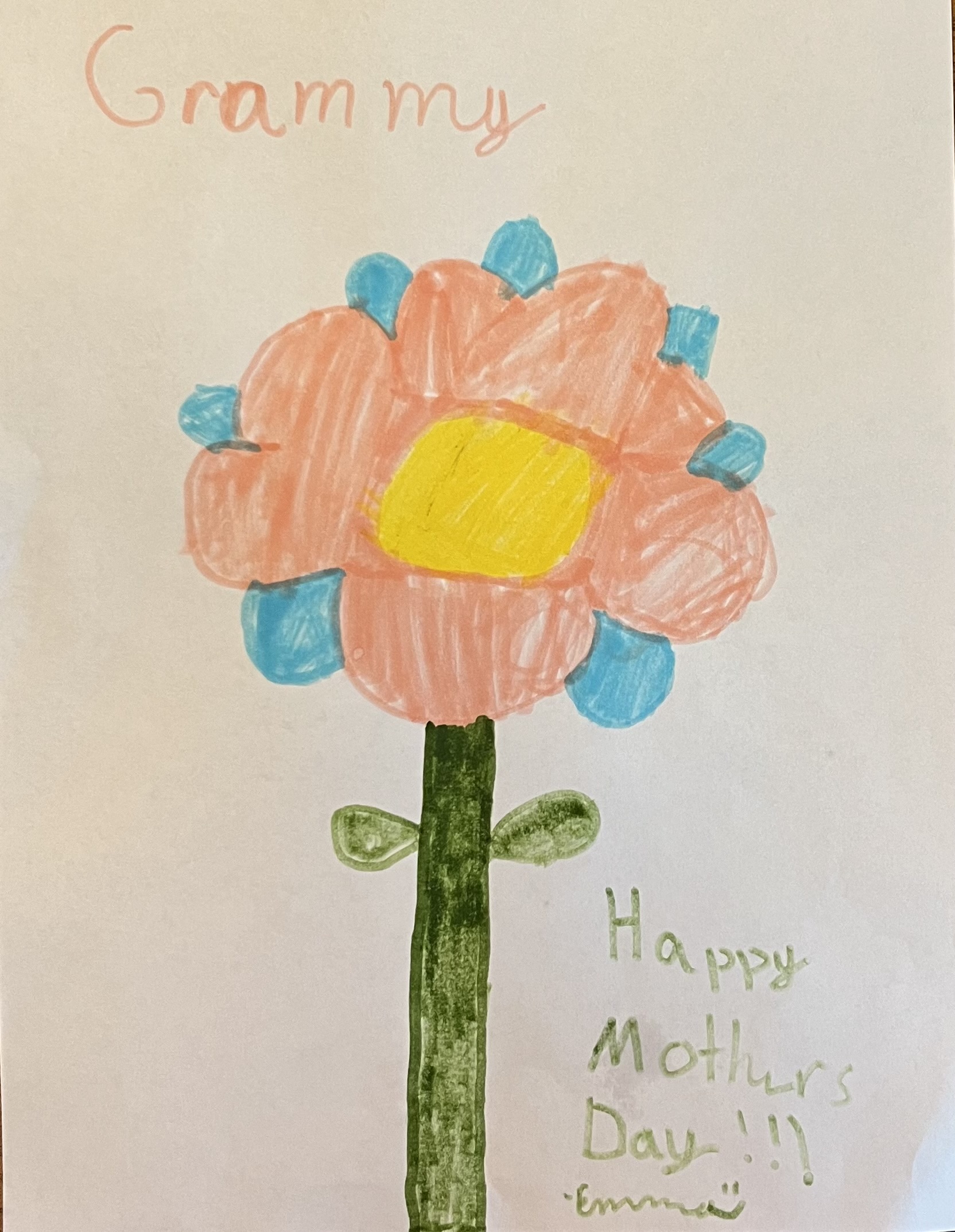
Likewise, when I gathered with my children and grandchildren, fortified with the timely reminders from Tim and Elisabeth, I did not let the sorrow of loss overshadow the joyful blessings of the present. I gratefully received my family’s charming expressions of affection – hugs, cards, both handmade and store-bought, and a delicious lunch prepared and served with love.

Family Blessings

As He often does in His over-and-above ways (Ephesians 3:20), God added a special surprise to my day. One of my nephews and his wife were in the area visiting her family on Saturday, and they stayed over to join us for church and lunch. Not only did they add to the joy and laughter of our celebration, but they also shared the happy news that they’re expecting a baby later this year.

The cycle of births and deaths will continue until Jesus returns. We will grieve the loss of loved ones and welcome new little ones, knowing that one day, we’ll be together in the presence of God, reunited forever. We’ll get to know generations of family members and marvel and rejoice at the way God wove us into His family and His great big story. Until then, may we treasure the memories of those who have gone before us while savoring the present with those who fill our lives now.

Dear Lord, thank You for the blessing of family, whether immediate or distant, by blood, by marriage, or by faith, present physically or in our memories. And let us never forget the privilege of being your beloved children, for that is who we are in Christ (John 1:12).


[1] “Proud of Her on Mother’s Day,” Tim Challies, Challies.com, May 9, 2025.

Room to Learn

Iron sharpens iron, and one man sharpens another.
Proverbs 27:17

No matter how long we’ve walked with the Lord or partaken of sound Biblical teaching, we can always learn more.

I spent the past three days at my denomination’s annual Women’s Ministry Leadership Training conference – LT for short. Each year, I look forward to taking time away from my daily activities, to participate in stimulating workshops, listen to thought-provoking keynote presentations, and reconnect with friends from other parts of the country.

I come home tired but inspired, drenched with points to ponder and potential programs to implement, as if I’d been caught in a sudden summer downpour of experiences. And, true confession, I always pick up a few items at the bookstore to add to my to-be-read pile, regardless of how many unread titles it already contains!

This year is no different. Even though I’m still in the early stages of processing, I want to share a nugget or two with you.

The theme for this year’s conference was “Big Picture Perspective.” I know the Bible is one continuous, extraordinary story of God pursuing His people and being faithful to His promises even when His people are unfaithful to theirs. I’m also familiar with the four main parts of His great big story:

  • Creation – when God spoke everything into existence and declared it to be very good. There was perfect peace between God and His creatures and between the creatures themselves (Genesis 1 and 2).
  • Fall – the terrible instant when Adam and Eve reaped the consequences of their disobedience, consequences that would impact them, their offspring, and all of Creation, which has been groaning ever since (Genesis 3, Romans 8:19-23).
  • Redemption – when Jesus, the promised Messiah, came, lived a sinless life, and paid the debt we owed God so that He sees Jesus’ righteousness, not our filthy rags, when He looks at us (2 Corinthians 5:21).
  • Consummation – when Jesus returns to make all things even better than before because there will no longer be the possibility of losing the perfect peace. No more pain, no more tears, no more death (Revelation 21:1-5).

I’ve often said death hurts because it wasn’t part of God’s good plan. Neither were sickness, injuries, conflict, chaos, or disorder. We can look at the way things were in the beginning and see why the brokenness in the world pains us. We were created for relationships and community. No wonder it hurts when we’re left out and isolated. We were created to tend the earth, which would easily flourish under our care. No wonder battling weeds and briers is so burdensome. We were created to live in a peaceful, well-ordered world. No wonder conflict and clutter are so unsettling.

So, what was one of my ah-ha moments at LT?

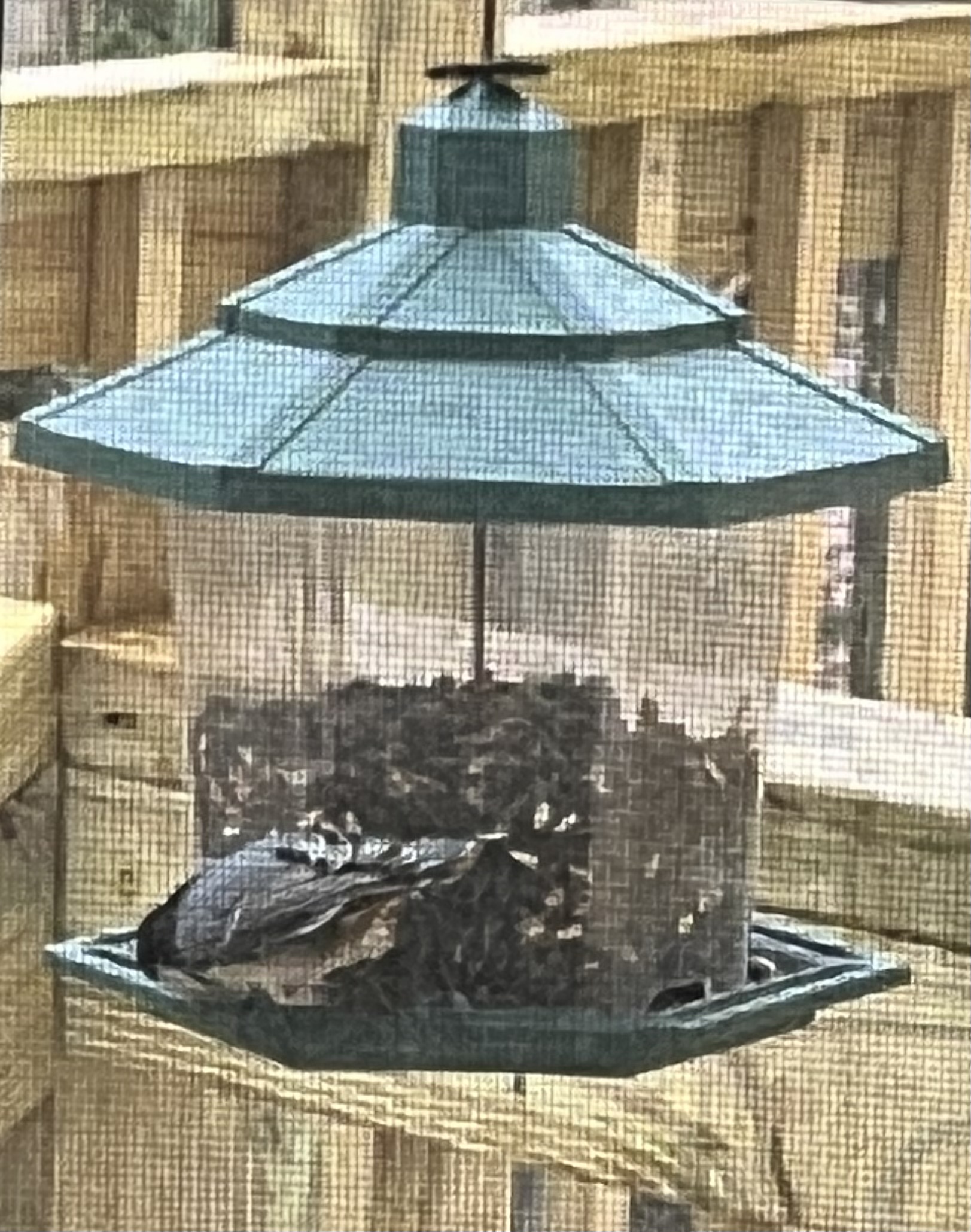
Creation not only informs our hurts, but it also informs our longings. It’s good to desire close, healthy relationships, pluck weeds from our flower gardens, keep the neighbor’s cat away from the bird feeders, paint, sing, dance, write, and perform for the glory of God. In fact, tending and beautifying all He’s entrusted to us is very good because He declared it so.

Reframing the contrast between the now and the beginning in a more positive way helps my heart focus on the glimpses of goodness God sprinkles throughout my days, to see that He is already making all things new bit by bit, including me.

We know God created the perfect beginning and has promised us a perfect ending. Between those two, we have the assurance that He is with us in the messy middle, transforming us more and more into the image of His Son while advancing His kingdom to the foreordained consummation we long for.

Lord, thank You that I will never fully plumb the depths of Your wisdom and ways, and for the opportunities to learn from my fellow finite sojourners until the day You call me Home!

The Best Gift

And these words that I command you today shall be on your heart. You shall teach them diligently to your children, and shall talk of them when you sit in your house, and when you walk by the way, and when you lie down, and when you rise.
Deuteronomy 6:6-7

Treasured Traditions

My family treasures our traditions and can confirm that they create lasting memories and form the basis for generational connections. We sometimes make good-natured fun of ourselves by saying something becomes a tradition once we’ve done it two years in a row. Take, for example, our now annual visit to see the magnificent light display at the Atlanta Botanical Garden. It took seven years after the initial opening before my younger daughter and I fit the first visit into our busy holiday schedule, but by our second visit, we were hooked, and we’ve been back every year since. This year, our eighth, my grandchildren joined the fun.

Still, despite our love of traditions, we’ve had to accept that there are times when circumstances intervene and precious customs must be modified or set aside entirely.

My husband Ray’s sudden death when our daughters were still in elementary school ushered in significant changes to our Christmas celebrations. Years later, our eldest daughter married her high school sweetheart, bringing about another shift in the flow of holiday events, as did the births of her children. Not only were there in-laws to visit, but she and her husband sought to develop their own blend of old and new traditions as Ray and I had done decades earlier.

One thing that hasn’t changed over the years is our oft-uttered proclamation, “Being together is the best gift.” Reiterated on various gift-giving special occasions, the truth of that statement has been confirmed as family members have gone Home, leaving their seats around the holiday table empty, and our hearts longing to be with them again.

Treasured Connections

Perhaps that’s why several of my most cherished Christmas traditions are connected to beloved family members:

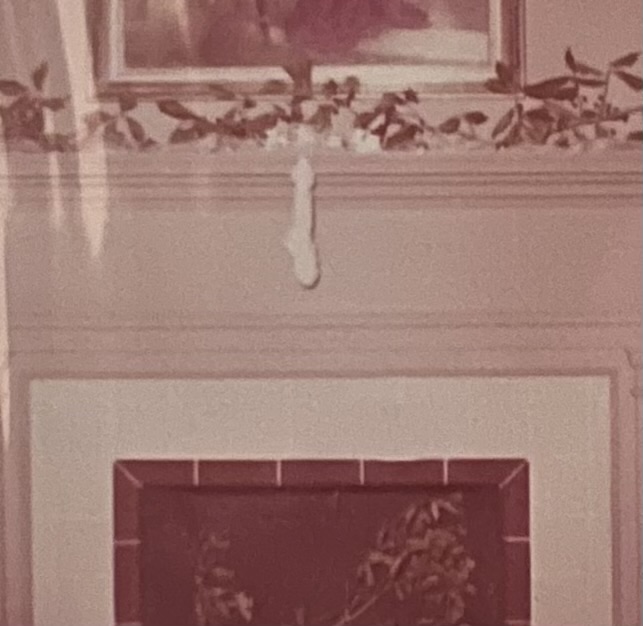
One of the first decorations I pull out each year is a small plastic, light-up Frosty my maternal grandfather, PaPa, gave me for my first birthday. PaPa was a kind, godly man, a deacon in the small country church within sight of his house. Even though he passed away a couple of months before my 7th birthday 59 years ago, I can still feel his love and cherish the memories of the brief time we had together. That enduring connection gives me hope that my grandchildren will feel my love for them long after I’m gone, too.

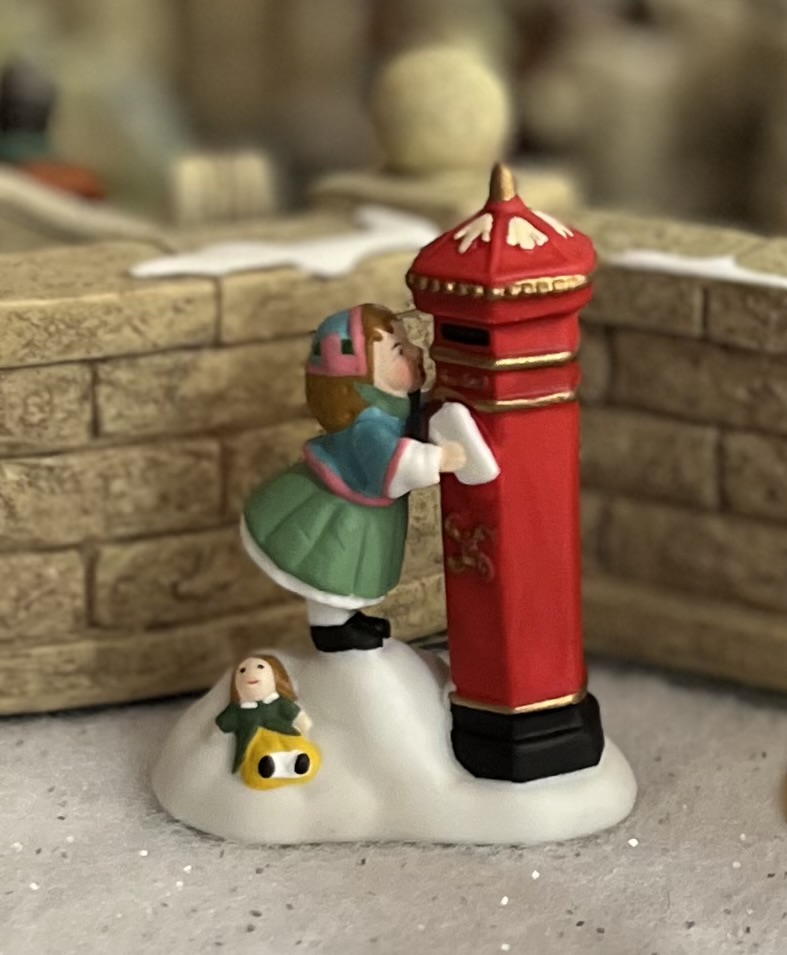
Unlike the few minutes it takes me to free Frosty from his box and plug him in, setting up my Dickens Village requires many hours across several days. Ray bought the first pieces for me in 1989 and continued to add pieces each year until he died. I kept adding to the collection after he passed and it now resides in three rooms of my house from late November through mid-January. Each year, when I set up the village, I hope Ray somehow knows how much it’s grown and how thankful I am that he started it for me. My grandchildren look forward to the annual display and finding pieces that represent them throughout the sprawling town, including a young boy riding a pony, a little girl putting her letter to Santa in a mailbox, and children gathering around the toy vendor’s cart.

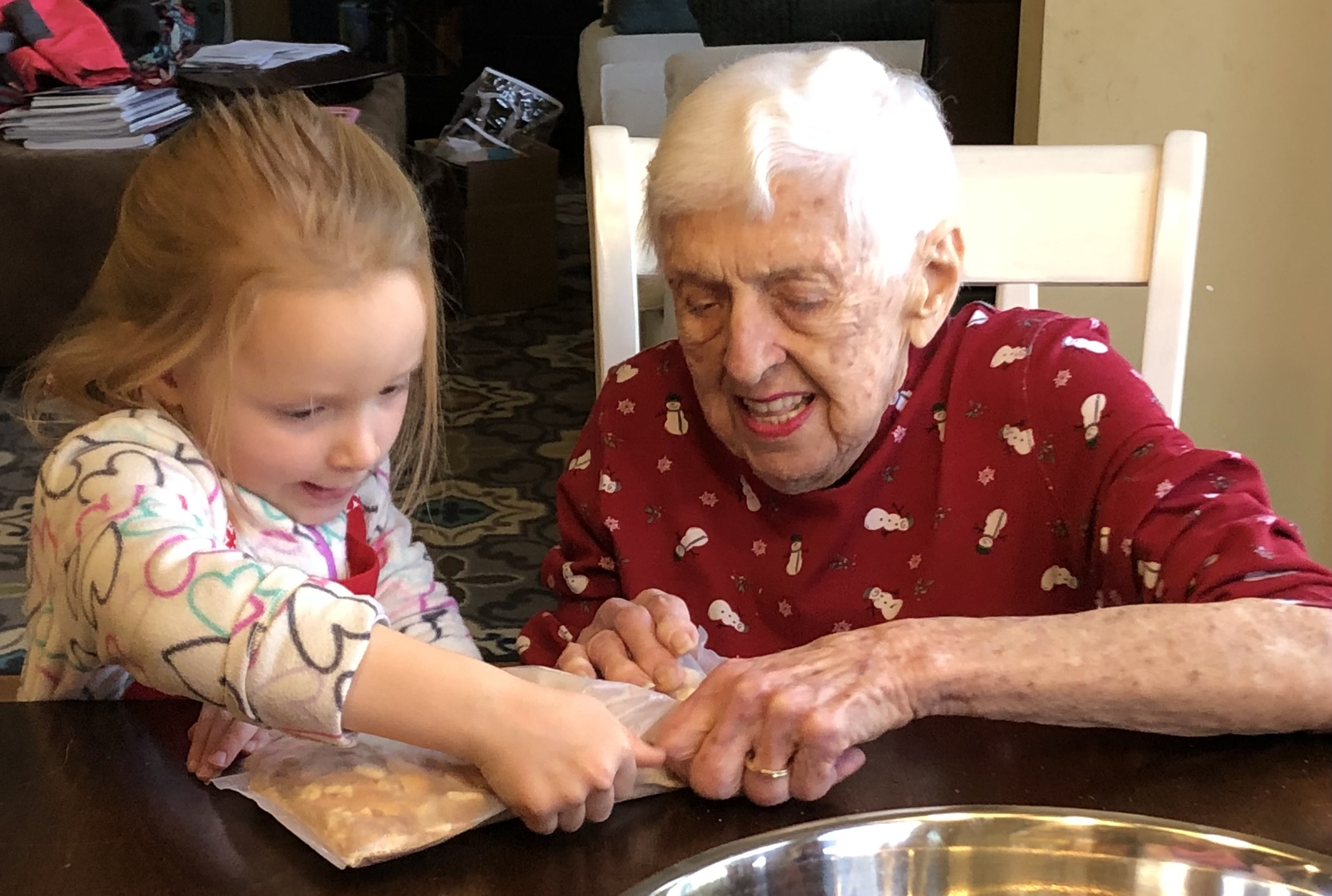
Then there’s baking. For years Mom and I made “goodie boxes” full of an array of homemade cookies and candies. The list of recipients evolved depending on our life stages and included teachers, friends, family members, neighbors, and work colleagues. Mom and I set a record one Christmas by packing and delivering 100 boxes of sweet treats! When my daughters graduated, and Mom and I retired from our jobs, the list of potential benefactors dwindled, as did the number of goodies we prepared, but Mom still made her fudge and rum balls each year. I treasure the memories from our last baking day together, when my daughters and grandchildren joined Mom and me, stirring batter, shaping run balls, baking cookies, and sharing recollections of past goodie box preparations. Those memories will remain for three generations and fuel fond reminiscences as we continue the baking day tradition.

Forever Connections

These precious traditions have meaning because I associate them with people I love. Sharing those connections with my grandchildren gives them a fuller picture of my relationships with those people and creates a connection for them as well.

Christmas is about a Person too – the most important Person in my life. Just as I delight in telling my grandchildren about the loved ones connected to my treasured traditions, I delight in telling them about Jesus, my Savior, Lord, and Friend, and His faithfulness to our family. But unlike the conversations that center around Christmas traditions, I endeavor to weave stories about God’s goodness throughout all of our times together, when we sit around my table or go for a walk in my neighborhood, when I tuck them in on sleepover nights and when I get them up for church.

Family traditions can cultivate a strong sense of belonging and lay a foundation for future connections when children and grandchildren grow up and have families of their own. But there’s no firmer foundation and no stronger connection than knowing Your heavenly Father loves you and chose you before the creation of the world to be adopted into His forever family (Ephesians 1:4-5).

My grandchildren have visited the small country cemetery in North Carolina where PaPa, Ray, and Mom are resting, awaiting the glorious resurrection day. Because God gave us the priceless gift of His Son, we can be assured that when Jesus returns, we will once again experience that “Being together is the best gift” –  with Him and our loved ones, eternally secure in His presence.

I pray that until that day, one generation after another of my family will carry on the tradition of telling their children about the glorious deeds of the Lord, and His might, and the wonders that He has done (Psalm 78:4).

Thanks, Mom! – Encore

Her children rise up and call her blessed.
Proverbs 31:28a

My dear little mom was born on November 24, 1931. Every few years, the anniversary of her birth falls on Thanksgiving. I think it’s so appropriate when it does since Mom’s life blessed me and many others. I originally wrote “Thanks, Mom!” for her birthday in 2018. I reprised it in 2022 and am considering rerunning it as a tribute to her every year. Mom was just that special.

Thus, in grateful appreciation to God for the gift of a godly mother and in recognition of what would have been her 93rd birthday today, I’ve added another of “Mom’s mottos,” “think positive,” and offer this otherwise lightly edited version of the initial post.

Mom’s Mottos

Following are some nuggets of wisdom Mom shared with me throughout my life. I referred to them as “Mom’s mottos” in her eulogy. They’ve become ingrained in my psyche, and I’ve passed them on to my daughters and am now sharing them with my grandchildren.

People will let you down, but God never will. Mom and I endured numerous trials together in the 62 years between my birth and her passing. Lies, disappointments, job loss, broken relationships, health crises, and deaths. Through it all, Mom taught me to depend on the One who says He’ll never leave or forsake us (Deuteronomy 31:6), faithfully keeps His promises (Hebrews 10:23), and speaks only truth (Hebrews 6:18). We will have troubles in this world, but Jesus has overcome the world. We can find peace in Him. (John 16:33)

When faced with a list of tasks, do whatever’s bothering you the most first and get it behind you. When I felt overwhelmed, which was more often than I like to admit, Mom encouraged me with this time-tested advice one of her grade-school teachers bestowed upon her. Though it may not have been inspired by Scripture originally, there’s undoubtedly a Biblical tie-in. Usually, when my to-do list becomes overloaded, it’s filled with chores associated with temporal concerns. Cooking, cleaning, weeding, mulching, paying bills, and the like are necessary. But Jesus makes it clear we’re to seek eternal things first, trusting Him to provide all we need (Matthew 6:25-33) and spending time at His feet to learn of Him (Luke 10:38-42).

We can’t change anyone else, much as we’d like to sometimes. We can only give an account of ourselves. My reply when Mom would tell me this? “You’re right. I have a hard enough time keeping myself in line!” Once again, there’s Biblical truth in Mom’s statement. As part of His magnificent Sermon on the Mount, Jesus warned against judging others, especially since we have sin to deal with in our own lives (Matthew 7:1-5). Praise God for giving us His Spirit, which is at work in us to bring about the transformation we’re incapable of accomplishing on our own (2 Corinthians 3:17-18). Furthermore, we’re called to pray for others because only He can soften hardened hearts (Ezekiel 36:25-27).

We can’t give up. We’ve got to hold on to our faith and keep going. Throughout her life, Mom faced challenges that may have led some to quit or become bitter. In the last decade of her life alone, she:

  • shattered the bones in her right shoulder, an injury that required surgery to install a plate and multiple screws, and left her with a limited range of motion in that arm.
  • suffered a heart attack that led to the discovery of three severely blocked arteries, requiring emergency open-heart surgery.
  •  fractured a vertebra in her back and had a procedure known as kyphoplasty to repair it.

Mom endured daily pain due to the ravages of arthritis that led to enlarged joints in her fingers and a bone-on-bone right knee due to cartilage deterioration. Yet she rarely mentioned her constant aches. Instead, she clung to God’s mercies, which are new every morning (Lamentations 3:22-24), and encouraged those in her inner circle to do the same. Not surprisingly, her life verse was Philippians 4:13, “I can do all things through Christ who strengthens me.” It appears on her grave marker.

There’s an end to everything and everybody sometime sooner or later. Mom usually used this phrase when a situation called for consolation, such as when a cherished object wore out, broke, or was lost. But her most poignant use of the saying came several days after she broke her hip. She recited it to me during one of her lucid moments, followed by, “I guess this is the end of me.” As much as it hurt to hear her acknowledge what was becoming increasingly likely, I could comfort her with the assurance of complete healing that awaited. As we live under the curse where death and brokenness are certainties, we have the promise of Christ’s return when all will be made new, and death will be no more (Revelation 21:1-4).

There’s nothing so bad it couldn’t be worse. Similar to the motto above, Mom used this one to offer comfort. It also reminds me to be thankful even in trying circumstances (1 Thessalonians 5:18). For believers, even death isn’t the worst possible scenario. Instead, it ushers us into the presence of Jesus (2 Corinthians 5:6-8).

Think positive! In some ways, Mom and Dad were a classic case of opposites attracting. Dad was more solemn and tended to focus on potential negatives in a given situation. Being a blend of the two, there were times when I, too, would see a half-empty glass. When Dad or I started imagining a worst-case scenario, Mom cheerfully yet firmly encouraged us to “think positive!”  Trusting God and knowing He works all things together for good for those who love Him (Romans 8:28) allowed Mom to maintain a positive attitude through even daunting circumstances. I imagine her greeting Dad when he entered Glory last year with a joyful, “See, John, I told you to ‘think positive.’ It’s all ok!”

That’s a Gulf song. This statement isn’t advice, but I include it because it alludes to my heritage of faith. Mom grew up in the tiny town of Gulf, NC, where she attended a small Presbyterian church established in the 1800s. When the strains of a familiar hymn from her childhood would begin to play at our current church, Mom’s face would brighten, and one of us would usually lean toward the other and whisper, “That’s a Gulf song.” On a recent Sunday morning, I whispered the same to my granddaughter Lyla, explaining the connection after the service. I don’t know how many generations my heritage of faith encompasses, but I know there are at least two behind me and two in front. I pray that the legacy of faith will be passed continually from generation to generation until Christ returns (Deuteronomy 6:4-9).

Mom’s Enduring Love

Oh, how I miss Mom! Though petite, she had a big, beautiful smile and an even bigger heart. She was my main cheerleader and most dependable defender. We all need someone who’s unconditionally, unreservedly in our corner. I’m so thankful Mom was in mine. She was my rock because she consistently pointed me to the Rock and reminded me that His everlasting arms are securely holding all who belong to Him in an eternal embrace (Deuteronomy 33:26-27a). And since Mom’s love was grounded in God’s great love, it will be with me until we meet again.

Dear LORD, thank You for the priceless blessing of a godly mother and the assurance that I will see her again! Please help me to recount Your goodness and faithfulness to coming generations as she did.

Scars, Epilog

I will hope continually
    and will praise you yet more and more.
My mouth will tell of your righteous acts,
    of your deeds of salvation all the day,
    for their number is past my knowledge.

Psalm 71:14-15

Secrets?

A longtime friend texted me after she read my last post to tell me she’d suffered an injury almost identical to one of the ones I described. It happened years ago, as did mine, but I never knew of our common experience until now. Admittedly, decades have passed since we lived near each other, and talking about such minor injuries isn’t at the top of our conversation topics when we schedule phone dates. But the fact that I didn’t know got me thinking about more serious things we intentionally hide, even sometimes from those closest to us.

I’m not implying that this particular friend has deep, dark secrets she’s never told me despite our five decades of friendship. No, I’m thinking about how reticent I’ve been to share things from my past for fear of rejection or condemnation. Yet, when situations arose that made it fitting to do so, I’ve not only been freed from my self-imposed isolation, but I’ve also made it safer for others to share their hard things. There is wonder and relief in knowing, “I’m not the only one!”

When someone further down the road assures us that God can redeem our brokenness and bring beauty from ashes (Isaiah 61:3), relief and hope unite as the Light leads us out of darkness.

Credentials

My dear friend Sharon Betters refers to the hard things the Lord brings us through as our credentials. As we call back to others, our experiences make us credible witnesses of God’s steadfast love, goodness, and faithfulness.

On a recent episode of her Daily Treasure podcast[1], Sharon included a quote from Oswald Chambers, which contained the following:

“There is no such thing as a private life . . . for a man or woman who is brought into fellowship with Jesus Christ’s sufferings . . . We are not sanctified for ourselves, we are called into the fellowhip of the Gospel, and things happen which have nothing to do with us . . . Why shouldn’t we go through heartbreaks? Through those doorways God is opening up ways of fellowship with His Son . . . If through a broken heart God can bring His purposes to pass in the world, then thank Him for breaking your heart.”[2]

Thank Him for breaking your heart? That’s unthinkable apart from our eternal security in Christ (2 Corinthians 16-18) and believing that God is working all things together for the good of those who love Him, those called according to His purpose (Romans 8:28). We can find great comfort in knowing that our little stories are part of God’s great big story. He’s weaving the plot lines together in ways we may not understand in the moment or possibly not even this side of Heaven, but we can always trust His character.

For the Lord will not
    cast off forever,
but, though he cause grief, he will have compassion
    according to the abundance of his steadfast love;
for he does not afflict from his heart
    or grieve the children of men.
(Lamentations 3:31-33)

Propriety

There are appropriate times and places to share how the Lord has brought us through challenging circumstances. Not all the stories He’s entrusted to us are meant to be broadcast from a public platform. Some are best processed with wise counselors and trusted friends. Even so, we need to be willing to share when God sovereignly places someone in our lives who would benefit from hearing how He’s worked in and through even our darkest places.

There are some things I’ll probably never write a blog post about. However, I pray for discernment to know when God has ordained a crossing of paths and is nudging me to bless someone with the assurance others have passed on to me: you are not alone, and God can redeem even this.

Before I close, I also want to remind us to be slow to judge since we don’t know all the experiences that have gone into making a person who they are, much less how far along they are on their journey of restoration (1 Samuel 16:7; John 7:24). I’ve had several instances when a piece or two of information has completely changed my perspective on someone’s behavior. And I’ve had others make similar comments when they’ve learned more about my past.  

There are still tender spots in my soul, scars that will cause me to retreat in situations that evoke painful, long-ago events, but I trust God will use even those lingering scars for His good purposes.

So we do not lose heart. Though our outer self is wasting away, our inner self is being renewed day by day. For this light momentary affliction is preparing for us an eternal weight of glory beyond all comparison, as we look not to the things that are seen but to the things that are unseen. For the things that are seen are transient, but the things that are unseen are eternal (2 Corinthians 4:16-18).


[1] “A Private Life?,” Daily Treasure, August 31, 2024. Daily Treasure is one of many resources available through MARKINC Ministries.

[2] Oswald Chambers, My Utmost for His Highest, November 1 devotion: “Ye Are Not Your Own.” (Grand Rapids, Discovery House.)

Don’t Cry! (Reprise)

Jesus wept.
John 11:35

Introduction

A recent conversation with friends began with one of them apologizing for the tears that accompanied her reply to our question, “How are you?” “Not great,” followed by,  “Oh, I’m sorry, I cry too easily!”

My other friend and I assured her there was no need for an apology. After all, we cry easily, too! Thinking back on our exchange reminded me of this blog post I wrote several years ago. I decided it was time to dust it off, make a few edits, and rerun it.

Tears for All Occasions

I suppose I should begin with a confession: I’m an equal-opportunity crier. My eyes are just as likely to well up in moments of joy as in sorrow – while reading sweet sentiments in Hallmark cards, watching heartbreaking news stories, attending weddings or funerals, even when leading Bible study, as the magnitude of God’s grace and mercy floods over me. Yes, from a barely-there trickle to gut-wrenching sobs, I’ve shed my share of tears and expect to shed plenty more.

A quick Google search reveals three different types of tears. Basal tears keep our eyes lubricated, while reflex tears pop up in response to irritants like slicing onions or having a pesky gnat flit into your eye. And then there are psychic tears associated with our emotions, distinct from the other two in that they contain stress hormones.[1] No wonder we often feel better after shedding them. They’re like an overflow valve for the soul.

Biblical Weeping

The Bible has much to say about tears and the circumstances surrounding them. Consider, for example:

  • Loss of a loved one by separation or death
    • David grieved the loss of his closer-than-a-brother friend, Jonathan, first from necessary distancing and then by death (1 Samuel 20:41; 2 Samuel 1:12).
    • Mary and Martha mourned Lazarus’ death. Seeing their distress, Jesus wept too, even though He knew his Father would hear His prayer to raise him. Jesus had compassion for the sisters in their time of loss, and He has compassion for us as well (John 11:31-35).
    • Jesus’ followers were bereft and befuddled after His death despite the many times He’d told them what was to come (Luke 18:31-34; 36:13-49).
  • Disappointments of various sorts
    • Esau wept over losing his birthright when he realized his brother had tricked their father (Genesis 27:30-38).
    • Hannah’s unfulfilled desire for a child, exacerbated by her rival’s provocation and her husband’s lack of understanding, led to her fervent, tear-stained prayer for relief (1 Samuel 1:1-10).
  • Sorrow for sin
    • Three of the four Gospels recount Peter’s tear-punctuated dismay when Jesus’ statement that he’d betray Him came to pass (Matthew 26:75; Mark 14:72; Luke 22:62).
    • James says we should be wretched, mourn, and weep over our transgressions, humbly drawing near to God for forgiveness and restoration (James 4:8-10).
  • Worship and Gratitude
    • The penitent woman who wet Jesus’ feet with her tears, wiped them with her hair, and anointed them with ointment was motivated by her love for her Savior (Luke 7:36-38).
  • Joyous reunion
    • Though bitterness marked their estrangement and Jacob feared the worst from Esau, the brothers’ reunion was accompanied by joyful tears (Genesis 33:4).
    •  I’m taking some liberty here because none of the translations I consulted mention crying, but I’ve got to believe the prodigal son’s compassionate father had tears of elation streaming down his face as he ran to greet his returning son (Luke 15:20).

To Grieve or Not to Grieve?

Even though these passages and others make it clear psychic tears are part of our God-given emotions, we’re quick to admonish, “Don’t cry!” Could it be that others’ tears make us uncomfortable or tearful ourselves? Or worse, might we believe God’s children aren’t supposed to cry because we know the end of the story?

I distinctly remember a visit from the mother of one of my daughter’s friends, though it occurred 27 years ago. She, too, was widowed at a young age, losing her husband a few months after I lost mine. Being a wee bit further along the path of single parenting, I hoped to console her, but when she arrived, she was surprisingly joyful and radiant. I’ll never forget her statement, “The elders and my church family have been praying I won’t grieve, and it’s working!”

Not grieve the loss of your life partner and father of your children? I was speechless. Granted, we don’t grieve as those who have no hope, but we do grieve.

Man of Sorrows

The women who witnessed Jesus’ crucifixion no doubt wailed at the sight of their beloved Teacher and Friend, bloodied and beaten, being nailed to a Roman cross – the innocent One put to death for the sins of others. Isaiah 53 is one of my most cherished passages, but also one which I can rarely get through without tears. Man of sorrows, acquainted with grief. Despised. Rejected. Wounded for our transgressions, crushed for our iniquities. My transgressions. My iniquities.

A conversation with my pastor regarding our propensity to rush to the good news of Christ’s victory over death without allowing ourselves or others to grieve reminded me of my daughter Jessie’s comment as we stood by Mom’s grave following her funeral three years ago. After watching Mom endure horrible pain the last ten days of her life, I said I was thankful she wasn’t suffering anymore. Jessie replied, “That’s true, but don’t miss out on the mourning, Mom.”

Don’t miss out on the mourning.

If we ever doubt we have permission to grieve, we have only to look to Jesus. He experienced what it’s like to walk through this sin-scarred world. Even though He knew He would defeat death and not one of those entrusted to Him would be lost, Jesus wept because death was never part of God’s good plan. It stings. It always will this side of heaven.

As we go through difficulties in this life, we know the One who keeps track of every tear (Psalm 56:8) is seated at the right hand of God, interceding for us. Nothing can separate us from His love (Romans 8:31-39). He has promised to return, to usher in a new heaven and a new earth, to wipe every tear from our eyes (Revelation 21:1-4). Until then, let us rejoice with those who rejoice and weep with those who weep, unafraid of our tears.

O Lord, thank You for hearing our cries for help. Though weeping may last through the night, joy comes with the morning (Psalm 30). You have shown great mercy in sending Jesus to die for our sins and will turn our mourning into gladness. For we know this momentary affliction is preparing an eternal weight of glory beyond all comparison (2 Corinthians 4:17). 

Note: A blend of joy that my granddaughter Lyla Ray arrived safely and sorrow that her Grandpa (Ray) Kuipers wasn’t with us to greet his namesake produced the barely visible tear on my cheek in the accompanying photo.


[1] “What are the three different types of tears found in our eyes?”, http://www.sharecare.com

The Empty Nest, Take 2

Grandchildren are the crown of the aged, and the glory of children is their fathers.
Proverbs 17:6

Losing my job had an upside I couldn’t imagine the afternoon my supervisor informed me that the company I’d worked for for 30 years no longer required my services or expertise. God knew I was needed elsewhere. My daughter Mary was early in her first pregnancy when I lost my job and was looking forward to having me around more often. She gave birth to Joshua, my first grandchild, six months later. For eleven years, until all the children were in school, I spent two days a week at Mary’s house, first with Joshua, then later with three little ones when his two sisters joined the mix. We looked forward to those days and came to refer to them as Grammie days.

Several summers ago, I became aware of a “whoosh” whenever I stepped out the front door onto their small porch. I soon realized I was being strafed by a mamma bird who’d built her nest in an eave of the entryway. She picked a perfect place. Not only were she and her carefully constructed home sheltered from the elements and out of reach of any passing predators, but we could observe from inside the house without disturbing her. My son-in-law Justin peeked into the nest when mamma bird was away and found five tiny eggs. We watched as she faithfully warmed and protected the eggs. One day we saw five little heads, mouths agape, as the babies begged for food. Mamma bird diligently cared for her brood. The little ones thrived under her care. Then, one day, I went over, and the porch was quiet.

They were gone.

Even though we human mothers have years to nurture our children, time passes so quickly that it sometimes seems it’s only days, like the time it took the mother bird to raise her young. Over the years, I’ve shared this bittersweet sentiment with other mothers: “If we do our job well, the result is an independent adult.” Mothering requires a balance of holding on and letting go and the wisdom to know which to employ at any particular time in our children’s lives. It’s a difficult but necessary process.

Yet my dear mother often said, “Once a mother, always a mother,” a statement as valid as the one I wrote above. We hold our children close in our hearts and prayers regardless of their life stages, ready to assist if called on. I’m quite sure the mamma bear syndrome knows no age limits. After all, of the many people who were upset when my 30-year career ended via termination, Mom was the most incensed by the treatment I’d received. Though tiny, she was my staunchest defender until her passing three years ago. Likewise, I can’t stand the thought of anyone hurting my kids and grandkids!

It’s that time of year – the time of graduations and weddings. So, for you mothers reading this and contemplating the emptying of your nests, I offer this: one day, you may realize the independent adult you worked so long and hard to raise has become one of your very best friends. Someone who brings joy to your life in new ways as you continue to cheer them on and are blessed by the fruits of your labors and theirs.

I vividly remember driving home after Mary and Justin’s wedding. I thought, “That’s it. I gave her away. It’s all over.” I was so wrong. I gained a son that night, and then came three brand new people whom I’m blessed to know and spend time with. Though my nest emptied years ago when my daughters graduated from college and established their own households, Mary and Justin’s nest is full, and I am welcome there. Welcome to help nurture a new generation and introduce them to plants and mamma birds and to their Savior, the One who loves them even more than I do.

Teach Your Children

Hello, dear readers!

Occasionally, I’ll take a devotional I’ve prepared for a women’s event, make a few edits, and use it as a blog post. This is one of those times. It’s a bit longer and not as tidy as usual, grammatically. Still, I hope you can imagine yourself being part of the group listening to this message on one of my very favorite subjects, passing our faith on to future generations.

As you’ll see, I alternated between reading Scripture and making comments.

24/7

“Hear, O Israel: The Lord our God, the Lord is one. You shall love the Lord your God with all your heart and with all your soul and with all your might. And these words that I command you today shall be on your heart. You shall teach them diligently to your children, and shall talk of them when you sit in your house, and when you walk by the way, and when you lie down, and when you rise (Deuteronomy 6:4-7).

Moses’ directive to teach our children may feel overwhelming because it covers every part of our day. But it is doable! Because God is present and pertinent to every moment of our lives. As many of you know, I love to garden. When I’m outside, many of Jesus’ parables come to life – God’s care for the birds of the air and the lilies of the field, how branches can’t survive much less bear fruit if they’re not attached to the vine, the importance of good soil if you want your plants to flourish. And then there’s the vast diversity of plants and animals that God created.

When my grandson Joshua was still a toddler, we made a pact that he would teach me about animals, and I would teach him about plants. It’s worked out great. Not only have we both learned from each other, but many of our conversations include comments about God. We wonder why He made roaches. (Most days, we think they were part of the curse!) We look forward to seeing how everything will fit together when all the plants and animals take their proper places on the new earth. And, when Joshua starts talking about predators, and I lament creatures killing each other, I often quote Isaiah 65:25: “They will not hurt or destroy in all my holy mountain,” says the Lord, followed by, “I can’t wait!”

Abundant Evidence

You may be thinking, “I’m not a gardener. I don’t particularly like being outside, especially during pollen season!”  But listen to this verse from the first chapter of Romans:

For (God’s) invisible attributes, namely, his eternal power and divine nature, have been clearly perceived, ever since the creation of the world, in the things that have been made. So (we) are without excuse (Romans 1:20).

That verse certainly speaks about creation – all the world around us, the heavens, oceans, mountains, plants, animals – but God also created us, and, as Psalm 139:14 states, we’re fearfully and wonderfully made. So, we can talk to our children about how wonderfully God made our bodies. We get well when we’re sick. Cuts and broken bones heal. And how about the miracle of sleep? We’re unaware of the world for hours at a time and then wake up again. I think that’s amazing!

I’ve been blessed this year to be the troop shepherd for the American Heritage Girls troop that meets at our church. Each week, when I prepared the devotional, I found Scriptures that related to what we were doing, regardless of the week’s focus. Subjects ranged from our identity in Christ to architecture to world cultures and aspects of our Oath and Creed. The latter features characteristics that we’re trying to develop in our lives so we’re more like Jesus, things like compassion, honesty, loyalty, perseverance, and helpfulness. In the last devotional for the year, I told the girls I hoped they’d been able to see how God’s inspired Word applies to all of life.

Spiritual Legacy

Give ear, O my people, to my teaching;
incline your ears to the words of my mouth!
I will open my mouth in a parable;
I will utter dark sayings from of old,
things that we have heard and known,
that our fathers have told us.
We will not hide them from their children,
but tell to the coming generation
the glorious deeds of the Lord, and his might,
and the wonders that he has done.
He established a testimony in Jacob
and appointed a law in Israel,
which he commanded our fathers
to teach to their children,
that the next generation might know them,
the children yet unborn,
and arise and tell them to their children,
   so that they should set their hope in God
and not forget the works of God,
but keep his commandments Psalm 78:1-7

My beloved maternal grandfather, PaPa,  was a kind, gentle man of faith who served as a deacon at his church.

We’re commanded to tell the next generation about God and His mighty deeds – personal stories recounting how God has worked in your life and been faithful to you and your family. Most of us would say we want to leave a material legacy of some sort for our offspring. However, a spiritual legacy is even more significant because it has eternal value. It’s part of the treasure Jesus commanded us to store up in heaven, a treasure that can’t rust or decay or be stolen (Matthew 6:19-21). I know my grandparents were Christians, so my grandchildren are at least the fifth successive generation who’ve been told the mighty deeds of the Lord. I pray that our family’s heritage of faith will continue until Jesus returns, regardless of how many generations are yet to come.  

Overflowing with Thankfulness

Going back to Deuteronomy chapter 6, we see the following warning:

“And when the Lord your God brings you into the land that he swore to your fathers, to Abraham, to Isaac, and to Jacob, to give you—with great and good cities that you did not build, and houses full of all good things that you did not fill, and cisterns that you did not dig, and vineyards and olive trees that you did not plant—and when you eat and are full, then take care lest you forget the Lord, who brought you out of the land of Egypt, out of the house of slavery (Deuteronomy 6:10-12).

We’re in danger of forgetting that God is the source of all good gifts, aren’t we? When things are going well and we’re thriving, we tend to think it’s due to our actions and that we’ve got it all under control. One way to combat that wrong thinking and to share our faith is to openly and frequently praise and thank God for His many blessings, acknowledging that all we have and are is from Him and encouraging our children and grandchildren to do the same.

Furthermore, we, too, were enslaved until God rescued us from the bondage of sin. The fact that He transferred our citizenship to the kingdom of His beloved Son is reason enough to rejoice and give thanks every day (Colossians 1:13-14).

The Danger of Misplacing the Word

This spring, we’ve been studying “What a Royal Mess“ in Bible study.[1] The lessons take us through Israel’s history, focusing on the ups and downs associated with some of the kings of Israel and Judah. Often, it was a mess because many of the kings were evil and led the people in worshiping other gods. After God gave the Law, He gave further instructions, including this message for Israel’s kings:

And when he sits on the throne of his kingdom, he shall write for himself in a book a copy of this law, approved by the Levitical priests. And it shall be with him, and he shall read in it all the days of his life, that he may learn to fear the Lord his God by keeping all the words of this law and these statutes, and doing them (Deuteronomy 17:18-19).

Fast forward several hundred years, Josiah is on the throne in Judah, and Hilkiah, the high priest, found the Book of the Law in the temple when renovations began. When he read it to Josiah, one of the few good kings, Josiah tore his clothes in dismay because he realized God’s people had been far from obeying its contents. To say Hilkiah found the Book of the Covenant implies that it had been lost and certainly not kept on hand, much less read,  by the kings who preceded Josiah. It’s no wonder the people had gone astray without God’s Word to guide them. I don’t know about you, but I don’t want to be the generation that misplaces God’s Word for the next generation. 

This sobering reminder takes us back to where we began, emphasizing the importance of one generation telling the next about God, His Word, His abundant blessings, and the need to obey Him. We must practice seeing and sharing how God, His ways, and His glory are apparent in all aspects of our lives. The more we practice seeing, the more we’re able to see.

Another beautiful thing about sharing with our children and grandchildren is that in reminding them, we’re also reminding ourselves, creating a delightful process of growing together. I hope I’ve given you plenty of ideas and reasons to do so. 😊


[1] Susan Tyner, “What a Royal Mess, A Study of 1 and 2 Kings,” (Lawrenceville, GA: CDM, 2023)