Train yourself for godliness; for while bodily training is of some value, godliness is of value in every way, as it holds promise for the present life and also for the life to come.
1 Timothy 4:7b-8
Watching the Winter Olympics last month reminded me how fitting the Apostle Paul’s comparisons of spiritual and physical training are.
Helpful Analogies

Like millions of other people around the world, I watched countless hours of coverage. I caught myself holding my breath multiple times, as athletes went hurtling down hills at speeds comparable to those I drive on the interstate, and did flips and tricks that left me mesmerized and marveling that human bodies can even perform such stunts.
As I viewed the various events, I kept thinking about how hard the athletes had to work and how many years they trained to reach the Olympics. You don’t just wake up one morning and master triple toe loops and backflips on an ice rink, or develop the stamina for cross-country skiing and speed skating overnight.
All this pondering reminded me of Bible passages that call us to apply the same discipline and dedication required of elite athletes to our spiritual development. These two came to mind in addition to the introductory verse:
Do you not know that in a race all the runners run, but only one receives the prize? So run that you may obtain it. Every athlete exercises self-control in all things. They do it to receive a perishable wreath, but we an imperishable. So I do not run aimlessly; I do not box as one beating the air. But I discipline my body and keep it under control, lest after preaching to others I myself should be disqualified.
1 Corinthians 9:24-27
Therefore, since we are surrounded by so great a cloud of witnesses, let us also lay aside every weight, and sin which clings so closely, and let us run with endurance the race that is set before us, looking to Jesus, the founder and perfecter of our faith, who for the joy that was set before him endured the cross, despising the shame, and is seated at the right hand of the throne of God.
Hebrews 12:1-2
Key Parallels
There are several parallels between physical and spiritual training:
- Discipline: Just as athletes need ongoing physical discipline in areas like diet and exercise, those who follow Jesus also require discipline in spiritual practices such as prayer, Bible study, and worship. Serious athletes wouldn’t think of eating a steady diet of junk food or going for days without practicing. Likewise, we must feed on God’s Word, pray, and participate in corporate worship, not occasionally or when we “feel” like it, but consistently.
- Endurance: The Christian life is often compared to a marathon. Having seen my daughter train to run that distance several times, I know it requires not only physical preparation but also mental toughness. Jesus is our ultimate example of endurance. He persevered through all of the trials set before Him, including death on the cross, remaining focused on the joy that awaited. Because of His work on our behalf, we can be confident that we, too, will finish the race and be seated in the heavenlies (Ephesians 2:4-6).
- Fans: Athletes receive support from devoted fans and enthusiastic followers, including fellow athletes who have competed in the past. Believers have a great cloud of witnesses who testify to God’s faithfulness (Hebrews 12:1). Their lives serve as examples of what faith and perseverance in hardship look like. I imagine them cheering us on toward certain victory in Christ (Philippians 1:6).
- Coaches: Skilled coaches who know their sports and can teach and motivate their athletes are priceless. Similarly, those who are further along in the Christian walk can exhort and encourage those who are younger in their faith; in fact, they are instructed to do so (Titus 2:1-8), and there are multiple examples in Scripture, such as Moses and Joshua, Naomi and Ruth, and Paul and Timothy. What’s more, we have the Holy Spirit, the ultimate coach, who counsels and empowers us (John 14:26).
Key Differences
- Effect: Because of the Fall, our physical bodies will wear out over time. No matter how much training we do, fitness and strength will decline. Not so with spiritual training, which helps us become more and more like Christ and produces eternal fruit (2 Corinthians 3:18; Galatians 5:22-23).
- Prizes: In sports competitions, only one athlete or team wins. Even then, the medals and trophies will eventually tarnish and decay. But every child of God will receive an imperishable prize of far greater value than a gold medal: eternal life with Him!
Though we will never achieve perfection in this life, we must continue practicing, training, and pressing on toward the prize of the upward call of God in Christ Jesus (Philippians 3:12-14), knowing that we do not strive alone. We are surrounded by a great cloud of witnesses, empowered by the same Spirit that raised Christ from the dead, and accompanied by a perfect Savior who has promised never to leave or forsake us.


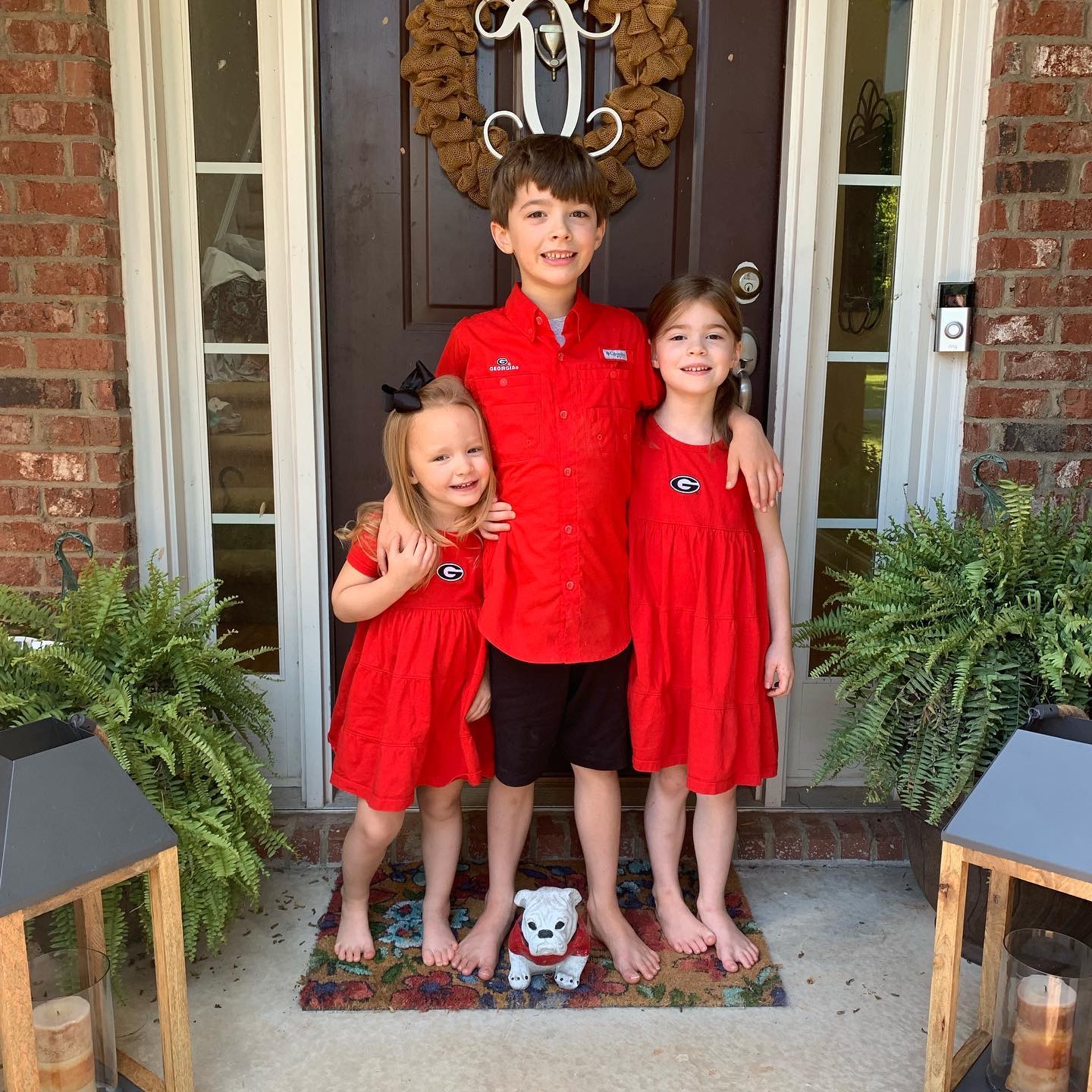



 Last year, my daughter, Mary, helped start an American Heritage Girls troop at her church and serves as one of the leaders. Each week, Mary and my granddaughters, Lyla and Emma, look forward to meeting with their friends. They engage in a variety of activities as they work toward the organization’s goal of developing Christ-like character and leadership skills.
 After a long period of separation related to coronavirus restrictions, the troop began meeting again last month. Though always vital, the skills they’re learning to earn their Emergency Preparedness badge seem especially appropriate during this time of uncertainty. They’ve talked about stranger danger, paid a virtual visit to a local fire station, and got an up-close look at an ambulance, all while discussing how to help themselves and others during emergency situations.
 During a recent reconnaissance walk through my woods, I discovered a patch of passionflower vine. Though it chose to pop up on its own, I was delighted to see it since it’s the food source for caterpillars of Gulf Fritillary butterflies. The petite vine was already sprouting tendrils and reaching out for support. I smiled and shook my head when I found one tiny green appendage wrapped around a leaf lying on the ground. Even though the tendril had a stranglehold on the leaf, the latter could never help the passionflower rise above the ground.
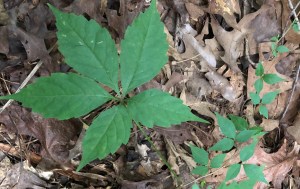 Virginia creeper, a native vine with 5-leaved adult foliage, is sometimes mistaken for poison ivy, because its juvenile foliage frequently has three leaves, like the pesky purveyor of itch-producing oil. Its ability to scale walls and tree trunks thanks to holdfasts that act like sticky toes, reminds me of the tiny lizards I see scampering up the bricks on the front of my house. Though both plant and critter are capable of ascending considerable heights, they’re easy to dislodge.
 Back 2 the Garden