For no good tree bears bad fruit, nor again does a bad tree bear good fruit, for each tree is known by its own fruit. For figs are not gathered from thornbushes, nor are grapes picked from a bramble bush. The good person out of the good treasure of his heart produces good, and the evil person out of his evil treasure produces evil, for out of the abundance of the heart his mouth speaks.
Luke 6:43-45
Identifying Features
Before I studied horticulture, I tried to identify trees by their leaves. Don’t get me wrong, leaves are important identifiers for many species, but they can be misleading in others. When botanists classify plants, they look instead at their reproductive structures – flowers, fruit, and seeds.
Although oak leaves come in different shapes, all oaks sprout from acorns. Likewise, there are numerous forms of maple leaves, not just the classic silhouette that appears on the Canadian flag. But all maple seeds are borne in samaras, those little winged carriers that float to the ground like tiny helicopters.
Once I learned this, it became a fun game to see if I could spot similarities between plants at the botanical garden where I volunteered. I first noted the flowers on Abutilon with their crepe paper-like petals resemble dwarf hibiscus blossoms. Despite the shape of its leaves, which leads to one of its common names, flowering maple, Abutilon is part of the Malvaceae family, as are hibiscus and okra.
-
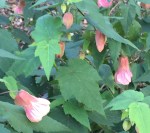
- Abutilon
-

- Hibiscus
-
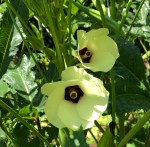
- Okra
Next, I noticed the tiny white bell-shaped flowers on Pieris japonica look like those on a small tree, known as farkleberry, and both resemble those on blueberry bushes. Those three belong to the Ericaceae family.
The more I studied, the easier it became to see the distinguishing characteristics and successfully match plants with their relatives. I wondered why I found it to be so gratifying, musing that it must be because family, both biological and spiritual, is so important to me.
Family Resemblance
Just like we can recognize plants by their fruit, Jesus taught that members of His family would bear distinguishing fruit as well, and He made it clear the only way to bear abundant spiritual fruit was to abide in Him:
Abide in me, and I in you. As the branch cannot bear fruit by itself, unless it abides in the vine, neither can you, unless you abide in me. I am the vine; you are the branches. Whoever abides in me and I in him, he it is that bears much fruit, for apart from me you can do nothing. John 15:4-5
I’m frequently reminded of His statement when I’m pruning. I sometimes leave piles of discarded branches on the ground and then go back to collect them after I finish cutting. Inevitably, the leaves on the severed limbs are already beginning to wilt. The longer the time apart from their source of nourishment and the hotter the day, the quicker their demise. They can no longer live, much less produce fruit.
When I think of abiding, I think of peace – no striving or struggling. The word appears ten times in verses 4 to 10 of John 15, emphasizing the permanence of our relationship with Christ as well as the eternal significance of the fruit we bear. Securely connected to the Giver of Life, His life flows through us to bless and benefit others, all to the praise of His glory.
Distinctive Fruit
And what kind of distinct fruit do we produce when we abide in Him? Love, joy, peace, patience, goodness, kindness, gentleness, faithfulness, self-control (Galatians 5:22-23). All are marks of God’s children, but one outshines them all – love. Jesus prayed that the love He and the Father shared would dwell richly in His followers (John 17:26). That singular mark of distinction would allow all people to identify them as being part of God’s family (John 13:35).
He also warned against false prophets, those seeking to deceive. Like leaves that mimic those of other plants, their outward appearance may initially camouflage their deceit. But closer inspection of the fruit borne of the evil intent in their hearts will give them away, ultimately leading to their destruction (Matthew 7:15-20).
Not so the children of God who bear fruit in keeping with repentance and shine as lights in this dark world (Ephesians 5:8-11).
O Lord, what a privilege it is to be a branch on Your family tree. We bear the imprint of the true Vine, Whose life in us allows us to bear abundant fruit of eternal value.

 Last year, my daughter, Mary, helped start an American Heritage Girls troop at her church and serves as one of the leaders. Each week, Mary and my granddaughters, Lyla and Emma, look forward to meeting with their friends. They engage in a variety of activities as they work toward the organization’s goal of developing Christ-like character and leadership skills.
 After a long period of separation related to coronavirus restrictions, the troop began meeting again last month. Though always vital, the skills they’re learning to earn their Emergency Preparedness badge seem especially appropriate during this time of uncertainty. They’ve talked about stranger danger, paid a virtual visit to a local fire station, and got an up-close look at an ambulance, all while discussing how to help themselves and others during emergency situations.
 My maternal grandfather was born 130 years ago today. This post, in honor of his birthday, is a meditation on enduring love and includes some reflections published in previous posts.
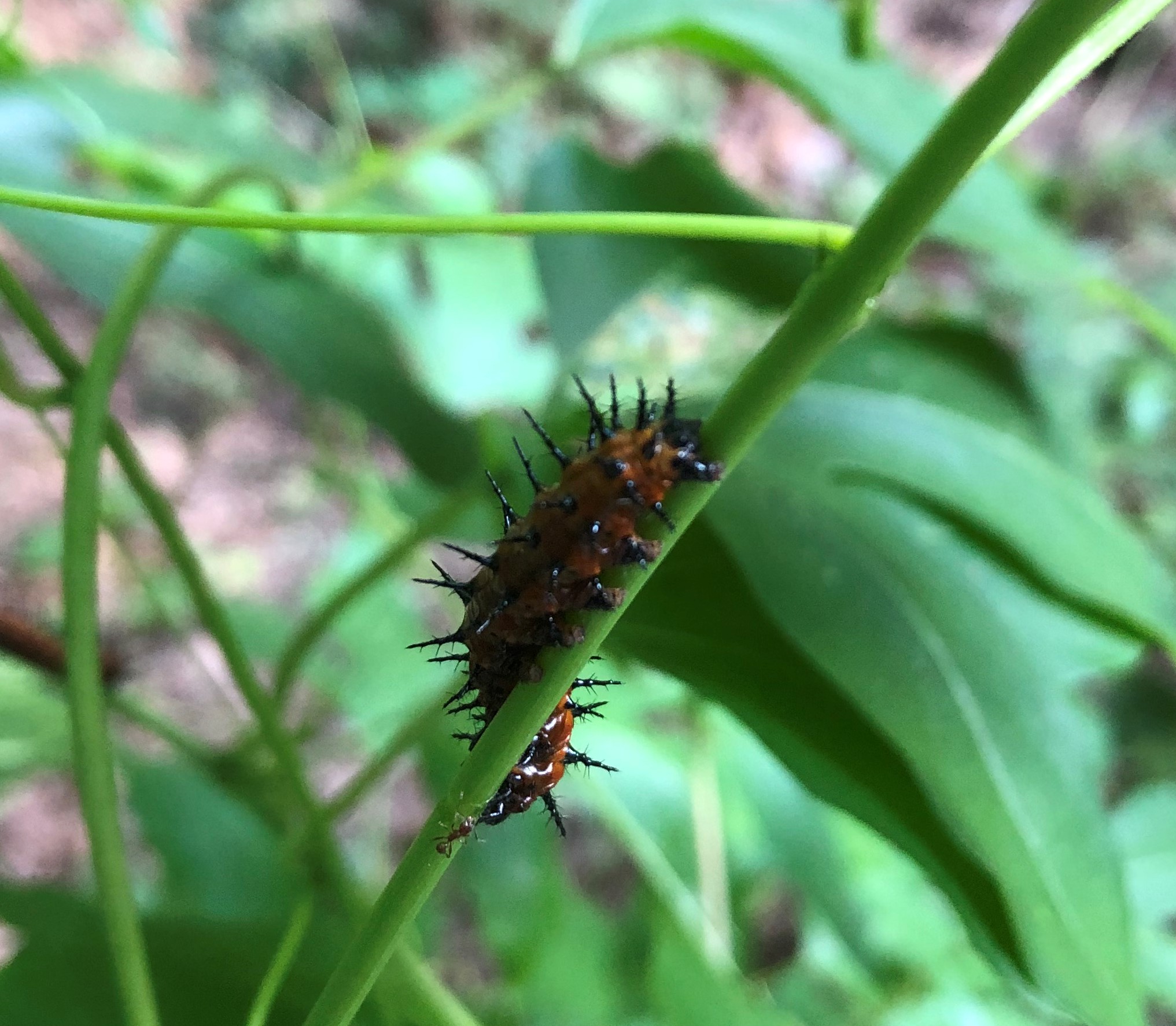
 During a recent reconnaissance walk through my woods, I discovered a patch of passionflower vine. Though it chose to pop up on its own, I was delighted to see it since it’s the food source for caterpillars of Gulf Fritillary butterflies. The petite vine was already sprouting tendrils and reaching out for support. I smiled and shook my head when I found one tiny green appendage wrapped around a leaf lying on the ground. Even though the tendril had a stranglehold on the leaf, the latter could never help the passionflower rise above the ground.
 Virginia creeper, a native vine with 5-leaved adult foliage, is sometimes mistaken for poison ivy, because its juvenile foliage frequently has three leaves, like the pesky purveyor of itch-producing oil. Its ability to scale walls and tree trunks thanks to holdfasts that act like sticky toes, reminds me of the tiny lizards I see scampering up the bricks on the front of my house. Though both plant and critter are capable of ascending considerable heights, they’re easy to dislodge.
 Back 2 the Garden