Good Gifts

My friend could scarcely contain her excitement as she said, “Be sure to see me after church. I have something for you. It has your name written all over it!”
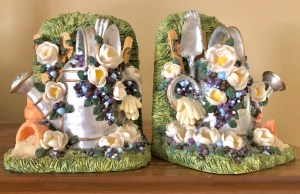
083Her statement piqued my curiosity and nudged a long-ago, gift-related memory from the recesses of my mind. The recollection tempered my enthusiasm as I wondered which traits I’d projected to inspire this perfect gift. Much to my relief, the beautiful bookends my friend joyfully presented after the worship service reflected my love of gardening and reading.
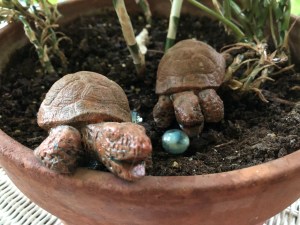
080So what about the memory? Two small, resin snapping turtles, a Mother’s Day gift from my then-elementary-aged daughters. Snapping turtles! To this day, some 25 years later, my daughters declare they thought the scary critters were cute. Cute?! Maybe it was my late husband’s barely-suppressed grin or my insecurities as a busy, often-tired mom, but no amount of explaining could convince me the turtles weren’t a commentary on my character flaws.

God’s Gifts

God is the supreme gift-giver. There’s no hiding our selves or our sins from Him. We deserve condemnation from One so holy, yet from the beginning He determined to give us the gift we needed most – salvation. As soon as Adam and Eve ate the forbidden fruit their eyes were opened to the reality of their condition. They tried to hide, just as we do. But God came to the garden as usual and promised the seed of the woman would one day crush the head of the serpent (Genesis 3).

Jesus fulfilled that promise by living a life of perfect obedience, taking our sins upon himself, enduring God’s wrath on the cross, dying, and being raised again to eternal life (Isaiah 53:4-6; Romans 5:17-18; 1 Corinthians 15:3-5).

In addition, Jesus promised his distraught disciples He wouldn’t leave them as orphans. He’d send a Helper (John 14:18, 25-26). The Holy Spirit came bearing specially-selected gifts. He empowers us to accomplish the good works prepared for us, not for personal glory, but for the building up of the body of believers to the glory of God (1 Corinthians 12).

Reflecting His Goodness

But there’s more. As we abide in Christ, we’ll produce good fruit in keeping with our salvation – love, joy, peace, patience, goodness, kindness, gentleness, faithfulness, self-control – which in turn reflects His goodness to others (Galatians 5:22-23a).

A dear friend gave me just such a gift when she asked if she could walk my garden with me. She knows, as most of you longtime readers do, that my garden is a refuge, a place of peaceful times with the Lord. Restrictions associated with COVID-19 have kept me home much more than usual the past two months. I’ve spent many happy hours trimming, weeding, and planting. Nonetheless, there are unsightly patches dotting my 1/3 acre, where weeds abound or poison ivy is winding its way around tree trunks.

Even so, my friend commented repeatedly on how beautiful it was and that she could see I’d worked hard to make it so. Reflecting on our stroll later, I realized this is exactly what she’s done across the years of our friendship. As one of my closest confidants, she’s seen me entangled in vines sprung from seeds I should never have sown and has prayerfully cheered me on as I sought to remove briars impeding my spiritual journey. She’s reminded me who I am in Christ and has never made me feel less than beautiful, even when I struggled to see beyond the weeds.

Isn’t that what God does? As long as we’re in the flesh we’ll battle our sin nature, but when God looks at us, He sees us robed in the perfect righteousness of His Son. What an amazing gift! Furthermore, we don’t battle alone. Not only is the power of the Spirit at work within us, conforming us more and more to the image of Christ (Romans 8:29), but God also graciously provides fellow believers to come alongside us on our journey.

Perhaps it’s time for me to accept my daughters’ explanation of their long-ago gift. Maybe they did look past the menacing mouths of those tiny turtles and saw the cuteness of their size, just like they looked past my moments of fatigue and impatience and saw my heart full of love for them.

O Lord, please help us to love others well and to reflect your goodness to those who we come in contact with that they might long to know Jesus, the greatest gift ever given.

Never alone – Reprise

Dear Readers,

I pray you’re finding ways to stay connected during this time of social distancing. Though technology can sometimes be intrusive, I’m grateful to live in an age when there are so many options available to keep in touch. 057While Grammie Mondays and Wednesdays are temporarily suspended, FaceTime allows me to visit with my grandchildren, though I’m just as likely to see a knee or the floor as they wiggle and giggle in and out of view. Mom and I logged on to Facebook Live for last night’s church service. I start most of my days listening to a podcast or two. Phone calls, e-mails, texts throughout the day keep me attached.

But oh how I miss the hugs and being in each other’s presence. Thus gathering with my neighbors for another Sunday afternoon session of worshipful singing yesterday was a special blessing. No hugs, of course, as we kept the prescribed distance. Even so, raising our voices together in song, prayer, and cheerful banter lifted my spirits in ways virtual visits can’t.

055I awoke to brilliant sunshine this morning, with one of the hymns we sang yesterday playing in my mind. I’ve hummed snippets of “Because He Lives” sporadically ever since, thankful to belong to the Lord of all, thankful to be sheltering in place surrounded by fellow believers. So I dedicate this post, a slightly-modified version of one I first published in June 2018, to them. I pray it will encourage you to look up and reach out during these unprecedented times.

* * * * *

Later this month, I’ll mark the 26th anniversary of my family’s move to Georgia. My tenure in the home my late husband Ray and I chose as our “raise-the-kids” house will then surpass by a decade my second-longest-term abode, the house I grew up in. Neighbors have come and gone over the years and I’ve watched several crops of children, including my own dear daughters, grow up. Currently, the homes around my cul-de-sac are filled with a pleasant mix of young families and empty-nesters.

IMG_6001I was working in my garden one recent afternoon, when my youngest neighbor, sweet-spirited Sadie, paid me a visit. We were chatting about flowers and butterflies and bumblebees when she suddenly asked, “Do you have a husband?” I replied, “I used to, but he’s already in heaven. He planted a lot of my trees. That’s why I love them so much.” As I watched, belatedly realizing I’d given a much-too-detailed reply to her simple question, her countenance was overshadowed by pensive consternation. Nonetheless, before I had a chance to offer up something more appropriate, Sadie’s expression brightened once again as she assured me, “But you’re not alone! You have lots of people around you!” I immediately followed up with, “You’re right! I have such good neighbors.”
With this, we took turns naming all the folks who live around us. Sadie finished the list, “And Sophie!” Yes, the boisterous ball of fluffy white fur, canine companion to our newest neighbors, is an essential part of the mix. With our conversation thus concluded, Sadie skipped across the street and up her driveway, ponytail swinging side to side with each hop.

I’ve reflected on our exchange several times since. It was such a life-giving reminder of the blessing of community. Created in the image of our Triune God, we are meant to live in relationship with Him and others. Early on, God said it wasn’t good for man to be alone. Although the Genesis account refers specifically to Adam’s need of a suitable helpmate (wife), it’s also clear the animals couldn’t provide the requisite companionship fellow human beings could (Genesis 2:18-23). People need people. We’re not meant to navigate life alone.

Sometimes it’s tempting to try, especially if you’re an introvert or an I-can-handle-this-myself type. Or maybe you figure everyone else is busy with their own responsibilities and you don’t want to be a bother. Or perhaps you’ve gotten your feelings hurt one time too many and decided to withdraw. (Please note: each of these scenarios has applied to me at some point in my life and most likely will again!) Whatever your rationale might be, Scripture is full of passages on the importance of relationships as well as how to treat each other. We’re told to love our neighbors as ourselves, to consider others’ needs before our own, to share and forgive and encourage (Matthew 22:39; Philippians 2:3-4; Luke 6:37-38).

In addition to our biological families, those who belong to God are part of a spiritual family, with unique benefits and obligations. For example:

  • The Apostle Paul says believers form the Body of Christ on earth, with each having a specific role, just as the various parts of our physical bodies have a critical part in keeping us healthy and alive. We are called to use our gifts and abilities to benefit others and to refrain from comparing ourselves to our brothers and sisters whose gifts and abilities are different (1 Corinthians 12).
  • We’ve been adopted into the very family of God and are being conformed more and more to the image of our elder Brother, Jesus, the firstborn Son (Ephesians 1:3-5; Romans 8:29). We are assured of an eternal inheritance and an eternal Home (1 Peter 1:3-5; John 14:2-3).
  • Though spending time with God individually is essential to our spiritual growth and transformation, Hebrews 10:24-25 clearly states the necessity of corporate worship: “And let us consider how to stir up one another to love and good works, not neglecting to meet together, as is the habit of some, but encouraging one another, and all the more as you see the Day drawing near.”
  • James instructed believers to pray for one another while Paul admonished believers to pray without ceasing (James 5:16; 1 Thessalonians 5:17). Such supplications can unite us, even when we’re unable to be together physically (Romans 15:30-32). Furthermore, Scripture tells us we are surrounded by a great cloud of witnesses, those who’ve gone before us, persevering in the faith (Hebrews 12:1-2). [1]
  • We are blessed with the indwelling presence and power of the Holy Spirit to comfort, guide and counsel us (John 14:15-17, 25-26). Apart from this divine Helper, we’d have no hope of pleasing God; with Him, our sanctification and, ultimately, our glorification, are ensured (2 Peter 1:3-4).

Family and friends, brothers and sisters in Christ, a loving Father, a selfless older Brother, the indwelling Spirit – sweet Sadie was so right. I’m not alone!

* * * * *

O Lord, how I thank You for the blessing of relationships and for your promise to never leave or forsake us. Please help us to be ever-mindful of your presence during this time of social distancing and potential isolation. And may we reach out to others with the love You’ve lavished upon us, using the amazing array of options available to do so.


[1] Note: This passage begins with “Therefore”, referring back to the long list of bygone saints who lived by faith.

Sibling Rivalry

In my post, “Tidings of Comfort and Joy” (see Archives, December 2019), I shared some thoughts from the devotion I presented at our women’s Christmas brunch. In writing that piece, I focused primarily on the good tidings of God’s promise to be with us: “I will be your God; you will be my people; I will dwell among you.”  Today I turn my attention to the other half of the message I delivered to the women in attendance.

Scripture is full of precious promises of God’s presence. Yet too often the noise and busyness of the world drown out the tidings of comfort and joy associated with God’s assurances. Or Satan tempts us to doubt. “Where’s God now?” he taunts. “Did He really say He wouldn’t leave you? Ever??”

Though His presence is sufficient, God didn’t intend for us to go it alone. Created in His image, we’re relational beings. Having been adopted into His family, we have spiritual brothers and sisters to remind us of truth, to testify to His faithfulness, and to be His hands and feet as we minister to one another.

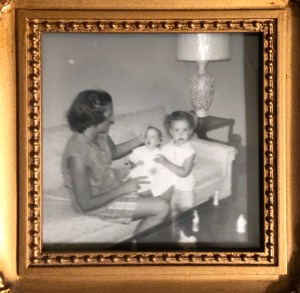
045My baby sister barely reached 8 months of age, hence I grew up an only child with no sibling rivalry and no one to bicker with. But I saw plenty of both as I raised my daughters and now witness more of the same as I spend time with my grandchildren.
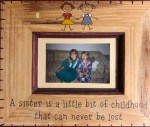
“Mine!”

“Me first!!”

“I was playing with that!!!”

Sound familiar?

Sadly, similar rivalries and bickering occur in the family of God. Remember the mother who asked Jesus if her sons could be seated next to Him in heaven, one on His left, the other on His right? Talk about a bold request! (Matthew 20:20-28) Then there were the disciples Jesus caught arguing about who would be the greatest. (Luke 22:24-27) Our presumptions may be more subtle, but they’re there, remnants of our sinful nature that won’t be fully eradicated until we’re called Home.

In the instances cited, Jesus made it clear the world’s definition of greatness didn’t apply to His disciples. Instead of exalting themselves, they were to follow His example by humbly serving others.

But God’s directives regarding His children’s interactions don’t stop there.  Scripture contains numerous passages expressing God’s will for our dealings with one another. Consider this one from Colossians:

Put on then, as God’s chosen ones, holy and beloved, compassionate hearts, kindness, humility, meekness, and patience, bearing with one another and, if one has a complaint against another, forgiving each other; as the Lord has forgiven you, so you also must forgive.  And above all these put on love, which binds everything together in perfect harmony (Colossians 3:12-14).

With our elder Brother as our example, we’re told to forgive one another, to be compassionate and kind, and most importantly, to love one another. In fact, Jesus commanded us to love one another so well that it sets us apart. If we do, it will make others notice (John 13:34-35). Even better, it may make them long to be part of God’s family.

During a recent visit, one of the missionaries our church supports described such a scenario. He became acquainted with a shopkeeper in the country where he and his wife serve and invited him to church. The shopkeeper accepted his invitation because he knew him to be a “nice” person. Even so, he was unprepared to meet a church full of “nice” people.  Wonderment at the tangible difference he observed provided an opportunity for the missionary to explain the why behind the behavior.

I put “nice” in quotes because as believers we know apart from Christ, even our best deeds are like filthy rags (Isaiah 64:6). We’re utterly incapable of conducting ourselves according to the Lord’s commands. But, praise God, His promise to be with us includes sending the Holy Spirit to remind us of Jesus’ teachings, to help us want to obey, and to enable us to do so (John 14:16, 26; Philippians 2:13), albeit imperfectly until we’re ushered into heaven.

044My sister’s death left an empty spot, a life-long yearning to have been able to grow up and grow old with her. In spite of my daughters’ and grandchildren’s childhood squabbling, they’re family, forever part of each other. And so it is in God’s family as He knits our hearts and lives together in love.

O, Lord, thank You for not only promising to never leave us or forsake us, but for also giving us each other, brothers and sisters in Christ. Please help us to follow our elder Brother’s example of putting others’ interests before our own, setting aside all rivalries and jealousy, loving and forgiving as He loves and forgives us. In so doing, may we draw others to You, ever ready to give a reason for the hope that is within us.


Welcome Home

Two years ago our church leaders decided it would be good to form a Welcome Team to greet visitors and members alike on Sunday mornings. I wasn’t surprised to see Gene Hunt’s name on the list of volunteers for the new team. Gene, a longtime pastor, was retired by then. Nonetheless, I clearly recall how he visited me and my husband, Ray, soon after we first attended Midway Presbyterian Church, where he served as assistant pastor, in July 1992. From that early encounter and across the ensuing years I came to know Gene as a natural when it came to welcoming others – genuine, warm, and caring.

Thus it also came as no surprise that Gene would be in the narthex greeting people even on Sundays when he wasn’t officially assigned to the task. Those of us within hearing range would smile when we heard him heartily exclaim, “Hey, this was great! Let’s do it again sometime. How about next Sunday?”, as he shook hands with visitors after morning worship.

240Gene entered his heavenly Home last month. I had the privilege of attending his memorial service. The sanctuary of our small church overflowed as several hundred people from all stages of Gene’s life gathered to celebrate by worshiping the One he faithfully served, for we do not grieve as those who have no hope. (1 Thessalonians 4:13-18)

Even so, tears mingled with laughter as various speakers shared reminiscences about our beloved brother because death does bring about a time of separation until Jesus’ promised return. I blotted at intermittent tears until one of my fellow congregants described a heavenly scene where Gene was greeting others, complete with the signature phrase I described above. That did it – my tears escaped and spilled down my cheeks. I sorely sensed the void Gene’s passing would leave on Sunday mornings.

One of Gene’s grandsons spoke next. His comments included a recounting of his grandfather’s testimony – how he’d been born into a non-Christian family, to parents who made no effort to take him to church. But after Gene’s dad died, God providentially placed his family in a neighborhood where he became friends with a little boy whose family was greatly involved in the life of the local Presbyterian church. Sonny would drag Gene along because he didn’t want to go alone. In Gene’s words, “I was enfolded into this community of believers and moved among them as if I belonged. It never occurred to me that I was an outsider. It all seemed perfectly natural and normal. Now I see that it was supernatural. It was the Gospel of grace being lived out in daily life.”[1]

I’d heard Gene’s testimony before, but it wasn’t until that moment I clearly recognized the connection between the tag-along boy, loved and accepted by a long-ago church family, and the man I was blessed to know, who genuinely loved others and welcomed them as he’d been welcomed. He never forgot what it meant to be included even though he “had no resources to contribute to the church.”[2]

Sound familiar? This storyline should resonate with every believer: For by grace you have been saved through faith. And this is not your own doing; it is the gift of God, not a result of works, so that no one may boast. (Ephesians 2:8-9) Furthermore, the Gospel itself is welcoming. Once we were separated from Christ, strangers to the covenants of promise. But now in Christ Jesus we have been brought near by the blood of Christ . . . So we are no longer strangers and aliens, but fellow citizens with the saints and members of the household of God. (Ephesians 2:12-13, 19)

I was one of the greeters last Sunday. After the worship service, a couple of folks asked if I’d had a chance to talk to our visitors (yes, briefly). Then one of us began to recite Gene’s phrase and the three of us finished in unison, “Let’s do it again. How about next Sunday?”, agreeing we need to add his words to our exit lines. We shared a laugh, warm with the memory of the man who showed us how to love others as we’ve been loved.

I expect God assigned Gene to the varsity greeting team as soon as he arrived on the other side. I like to imagine the day I’ll get to see him again, welcoming me with a big smile and another of his classic phrases, “Ain’t God good?!” Oh yes, Gene, so very good! I pray He will enable me to serve Him and others joyfully as you did, from the overflow of a grateful heart.


[1] Susan Hunt, “Your Home A Place of Grace”, (Wheaton, IL, Crossway Books, 2000) pp. 26-27

[2] Ibid, p. 27

Hide and seek

11-5-2012, Peek-a-boo 5Surely one of the earliest and most endearing games we play with babies involves disappearing behind our hands only to reappear moments later, smiling and exclaiming, “peek-a-boo!” We repeat the sequence of movements multiple times, rewarded with baby’s surprised chuckles.

11-5-2012, Peek-a-boo 6Before long, infants turn into mobile toddlers, able to participate in the hiding aspect of the game. In fact, hide-and-seek becomes an oft-requested favorite, complete with random-number counting and much laughter while scurrying to find the perfect hiding spot. Shrieks are just as likely to accompany finding as being found.

IMG_1258Sometimes the hiding isn’t all that effective. For instance, even though most of the tiny body is covered up, a foot may remain visible. Or, try as I might, I can’t fully wedge myself between the wall and the recliner when the little people are hunting me.

And then there are times when I wander around, pretend-seeking the hidden one, musing, “Hmm, I wonder where (insert grandchild’s name) is?” The confident, she-can’t-find-me laughter that follows allows me to zero in like a honey bee to its hive. More laughter ensues, along with, “Let’s hide again, Grammie!”

Child’s play?

The first recorded episode of hide-and-seek was no child’s game. It wasn’t planned and it certainly wasn’t accompanied by laughter, unless it was the nervous kind borne of embarrassment. Genesis 3 recounts the story of the Fall. Satan, disguised as a serpent, engaged Eve in a doubt-God’s-goodness conversation – surely it wasn’t proper for God to withhold something as wonderful as the forbidden fruit? Sadly, it didn’t take much to convince Eve of her right to partake. She ate and then shared some of the bounty with Adam. (verses 1-6).

Oh, their eyes were opened, just like Satan promised. But instead of delighting in their newfound enlightenment, they were overcome with shame as they realized they were naked (verse 7a). Knowing God would soon arrive for His daily garden stroll, they hastily covered themselves with leafy loincloths and hid (verses 7b-8).

Shame or guilt?

We’ve been hiding from God and each other ever since, haven’t we? Afraid if people knew our short-comings and the secret sins that plague us, they’d turn away.

Guilt is a helpful, God-given poke to our conscience convicting us of a specific wrongdoing, leading us to confess, repent, seek forgiveness and be restored. By contrast, shame condemns, whispering some variation of, “You’re bad and you always will be”, to our weary souls. Like Georgia-clay stains on white socks, we just can’t rid ourselves of that sense of not measuring up, the vague feeling of not fitting in or meeting expectations.

So we cover up and keep our distance, as we strive to maintain an acceptable facade at all times, even, or maybe especially, at church where it seems like everyone else has it all together. We hide in our respective caves, safe, but so alone.

Come out, come out, wherever you are!

Even though we usually don’t want to be found out, we do want to be found.

Praise God for coming to the garden in the cool of that fateful day, just like He always had before. This, even though He already knew of Adam and Eve’s disobedience, the great pain it would cause their offspring and the price He Himself would pay to redeem them (John 3:16). He came bearing a perfect plan and the promise of better garments. The seed of the woman would one day crush the head of the serpent so all of God’s children could be robed in the righteousness of His beloved Son (verse 15).

Jesus. The Good Shepherd who came to seek the lost (Luke 19:10). The unblemished Lamb, slain for us (John 1:29). The Risen Savior who bids us come that we might find rest for our souls (Matthew 11:29). He knows the very worst about us, but calls us from darkness into light (Isaiah 9:2, John 1:5), to be cleansed by His precious blood that He might present us spotless before God (Ephesians 5:25-27).

Jesus is the safest of safe places for the children of God (John 3:17; Romans 8:1).

Becoming a safe place

Scripture is clear that we are to be conformed to the likeness of our elder brother (Romans 8:29), transformed by the renewing of our minds (Romans 12:2). So how can we become safe places for fellow, flawed sojourners, afraid to come out of their caves? Scripture entreats us to:

  • Practice humility, considering others’ needs, hurts and heartaches before our own (Philippians 2:3-4). Each one of us is dealing with things known only to God (Psalm 139:1-3, 23-24).
  • Judge not, remembering all we’ve been forgiven (Matthew 7:1-5; Luke 6:37-38). Though our sins may differ from those of our brothers and sisters in Christ, we’re all sinners saved by grace (Isaiah 53:6; Romans 3:23).
  • Be willing to become vulnerable, stewarding our own stories well as we share examples of God’s goodness, faithfulness, even discipline across the years we’ve walked with Him (Psalm 78).

May we live in such a way that it’s safer, indeed more desirable, for others to come out of their caves, into the Light of the One who will not break a bruised reed or quench a smoldering wick (Isaiah 42:3).

Therefore, as God’s chosen people, holy and dearly loved, clothe yourselves with compassion, kindness, humility, gentleness and patience. Bear with each other and forgive whatever grievances you may have against one another. Forgive as the Lord forgave you. And over all these virtues put on love, which binds them all together in perfect unity. (Colossians 3:12-14)


Encourage one another

(This is the promised continuation of my last post, “Through the night”.)

More prayer preceded my call to ICU the next morning. My heart rate increased as I waited for the nurse’s update, only to hear, “She’s not here.” What?! Not there?? I’m sure only moments passed until she added, “She’s still in the ED”, but it was plenty long enough for a panic-laden “Mom died and they didn’t call me?!” to pierce my racing heart. Instead, her condition had improved over-night and they were going to move her to a regular room.

“THANK YOU, LORD!!” I instantly recognized God had graciously heard the prayers of His people on Mom’s behalf. It wasn’t the first time I experienced the palpable power of prayer.

Mom suffered a heart attack the week after Christmas, 2010 while strolling through the neighborhood with my dad. They spent the night in cardiac ICU as Mom awaited a heart catheterization the next afternoon. When I arrived at the hospital to relieve my exhausted father, I assured him I’d be Mom’s responsible person so he could go home to rest. My “I’ve-got-this” confidence would soon dissipate like mist blown by the wind.

The image of the attendants who rolled Mom out of the testing area is imprinted on my mind. Stationed one on either end of the gurney, they gazed down, refusing to meet my eyes after saying the doctor would be out to talk to me. A niggling sense of concern began to infiltrate my optimistic expectations.

The doctor delivered the sucker punch moments later: “We have a life-threatening situation here. Your mother has three blocked arteries – one 90%, one 80% and one 70%. We’re going to start prepping her for surgery immediately so she’ll be ready as soon as an operating room becomes available.”

My mind struggled to accept this verdict. “Wait! Surely there must be a mistake. I’m here alone!!” The techs’ immediate response as they whisked Mom away dispelled any lingering doubt. In the midst of my turmoil, God’s still quiet voice reminded me Mom and I weren’t alone at all. I may have been undone by the news of Mom’s condition, but it hadn’t surprised Him.

In spite of the Spirit’s timely nudge, I knew I needed some of my people with me. Any attempt to steady my voice as I called daughter Mary and asked her to bring my dad to the hospital vanished when she answered. Like a child who scrapes her knee and bravely holds back the tears until she reaches home and the consolation of her mother, I poured out the details, urging Mary to come quickly.

Mom and I were able to spend a few minutes together before they wheeled her into the OR. I prayed, I held her hand, I told her she was the best mom I could have ever hoped for. And then I watched, desolate, as the doors closed behind her and her attendants, wondering if we’d shared our last moments in this life.

grace logoI trudged to the waiting room and slumped into a seat, longing for the arrival of my family. But I knew there were other reinforcements to call on – our church family. Almost as soon as I sent the prayer request e-mail, I heard a chime alerting me to an incoming message. Recognizing the urgency of the situation, our prayer chain coordinator forwarded my note to the congregation as soon as she received it.

The taunting fears echoing through my mind since I heard the results of the heart cath fell silent. My family’s physical presence was imminent and God’s people were praying as He sovereignly watched over Mom and guided the surgeons’ hands.

I wrote in recent posts, “Preach to yourself” and “Through the night”, how essential it is for us to remind ourselves of all we know about God – His character, promises, assurances, faithfulness, love, goodness.[1] Nonetheless, we’re not meant to navigate this world alone. We are relational beings, like the Triune God who created us in His image. (Genesis 1:26) As such, Scripture tells us to:

  • rejoice with those who rejoice and mourn with those who mourn. (Romans 12:15)
  • comfort others with the comfort we ourselves have received from the God of all comfort. (2 Corinthians 1:3-4)
  • pray for one another (Ephesians 6:18; James 5:16)
  • bear one another’s burdens. (Galatians 6:2)
  • stir one another up to love and good works. (Hebrews 10:24)
  • encourage each other. (Hebrews 10:25)

There are times when the road becomes steep, the journey difficult; times when healing doesn’t come and death does. Jesus told us we would have troubles in this world (John 16:33), but He promised to never leave us (Matthew 28:20) and sent His Spirit to comfort us. (John 14:16, 26) Furthermore, He adopted us into His family, a family full of brothers and sisters, so we might mutually encourage and assist each other as we make our way Home.

“Two are better than one, because they have a good reward for their toil. For if they fall, one will lift up his fellow. But woe to him who is alone when he falls and has not another to lift him up! Again, if two lie together, they keep warm, but how can one keep warm alone? And though a man might prevail against one who is alone, two will withstand him—a threefold cord is not quickly broken.” (Ecclesiastes 4:9-12)

O, Lord, please help us to be faithful comforters, encouragers and prayer warriors!


Epilogue: During my annual reminiscences surrounding my husband’s death in 1997, I came across this notation in my journal: “This has been the most difficult week of my entire life, but I can honestly say I’ve never felt more loved. Lord, thank you for loving me through so many people.” Since I started working on this post several days ago, my brother-in-law David passed away. My prayer is that his family will be able to say the same, as they feel the love of God surrounding them in the prayers and presence of His people.

[1] See Archives April 4, 2019 and May 9, 2019 respectively.

Royalty – epilogue

We try to deny it, but we all know it’s true – our technology spies on us, keeps track of our whereabouts and catalogs our interests. Why else would I suddenly start receiving ads in my newsfeed for the exact products I’d been shopping online for moments before? Or, the example that unnerves me the most, get unsolicited information regarding how long it would take to get to my daughter’s house on the day of the week and around the time I usually head her way?

So, it shouldn’t have surprised me when headlines pertaining to an alleged feud between Kate and Meghan (Duchess of Cambridge and Duchess of Sussex respectively) kept popping up whenever I used Google this past month. After all, I’ve searched for royal updates a time or two or several in the past. However, I was immersed in holiday-related activities and didn’t take time to read the articles associated with the recent headlines. Nonetheless, they fueled a growing sense of angst, as each reminded me that “Royalty” (see Archives, September 2018) was scheduled to appear on our denomination’s enCourage website this month. Would the purported bickering between the royal sisters-in-law negate the premises of my post?

IMG_6265Now that I’ve finally resurfaced, I’ve skimmed some of the articles and reviewed “Royalty” in light of them. Fortunately, the analogy in my previous post remains pertinent. In fact, coverage of the duchesses’ squabbles amplified one of my key points: people are always watching, evaluating, commenting. Sadly, some prefer drama over harmony. Some may even be looking for a reason to criticize or reject.

Such was the case with Jesus. The religious leaders were constantly trying to catch Him in compromising situations or bait Him into contradicting Himself, all to no avail.[1] Likewise, there are those who would like to see His followers fail. They’re ever-vigilant for unbecoming behavior or attitudes so they can discount our perfect Savior along with us, His not-so-perfect followers. It’s important to be concerned about our personal reputations, but even more so to walk worthy of our calling and thereby honor the reputation of the One whose Name we bear. (Ephesians 4:1-6)

Interestingly, the supposed feud was brought to an end by Queen Elizabeth who’d reportedly “had enough” of the arguing and its attendant negative press. We’ll never know how much the media embellished the situation to make it appear more dire. And so it is with disagreements between ordinary folk – only those directly involved (and God) know all the details and, even then, they may well perceive the situation differently. After all, each of us is a unique bundle of opinions, strengths and weaknesses. Furthermore, we’ll continue to struggle with sin until we’re called Home. (Romans 7:15-20) But God has given His children clear instructions on how to relate to each other:

  • (Jesus said), “A new command I give you, that you love one another: just as I have loved you, you also are to love one another. By this all people will know that you are my disciples, if you have love for one another.” (John 13:34-35)
  • So then, as we have opportunity, let us do good to everyone, and especially to those who are of the household of faith. (Galatians 6:10)
  • Put on then, as God’s chosen ones, holy and beloved, compassionate hearts, kindness, humility, meekness, and patience, bearing with one another and, if one has a complaint against another, forgiving each other; as the Lord has forgiven you, so you also must forgive. And above all these put on love, which binds everything together in perfect harmony. And let the peace of Christ rule in your hearts, to which indeed you were called in one body. And be thankful. Let the word of Christ dwell in you richly, teaching and admonishing one another in all wisdom, singing psalms and hymns and spiritual songs, with thankfulness in your hearts to God. And whatever you do, in word or deed, do everything in the name of the Lord Jesus, giving thanks to God the Father through him. (Colossians 3:12-17)
  • Let no corrupting talk come out of your mouths, but only such as is good for building up, as fits the occasion, that it may give grace to those who hear. And do not grieve the Holy Spirit of God, by whom you were sealed for the day of redemption. Let all bitterness and wrath and anger and clamor and slander be put away from you, along with all malice. Be kind to one another, tenderhearted, forgiving one another, as God in Christ forgave you. (Ephesians 4:29-32)
  • Let love be genuine. Abhor what is evil; hold fast to what is good. Love one another with brotherly affection. Outdo one another in showing honor. Do not be slothful in zeal, be fervent in spirit, serve the Lord. Rejoice in hope, be patient in tribulation, be constant in prayer. Contribute to the needs of the saints and seek to show hospitality. Bless those who persecute you; bless and do not curse them. Rejoice with those who rejoice, weep with those who weep. Live in harmony with one another. Do not be haughty, but associate with the lowly. Never be wise in your own sight. Repay no one evil for evil, but give thought to do what is honorable in the sight of all. If possible, so far as it depends on you, live peaceably with all. (Romans 12:9-18)

Misunderstandings and disagreements are an inevitable part of life. Nonetheless, when conflicts arise, we are to deal with them in a way that honors God. We are called to act and think differently, to be transformed more and more into the image of Christ so that the family resemblance is unmistakable. (Romans 8:29; Romans 12:2)

Lord, please help us to live and love in such a way that those watching will take note (Acts 4:13) and inquire about the difference. May we always be prepared to give a reason for the hope that is within us, gently and with respect, remembering that it is better to suffer for doing good, if that should be Your will, than for doing evil. (1 Peter 3:15-17)


[1] See, for example, Mark 3:1-6, Luke 14:1-6 (healing on the Sabbath); Matthew 9:2-7 (forgiving sins); Matthew 12:1-8 (Lord of the Sabbath); Matthew 26:59-60 (false witnesses)

Keeping current

IMG_0321I’m playing catch-up. December descended, as it always does, with its attendant whirlwind of activities. I’m one of those who revel in the festivities, from sending and receiving cards to plotting gift strategy with family members to savoring special meals with loved ones. But, as I’m enjoying the merriment the season has to offer, day-to-day chores and responsibilities start to pile up and about now, as the celebrations wind down, I realize just how far behind I am. I don’t regret my decision to enjoy the season, since it comes but once a year, while chores persist year-round. But I know I now need to pick up the reins and get the more mundane aspects of life back in order. As much as I relish celebrating, I also look forward to returning to a normal schedule.

There are times when it’s ok to step back from our daily routines, to focus on special occasions and events, to appreciate holidays and vacations. But the Bible is clear there are some things we need to make every effort to keep current on, many of which involve relationships. Consider, for example:

So if you are offering your gift at the altar and there remember that your brother has something against you, leave your gift there before the altar and go. First be reconciled to your brother, and then come and offer your gift. (Matthew 5:23-24)

Be angry and do not sin; do not let the sun go down on your anger, and give no opportunity to the devil. (Ephesians 4:26-27)

I don’t like conflict. I’d much rather compliment than confront. Faced with disappointment, I’m more likely to withdraw, not wanting to hurt anyone’s feelings, or risk being hurt more deeply myself. Yet these two passages direct us to address discord in a timely manner and not allow misunderstandings to fester. I’ve learned first-hand the necessity of doing so. Unresolved differences provide fertile soil for Satan to inflict further misery, including divisions and estrangement.

Let all bitterness and wrath and anger and clamor and slander be put away from you, along with all malice. Be kind to one another, tenderhearted, forgiving one another, as God in Christ forgave you. (Ephesians 4:31-32)

So if there is any encouragement in Christ, any comfort from love, any participation in the Spirit, any affection and sympathy, complete my joy by being of the same mind, having the same love, being in full accord and of one mind.  Do nothing from selfish ambition or conceit, but in humility count others more significant than yourselves. Let each of you look not only to his own interests, but also to the interests of others.  Have this mind among yourselves, which is yours in Christ Jesus, who, though he was in the form of God, did not count equality with God a thing to be grasped, but emptied himself, by taking the form of a servant, being born in the likeness of men. And being found in human form, he humbled himself by becoming obedient to the point of death, even death on a cross. (Philippians 2:1-9)

Here we receive guidance on how to conduct our relationships. We are to treat each other with kindness and consideration, humbly forgiving as we ourselves have been forgiven. God asks nothing of us that He hasn’t already done Himself in ways that far surpass any giving or humbling or forgiving we’ll ever do.

Rejoice always, pray without ceasing, give thanks in all circumstances; for this is the will of God in Christ Jesus for you. (1 Thessalonians 5:16-18)

Be filled with the Spirit, addressing one another in psalms and hymns and spiritual songs, singing and making melody to the Lord with your heart, giving thanks always and for everything to God the Father in the name of our Lord Jesus Christ, submitting to one another out of reverence for Christ. (Ephesians 5:18b-21)

These last two passages are similar in their decree: we’re to give thanks, rejoice and pray continually – no slacking or falling behind!

The directives in the passages above are impossible for us to carry out in our own strength, but, praise God, we’ve been given the indwelling power of the Holy Spirit to enable us to do far more abundantly than all we ask or imagine. (Ephesians 3:20-21) May we ever depend on Him to help us keep current in the things that matter most.

For this reason I bow my knees before the Father, from whom every family in heaven and on earth is named, that according to the riches of his glory he may grant you to be strengthened with power through his Spirit in your inner being, so that Christ may dwell in your hearts through faith—that you, being rooted and grounded in love, may have strength to comprehend with all the saints what is the breadth and length and height and depth, and to know the love of Christ that surpasses knowledge, that you may be filled with all the fullness of God. (Ephesians 3:14-19)

Becoming fluent

The church I attend recently began a small-group discipleship ministry for our women. As part of getting to know each other better, the leader of my group asked us to share a little-known fact about ourselves. I decided to tell the group about living in Argentina in the early-1970’s. The usual questions regarding life in a foreign country followed, accompanied by my well-practiced answers. Being so far away from family and friends at a time when communication was limited to snail mail was decidedly difficult, but the opportunity to experience a different culture and learn a second language was priceless.

Our 2-year stay abroad resulted from my dad accepting a temporary transfer to work for the Argentine subsidiary of his U.S. employer. Thus, part of the pre-move preparations involved my parents’ 2-week, company-paid attendance at a local Berlitz total-immersion language school. It was a stressful, morning-to-night grind, no English allowed.

Unlike my beleaguered parents, I began my language studies once we landed in Argentina. I was enrolled in an American school where I had classes in English in the morning and classes in Spanish in the afternoon. That, plus daily interaction with native speakers in our community, provided an excellent learning environment. Nonetheless, my parents hired a tutor to help me with the intricacies of sentence structure and verb tenses.

IMG_6898Just as I benefitted greatly from learning Spanish in a Spanish-speaking country, Christians thrive best when we’re part of God’s visible church. Scripture is clear that each of us has an important, God-ordained place in His body (1Corinthians 12:12-30) and that we should not neglect meeting together. (Hebrews 10:24-25) Furthermore, God’s family is composed of members of varying ages, abilities and spiritual maturities, just like biological families. We are called to do life together in compassionate covenant communities, where we rejoice with those who rejoice, mourn with those who mourn and come alongside each other to teach, support and encourage according to the gifts we’ve been given. (Romans 12:3-21)

In addition, we have a responsibility to tell the younger generations of the mighty deeds of the Lord and to instruct them in His ways. (Deuteronomy 6:4-7; Psalm 145:10-13) Likewise, the Apostle Paul’s directions to Titus are clear regarding the role older women are to play in tutoring the younger women, teaching them the finer points of Biblical womanhood through both word and action. (Titus 2:3-5)

I don’t remember how long it took, but one day, to my amazement, I realized I could speak and respond in Spanish without a conscious translation step. The second language had become second-nature.

And so it is with our spiritual transformation. Because of Jesus’ atoning sacrifice on our behalf, we’re no longer slaves to sin. Instead, we’ve become slaves to righteousness. (Romans 6) Through the Spirit’s power at work within us, we’re able to discern what is right and true, something we could never do when we were dead in our trespasses. Furthermore, as our sanctification progresses, Christ’s light shines ever-brighter in us and we produce spiritual fruit. (Matthew 5:14-15; Galatians 5:22-23) More and more, our renewed nature becomes second-nature as we seek to please God and abide in Him. (John 15:5)

Nonetheless, aspects of our old selves will persist until God calls us Home, as Paul so eloquently describes in his letter to the Romans. (Romans 7:15-20) And so we press on to become fluent in God’s ways, by studying His Word, praying and joining with fellow believers to worship Him and stir one another to love and good works.

Even now, over four decades later and without daily use, I’m apt to spontaneously sprinkle Spanish sentences into conversations with my grandchildren. They’ve become used to these linguistic detours and know an immediate translation-repetition-translation mini-lesson is sure to follow. Yes, I can speak Spanish, though far from flawlessly – I still can’t roll my Rs and I mix up verb tenses – but I enjoy the language and sharing it with my grandchildren.

How much more I savor sharing our Savior with them. I’m far from perfect when it comes to fluency in my Christian walk as well. But I pray I’ll always be faithful to spontaneously sprinkle His ways and words into our conversations as I point them to the only perfect One who loves them even more than I do and encourage them to take their places in His family. May His nature become increasingly second-nature for us all.

“Hear, O Israel: The Lord our God, the Lord is one. You shall love the Lord your God with all your heart and with all your soul and with all your might. And these words that I command you today shall be on your heart. You shall teach them diligently to your children, and shall talk of them when you sit in your house, and when you walk by the way, and when you lie down, and when you rise.” (Deuteronomy 6:4-7)

Royalty

I’m captivated by British history, probably because it’s part of my history. The lineage of all four of my grandparents can be traced back to the isles across the Atlantic, at least in part. And who doesn’t enjoy a fairy tale romance? Thus, like millions of others around the globe, I delightedly followed the updates surrounding the engagement and nuptials of Prince Harry and his American sweetheart, Meghan Markle, earlier this year. So many traditions, so much pomp, as a real-life princess wed her prince charming.

Of the many details to savor and contemplate, one has continued to resonate with me. Queen Elizabeth’s wedding gift to Meghan was a new title, signifying her acceptance into the royal family. In historical parlance, Meghan is a commoner, without the usual pedigree that accompanies, and in the past was required of, royal brides. Her Royal Highness, the Duchess of Sussex, will now receive the honor due her new role, not because of her worthiness, but due to her relationship to the reigning monarch and the dignity pertaining to the position. The queen’s approval supersedes Meghan’s past and serves to silence the nay-sayers.

And so it is for those of us who’ve been chosen by the King. Scripture is clear that we’re commoners, unable to gain access to the throne on our own merits. (Ephesians 2:1-9) In fact, left to ourselves, we wouldn’t even seek an audience with the Lord. (Isaiah 64:6-7b) But, wonder of wonders, He chose us before the foundation of the world to be adopted into His family, because He loves us! (Ephesians 1:3-8a) Not only does God see us a chosen race, a royal priesthood and a people for His own possession (1 Peter 2:9), He calls us His children (Romans 8:15-17; 1 John 3:1) Furthermore, because of our Elder Brother’s atoning sacrifice, we now have access to the throne of grace. (Matthew 27:50-51; Hebrews 4:14-16)

Just as there was much discussion regarding Meghan’s non-aristocratic lineage and the fact she’d been married before, the tiniest details of her behavior have been scrutinized. From posture to if or how she crosses her legs while seated to her facial expressions while chatting with Queen Elizabeth – everything has been evaluated versus standards expected of members of the royal family. Meghan’s actions will provide evidence of her understanding and respect of the position bestowed upon her. Her conduct may enhance or tarnish the reputation of the monarch who welcomed her.

Although many years have passed, I well-remember a colleague’s comment that he wouldn’t put a fish sticker on the back bumper of his car because there were times his driving habits didn’t befit a Christ-follower. Those of us listening chuckled, but shifted uneasily in our seats, recognizing ourselves in his statement. As members of God’s family, we are also His representatives. In fact, the third commandment, “You shall not misuse the name of the LORD your God”, whose interpretation is too-often limited to not using God’s name in a profane way, addresses God’s concern about how He’s represented by those who bear His name.[1]

We are called to honor our Father and His name by:

  • Bearing an ever-increasing resemblance to Jesus. (Romans 8:29)
  • Loving each other so well that our love becomes a family hallmark. (John 13:34-35)
  • Obeying Him to show our love for Him and our gratitude for His undeserved favor. (John 14:23-24; 1 John 2:4-6)

Putting off our old ways and becoming transformed to fit our new personas is challenging. (Romans 7:21-25; Romans 12:2) Fortunately for Meghan, she has a sister-in-law who’s already been in the royal spotlight for several years and appears willing to teach her the finer points of being a duchess. In his letter to Titus, the Apostle Paul made it clear that women who are further along in their spiritual journeys are to do the same for their younger sisters in the faith, instructing them through reverent behavior and sound teaching. (Titus 2:3-5)

As I was double-checking Meghan’s official title, I came across an interesting factoid. Only women born into the royal family may use “princess” before their names.[2] Not so in God’s family. There are no divisions or distinctions among Abraham’s spiritual offspring. (Romans 10:11-13; Galatians 3:27-29)

IMG_6265I enjoy coloring with my young granddaughters. A recent art session found me recreating myself and my daughters on the page. When I saw the title of the book the page was pulled from, I smiled. “Picture me a Princess”. Why, yes, I will! Because God calls me His child, I am a princess, a daughter of the King!

Sisters, may we recognize and embrace our identity in Christ and may we spur one another on to love and good deeds (Hebrews 10:23-25) that we might represent Him well before a watching world.


[1] Sermon, Pastor Ben Duncan, “Loving the Lord with All Your Might: The First Table of the Law”, June 17, 2018.

[2] I suppose popular culture overrode that mandate when it came to “Princess Di”.