
Measuring up

img_0026Several weeks ago my daughter, Mary, found her not-quite-three-year-old daughter, Emma, peering intently into a mirror. Curious as to the cause of her staring, Mary asked what she was looking at. Stoically, Emma replied she had no eyebrows. It was one of those moments when Mary most likely had to fight to control any laughter that threatened to erupt. After all, Emma was quite serious. Her light-blond brows are barely discernible and that, she realized, set her apart from the rest of her darker-browed family members.

img_0478Little more than a week had passed since Mary’s recounting of the eyebrow incident, when Emma approached me, tape measure in hand, and asked if I would measure her. I obliged, measuring around her tummy, a place or two on her legs, and both little arms. I knew her request was inspired by wanting to be like Mommy, her very favorite person. You see, Mary uses that same pink tape measure to periodically assess her progress since starting a strengthening and conditioning program last fall.

The occurrence of these two incidents in such proximity to one another impressed upon me, yet again, that much of what our children (and grandchildren) learn from us is caught rather than taught. And, ever-observant, they easily detect discrepancies between what we say and what we do. Consistency between verbal and behavioral lessons is crucial. But, when such consistency is lacking, our deeds supersede our admonitions as the old adage, “actions speak louder than words”, attests.

Most of us truly want to be good examples, to live lives of integrity. Yet, in spite of our best intentions, we frequently struggle to do what we know is right, what we yearn to do. The Apostle Paul described this tension between giving into the flesh and obeying the Spirit in his letter to the Romans (Romans 7:15) and to the Galatians. (Galatians 5:17) In fact, he described himself as the chief of sinners not withstanding all he did and sacrificed for the early church. Instead, he focused on the great grace that had been shown him by the only perfect One. (1 Timothy 1:15)

Oh that we would do likewise. Instead we too often compare ourselves to our fellow sinners, thinking, “I’m not that bad.” (Luke 18:9-14) But the thoughts and behavior of our fellow sinners are not our standard. Jesus’ perfect righteousness and sinless life are. We are to be holy as He is Holy. (Leviticus 11:45; Matthew 5:48; 1 Peter 1:14-16) Furthermore, Jesus made it clear that keeping the Law begins in our hearts and encompasses more than our actions:

“You have heard that it was said to those of old, ‘You shall not murder; and whoever murders will be liable to judgment.’ But I say to you that everyone who is angry with his brother will be liable to judgment; whoever insults his brother will be liable to the council; and whoever says, ‘You fool!’ will be liable to the hell of fire.” (Matthew 5:21-22)

“You have heard that it was said, ‘You shall not commit adultery.’ But I say to you that everyone who looks at a woman with lustful intent has already committed adultery with her in his heart.” (Matthew 5:27-28)

The longer we walk with Jesus and the closer we get to Him, the more easily we recognize our flaws and failings. There are times when a thought pops into my mind, uncensored, appalling. I’m shocked and saddened at the darkness that still dwells in me. Yet I know my dismay is evidence my heart of stone was replaced with a heart of flesh that desires to obey God. (Ezekiel 36:26-27) It also reminds me that the One who began a good work in me is faithfully transforming me into the image of his Son and will finish what He started. (Philippians 1:6; Romans 8:29; 2 Corinthians 3:18)

I long to be a good role model for my children and grandchildren, someone worthy of emulation. But, even more, I want to point them to Jesus, the author and perfecter of our faith (Hebrews 12:1-2); the Servant Leader who set us an example in all things (John 13:14-15); the One who died that we might be clothed in His perfect righteousness. (Isaiah 61:10; 2 Corinthians 5:21) He alone is our flawless standard.

O Lord, please help us to remember that all we have and are is a gift from you, leaving no room for boasting or comparing. (Romans 12:3; 2 Corinthians 10:17-18; Ephesians 2:8-9) And may we grow to resemble our elder Brother more and more, by the power of your Spirit at work within us.

But when the goodness and loving kindness of God our Savior appeared, he saved us, not because of works done by us in righteousness, but according to his own mercy, by the washing of regeneration and renewal of the Holy Spirit, whom he poured out on us richly through Jesus Christ our Savior, so that being justified by his grace we might become heirs according to the hope of eternal life. (Titus 3:4-7)

Logs and Specks

img_6403One recent Grammie day[1] found me, 7-year-old Joshua, and almost-three-year-old Emma having a pleasant chat about some kid-friendly subject. Somehow the topic turned to an episode of disobedience on Emma’s part. I watched as my sweet, spunky sprite withered under the weight of her brother’s words. She rounded her shoulders and gazed intently at the floor while Joshua relished telling every detail about the infraction and the ensuing Mom-administered discipline.

Joshua’s words trailed off and Emma cast a cautious glance my way, no doubt wondering if I would compound her embarrassment by adding to Joshua’s diatribe. I calmly confirmed her behavior was objectionable and not to be repeated, but quickly turned my attention to her accuser. Most Grammie days provide at least one opportunity to quote the Golden Rule. (Matthew 7:12) This was such a time.

“Joshua, how would you like it if Emma told me all about your misbehavior and how Mommy disciplined you? Do unto others!”

I followed up with my best effort at an age-appropriate explanation of Jesus’ teaching regarding putting a higher priority on making sure our own behavior honors Him before we start pointing out others’ flaws. As recorded in Matthew 7, Jesus said:

“Judge not, that you be not judged. For with the judgment you pronounce you will be judged, and with the measure you use it will be measured to you. Why do you see the speck that is in your brother’s eye, but do not notice the log that is in your own eye? Or how can you say to your brother, ‘Let me take the speck out of your eye,’ when there is the log in your own eye? You hypocrite, first take the log out of your own eye, and then you will see clearly to take the speck out of your brother’s eye. (Matthew 7:1-5)

Ever since Adam and Eve ate the forbidden fruit, we’ve been hiding and blame-shifting. (Genesis 3:1-13) Burdened with shame, we attempt to take the spotlight off of our own failings by magnifying the short-comings of others. But the One who knows our every thought and action (Psalm 139:1-12) isn’t impressed by our diversionary tactics or our self-righteous attitudes, as recounted in the parable of the Pharisee and the tax collector:

(Jesus) also told this parable to some who trusted in themselves that they were righteous, and treated others with contempt: “Two men went up into the temple to pray, one a Pharisee and the other a tax collector. The Pharisee, standing by himself, prayed thus: ‘God, I thank you that I am not like other men, extortioners, unjust, adulterers, or even like this tax collector. I fast twice a week; I give tithes of all that I get.’ But the tax collector, standing far off, would not even lift up his eyes to heaven, but beat his breast, saying, ‘God, be merciful to me, a sinner!’ I tell you, this man went down to his house justified, rather than the other. For everyone who exalts himself will be humbled, but the one who humbles himself will be exalted.” (Luke 18:9-14)

Likewise, Jesus refused to allow the woman caught in adultery to be used as a pawn by the sanctimonious religious leaders who were trying to trip Him up, yet again, by presenting Him with what they hoped would be a no-win situation. Instead, Jesus reminded them of their own sinfulness:

Early in the morning he came again to the temple. All the people came to him, and he sat down and taught them. The scribes and the Pharisees brought a woman who had been caught in adultery, and placing her in the midst they said to him, “Teacher, this woman has been caught in the act of adultery. Now in the Law, Moses commanded us to stone such women. So what do you say?” This they said to test him, that they might have some charge to bring against him. Jesus bent down and wrote with his finger on the ground. And as they continued to ask him, he stood up and said to them, “Let him who is without sin among you be the first to throw a stone at her.” And once more he bent down and wrote on the ground. But when they heard it, they went away one by one, beginning with the older ones, and Jesus was left alone with the woman standing before him. Jesus stood up and said to her, “Woman, where are they? Has no one condemned you?” She said, “No one, Lord.” And Jesus said, “Neither do I condemn you; go, and from now on sin no more.” (John 8:2-11)

Forgiveness instead of condemnation. Isn’t that what we all long for? Praise God, we have a Savior who took our sins upon Himself and bore the penalty we deserved. (Isaiah 53:4-6) Furthermore, when we confess our sins, He is faithful and just to forgive us and to cleanse us from all unrighteousness. (1 John 1:9)

We’ll continue to struggle with sin until we’re called Home, as so eloquently described by the Apostle Paul in his letter to the Romans. (Romans 7:15-19) Indeed, each one of us has plenty of logs to deal with. Nonetheless, there are times when we must address the sins of others. Speaking truth in love, we are to restore them gently, being watchful lest we too be tempted (Ephesians 4:15; Galatians 6:1), always remembering how much God has forgiven us.

Somewhere in the course of all the reading I do, I came across this sentiment: “Be the kind of woman who can help a sister in Christ straighten her crown without telling anyone else it was crooked.”

Do unto others. Restore gently. Forgive much.

O Lord, if You kept a record of our iniquities, who could stand? (Psalm 130:3) Like sweet Emma and the careless words of her brother, we would wither under the weight of your wrath. But with You there is forgiveness. You are our compassionate Father, merciful and gracious, slow to anger, and abounding in steadfast love and faithfulness. (Exodus 34:6) You know our frames and remember we are but dust. (Psalm 103:13-14) Please help us to do likewise, granting others the same grace we’ve received from You.


[1] My grandchildren and I refer to my bi-weekly, day-long stays while daughter Mary is at work as “Grammie days”.

Royalty – epilogue

We try to deny it, but we all know it’s true – our technology spies on us, keeps track of our whereabouts and catalogs our interests. Why else would I suddenly start receiving ads in my newsfeed for the exact products I’d been shopping online for moments before? Or, the example that unnerves me the most, get unsolicited information regarding how long it would take to get to my daughter’s house on the day of the week and around the time I usually head her way?

So, it shouldn’t have surprised me when headlines pertaining to an alleged feud between Kate and Meghan (Duchess of Cambridge and Duchess of Sussex respectively) kept popping up whenever I used Google this past month. After all, I’ve searched for royal updates a time or two or several in the past. However, I was immersed in holiday-related activities and didn’t take time to read the articles associated with the recent headlines. Nonetheless, they fueled a growing sense of angst, as each reminded me that “Royalty” (see Archives, September 2018) was scheduled to appear on our denomination’s enCourage website this month. Would the purported bickering between the royal sisters-in-law negate the premises of my post?

IMG_6265Now that I’ve finally resurfaced, I’ve skimmed some of the articles and reviewed “Royalty” in light of them. Fortunately, the analogy in my previous post remains pertinent. In fact, coverage of the duchesses’ squabbles amplified one of my key points: people are always watching, evaluating, commenting. Sadly, some prefer drama over harmony. Some may even be looking for a reason to criticize or reject.

Such was the case with Jesus. The religious leaders were constantly trying to catch Him in compromising situations or bait Him into contradicting Himself, all to no avail.[1] Likewise, there are those who would like to see His followers fail. They’re ever-vigilant for unbecoming behavior or attitudes so they can discount our perfect Savior along with us, His not-so-perfect followers. It’s important to be concerned about our personal reputations, but even more so to walk worthy of our calling and thereby honor the reputation of the One whose Name we bear. (Ephesians 4:1-6)

Interestingly, the supposed feud was brought to an end by Queen Elizabeth who’d reportedly “had enough” of the arguing and its attendant negative press. We’ll never know how much the media embellished the situation to make it appear more dire. And so it is with disagreements between ordinary folk – only those directly involved (and God) know all the details and, even then, they may well perceive the situation differently. After all, each of us is a unique bundle of opinions, strengths and weaknesses. Furthermore, we’ll continue to struggle with sin until we’re called Home. (Romans 7:15-20) But God has given His children clear instructions on how to relate to each other:

  • (Jesus said), “A new command I give you, that you love one another: just as I have loved you, you also are to love one another. By this all people will know that you are my disciples, if you have love for one another.” (John 13:34-35)
  • So then, as we have opportunity, let us do good to everyone, and especially to those who are of the household of faith. (Galatians 6:10)
  • Put on then, as God’s chosen ones, holy and beloved, compassionate hearts, kindness, humility, meekness, and patience, bearing with one another and, if one has a complaint against another, forgiving each other; as the Lord has forgiven you, so you also must forgive. And above all these put on love, which binds everything together in perfect harmony. And let the peace of Christ rule in your hearts, to which indeed you were called in one body. And be thankful. Let the word of Christ dwell in you richly, teaching and admonishing one another in all wisdom, singing psalms and hymns and spiritual songs, with thankfulness in your hearts to God. And whatever you do, in word or deed, do everything in the name of the Lord Jesus, giving thanks to God the Father through him. (Colossians 3:12-17)
  • Let no corrupting talk come out of your mouths, but only such as is good for building up, as fits the occasion, that it may give grace to those who hear. And do not grieve the Holy Spirit of God, by whom you were sealed for the day of redemption. Let all bitterness and wrath and anger and clamor and slander be put away from you, along with all malice. Be kind to one another, tenderhearted, forgiving one another, as God in Christ forgave you. (Ephesians 4:29-32)
  • Let love be genuine. Abhor what is evil; hold fast to what is good. Love one another with brotherly affection. Outdo one another in showing honor. Do not be slothful in zeal, be fervent in spirit, serve the Lord. Rejoice in hope, be patient in tribulation, be constant in prayer. Contribute to the needs of the saints and seek to show hospitality. Bless those who persecute you; bless and do not curse them. Rejoice with those who rejoice, weep with those who weep. Live in harmony with one another. Do not be haughty, but associate with the lowly. Never be wise in your own sight. Repay no one evil for evil, but give thought to do what is honorable in the sight of all. If possible, so far as it depends on you, live peaceably with all. (Romans 12:9-18)

Misunderstandings and disagreements are an inevitable part of life. Nonetheless, when conflicts arise, we are to deal with them in a way that honors God. We are called to act and think differently, to be transformed more and more into the image of Christ so that the family resemblance is unmistakable. (Romans 8:29; Romans 12:2)

Lord, please help us to live and love in such a way that those watching will take note (Acts 4:13) and inquire about the difference. May we always be prepared to give a reason for the hope that is within us, gently and with respect, remembering that it is better to suffer for doing good, if that should be Your will, than for doing evil. (1 Peter 3:15-17)


[1] See, for example, Mark 3:1-6, Luke 14:1-6 (healing on the Sabbath); Matthew 9:2-7 (forgiving sins); Matthew 12:1-8 (Lord of the Sabbath); Matthew 26:59-60 (false witnesses)

Keeping current

IMG_0321I’m playing catch-up. December descended, as it always does, with its attendant whirlwind of activities. I’m one of those who revel in the festivities, from sending and receiving cards to plotting gift strategy with family members to savoring special meals with loved ones. But, as I’m enjoying the merriment the season has to offer, day-to-day chores and responsibilities start to pile up and about now, as the celebrations wind down, I realize just how far behind I am. I don’t regret my decision to enjoy the season, since it comes but once a year, while chores persist year-round. But I know I now need to pick up the reins and get the more mundane aspects of life back in order. As much as I relish celebrating, I also look forward to returning to a normal schedule.
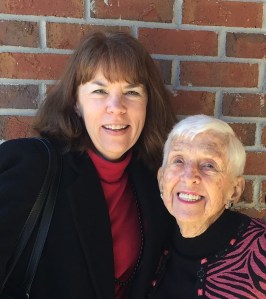
There are times when it’s ok to step back from our daily routines, to focus on special occasions and events, to appreciate holidays and vacations. But the Bible is clear there are some things we need to make every effort to keep current on, many of which involve relationships. Consider, for example:

So if you are offering your gift at the altar and there remember that your brother has something against you, leave your gift there before the altar and go. First be reconciled to your brother, and then come and offer your gift. (Matthew 5:23-24)

Be angry and do not sin; do not let the sun go down on your anger, and give no opportunity to the devil. (Ephesians 4:26-27)

I don’t like conflict. I’d much rather compliment than confront. Faced with disappointment, I’m more likely to withdraw, not wanting to hurt anyone’s feelings, or risk being hurt more deeply myself. Yet these two passages direct us to address discord in a timely manner and not allow misunderstandings to fester. I’ve learned first-hand the necessity of doing so. Unresolved differences provide fertile soil for Satan to inflict further misery, including divisions and estrangement.

Let all bitterness and wrath and anger and clamor and slander be put away from you, along with all malice. Be kind to one another, tenderhearted, forgiving one another, as God in Christ forgave you. (Ephesians 4:31-32)

So if there is any encouragement in Christ, any comfort from love, any participation in the Spirit, any affection and sympathy, complete my joy by being of the same mind, having the same love, being in full accord and of one mind.  Do nothing from selfish ambition or conceit, but in humility count others more significant than yourselves. Let each of you look not only to his own interests, but also to the interests of others.  Have this mind among yourselves, which is yours in Christ Jesus, who, though he was in the form of God, did not count equality with God a thing to be grasped, but emptied himself, by taking the form of a servant, being born in the likeness of men. And being found in human form, he humbled himself by becoming obedient to the point of death, even death on a cross. (Philippians 2:1-9)

Here we receive guidance on how to conduct our relationships. We are to treat each other with kindness and consideration, humbly forgiving as we ourselves have been forgiven. God asks nothing of us that He hasn’t already done Himself in ways that far surpass any giving or humbling or forgiving we’ll ever do.

Rejoice always, pray without ceasing, give thanks in all circumstances; for this is the will of God in Christ Jesus for you. (1 Thessalonians 5:16-18)

Be filled with the Spirit, addressing one another in psalms and hymns and spiritual songs, singing and making melody to the Lord with your heart, giving thanks always and for everything to God the Father in the name of our Lord Jesus Christ, submitting to one another out of reverence for Christ. (Ephesians 5:18b-21)

These last two passages are similar in their decree: we’re to give thanks, rejoice and pray continually – no slacking or falling behind!

The directives in the passages above are impossible for us to carry out in our own strength, but, praise God, we’ve been given the indwelling power of the Holy Spirit to enable us to do far more abundantly than all we ask or imagine. (Ephesians 3:20-21) May we ever depend on Him to help us keep current in the things that matter most.

For this reason I bow my knees before the Father, from whom every family in heaven and on earth is named, that according to the riches of his glory he may grant you to be strengthened with power through his Spirit in your inner being, so that Christ may dwell in your hearts through faith—that you, being rooted and grounded in love, may have strength to comprehend with all the saints what is the breadth and length and height and depth, and to know the love of Christ that surpasses knowledge, that you may be filled with all the fullness of God. (Ephesians 3:14-19)

Thanks, Mom!

Her children rise up and call her blessed.
Proverbs 31:28a

Ok, you probably think I’ve gotten my holidays mixed up. No, I know it’s not Mother’s Day. But it is the season of Thanksgiving and today is my dear mom’s 87th birthday. Thus, I want to thank God for the blessing of a godly mother as well as celebrate this very special woman by documenting some of the nuggets of wisdom she’s shared with me for as long as I can remember.

People will let you down, but God never will. Mom and I have been through numerous trials together in the nearly-60 years since she gave birth to me. Lies, disappointments, job loss, broken relationships, deaths. Through it all, Mom has taught me to depend on the One who says He’ll never leave or forsake us (Deuteronomy 31:6); who faithfully keeps His promises (Hebrews 10:23) and speaks only truth. (Hebrews 6:18) We will have troubles in this world, but Jesus has overcome the world. We can find peace in Him. (John 16:33)

When faced with a list of tasks, do whatever’s bothering you the most first and get it behind you. When I feel overwhelmed, which is more often than I like to admit, Mom encourages me with this time-tested advice bestowed upon her by one of her grade-school teachers. Though it may not have been inspired by scripture originally, there’s certainly a Biblical tie-in. Usually when my to-do list becomes over-loaded, it’s filled with chores associated with temporal concerns. Cooking, cleaning, weeding, mulching, paying bills and the like are necessary. But Jesus makes it clear we’re to seek eternal things first, trusting Him to provide all we need (Matthew 6:25-33) and spending time at His feet to learn of Him. (Luke 10:38-42)

We can’t change anyone else, much as we’d like to sometimes. We can only give an account of ourselves. My reply when Mom tells me this? “You’re right. I have a hard enough time keeping myself in line!” Once again, there’s Biblical truth in Mom’s statement. As part of His magnificent Sermon on the Mount, Jesus warned against judging others, especially since we have sin in our own lives to deal with. (Matthew 7:1-5) Praise God for giving us His Spirit, which is at work in us to bring about the transformation we’re incapable of accomplishing on our own. (2 Corinthians 3:17-18) Furthermore, we’re called to pray for others, but only He can soften hardened hearts. (Ezekiel 36:25-27)

We can’t give up. We’ve got to hold on to our faith and keep going. Throughout her life, Mom’s faced challenges that may have led some to quit or become bitter. In the last decade alone, she:

  • shattered the bones in her right shoulder, an injury that required surgery to install a plate and multiple screws and left her with limited range of motion in that arm.
  • suffered a heart attack that led to the discovery of three severely-blocked arteries resulting in emergency open-heart surgery.
  • fractured a vertebra in her back and had a procedure known as kyphoplasty to repair it.

Mom endures daily pain due to the ravages of arthritis that have led to enlarged joints in her fingers and cartilage deterioration in her now-bone-on-bone right knee. Yet she rarely mentions her constant aches. Instead, she clings to God’s mercies which are new every morning (Lamentations 3:22-24) and encourages those in her inner circle to do the same. Though she’s never declared a favorite verse, I expect Philippians 4:13, “I can do all things through Christ who strengthens me”, would be a front-runner.

That’s a Gulf song. Granted, this statement isn’t advice, but I include it because it alludes to my heritage of faith. Mom grew up in the tiny town of Gulf, NC, where she attended a small Presbyterian church established in the 1800’s. When the strains of a familiar hymn from her childhood begin to play at our current church, Mom’s face brightens and one of us will usually lean toward the other and whisper, “That’s a Gulf song.” I don’t know how many generations my heritage of faith encompasses, but I know there are at least two behind me and two in front. I pray that legacy of faith will be passed continually from generation to generation until Christ returns. (Deuteronomy 6:4-9)

IMG_4723Though petite in stature, Mom’s my biggest cheerleader and most dependable defender. We all need someone who’s unconditionally, unreservedly in our corner. I’m so thankful Mom’s in mine. She’s my rock because she consistently points me to the Rock and reminds me His everlasting arms are securely holding all who belong to Him in an eternal embrace. (Deuteronomy 33:26-27a) O LORD, please help me to do the same for my precious children and grandchildren. Thank You for the priceless blessing of a godly mother!

Give ear, O my people, to my teaching; incline your ears to the words of my mouth! I will open my mouth in a parable; I will utter dark sayings from of old, things that we have heard and known, that our fathers have told us. We will not hide them from their children, but tell to the coming generation the glorious deeds of the Lord, and his might, and the wonders that he has done. (Psalm 78:1-4)

Make a joyful noise to the Lord, all the earth! Serve the Lord with gladness! Come into his presence with singing! Know that the Lord, he is God! It is he who made us, and we are his; we are his people, and the sheep of his pasture. Enter his gates with thanksgiving and his courts with praise! Give thanks to him; bless his name! For the Lord is good; his steadfast love endures forever, and his faithfulness to all generations. (Psalm 100)

Becoming fluent

The church I attend recently began a small-group discipleship ministry for our women. As part of getting to know each other better, the leader of my group asked us to share a little-known fact about ourselves. I decided to tell the group about living in Argentina in the early-1970’s. The usual questions regarding life in a foreign country followed, accompanied by my well-practiced answers. Being so far away from family and friends at a time when communication was limited to snail mail was decidedly difficult, but the opportunity to experience a different culture and learn a second language was priceless.

Our 2-year stay abroad resulted from my dad accepting a temporary transfer to work for the Argentine subsidiary of his U.S. employer. Thus, part of the pre-move preparations involved my parents’ 2-week, company-paid attendance at a local Berlitz total-immersion language school. It was a stressful, morning-to-night grind, no English allowed.

Unlike my beleaguered parents, I began my language studies once we landed in Argentina. I was enrolled in an American school where I had classes in English in the morning and classes in Spanish in the afternoon. That, plus daily interaction with native speakers in our community, provided an excellent learning environment. Nonetheless, my parents hired a tutor to help me with the intricacies of sentence structure and verb tenses.

IMG_6898Just as I benefitted greatly from learning Spanish in a Spanish-speaking country, Christians thrive best when we’re part of God’s visible church. Scripture is clear that each of us has an important, God-ordained place in His body (1Corinthians 12:12-30) and that we should not neglect meeting together. (Hebrews 10:24-25) Furthermore, God’s family is composed of members of varying ages, abilities and spiritual maturities, just like biological families. We are called to do life together in compassionate covenant communities, where we rejoice with those who rejoice, mourn with those who mourn and come alongside each other to teach, support and encourage according to the gifts we’ve been given. (Romans 12:3-21)
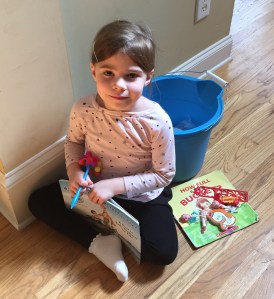
In addition, we have a responsibility to tell the younger generations of the mighty deeds of the Lord and to instruct them in His ways. (Deuteronomy 6:4-7; Psalm 145:10-13) Likewise, the Apostle Paul’s directions to Titus are clear regarding the role older women are to play in tutoring the younger women, teaching them the finer points of Biblical womanhood through both word and action. (Titus 2:3-5)

I don’t remember how long it took, but one day, to my amazement, I realized I could speak and respond in Spanish without a conscious translation step. The second language had become second-nature.

And so it is with our spiritual transformation. Because of Jesus’ atoning sacrifice on our behalf, we’re no longer slaves to sin. Instead, we’ve become slaves to righteousness. (Romans 6) Through the Spirit’s power at work within us, we’re able to discern what is right and true, something we could never do when we were dead in our trespasses. Furthermore, as our sanctification progresses, Christ’s light shines ever-brighter in us and we produce spiritual fruit. (Matthew 5:14-15; Galatians 5:22-23) More and more, our renewed nature becomes second-nature as we seek to please God and abide in Him. (John 15:5)

Nonetheless, aspects of our old selves will persist until God calls us Home, as Paul so eloquently describes in his letter to the Romans. (Romans 7:15-20) And so we press on to become fluent in God’s ways, by studying His Word, praying and joining with fellow believers to worship Him and stir one another to love and good works.

Even now, over four decades later and without daily use, I’m apt to spontaneously sprinkle Spanish sentences into conversations with my grandchildren. They’ve become used to these linguistic detours and know an immediate translation-repetition-translation mini-lesson is sure to follow. Yes, I can speak Spanish, though far from flawlessly – I still can’t roll my Rs and I mix up verb tenses – but I enjoy the language and sharing it with my grandchildren.

How much more I savor sharing our Savior with them. I’m far from perfect when it comes to fluency in my Christian walk as well. But I pray I’ll always be faithful to spontaneously sprinkle His ways and words into our conversations as I point them to the only perfect One who loves them even more than I do and encourage them to take their places in His family. May His nature become increasingly second-nature for us all.

“Hear, O Israel: The Lord our God, the Lord is one. You shall love the Lord your God with all your heart and with all your soul and with all your might. And these words that I command you today shall be on your heart. You shall teach them diligently to your children, and shall talk of them when you sit in your house, and when you walk by the way, and when you lie down, and when you rise.” (Deuteronomy 6:4-7)

Bucket-fillers

Most Mondays and Wednesdays find me at daughter Mary’s house. As 1pm draws nigh, I start herding 7-year-old Joshua and 2-year-old Emma toward the car so we can pick almost-5-year-old Lyla up from pre-school. Depending on the number of distraction-produced detours they take, the process can last anywhere from 5 to 15 minutes. Likewise, the drive to school and back may be filled with enthusiastic commentary on the scenes passing by or with shrieks of “Grammie, tell (insert sibling’s name) not to look at/touch/talk to me!!!” Yes, the trek to retrieve Lyla from school and return home safely is often the most stressful part of my day.

But a couple of Mondays ago, the events surrounding our mid-day trip were decidedly pleasant. As soon as Lyla and her teacher exited the building, Joshua, exclaimed, “Lyla’s got the bucket! She’s kid of the day!!” And so she was.

As Lyla climbed aboard and buckled up for the ride home, we all started talking excitedly. Congratulatory remarks blended with curious queries regarding the contents of her bucket. Several pieces of candy, a stencil, a super-cool, light-up pen, a certificate declaring her kid-of-the-day and two books resided inside.

IMG_6750Joshua read the books to us after lunch. They were all about how we fill or empty each other’s imaginary buckets by being kind or being mean. Furthermore, the books pointed out we’re doing one or the other all the time. The narrative went on to say that by filling up others’ buckets, we’re filling up our own as well since being helpful, obedient and thoughtful makes situations better for everyone involved. Bucket-fillers, buoyed by the results of their good deeds, are much happier than bucket-dumpers, whose actions contribute to continued strife.

As I listened to Joshua’s expressive reading, I smiled knowing I was hearing a child-friendly version of one of my most cherished spiritual principles: our calling to glorify God by being life-giving helpers. This concept was introduced to me over two decades ago by Susan Hunt, my dear friend and spiritual mother.

In the beginning, when God spoke everything into existence, He declared it all good, with one exception. In Genesis 2:18, God states, “It is not good that the man should be alone; I will make him a helper fit for him.” The helper was so perfect, Adam stated, “This at last is bone of my bones and flesh of my flesh; she shall be called Woman, because she was taken out of Man.” (Genesis 2:23)

Her name (Woman) acknowledged her equal status before God, having been created in God’s image just as Adam was, though her function was different. Lest we think women’s helper position is somehow inferior, we need only look at other uses of the Hebrew word ezer (translated “helper”) in the Old Testament. It is frequently used to describe attributes of God Himself: Defender (Exodus 18:4), Protector (Psalm 33:20), Comforter (Psalm 86:17), Deliverer (Psalm 70:5), Champion of the poor and oppressed (Psalm 72:12-14).[1] These are strong, necessary, life-giving roles.

But sin intervened. As Susan explains:

“When the man and woman sinned, Woman lost her ability to be a true helper. At this point of hopelessness, God gave hope. He promised that the woman’s offspring would crush Satan’s head (Genesis 3:15). Adam affirmed and celebrated his belief in this promise by renaming her. ‘The man called his wife’s name Eve, because she was the mother of all living’ (Genesis 3:30). Eve means ‘life-giver’. Because of her rebellion the woman became a life-taker, but because of the promise of life she became a ‘life-giver’. This is more than biological. Woman’s redemptive calling is to be a life-giver in every relationship and circumstance.”[2] (Emphasis mine.)

Left to ourselves, we would be utterly incapable of carrying out our calling. But, praise God, He didn’t leave it up to us. Because of Jesus’ promise-fulfilling sacrifice on our behalf, we’ve been given hearts of flesh that want to please our Lord and Savior and the power of His indwelling Spirit to help us accomplish His purposes. (Ezekiel 36:25-27; Ephesians 1:19-20)

Though being life-givers is part of women’s distinctive design, all believers are called to love and serve others well, as evidenced by:

  • God’s command to love our neighbors as ourselves, which Jesus confirmed as being second only to the command to love God with all our heart, soul, mind and strength. (Mark 12:28-31)
  • Jesus’ instruction to do unto others as we would have them do unto us, a concept so basic and essential that we refer to it as “The Golden Rule”. (Matthew 7:12)
  • Jesus’ reminder that when we care for the needy among us, we’re caring for Him. (Matthew 25:31-46)
  • Paul’s teaching that we should consider other’s needs before our own, following Jesus’ example of humility. (Philippians 2:3-8)
  • James’ warning that faith without works is dead. In fact, true faith will result in action – good fruit produced from being intimately and securely attached to the Life-giving Vine. (James 2:14-17; John 15:4-5)

As sojourners longing for Home, we may be tempted to despair when we look at current events. Most of us don’t have the influence or following to bring about change on a grand scale. But we belong to the One who is Sovereign over all things. (Psalm 2) He’s assigned us a place (Acts 17:24-26) and calls us to be life-givers in the midst of our unique situations – in our families, our communities, our churches. From brief exchanges with fellow shoppers in a check-out line all the way to decades-long relationships with cherished friends and family members, we are called to be life-givers in every relationship and circumstance.

Lyla is a sweet-natured child, a blessing to all in her small sphere of influence. She earned her kid-of-the-day title by collecting five “warm fuzzies”, each representing an act of kindness toward her teacher or classmates. May we be equally faithful to fill others’ buckets with hope and truth as we point them to the ultimate Giver of Life. (John 1:1-5; John 10:10-11)


[1] J. Ligon Duncan & Susan Hunt, Women’s Ministry in the Local Church, (Wheaton, IL; Crossway Books, 2006), pp. 34-35

[2] Ibid, p. 34

Never alone

Later this month, I’ll mark the 26th anniversary of my family’s move to Georgia. My tenure in the home my late husband Ray and I chose as our “raise-the-kids” house will then surpass by a decade my second-longest-term abode, the house I grew up in. Neighbors have come and gone over the years and I’ve watched several crops of children, including my own dear daughters, grow up. Currently, the homes around my cul-de-sac are filled with a pleasant mix of young families and empty-nesters.

IMG_6001I was working in my garden one recent afternoon, when my youngest neighbor, sweet-spirited Sadie, paid me a visit. We were chatting about flowers and butterflies and bumblebees when she suddenly asked, “Do you have a husband?” I replied, “I used to, but he’s already in heaven. He planted a lot of my trees. That’s why I love them so much.” As I watched, belatedly realizing I’d given a much-too-detailed reply to her simple question, her countenance was overshadowed by a pensive consternation. Nonetheless, before I had a chance to offer up something more appropriate, Sadie’s expression brightened once again as she assured me, “But you’re not alone! You have lots of people around you!” I immediately followed up with, “You’re right! I have such good neighbors.”

With this, we took turns naming all the folks who live around us. Sadie finished the list, “And Sophie!” Yes, the boisterous ball of fluffy white fur, canine companion to our newest neighbors, is an established part of the mix. With our conversation thus concluded, Sadie skipped happily across the street and up her driveway.

I’ve reflected on our exchange several times since. It was such a life-giving reminder of the blessing of community. Created in the image of our Triune God, we are meant to live in relationship with Him and others. Early on, God said it wasn’t good for man to be alone. Although the Genesis account refers specifically to Adam’s need of a suitable helpmate (wife), it’s also clear the animals couldn’t provide the requisite companionship fellow human beings could.[1] People need people. We’re not meant to navigate life alone.

Sometimes it’s tempting to try, especially if you’re an introvert or an I-can-handle-this-myself type. Or maybe you figure everyone else is busy with their own responsibilities and you don’t want to be a bother. Or perhaps you’ve gotten your feelings hurt one time too many and decided to withdraw. (Please note: each of these scenarios has applied to me at some point in my life and most likely will again!) Whatever your rationale might be, Scripture is full of passages on the importance of relationships as well as how to treat each other. We’re told to love our neighbors as ourselves,[2] to consider others’ needs before our own,[3] to share and forgive and encourage.[4]

In addition to our biological families, those who belong to God are part of a spiritual family, with unique benefits and obligations. For example:

  • The Apostle Paul says believers form the Body of Christ on earth, with each having a specific role, just as the various parts of our physical bodies have a critical part in keeping us healthy and alive. We are called to use our gifts and abilities to benefit others and to refrain from comparing ourselves to our brothers and sisters whose gifts and abilities are different.[5]
  • We’ve been adopted into the very family of God and are being conformed more and more into the image of our elder Brother, Jesus, the firstborn Son.[6] We are assured of an eternal inheritance and an eternal Home.[7]
  • Though spending time with God individually is essential to our spiritual growth and transformation, Hebrews 10:24-25 clearly states the necessity of corporate worship: “And let us consider how to stir up one another to love and good works, not neglecting to meet together, as is the habit of some, but encouraging one another, and all the more as you see the Day drawing near.”
  • There are numerous passages encouraging believers to pray for one another. Such supplications can unite us, even when we’re unable to be together physically.[8] Furthermore, Scripture tells us we are surrounded by a great cloud of witnesses, those who’ve gone before us, persevering in the faith. [9]
  • We are blessed with the indwelling presence and power of the Holy Spirit to comfort, guide and counsel us. [10] Apart from this divine Helper, we’d have no hope of pleasing God; with Him, our sanctification and, ultimately, our glorification, are ensured. [11]

Throughout most of my career, I traveled to visit customers. Early on, there were no cell phones, much less apps like “Find Friends”. Sometimes I’d be driving on a dark, lonely stretch of road when a stark realization would enter my thoughts: “No one in the whole world knows where I am right now.” But, just as quickly, a comforting reassurance followed: “God knows.” And so it is for all his children. We’re never out of his sight.[12]

Family and friends, brothers and sisters in Christ, a loving Father, a selfless older Brother, the indwelling Spirit – sweet Sadie is so right. I’m not alone, ever!


[1] Genesis 2:18-23

[2] Matthew 22:39, Mark 12:31, Luke 10:27

[3] Philippians 2:3-4

[4] Luke 6:27-38

[5] 1 Corinthians 12

[6] Ephesians 1:3-5, Romans 8:29

[7] 1 Peter 1:3-5, John 14:2-3

[8] See for example, Ephesians 6:18-19, Colossians 1:3-14, Colossians 4:2-4

[9] Hebrews 12:1-2. Note, this passage begins with “Therefore”, referring back to the long list of bygone saints who lived by faith.

[10] John 14:15-17, 25-26

[11] 2 Thessalonians 1:11, 2 Peter 1:3-11

[12] Psalm 33:18, Psalm 34:15

A little bit of heaven

The first time I visited The Pocket at Pigeon Mountain it was unseasonably cold. All I remember are snow flurries swirling through the crisp air while I huddled close to my fellow wildflower enthusiasts in an attempt to avoid the brunt of the biting wind. I can’t even tell you if anything was blooming. cropped-016.jpgTwo weeks later I returned to find the slopes bedecked with such a vast array of wildflowers I could barely take it in. I asked my companion if someone had planted the wondrous variety. “No”, he explained. “The soils and conditions here are such that it developed naturally.” From that moment on, I’ve thought of The Pocket as “God’s Garden”, a little bit of heaven on earth, where the Creator’s ingenuity is on magnificent display.

I’ve written previously about what has become a highly-anticipated annual pilgrimage to this outdoor mecca, where a reverent awe settles upon me each time I visit.[1] Last week was no different. Sunlight filtered through the leafy canopy as a gentle breeze wafted about. The gurgling brook and chirping birds provided background music as I retraced familiar pathways, stopping repeatedly to admire God’s handiwork. What a joy to behold the complexity and beauty, fIMG_3106 (2)rom the tiniest of flowers to massive tree trunks toppled long ago, the latter now moss-covered works of art. All tucked away, far from the traffic zipping by heedlessly on the interstate, waiting to be discovered, pondered and appreciated.

It may sound presumptuous, but I’ve designated a small section of my wooded backyard a mini-Pocket. I’m gradually introducing some of the native plants found in that special place to my own suburban property – trilliums, wood poppies, Virginia bluebells, bloodroot, Solomon’s plume. Though it is but a shadow of the original, it nonetheless allows me to experience the same sense of wonder each spring as the plants reawaken, each uniquely exquisite. IMG_3050I stroll the woods almost daily in the early months of the year, gently moving leaves, searching for signs of life. I sense God’s peace and presence as I meander and I pray that my joyful exclamations of delight upon finding the treasures He’s brought through another winter reach his ears as songs of praise and thanksgiving.
As I was contemplating my attempts to recreate some semblance of The Pocket, the Lord’s Prayer[2] came to my mind, specifically the lines, “Thy kingdom come, thy will be done, on earth as it is in heaven.” At times we may think of this request in terms of Jesus’ second coming when all things will be made new and God’s kingdom will indeed be established forever. But Jesus ushered in the kingdom of God when He came the first time, saving us from our sins, buying our pardon with his precious blood, [3] gaining victory over death,[4] all that we might live and reign with Him in the new, forever kingdom. But in the meantime, He sent the Holy Spirit to comfort and counsel us, to conform us more and more to His image.[5] We are to be salt and light.[6] We are to bear witness, to be ready to give an answer for the hope that is within us.[7] We are called to take up our crosses, to follow Jesus and to love like He did.[8] We are to bring a little bit of heaven into the lives of those who come our way, be it for a moment or a lifetime.

Our finite minds can’t comprehend what it will be like to be in God’s presence. Even the most beautiful day here will seem dingy when compared to the radiant light emanating from his throne. But I’m so thankful He gives us glimpses of how amazing it will be. In blue skies and breezes. In flowers and friends. In love that will last forever. Though now we see only a reflection as in a mirror; then we shall see face to face. Now we know in part; then we shall know fully, even as we are fully known.[9]

It is good to praise the Lord and make music to your name, O Most High, proclaiming your love in the morning and your faithfulness at night, to the music of the ten-stringed lyre and the melody of the harp. For you make me glad by your deeds, Lord; I sing for joy at what your hands have done. How great are your works, Lord, how profound your thoughts![10]


[1] Please see “He didn’t have to do it”, Archives, April 2017.

[2] Matthew 6:9-13

[3] John 1:29

[4] 1 Corinthians 15:54-57

[5] John 14:26

[6] Matthew 5:13-16

[7] 1 Peter 3:15

[8] Luke 9:23; John 13:35

[9] 1 Corinthians 13:12

[10] Psalm 92:1-5

Have you seen Jesus?

I caught a glimpse of Jesus. It happened in our local hospital, where Mom spent several nights while various tests were run in an attempt to discover the cause of her dizziness. Thankfully all results were normal. Upon receiving the good news of her imminent release, I went to check on Mom’s discharge papers. When I returned to her room moments later, the chair she’d been sitting in was empty. Her back was to me as she stood by the other patient’s bed and she had no idea I was observing her kind ministrations. Jesus’ love emanated from my tiny mother as she stood beside her roommate’s bed, gently holding the hand of a woman she’d just met the day before. Verbal communication was limited by a language barrier. Nonetheless, Mom’s spoken, “I love you”, was underscored with such tenderness, there could be no mistaking her message of encouragement and care.

I’ve thought about that brief encounter numerous times since it occurred nearly three weeks ago. So many lessons, so many reminders. The following may be a bit more stream-of-consciousness than usual, but I pray you’ll glean some points worth pondering.

On their inaugural album, Christian contemporary band, Casting Crowns, challenged, “But if we are the body, why aren’t His arms reaching? Why aren’t His hands healing? Why aren’t His words teaching? And if we are the body, why aren’t His feet going? Why is His love not showing them there is a way?”[1] Their lyrics remind me of the parable of the sheep and goats wherein Jesus made it clear that in caring for practical needs of the least among us, we are caring for Him.[2] Likewise, James emphasized that faith without works is dead.[3]

In the Acts 4 recounting of Peter and John before the Sanhedrin, “when (the people) saw the courage of Peter and John and realized that they were unschooled, ordinary men, they were astonished and they took note that these men had been with Jesus.”[4] Peter, the disciple who was so afraid of being associated with Jesus on the night He was betrayed that he denied Him three times, courageous? Yes, that very same man, forgiven and restored by Jesus, empowered by the promised Holy Spirit, was notably, distinctly different. As believers, we too have been forgiven, restored and empowered. May we be conformed more and more to the image of Jesus, that others might readily take note of our association with Him.

In the lesson of the vine and the branches, Jesus promised we’ll bear good fruit as long as we abide in Him. But apart from Him, we wither and are useless.[5] Furthermore, Jesus taught that each tree is recognized by its fruit. Likewise, we bring forth fruit based on what’s stored in our hearts.[6] Thus, the fruit of the Spirit – love, joy, peace, patience, goodness, kindness, faithfulness, gentleness, self-control[7] – must set us apart in an increasingly self-focused world.

IMG_5428Of all the fruits and gifts of the Spirit, love reigns supreme.[8] We are commanded to love God with all our heart, soul, mind and strength and our neighbor as ourselves[9]; to love our brothers and sisters in Christ[10]; even to love our enemies.[11] In fact, love is to be the hallmark of those who belong to Jesus.[12]

I usually read each of my blog posts to Mom. I most likely won’t read this one. It would embarrass her. Her love and concern for others are such an innate part of who she is – a senior saint who bears much fruit for her Savior after many years of abiding in him. Accolades for those qualities would be discomfiting. And rightly so, since Jesus taught us not to perform our righteous deeds to impress others, but to please our Father, who sees all.[13] Furthermore, we’re called to work as if we’re working for the Lord, not men, knowing He is ultimately the One we serve.[14]

Although God is faithfully sanctifying us, perfection will remain elusive until Jesus returns to make all things new. Even the very best of us sin and fall short of the glory of God. How grateful I am for the spotless Lamb who took our iniquities upon Himself and paid the debt we owed so that even now, when the Father gazes at us, He sees the righteousness of his beloved Son.[15]

Dear Father, thank you for loving us so much You sent your only Son to die for us, that we might live with You forever.[16] Please help us to display Jesus’ attributes more and more, loving and serving others in such a way that they may taste and see that You are good.[17]

[1] “If We are the Body” from “Casting Crowns” by Casting Crowns, July 2003.

[2] Matthew 25: 31-46.

[3] James 2:14-17.

[4] Acts 4:13.

[5] John 15:1-6.

[6] Luke 6:43-45.

[7] Galatians 5:22.

[8] 1 Corinthians 13:1-7, 13.

[9] Matthew 22:34-40

[10] Numerous references, including John 13:34-35; Romans 12:10; Ephesians 4:2; 1 Peter 3:8; 1 John 4:11.

[11] Matthew 5:43-48; Luke 6:27-36.

[12] John 13:35.

[13] Matthew 6:1-18.

[14] Colossians 3:23-24.

[15] Romans 3:21-26.

[16] John 3:16.

[17] Psalm 34:8a.