A Book Is Born

094

Dear Readers,

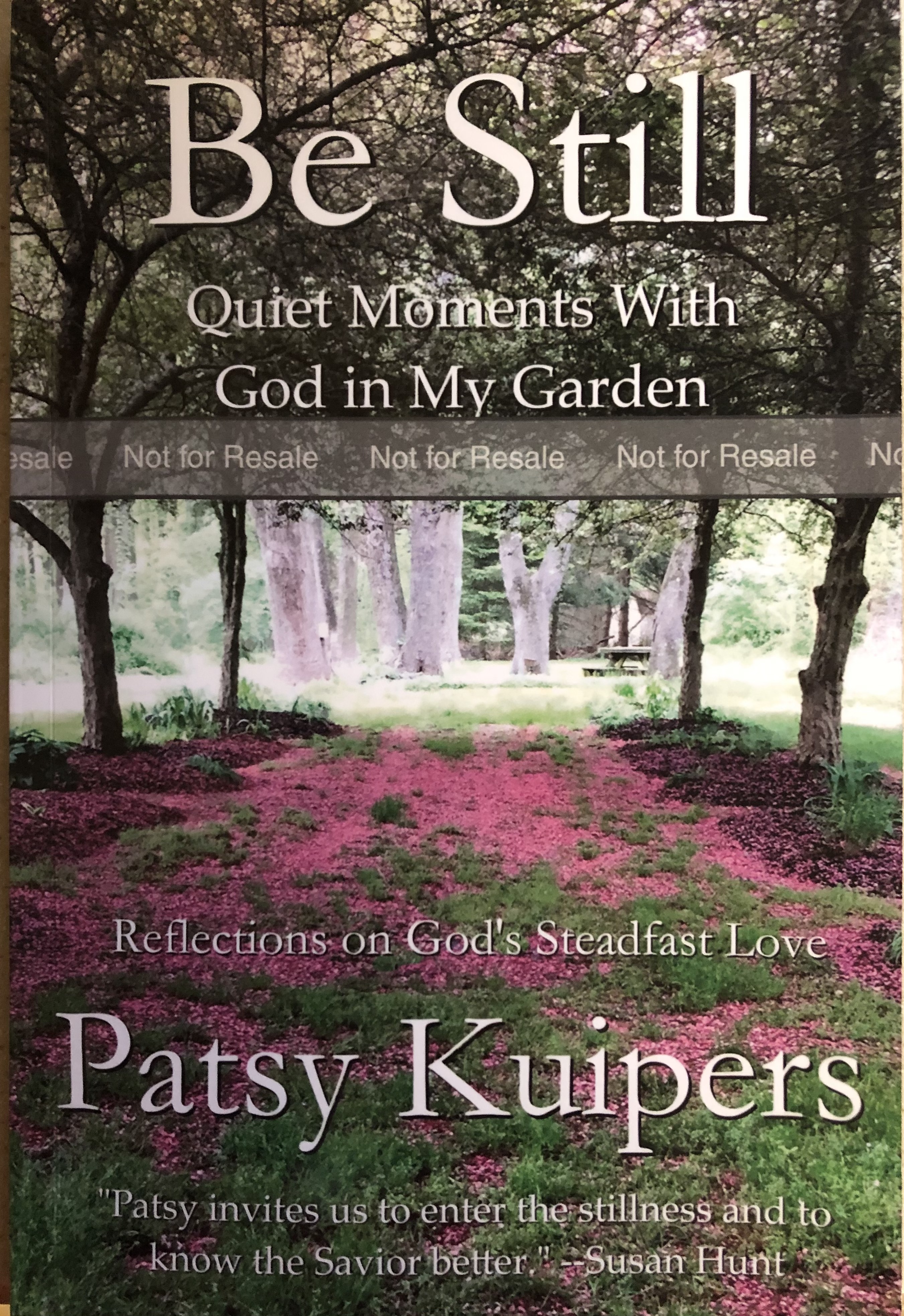
It is with great joy that I announce my first book, Be Still, Quiet Moments With God in My Garden, went live on Amazon this morning. I want to write something profound about the process and journey of getting to this point, but I’m feeling so overwhelmed with wonder and gratitude that God has allowed me to fulfill this dream that I can’t get the words to line up in my mind or on the page. There’s just a happy jumble of thoughts and emotions tumbling around in my heart as tears of amazement well up repeatedly and blur my vision.

So, for now, I’ll share the author’s note from the book and say a sincere, “Thank you!” to all of you who’ve read my blog posts, encouraged me to keep writing, and prayed for me as I labored over Be Still. I pray the Lord will use my stories and my efforts for His glory.

Blessings to you and yours as we enter into this Advent season.

Author’s Note

Come to me, all who labor and are heavy laden, and I will give you rest. Take my yoke upon you, and learn from me, for I am gentle and lowly in heart, and you will find rest for your souls.
Matthew 11:28-29

Scattered. A word I often use to describe my thoughts, my activities, and my days. Numerous distractions and responsibilities vie for attention. They scramble my mind and weary my soul. But there’s a place I can turn to for solace, a place where I spend some of my sweetest times with the Lord – my garden. There I’m reminded of the first garden and the promise of a new, redeemed garden. I see Jesus’ parables come to life as I observe the flowers and birds, the seasons and soils. My spirit soars as I behold God’s tremendous power, yet is quieted by the assurance that the One who cares for all creation also cares for me.

Several years ago, the lessons I’ve learned in my garden met up with my love of writing, and I began a blog, Back 2 the Garden (patsykuipers.com). I longed to share what God had been teaching me and to tell others of His great love and faithfulness.

As my portfolio of stories grew, so did the dream to compile them into a book, something that will be around for my children and grandchildren even after my blog and I are not.  Five years in the making, Be Still is the fulfillment of that dream.

I’ve arranged the 35 devotional readings in Be Still in five categories, with distinct yet intertwined themes:

  • Glimpses of Glory – evidence of God’s love all around us
  • The Benevolent Gardener – God’s protection and provision
  • Planted Together – principles for life-giving relationships
  • Cultivating Holiness – disciplines of spiritual growth
  • Transformation – God’s work of sanctification

Each entry begins with a passage from the Bible and ends with a brief prayer. In between, you’ll find the timeless truths of Scripture wrapped in simple stories. I pray they will encourage you to slow down and open your eyes to the wonders all around us, to be still and draw near to God.

Bearing Fruit

For no good tree bears bad fruit, nor again does a bad tree bear good fruit, for each tree is known by its own fruit. For figs are not gathered from thornbushes, nor are grapes picked from a bramble bush. The good person out of the good treasure of his heart produces good, and the evil person out of his evil treasure produces evil, for out of the abundance of the heart his mouth speaks.
Luke 6:43-45

Identifying Features

Before I studied horticulture, I tried to identify trees by their leaves. Don’t get me wrong, leaves are important identifiers for many species, but they can be misleading in others. When botanists classify plants, they look instead at their reproductive structures –  flowers, fruit, and seeds.

Although oak leaves come in different shapes, all oaks sprout from acorns. Likewise, there are numerous forms of maple leaves, not just the classic silhouette that appears on the Canadian flag. But all maple seeds are borne in samaras, those little winged carriers that float to the ground like tiny helicopters.

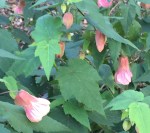
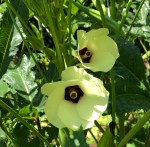
Once I learned this, it became a fun game to see if I could spot similarities between plants at the botanical garden where I volunteered. I first noted the flowers on  Abutilon with their crepe paper-like petals resemble dwarf hibiscus blossoms. Despite the shape of its leaves, which leads to one of its common names, flowering maple, Abutilon is part of the Malvaceae family, as are hibiscus and okra.

Next, I noticed the tiny white bell-shaped flowers on  Pieris japonica look like those on a small tree, known as farkleberry, and both resemble those on blueberry bushes. Those three belong to the Ericaceae family.

The more I studied, the easier it became to see the distinguishing characteristics and successfully match plants with their relatives. I wondered why I found it to be so gratifying, musing that it must be because family, both biological and spiritual, is so important to me.

Family Resemblance

Just like we can recognize plants by their fruit, Jesus taught that members of His family would bear distinguishing fruit as well, and He made it clear the only way to bear abundant spiritual fruit was to abide in Him:

Abide in me, and I in you. As the branch cannot bear fruit by itself, unless it abides in the vine, neither can you, unless you abide in me.  I am the vine; you are the branches. Whoever abides in me and I in him, he it is that bears much fruit, for apart from me you can do nothing. John 15:4-5

I’m frequently reminded of His statement when I’m pruning. I sometimes leave piles of discarded branches on the ground and then go back to collect them after I finish cutting. Inevitably, the leaves on the severed limbs are already beginning to wilt. The longer the time apart from their source of nourishment and the hotter the day, the quicker their demise. They can no longer live, much less produce fruit.

When I think of abiding, I think of peace – no striving or struggling. The word appears ten times in verses 4 to 10 of John 15, emphasizing the permanence of our relationship with Christ as well as the eternal significance of the fruit we bear. Securely connected to the Giver of Life, His life flows through us to bless and benefit others, all to the praise of His glory.

Distinctive Fruit

And what kind of distinct fruit do we produce when we abide in Him? Love, joy, peace, patience, goodness, kindness, gentleness, faithfulness, self-control (Galatians 5:22-23). All are marks of God’s children, but one outshines them all – love. Jesus prayed that the love He and the Father shared would dwell richly in His followers (John 17:26). That singular mark of distinction would allow all people to identify them as being part of God’s family (John 13:35).

He also warned against false prophets, those seeking to deceive. Like leaves that mimic those of other plants, their outward appearance may initially camouflage their deceit. But closer inspection of the fruit borne of the evil intent in their hearts will give them away, ultimately leading to their destruction (Matthew 7:15-20).

Not so the children of God who bear fruit in keeping with repentance and shine as lights in this dark world (Ephesians 5:8-11).

O Lord, what a privilege it is to be a branch on Your family tree. We bear the imprint of the true Vine, Whose life in us allows us to bear abundant fruit of eternal value.

Superfood for the Soul

But Jesus answered, “It is written, ‘Man shall not live by bread alone, but by every word that comes from the mouth of God’”
Matthew 4:4

Unequal  Options

From the time he was big enough to sit in his highchair, grandson Joshua and I have enjoyed watching the birds flock to the feeder his dad had hung from their deck. Not wanting to be left out of the fun, I added “birdfeeder” to my Christmas list several years ago. My dad fulfilled my wish, launching a pastime that’s given me hours of enjoyment since.

Being a novice faced with multiple options, I didn’t know what kind of food to buy. I settled on a bag of Southern Regional Blend. The tagline on the bag declared, “blended to attract Southern songbirds,” while another statement promised “25% sunflower plus safflower” seeds. However, a closer look at the ingredients list revealed millet to be the predominant component.

I chose a location for the feeder where I could keep an eye on it from two key vantage points: the window above the kitchen sink and my seat at the table. I filled the feeder and awaited the birds’ arrival with joyful expectancy. It took a couple of days for them to notice the new food source, but one morning a red-bellied woodpecker arrived, followed by several tiny chickadees and some tufted titmice.

I mentioned my new hobby to a fellow bird-feeding friend who promptly shared some of his stash of many birds’ favorite food: black oil sunflower seed. I gradually transitioned the contents of the feeder from the original blend until it contained only that delicacy. The changeover led to increased activity around the feeder and attracted a wider variety of birds.

In the years since, I’ve become more knowledgeable about the preferences of different birds. I’ve added suet, thistle seeds, and a premium blend containing peanuts and striped sunflower seeds to the bird buffet.

Soul Food

Observing my feathered visitors, I’ve reflected on the options available to us when it comes to nourishing our souls. We’re blessed to live at a time when technology allows us to access spiritual teaching in many different ways – podcasts, blogs, and books, both printed and electronic. Yet, with such an assortment of choices available, we need to be discerning consumers.

Just like the components in the blend of seeds I originally purchased varied dramatically in nutritional value, some lessons are little more than filler. We must be careful not to feast on snack food when we require a diet of sound teaching instead. The Apostle Peter confirmed the importance of feeding our souls with the proper nourishment. He urged those who received his letter to crave pure spiritual milk, like infants hungering for their mothers’ milk, that they would grow strong in their faith (1 Peter 2:2).

Praise God for providing His inerrant Word, the standard against which all other instruction is to be measured. Scripture is

  • profitable for teaching, rebuking, correcting, and training in righteousness, capable of equipping us for every good work (2 Timothy 3:16-17).
  • living and active, sharper than any two-edged sword, piercing to the division of soul and spirit, of joints and marrow, and discerning the thoughts and intentions of the heart (Hebrews 4:12).
  • able to accomplish the purposes of God and never return to Him void (Isaiah 55:11).

Given the power of this spiritual superfood, it’s no wonder Jesus deflected Satan’s temptation to turn stones into bread by affirming the real source of our sustenance – every word that comes from the mouth of God.

In his second letter to Timothy, the Apostle Paul warned that a time would come when people would no longer listen to the truth but instead turn to teachers who told them what they wanted to hear (2 Timothy 4:3-4). Like my friend who enlightened me when it came to feeding the birds, may we faithfully point fellow believers to the supreme soul food found in the Word of God.

O Lord, how blessed we are to have Your Word to guide and sustain us! Thank You for providing many ways for us to receive spiritual nourishment. Please help us to make Your Word the benchmark against which we evaluate the nutritional value of all other sources. 

Seasons

For everything there is a season, and a time for every matter under heaven: a time to be born, and a time to die; a time to plant, and a time to pluck up what is planted; a time to kill, and a time to heal; a time to break down, and a time to build up; a time to weep, and a time to laugh a time to mourn, and a time to dance; a time to cast away stones, and a time to gather stones together; a time to embrace, and a time to refrain from embracing; a time to seek, and a time to lose; a time to keep, and a time to cast away; a time to tear, and a time to sew; a time to keep silence, and a time to speak; a time to love, and a time to hate; a time for war, and a time for peace. Ecclesiastes 3:1-8

Nature’s Seasons

I once attended a presentation where the speaker began with, “Summer, fall, and winter are seasons – spring is a miracle.” I’ve thought about her comment every spring since. Early warm spells begin to nudge plants from their winter slumber in January here in the South. Witchhazel, Lenten roses, and paperbush start the floral parade that continues for multiple weeks as plants take turns in the spotlight. Trees, flowers, baby birds – all embody the joyful message of rebirth, which in turn stimulates hope and rejuvenation in us.

But spring gives way to summer, and tender ephemerals disappear for another year as heat-loving specimens flourish. Summer annuals and perennials bloom, then set and disperse their seeds before beginning their decline. Fall arrives. Crops are ripe for harvest, the fruit of spring planting and summer tending. Soon daylight hours decrease, as does the temperature, and autumnal leaves create a riotous display of color – one last hurrah before they let go and blanket the ground for the winter.

Ah, winter. Based on my observations, I’ve concluded it is the most misunderstood, under-appreciated season, at least from a gardening standpoint. Those unfamiliar with the ways of plants scan the leafless, apparently lifeless landscape and pronounce, “everything’s dead.” I used to think that too, but my horticulture studies dissuaded me from that notion. For instance, some seeds won’t germinate without scarification, some bulbs won’t bloom without adequate chill time, and many plants depend on the decreased daylight and increased darkness that accompany winter to flower at the appropriate time.

My newfound knowledge has given me a different perspective. Now when I contemplate winter vistas, I prefer to think the plants are resting while building reserves for the next season of fruitfulness.

Seasons of the Soul

Contemplating the bedraggled state of my summer annuals one early-September day reminded me of a book I’d been reading. Instead of equating the aging process with seasons as is often done, author Mark Buchanan explores what he’s deemed “cycles in our hearts.” In Spiritual Rhythm, Being with Jesus Every Season of Your Soul, he describes different periods in our lives in terms of the four seasons, each with its own set of challenges and blessings, each necessary if we’re to bear fruit.

The friends who gave me the book thought the analogy would resonate with me because of my love of gardening. And so it does. Year after year, I’ve observed and anticipated the changes, as one season follows another, each dependent on the ones that precede.

Sometimes I think it would be nice to live in a constant state of springtime, emotionally and spiritually speaking – productive, energetic, surrounded by resurgent, hope-producing, joy-filled circumstances. But like the plants, God knows we need all the seasons to produce abundant fruit and to become more like Jesus.

We need to slow down and be still, to rest and draw near to God in all seasons, but we’re most likely to do so during the winters of our souls – times of loss and suffering. For it’s then we realize our utter reliance upon God, a dependence present every moment, but most evident when we come to the end of our supposed self-sufficiency.

My own winters have convinced me of the veracity of Elisabeth Elliot’s declaration, “The deepest things that I have learned in my own life have come from the deepest suffering. And out of the deepest waters and the hottest fires have come the deepest things that I know about God.” (1)

Yet, like the trees and flowers, I’ve emerged able to bear more fruit, because I know my Father and His ways more intimately (Romans 5:3-5). Signs of life return, as our winter gives way to another cycle of spring planting, summer tending, fall harvesting, a cycle that will continue in us and the natural world until our final winter. Our bodies will rest in the ground, waiting for reunion with our souls when we’re called Home, glorified, and welcomed into the joy of eternal spring (1 Thessalonians 4:13-16).

Dear Lord, just as we savor the changing of the seasons in the natural world, please help us to embrace the seasons of our souls, knowing that You have a purpose and plan for each as the cycles of our lives continue until Jesus’ return.

(1) Elisabeth Elliot, “Suffering is Never for Nothing”, lecture series, 1989.

Prudent Pruning

I am the true vine, and my Father is the vinedresser. Every branch in me that does not bear fruit he takes away, and every branch that does bear fruit he prunes, that it may bear more fruit (John 15:1-2).

Pruning requires skill and an understanding of the plant being pruned. Some plants bloom on old wood, others on new. Some require severe pruning to increase fruitfulness, while such treatment will stunt, disfigure, or kill others.

As much as I decry the practice of crape murder,[1] I recognize the need for proper pruning. Done correctly, it is an essential part of maintaining a specimen’s health and enhancing its aesthetic value. After some years of practice, I feel more confident when it comes time to trim my trees and shrubs, yet I still approach the task with a measure of trepidation. What if the results of my efforts look more like a bad haircut? Or I snip off next year’s buds? Or I accidentally remove the flowering branch instead of the dead one next to it because the shrub was so thick I didn’t have a clear view? Yep, I’ve found myself in those situations – more than once.

And I’ve learned to call for professional help when the job is too big or too complicated for me to handle.

The introductory verses above from the Gospel of John are familiar. Removing dead branches and those that aren’t bearing fruit seems reasonable—but pruning the fruitful ones to make them more fruitful? Increasing by taking away sounds counterintuitive until you understand the science behind the analogy. Without delving too deeply into the details, pruning stimulates plant growth at the point of the cut by removing growth-inhibiting hormones present in the tips of branches and stems.

So what might pruning look like in the spiritual realm given we’re to produce fruit in keeping with repentance, fruit that provides evidence of our faith?

  • Loss leads to empathy for others experiencing similar losses. I’ve often said before Ray died, I was genuinely sorry for those who lost a beloved spouse, but after losing him, I became intimately acquainted with the sorrow associated with such a blow. My sympathy became empathy, which in turn has allowed me to comfort others with the comfort I’ve received from the Lord (2 Corinthians 1:3-4).
  • Trials produce patience and strengthen our faith as we wait on the Lord.  As the Apostle Paul wrote in his letter to the Romans, “we rejoice in our sufferings, knowing that suffering produces endurance, and endurance produces character, and character produces hope, and hope does not put us to shame” (Romans 3b-4). That’s a bountiful harvest of desirable traits! Furthermore, we can encourage others by stewarding our stories well, sharing examples of God’s love and faithfulness.
  • Discipline engenders repentance, which yields the fruit of righteousness and, later, humility. We recognize no one is righteous apart from Christ (Romans 3:10). We’re to take the log out of our own eye before dealing with the speck in others’, and to forgive as God has forgiven us (Matthew 7:3-5; Colossians 3:13).

How about you? Are there areas in your life where God has removed something or someone, resulting in an abundance of spiritual fruit? Love, joy, peace, patience, kindness, goodness, faithfulness, gentleness, self-control (Galatians 5:22-23).

Proper pruning, even the most severe that leaves the plant looking like a shadow of its former self, doesn’t hurt the plant. Fortunately, we belong to the Master Vinedresser, not a weekend warrior wielding a chainsaw. He determines exactly where and how to make the required cuts to enable us to bear more fruit for Him. Sometimes the pruning is relentless, and the process is painful, but we can always trust Him. He knows us by name and loves us far more than we can imagine. He’s tenderly transforming us into who He created us to be. 

O Lord, trials, loss, discipline – the very thought makes us tremble. But we know we can trust You to bring joy from suffering, beauty from ashes, and life from death.


[1] A term used to describe the act of severely pruning crape myrtles, sometimes back to their main trunks.

Prepared, Not Scared

007Last year, my daughter, Mary, helped start an American Heritage Girls troop at her church and serves as one of the leaders. Each week, Mary and my granddaughters, Lyla and Emma, look forward to meeting with their friends. They engage in a variety of activities as they work toward the organization’s goal of developing Christ-like character and leadership skills.[1]

005After a long period of separation related to coronavirus restrictions, the troop began meeting again last month. Though always vital, the skills they’re learning to earn their Emergency Preparedness badge seem especially appropriate during this time of uncertainty. They’ve talked about stranger danger, paid a virtual visit to a local fire station, and got an up-close look at an ambulance, all while discussing how to help themselves and others during emergency situations.

One comment in particular from a recent weekly recap warmed this grandmother’s heart: “First and foremost, we learned that God has told us not to fear, and is always with us. We want to be ‘Prepared Not Scared’ as we learn about different situations and how to handle them or how to help others.”

“Prepared, not scared.” That phrase resonated with me. If I had to pick one word to describe the prevailing feeling in a post-COVID world, fear would come out on top. Fear of the unknown effects of the virus. Fear of being separated from loved ones. Fear of empty shelves at the store. Fear of death itself. How about you? Have you been battling anxiety-producing fears?

Fear Not!

Though there will be times when we give way to fear because our flesh is weak, scripture provides ample assurance for those who belong to God – as children of the King, we have nothing to fear. Consider:

All of our days were written in God’s book before even one came to be (Psalm 139:16). Shortly before my husband died suddenly in April 1997, I read a quote that gave me much comfort after his passing and many times since: “Until it’s my time to go, nothing can take me. When it’s my time to go, nothing can keep me here.” God is sovereign over every breath, and we’re never out of His sight.

Does that mean we can live irresponsibly because God has foreordained our length of days? Not at all! Even Jesus wouldn’t test His Father by throwing Himself off a Temple spire when tempted by Satan (Matthew 4:5-7). Furthermore, God has given us sound minds and self-control (2 Timothy 1:7), which we’re to use to be good stewards of our bodies. Even so, we can rest knowing our days are ultimately in God’s hands.

The passage in 2 Timothy begins with the statement that God hasn’t given us a spirit of fear. A familiar passage in 1 John expresses a similar sentiment: there’s no fear in love because fear has to do with condemnation and the perfect, sacrificial, atoning love of Christ ensures there will be no condemnation for believers on the day of judgment (1 John 4:18; Romans 5:18; Romans 8:1).

Worry and anxiety are close relatives of fear. In His sermon on the mount, Jesus painted a beautiful word picture for His listeners. In reminding them of God’s care for the birds of the air and the flowers of the field, He assured them God would care for them. He admonished them not to worry. Doing so wouldn’t add a single hour to their lives. Instead, it would rob them of the joys of the present (Matthew 6:25-32).

Yet, amidst the assurances, Jesus sounded a warning: “Do not fear those who kill the body but cannot kill the soul. Rather fear him who can destroy both soul and body in hell” (Matthew 10:28).  There is a real and eternal danger for those who don’t accept God’s gift of salvation through His Son (John 14:6; Revelation 20:15).

Be Prepared

As those who have been redeemed by the blood of Christ, we do not fear God’s condemnation, but as sojourners, we know we’ll face trials in this world. How do we prepare for battle?

The Apostle Paul instructs us to put on the whole armor of God so that we can stand firm against the attacks of Satan and his comrades and their flaming darts of doubt (Ephesians 6:10-17):

  • The belt of truth protects us from Satan’s lies and accusations.
  • The breastplate of righteousness covers our hearts and defends us from guilt and self-condemnation.
  • Shoes of the gospel of peace provide an unshakable foundation.
  • The shield of faith keeps us from fear.
  • The helmet of salvation guards our minds against worldly influences.
  • The sword of the Spirit is an offensive weapon – God’s Word, living and active, fully capable of accomplishing God’s purposes (Hebrews 4:12, Isaiah 55:10-11).

Paul concludes his description of our spiritual weapons by urging us to pray at all times in the Spirit, for ourselves and for our brothers and sisters in Christ (Ephesians 6:18-19). Like good soldiers, we’re to remain alert, because our enemy prowls about like a roaring lion seeking his prey (1 Peter 5:8). In his commentary on Ephesians, John Stott proclaims, “Paul adds prayer not because he thinks of prayer as another though unnamed weapon but because it is to pervade all our spiritual warfare . . . Scripture and prayer belong together as the two chief weapons which the Spirit puts into our hand.”[2]

Take heart, dear readers. God graciously provides all we need to prevail. Clothed in Christ and His righteousness, we can be prepared, not scared, in this life, and for the life to come.

Father, thank You that Your children have nothing to fear, for our names are written in the Lamb’s book of life. Please help us to shine the light of Your truth into the darkness, illuminating the way for others to find hope and peace in You.


[1] “American Heritage Girls is a Christ-centered character and leadership development program for girls 5 to 18 years of age. AHG is dedicated to the mission of building women of integrity through service to God, family, community, and country.” Taken from the American Heritage Girls website: https://americanheritagegirls.org/

[2] J.R.W. Stott, The Message of Ephesians, God’s New Society (Downers Grove, Intervarsity Press, 1979), 283.

Legacy of Love

029My maternal grandfather was born 130 years ago today. This post, in honor of his birthday, is a meditation on enduring love and includes some reflections published in previous posts.

Love bears all things, believes all things, hopes all things, endures all things. Love never ends . . . So now faith, hope, and love abide, these three, but the greatest of these is love (1 Corinthians 13:7-8a; 13, emphasis mine).

Death has visited my family often in October.  Three of my four grandparents, a beloved aunt, a cherished uncle – all six passed away during the tenth month of different years.

October 2017 found us bereaved once again, as son-in-law Justin’s grandfather completed his earthly sojourn.  His memorial service was a celebration of a life well-lived, a race faithfully run, a servant safely Home.  As Justin and his brother and cousin shared memories of their grandfather, it was clear he made a lasting, positive impact on their lives.

Though their memories won’t be as distinct or numerous, “Papa” touched the lives of the next generation as well.  Great-grandson, Joshua, six at the time, comforted himself and others with truth: “He’s not sick anymore.  He’s in heaven!” “In heaven, guess what?  You can’t die again! Papa is there waiting for us!” And, possibly my favorite, “Papa doesn’t have to pray anymore.  He can walk right up and talk to Jesus!”

Oh, the beauty and simplicity of child-like faith, the kind of faith Jesus commended (Matthew 19:13-14), the kind God tells us to pass on to our offspring (Deuteronomy 4:9).  It’s apparent Papa followed that mandate, modeling a godly walk for his children, grandchildren, and great-grandchildren.

I think of my own dear Papa, called Home in October 1965, when I was six. A life-long farmer, he was short and wiry, yet mighty in his faith. According to Mom, he was present at the tiny country church, where he served as a deacon, every time the doors were open. My memories of him are few but precious – sitting on his lap eating apple slices, walking to the small general store, stopping at the post office, waving to the train conductor and counting the cars. I still feel his love over five decades later.[1]

Likewise, during my husband’s graveside service, one of the pastors told daughters Mary and Jessie, their lives would be forever blessed by having a godly father. Even though he was with us for a relatively short time, we continue to experience the impact of Ray’s unconditional love and steadfast faith some 23 years hence.

Other loved ones people my heritage of faith: A great-aunt, poor by worldly standards, but exceedingly wealthy in grace and kindness. Aunts who didn’t think a visit was complete until they’d fed me, physically and spiritually. Grandmothers with well-worn Bibles and “Jesus Loves Me” on their lips. All of them have long-since joined the great cloud of witnesses mentioned in Hebrews, but their influence lives on (Hebrews 12:1).

I’ve pondered these relationships, marveling how love can reach beyond death, undimmed by the passage of time. Though I cherish tangible reminders of departed loved ones, the lasting connections aren’t based on material gifts. They’re woven together from shared experiences undergirded by loving acceptance and encouragement. Love grounded in faith and hope is the greatest legacy any of us can bestow, far more valuable than any earthly treasures we might bequeath. It’s the legacy I most want to leave.

O Lord, your word has much to say about love. We love because You first loved us, unconditionally and sacrificially (1 John 4:10-11). May we live in such a way that our love and faith are evident, hallmarks of our relationship with You (John 13:35). Please help us to love others as You love us so that the effects linger long after You’ve called us Home, connecting one generation to another.

[1] Please see “Eating Apples (reprise)” in Archives October 2018.

Twiners and Climbers

Vines, whether ornamental like clematis and honeysuckle or food-producing like squash and beans, are plants whose stems require support – unless they’re left to trail along the ground because they bear more substantial fare like pumpkins and watermelons.  They use a variety of methods to climb and attach themselves to supporting structures, including twining stems, tendrils, aerial roots, and adhesive disks, also known as holdfasts.[1]

I know I’m showing my plant geek side, but please keep reading. Like so much of God’s creation, these details show how fearfully and wonderfully made everything is and how much care God took when He designed it all. They also offer some spiritual parallels, which I describe in the mini-devotions below.

Tenacious Tendrils

According to Britannica.com, tendrils are plant organs specialized to anchor and support vining stems, distinctive because they possess a strong twining tendency causing them to encircle any object encountered. The article goes on to say that tendrils are sensitive to contact and will turn toward objects they brush against. In time, tendrils grow strong enough to support the weight of the plant.[2] Think curly-cue fishing line, slender but sturdy.

016During a recent reconnaissance walk through my woods, I discovered a patch of passionflower vine. Though it chose to pop up on its own, I was delighted to see it since it’s the food source for caterpillars of Gulf Fritillary butterflies. The petite vine was already sprouting tendrils and reaching out for support. I smiled and shook my head when I found one tiny green appendage wrapped around a leaf lying on the ground. Even though the tendril had a stranglehold on the leaf,  the latter could never help the passionflower rise above the ground.

Tendrils borne on another sprig of vine clutched a more promising, but still less-than-ideal platform, a squat neighboring plant. I fetched a trellis from the garage and returned to the woods, determined to pry the tendril free from the leaf and unwrap those twirled around the unsuspecting coral bells. As I guided them to the trellis, nudging the newly-freed tendrils to grasp the appropriate support, I thought how prone we are to engage in misguided attachments.

Created in the image of the Triune God, we’re relational beings, designed for community. But often, we look to fellow finite sojourners to meet needs only God Himself can fill, overwhelming or alienating them in the process.

Or, worse, we turn to things to sustain us. Though we are meant to worship our Creator, we worship creation instead. At times, our hearts are like tendrils that turn toward whatever they brush against.

Praise God for sending the Spirit, just as Jesus promised (John 14:26). His power raised Jesus from the dead, and that same power is at work within every believer – to change our hearts, to transform us more and more into the image of Christ, and to enable us to walk worthy of our calling (Ephesians 1:19-20; 2 Corinthians 3:18). He is our all-sufficient, strong-enough Support.

Clinging Climbers
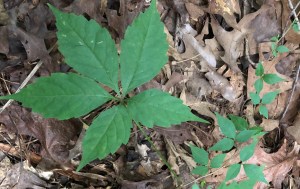
203Virginia creeper, a native vine with 5-leaved adult foliage, is sometimes mistaken for poison ivy, because its juvenile foliage frequently has three leaves, like the pesky purveyor of itch-producing oil. Its ability to scale walls and tree trunks thanks to holdfasts that act like sticky toes, reminds me of the tiny lizards I see scampering up the bricks on the front of my house. Though both plant and critter are capable of ascending considerable heights, they’re easy to dislodge.

Earlier this summer, I yanked a Virginia creeper off the side of my daughter’s house. Nourished by plentiful rainfall, it had clambered all the way to the second story and put down roots in the gutter. Nonetheless, a few tugs brought the entire vine tumbling down as its little feet let go of the wall. Unlike the wayward tendrils in the first story, the vine picked a solid underpinning.  But it didn’t have the strength to hold on when adversity came in the form of my pulling.

In 1997, the year my husband Ray died, Christian artist Geoff Moore released his album “Threads,” which concluded with “The Letter.” The lyrics tell of someone ready to give up but encouraged not to do so by the friend who received the letter.  As I struggled to regain my footing after Ray’s sudden death, these words brought hope and comfort:

And when your hand starts to slip
And when you’re losing your grip
And when you know your hope is gone
You’re not the only one holding on[3]

There were many times I had to remind myself God was holding me and would never let go. Jesus said as much: “My sheep hear my voice, and I know them, and they follow me. I give them eternal life, and they will never perish, and no one will snatch them out of my hand. My Father, who has given them to me, is greater than all, and no one is able to snatch them out of the Father’s hand” (John 10:27-29).

We’ve been learning a new-to-us hymn at church, “He Will Hold Me Fast.” I catch myself humming the tune repeatedly while the lyrics play in my mind, offering the same assurance found in the long-ago Geoff Moore song:

When I fear my faith will fail, Christ will hold me fast;
When the tempter would prevail, He will hold me fast.
I could never keep my hold through life’s fearful path;
For my love is often cold; He must hold me fast.

He will hold me fast, He will hold me fast;
For my Saviour loves me so, He will hold me fast.
[4]

An assurance that will carry us through this life until we’re called Home and our faith is made sight (1 Corinthians 13:12).

Lord, how I thank You for sending Your Spirit to guide and sustain us, to be our Support as we seek to grow according to your will for us. And I praise You for the precious promise that though our strength may fail, You’ll never let us go. We’re forever safe in Your mighty grasp.


[1] https://web.extension.illinois.edu/vines/attachment.cfm:

[2] https://www.britannica.com/science/tendril

[3] “The Letter” lyrics © 1997 Universal Music Publishing Group. Songwriters: Lisa Kainde Diaz / Maya Dagnino / Naomi Diaz / Paula Moore

[4] Ada R. Habersham, “He Will Hold Me Fast,” 1906
Garden Stories

I’m a member of the “Play in the Dirt Club”, a frequent-shopper program at a local nursery. I adopted their phrase years ago to describe my gardening ventures. Weeding, mowing, mulching, planting – I love playing in the dirt!

To use one of Mom’s old expressions, I suppose I come by it honest. My grandfathers supported their families by farming in central North Carolina. My grandmothers canned, preserved, or froze the excess fruits of their husbands’ labors, those not consumed or shared right after harvesting.

Memories of summertime Sunday dinners around their tables are vibrant even though decades have passed since I last sat elbow-to-elbow with relatives of multiple generations: plates of juicy red tomato slices and steaming corn on the cob; bowls full of fried okra, green beans, and lima beans; freshly-made biscuits and gravy. Laughter seasoned the conversation as family stories mingled with good-natured ribbing.

Other recollections are equally vivid – flowers edging the fields; straw hats perched on hooks by the door, ready to be grasped on the way out to the garden; a metal dipper hung on a nail above the back-porch sink for a refreshing sip of water upon returning to the house.

In My Genes?

My mom was one of eight siblings, my dad one of ten. They, along with most of my aunts and uncles, gardened. Their efforts ranged from plots to grow a few vegetables to a commercial tomato farm, from fruit trees to flower-filled beds surrounding suburban homes.

179Multiple members of my generation love tending plants, as do a number of our children and grandchildren. Recognizing our shared passion, I smile when cousins post pictures of their gardens, sometimes with young offspring sampling produce fresh from the vine.042

My gardening efforts are aimed at ornamentals since I don’t have a spot sunny enough to grow veggies. Nonetheless, the delight I feel in caring for my flowers and shrubs is enhanced by the connection to generations of loved ones.

Sometimes I muse that gardening is in my genes.

In the Beginning

Maybe that notion isn’t so far-fetched, at least when you consider where God placed our very first ancestors – in an idyllic garden, where all sorts of plants thrived, and God strolled in the cool of the evening. He entrusted them with the responsibility of maintaining the garden and gave them all the plants as food, save one, the tree of the knowledge of good and evil (Genesis 2:8, 15-17).

One exception amidst abundance we can’t imagine, yet Adam and Eve didn’t obey. Satan cunningly twisted God’s command and Eve ate, believing his lie that God was withholding something pleasant and necessary. She offered Adam a bite and he ate. In a moment, everything changed (Genesis 3:1-7).

But God came to the garden, as always, even though He knew of their disobedience. He drew them out of their hiding place. In the midst of declaring the penalties they’d incur, He planted a kernel of hope, a promise they could count on. One day the Seed of the woman would bruise the head of the serpent, dealing death itself a fatal blow. (Genesis 3:8-19).

Centuries passed and the time came for God to send His beloved Son, that whoever believes in Him would not perish, but have everlasting life (John 3:16). Jesus left His place at the Father’s right hand and dwelt among us for a while (John 1:1-5, 14). On the night of His betrayal, He retreated with His disciples to the Garden of Gethsemane. With sorrow weighing heavily on His soul, He fervently prayed that the cup might pass from Him (Matthew 26:36-44). But it was the Father’s will to crush Him for our sake (Isaiah 53:10).

Jesus remained perfectly obedient to His Father’s will, even to the point of death on a cross (Philippians 2:5-8). There was a new tomb in the garden near the place of  Jesus’ crucifixion (John 19:41). Joseph of Arimathea placed His body in that tomb, but death couldn’t hold Him there. On the third day, God raised Him by the power of the Spirit. According to the Apostle John, the resurrected Christ first appeared to Mary Magdalene in the garden. In her grief, she even mistook Him for the gardener (John 20:14-16).

The New Earth

So many momentous garden moments in His-story, with more to come. Jesus promised to return. When He does, heaven and earth will pass away, making way for the new heaven and new earth where God will dwell with His people forever (Revelation 21:1-4). Creation will be redeemed right along with the children of God (Romans 8:19-22).

One continuous story from beginning to end. Could it be the sweet connections woven through generations of gardeners in my family are rooted in echoes of Eden? Our hearts harbor a deep-seated longing for perfect communion with God in a world unmarred by sin. No more thistles and thorns. No more pain or tears or death.

As we wait for Jesus’ return, God gifts us with hints of heaven, in blue skies and gentle breezes, in fruits and flowers and fresh-from-the-field vegetables, in gatherings with friends and family around food-laden tables. Let us give thanks, remembering even the most splendid day here is a mere shadow of the beauty that awaits in the restored garden (1 Corinthians 13:12).

Six Years

Dear Readers,

I’ve journaled since I was a teen, filling numerous notebooks with descriptions of family vacations and special occasions. The lined pages also contain plenty of what I came to call “written therapy sessions”. But it wasn’t until I read “A Heart Set Free”[1] that I realized those sessions had a scriptural counterpart.  The characteristic pattern of the Psalms of Lament described by author Christina Fox closely resembles the one I frequently follow in times of emotional upheaval. I begin by describing the sad state of affairs leading up to that particular journal entry, follow with ruminations on how to address it, and intersperse petitions to God to help me sort it out. As I write, I remind myself of His character, add Bible verses, and hearken back to other times He’s been faithful. By the time I reach the end, I feel better. Writing doesn’t change my circumstances, but it does change my perspective.

img_3562I launched Back 2 the Garden six years ago today with “Consider It Pure Joy”. (July 2014 Archives) My venture into the world of blogging was fueled by a desire to use my God-given writing ability to tell whoever would read my words of His great love and faithfulness. I wanted to encourage others with the promises and assurances God has brought to my mind as I’ve dealt with challenges stemming from widowhood, job loss, family illnesses, the deaths of beloved friends and family members, and world events.

This is my 166th post. Some of you have been faithful readers from the very first one. Thank you for your comments and support over the years! Some of you have found your way here more recently. Thank you for joining me in the Garden. To all of you, I pray my posts will always honor God and help you find hope in Him, whatever your specific circumstances.

And remember my goal of publishing a book based on my blog posts? It’s finally making its way from dream to reality. More on that later this year.

In the meantime, I hope you’ll come Back 2 the Garden often and find life-giving words to point you to the One who loves us more than we can imagine.

For this reason I bow my knees before the Father, from whom every family in heaven and on earth is named, that according to the riches of his glory he may grant you to be strengthened with power through his Spirit in your inner being, so that Christ may dwell in your hearts through faith – that you, being rooted and grounded in love, may have strength to comprehend with all the saints what is the breadth and length and height and depth, and to know the love of Christ that surpasses knowledge, that you may be filled with all the fullness of God.  Ephesians 3:14-19

[1] Christina Fox, A Heart Set Free, A Journey to Hope Through the Psalms of Lament, Christian Focus Publications, 2016.