Warmed by the Son

Contrary to popular belief, fall, not spring, is the best time to plant most perennials. As air temperatures cool, top growth gradually comes to a halt. Since soil temperatures drop more slowly, the plant can then shift additional energy to its roots, thereby establishing a healthy network to convey water and nutrients to support the plant’s next round of growth the following year.

As is usually the case, we’ve been experiencing a beautiful fall here in the Atlanta area, with daytime highs near 70⁰F and nighttime lows in the 50s. However, I’ve been busy and haven’t been able to spend nearly as much time outside as I would have liked. Finally, there was an opening on my calendar last Thursday. I set my sights on installing numerous plants, some purchased, some adopted from friends, along the path taking shape through the woods.

Wouldn’t you know it? By the time Thursday rolled around, the arctic blast that’s put a big part of the country into an early deep freeze had made its way to north Georgia. Not one to be deterred from my mission to get the plants out of their pots and into the ground, I proceeded to spend several hours happily planting my new friends as my fingers and toes got colder and colder.

As forecast, temperatures that night dipped below freezing – well below when the wind chill was factored in. When I got downstairs the next morning, I went to the kitchen window overlooking the woods and scanned the scene, trying to ascertain how the plants had fared in the less-than-ideal conditions. The Calycanthus was upright, its bright yellow leaves a cheerful greeting in the early morning light. The Fatsia were slightly drooped, yet still green. But where was the beautiful Ilicium floridanum ‘Pink Frost’ that had enchanted me the day before with its spicy scent and lovely green leaves outlined with a margin of creamy white? Illicium floridanum Pink Frost nipped by the coldSurely that brownish mass of sagging leaves wasn’t it! I quickly pulled a heavy coat on over my PJs, slipped my feet into my work boots and headed to the woods for a closer look. Alas, it was the Ilicium. Its leaves so graceful and aromatic the day before were stiff. In that moment, I think I knew what Charlie Brown must have felt like when he put the first ornament on his spindly little Christmas tree, only to watch it bend to the ground, overwhelmed by the weight. “I’ve killed it!” As I trudged back inside, I chided myself with thoughts of “Why didn’t I heed the forecast and leave the Illicium in its pot in a sheltered area?”

Even though there was a brisk wind and the temperature remained below average, the sun shone brightly throughout the day. Several hours after I made my initial trek to the woods, I peered out the window again. Much to my surprise, the color had returned to the Illicium! Once more, I made my way to the woods for a closer look. Sure enough – the leaves were supple and fragrant.  Just like Charlie Brown’s tree, all it needed was a little tender love and care. In this case, the TLC came in the form of warmth from the sun. Illicium floridanum 'Pink Frost' warmed by the sun
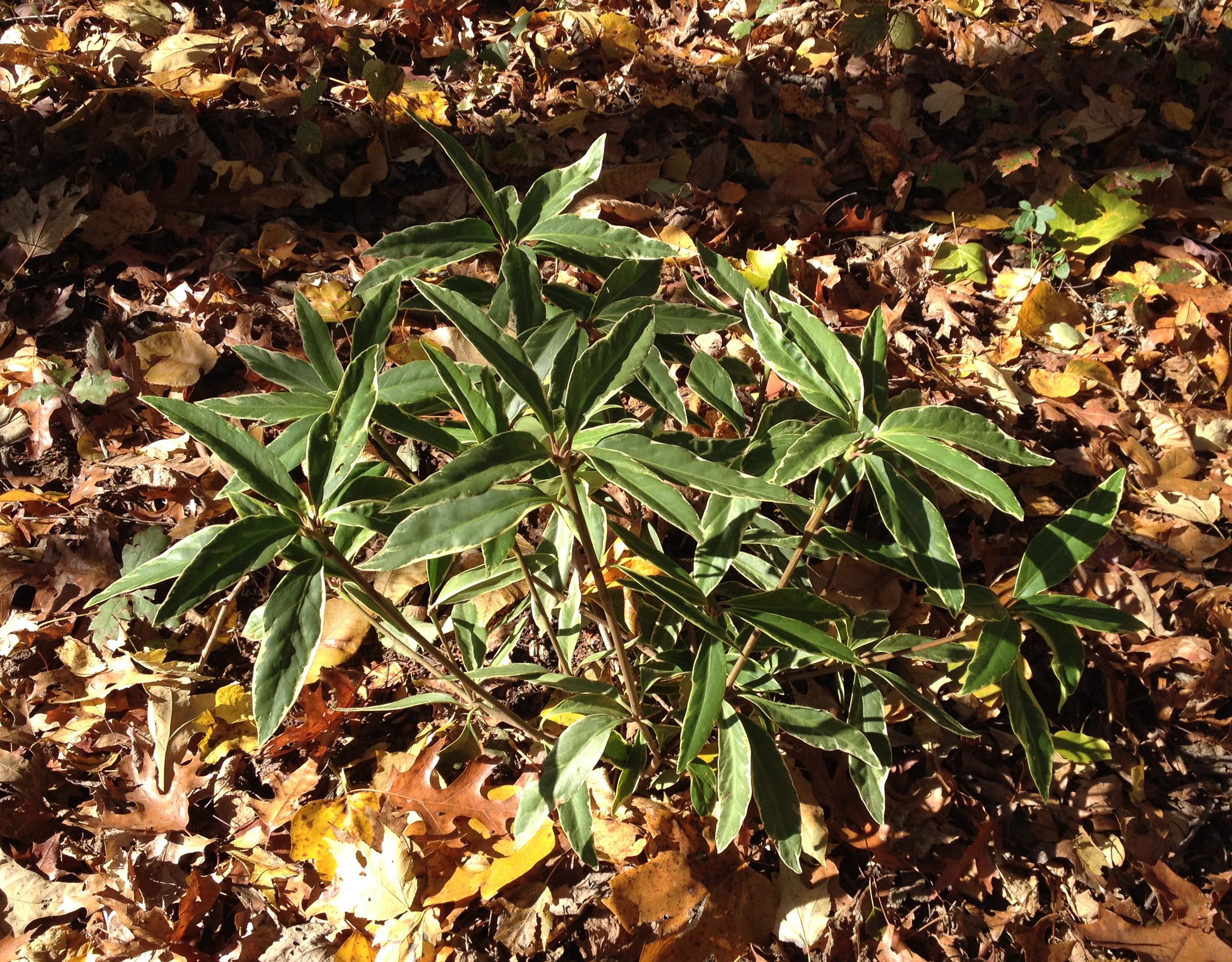
There are times when chilling winds blow through our lives. They present themselves in myriad forms – harsh words, a disappointing turn of events, unfulfilled hopes. Jesus told us, “In this world you will have trouble. But take heart! I have overcome the world.” (John 16:33) Indeed, he is the Light of the world, guiding, reassuring, encouraging us along the way. The warmth of his presence can revive and restore our souls. And we are called to provide that same care to others. “Praise be to the God and Father of our Lord Jesus Christ, the Father of compassion and the God of all comfort, who comforts us in all our troubles so that we can comfort those in any trouble with the comfort we ourselves have received from God.” (2 Corinthians 1: 3-4)

May we love others well because we have been well-loved. (I John 4:19)

Be still

I was somewhat taken aback when I saw “Black Friday” Christmas specials being advertised the day after Halloween. Since when is that retail free-for-all associated with trick-or-treat instead of Thanksgiving?! Yes, it seems the Christmas rush has started even earlier than usual. Don’t get me wrong, this is one of my favorite seasons. My daughter Mary’s late-October birthday officially kicks off our family’s holiday celebrations, which include Thanksgiving and my mom’s birthday in November and my and granddaughter Lyla’s birthdays and Christmas in December. Then there’s New Year’s, straddled by a month’s worth of college football playoffs and bowl games. (In addition to faith and flowers, college football happens to be one of my other passions!)

Yet, even though I enjoy the festivities associated with all these happy occasions, I, like many others, struggle not to feel overwhelmed by my calendar and my to-do list. When I was employed full-time, I would think, “If only I could have the whole month of December off . . .” Well, technically, I’m always “off” these days, but I often quote a long-time friend who I worked with for many years, “I’m so busy now that I’m retired, I wonder how I ever had time to work!”

And so, as I wrote in my last post, it gets back to what I choose to focus on and Who I choose to please. A number of things combined yesterday to disquiet my outlook. As I fell asleep last night, I was still mulling over everything I have to do in the days ahead plus the possibility of taking on some other commitments. I certainly wasn’t following Jesus’ mandate not to worry about tomorrow. As a matter of fact, I was worrying about several weeks’ worth of tomorrows plus things that haven’t even officially made it onto my list of obligations!

Zephaniah 3:17 says “The LORD your God is with you, he is mighty to save. He will take great delight in you, he will quiet you with his love, he will rejoice over you with singing.” What an amazing verse! Imagine, the Lord of all creation quiets us as a mother calms her beloved child. Sometimes I think he must sing over me while I sleep. When I woke up this morning, one of the first things that came to my mind was Psalm 46:10, “Be still and know that I am God; I will be exalted among the nations, I will be exalted in the earth.” With his help, I’ve tried to focus on him today, enjoying the beauty of his handiwork which is exuberantly exalting him with a vibrant array of fall colors. I hope you’ll enjoy the following collage of images. May they help you to be still as well.


Where’s your focus?

“Turn your eyes upon Jesus, look full in His wonderful face, and the things of earth will grow strangely dim in the light of His glory and grace.” Helen H. Lemmel

In landscaping, a specimen plant can be used to create a focal point. To merit such a special role, the plant generally has some unique or impressive attribute. I described one such example, my beloved crape myrtle, in my last post. Depending on the season, its size, exfoliating bark and/or flower-laden branches command attention. It’s often the first thing people notice when they stop by to visit.

Just as experienced landscapers carefully select specimen plants to create garden-enhancing focal points, we need to take great care in choosing what we focus on moment-by-moment and day-by-day as we go about our lives. We’re all surrounded by varying demands, requiring action or decisions on our part. The weight of responsibility and pace of life can frequently result in a sense of disquiet and anxiety, especially if we concentrate on our circumstances. But what if we could shift our focus to something, or better yet, Someone, who offers peace amidst all the hustle and bustle?

The apostle Peter learned much about the importance of choosing wisely when it comes to deciding what to focus on. In the well-known account of him walking on water (Matthew 14:22-32), Peter was able to perform the miraculous feat as long as he kept his eyes on Jesus. “But when he saw the wind, he was afraid and, beginning to sink, cried out, Lord, save me! Immediately Jesus reached out his hand and caught him.” (verses 30-31)

Likewise, when Jesus and his disciples visited the home of Martha and Mary, “Martha was distracted by all the preparations that had to be made.” Not only was she preoccupied with the details involved with feeding her guests, she became quite exasperated when her sister, Mary, decided to sit at Jesus’ feet and listen to his teaching instead of helping. In fact, Martha was so annoyed she asked Jesus to tell Mary to assist with the meal. To her surprise and possibly dismay, she was the one who received a gentle rebuke: “Martha, Martha”, the Lord answered, “you are worried about many things, but only one thing is needed. Mary has chosen what is better, and it will not be taken away from her.” (Luke 10:41-42)

Similarly, as recounted in Matthew 6:25-34, Jesus told his listeners not to worry about what they would eat or drink or wear, but to “seek first his kingdom and his righteousness, and all these things will be given to you as well. Therefore do not worry about tomorrow, for tomorrow will worry about itself. Each day has enough trouble of its own.” (verses 33-34)

So, does this mean we shouldn’t take care of ourselves and our loved ones or tend to the details of our lives? Of course not! There will always be demands on our time and resources, meals to be prepared, laundry to be washed and folded, bills to be paid. But, instead of becoming anxious and afraid, burdened and weighed down by focusing on our circumstances, we need to “turn our eyes upon Jesus”. Earlier, I described a specimen plant as one that usually has an impressive or unique attribute. In four brief but very rich verses, Hebrews 1:1-4 declares a number of Jesus’ amazing, matchless characteristics. He is the Son of God, the radiance of God’s glory, heir of all things, superior to the angels. Not only was everything created through him, but he sustains all things through his powerful word. He’s seated at God’s right hand, interceding for us (Romans 8:34).

Jesus, our Lord and Savior, is supremely worthy to be our focal point. We can rest in the assurance of all he’s done for us and all he’s promised to do for us, confident he’ll never leave us or forsake us.


Ode to a crape myrtle

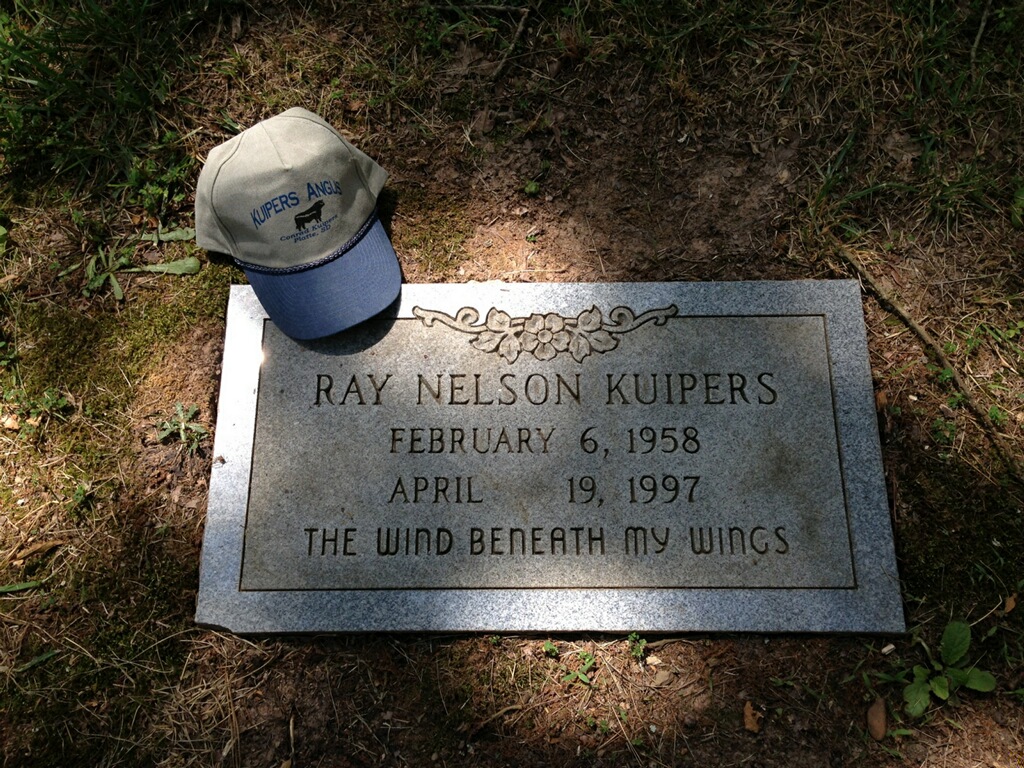
There are a number of special plants in my yard, dear to me because Ray selected and installed them. They are lasting gifts from him as I’ve had the pleasure of watching them grow for many years. One of the most cherished is my crape myrtle.

When we moved to Georgia, I was a colorist for a large fiber-producer. In my role, I followed color trends and chose colors for fibers the company produced as well as for carpet samples we showed our customers. I was delighted to have the opportunity to put my expertise to use choosing colors for the interior and exterior finishes of the home being built for us.

Likewise, Ray was looking forward to having a nearly-blank slate to work with outside since the builder-installed landscaping left a lot to be desired. Little did I know the exterior colors I picked (cream accented with various shades of rust and cinnamon) would present a challenge for Ray when it came to selecting a crape myrtle to reside in the main bed in front of the house. Varieties with pink or purple or magenta blossoms would clash with the brick and shutter colors and clashing just wasn’t an option! Never one to shrink from a challenge, especially one involving horticulture, Ray came up with the perfect solution, a cultivar called ‘Natchez’, with creamy white flowers and cinnamon-colored bark.

I don’t recall how tall the small tree was when Ray planted it over 20 years ago, but it’s reached a height which surpasses its age, with a canopy almost as wide. When in full bloom, its size and splendor prompt visitors to ask, somewhat in awe, “What is that?” I reply, “It’s a crape myrtle. That’s what they can look like if you don’t commit ‘crape murder’.” For those of you unfamiliar with the term, “crape murder” refers to the severe and unnecessary pruning of these lovely trees, usually in late winter. Although some early cultivars supposedly produced more blooms after such treatment, most of those used today flower just as well without being subjected to such torture. I cringe when the annual amputations begin, envisioning the tiny new branches which will sprout from the large remaining limbs, much like fingers emerging from a shoulder. I’m thankful I only committed this crime once, the winter after Ray died, when I was still trying to figure out how to take care of the garden treasures I’d inherited. Fortunately, I quickly learned making my crape myrtle look like everyone else’s was not the thing to do!

(Ok, I’m stepping down from that soap box so I can return to the story at hand . . .)

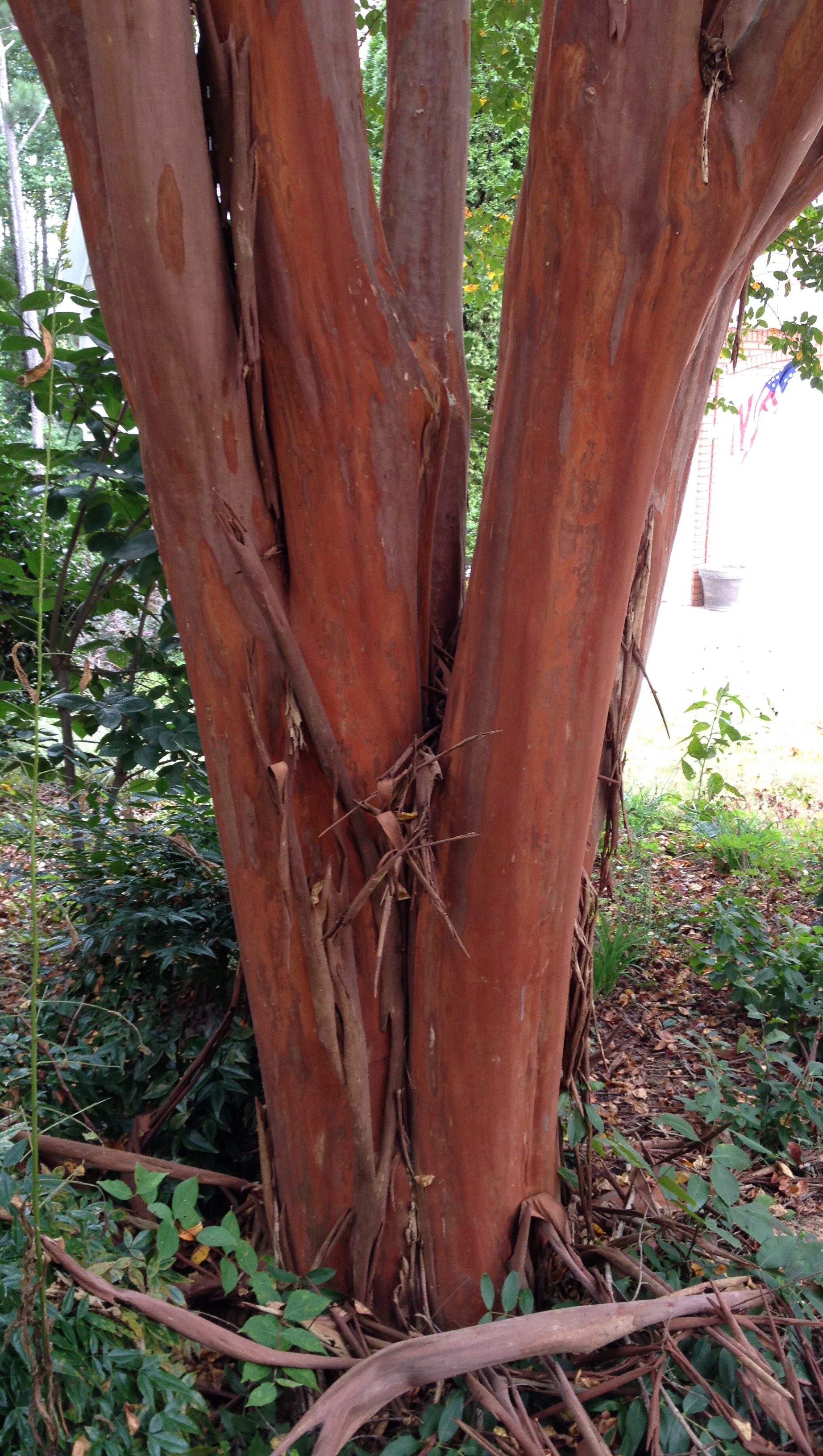
My hort mentor sometimes speaks of plants as having single-season or multiple-season interest, not that one kind is better than the other, just different in its appeal. The first category includes plants such as spring-flowering specimens or those with vibrant fall color which take center stage for a few weeks each year and then play more of a supporting role in the landscape until time for them to burst forth and captivate us once again. I would put my crape myrtle in the latter category, as it has something to offer year-round. Some might question the beauty of the leafless branches, but the leftover seed pods contribute textural interest throughout the winter. Sometimes I even get to see the limbs decorated with a layer of snow. Beginning in the spring, the massive canopy provides shelter for numerous birds and shade for the southeast side of my house. In the summer, its flowers attract a variety of pollinators that dart in and out of the blossoms, creating a low humming as they go about their task. Then there’s its aesthetic value. My tree was so floriferous this year, its flower-filled branches resembled a cascade of blossoms. In late summer, the bark starts to exfoliate, peeling off to reveal the new layer underneath. The process can be a bit alarming to the uninitiated since it almost looks like the tree is falling apart, but exfoliation is one of the characteristics I most like about my crape myrtle.

002And, in case you’re wondering, it’s the feature that inspired the spiritual tie-in for this post. As I’ve watched the bark begin to peel away this season, exposing the beautiful surface beneath, I’ve been reminded of the mandates in Scripture to “put off the old and put on the new”, a concept so important I’ll dedicate a separate essay to it. Today, I’m grateful for a thoughtful husband who chose just the right plant and for a loving Father who’s sustained it and me across all the years since He called him Home.


The gift of remembrance

“And I heard a loud voice from the throne saying, ‘Now the dwelling of God is with men, and he will live with them. They will be his people, and God himself will be with them and be their God. He will wipe every tear from their eyes. There will be no more death or mourning or crying or pain, for the old order of things has passed away.’” Revelation 21:3-4

Each year when October comes around, Mom and I reflect on the fact that three of my four grandparents died during the last week of the month, in different years – 1965, 1966 and 1974 to be exact. Many years have passed, but I know my mom, now in her early 80’s, still misses her parents. Likewise, there are days when I long to talk to Ray, though it’s been 17 years since I last held his hand and shared the details of my day with him. And then I have several friends who are in the early stages of grief, having lost their much-loved spouses within the past few months. I assure them it will get better, that the pain won’t always be so raw, but I also tell them they won’t ever “get over” the loss. There will always be a tender spot, a place only the beloved can fill. Yet, would we want it any other way?

And so, to all those who are missing someone dear, no matter how long the separation has been, I offer up this quote from Dietrich Bonhoeffer. It eloquently describes how precious the memories are that link us to our departed loved ones until the day when we’re finally reunited:

“Nothing can make up for the absence of someone we love . . . it is nonsense to say that God fills the gap; God doesn’t fill it, but on the contrary, God keeps it empty and so helps us keep alive our former communion with each other, even at the cost of pain . . . the dearer and richer the memories, the more difficult the separation. But gratitude changes the pangs of memory into tranquil joy. The beauties of the past are borne, not as a thorn in the flesh, but as a precious gift in themselves.”

055

Very Hungry Caterpillars

“The caterpillar ate through one nice green leaf, and after that he felt much better.”
Eric Carle

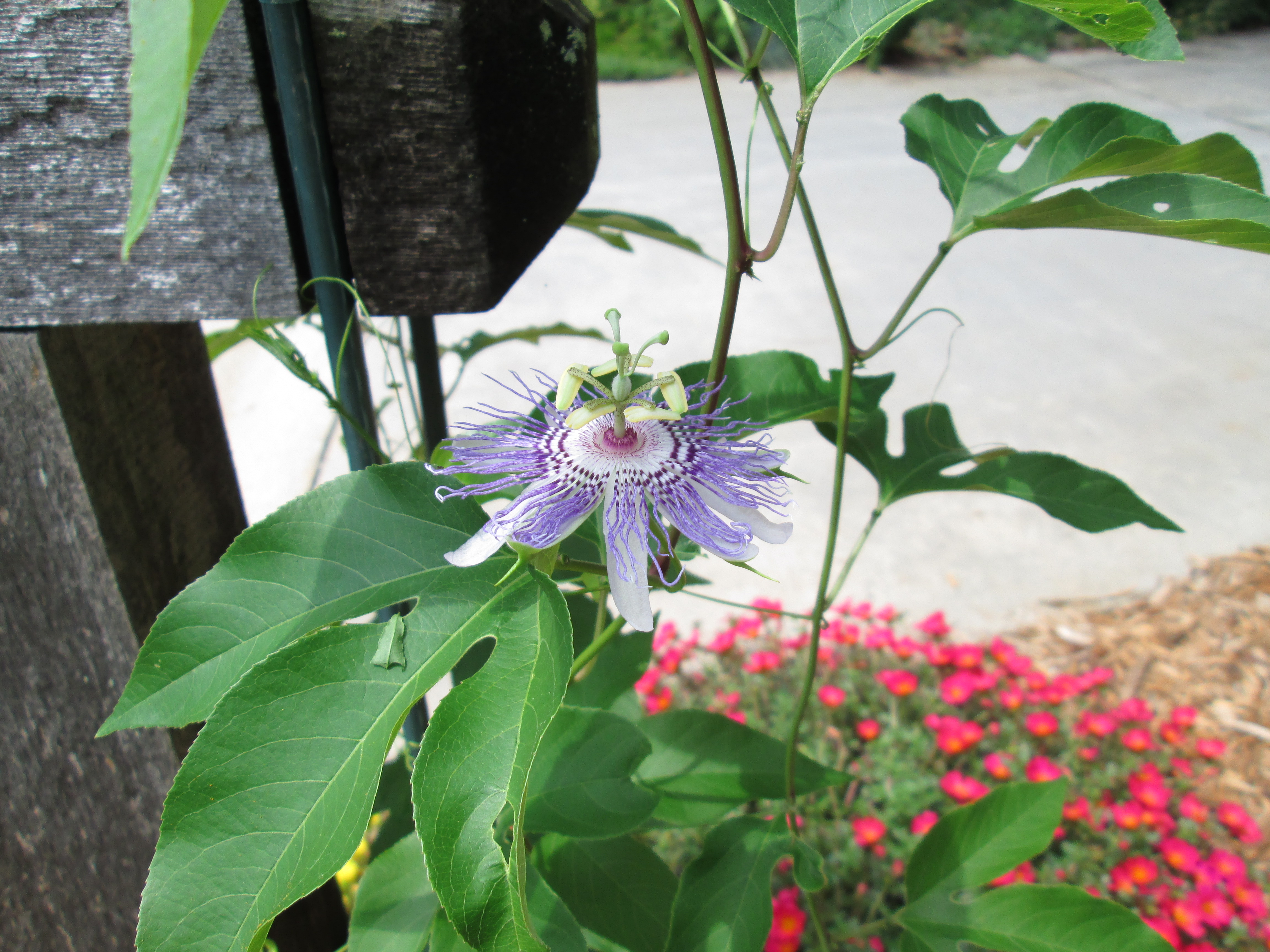
Getting to study horticulture the past three years has given me the opportunity to be introduced to lots of interesting new (to me) plants. Passiflora incarnata is one such plant. One of its common names, passion flower, alludes to the fact that some of the components of its wonderfully complex flowers have been likened to various aspects of the passion of Christ. According to the Floridata website, “The name, Passiflora or ‘passion flower’, was given by 16th century Spanish missionaries in South America who thought they saw a reference to the Crucifixion of Christ in the elaborate flower structures: the corona, sitting at the top of the flower, is the crown of thorns; the five anthers are the five wounds; the three styles are the three nails; and the five petals and five sepals are the apostles, less Judas and Peter.” (The two apostles who betrayed Jesus – Judas to the utmost and Peter only temporarily.)Passiflora incarnata


I decided the stunning flowers would make a lovely addition to my garden and planted a small vine next to my mailbox. I watched as the vine grew, wrapping tiny tendrils around support stakes as it went. I searched daily for buds, which finally appeared. Sadly, for some enigmatic reason, all but two failed to produce the much anticipated and hoped-for flowers. Instead, my Passiflora produced a bounty of a different kind . . .

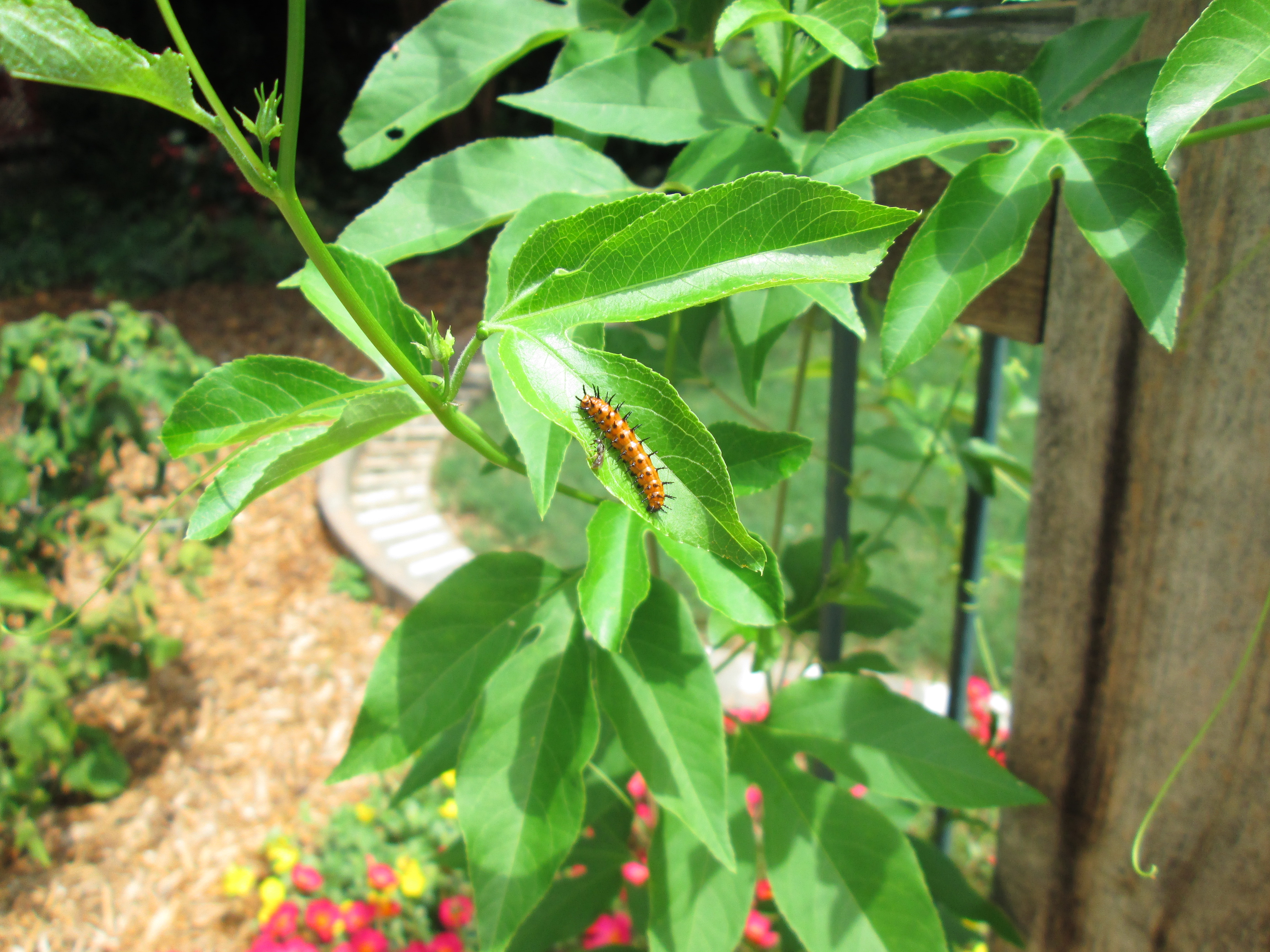
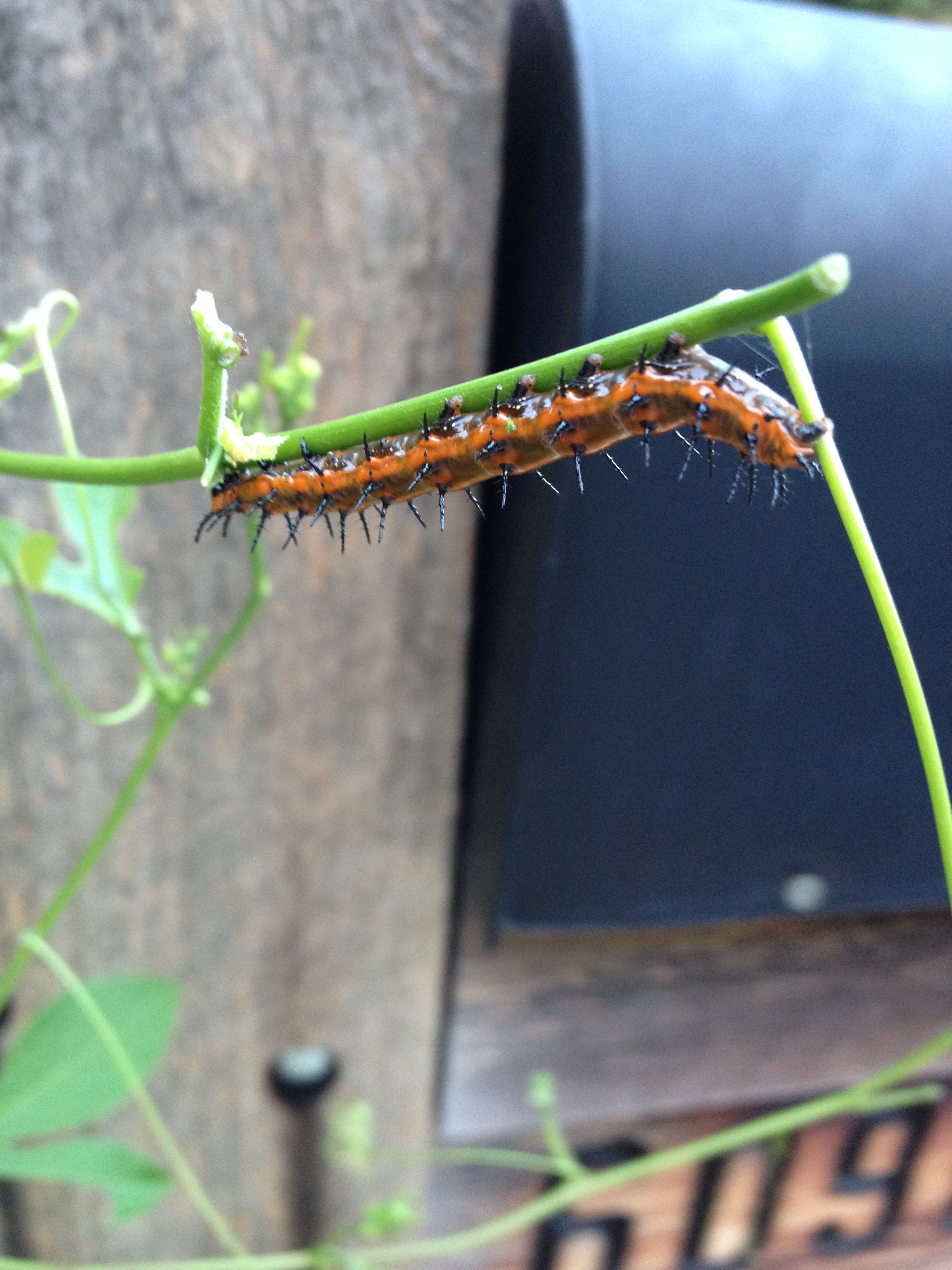
In addition to the beautiful flowers, I learned Passiflora serves as a host plant for the larva of the Gulf fritillary, a lovely bright orange butterfly with black markings. The Gulf fritillary is so-named because of its migration across the Gulf of Mexico. Sure enough, one morning when I went out to get my newspaper, I spied the first of what would be several waves of caterpillars to feast on my vine. Although the orange caterpillars don’t sting, they have rows of soft black spines. The black and orange stripes warn potential predators of their toxicity and so, even though my little crop of caterpillars was munching away in plain view, the birds left them alone to eat and grow. And eat and grow some more!An early caterpillar

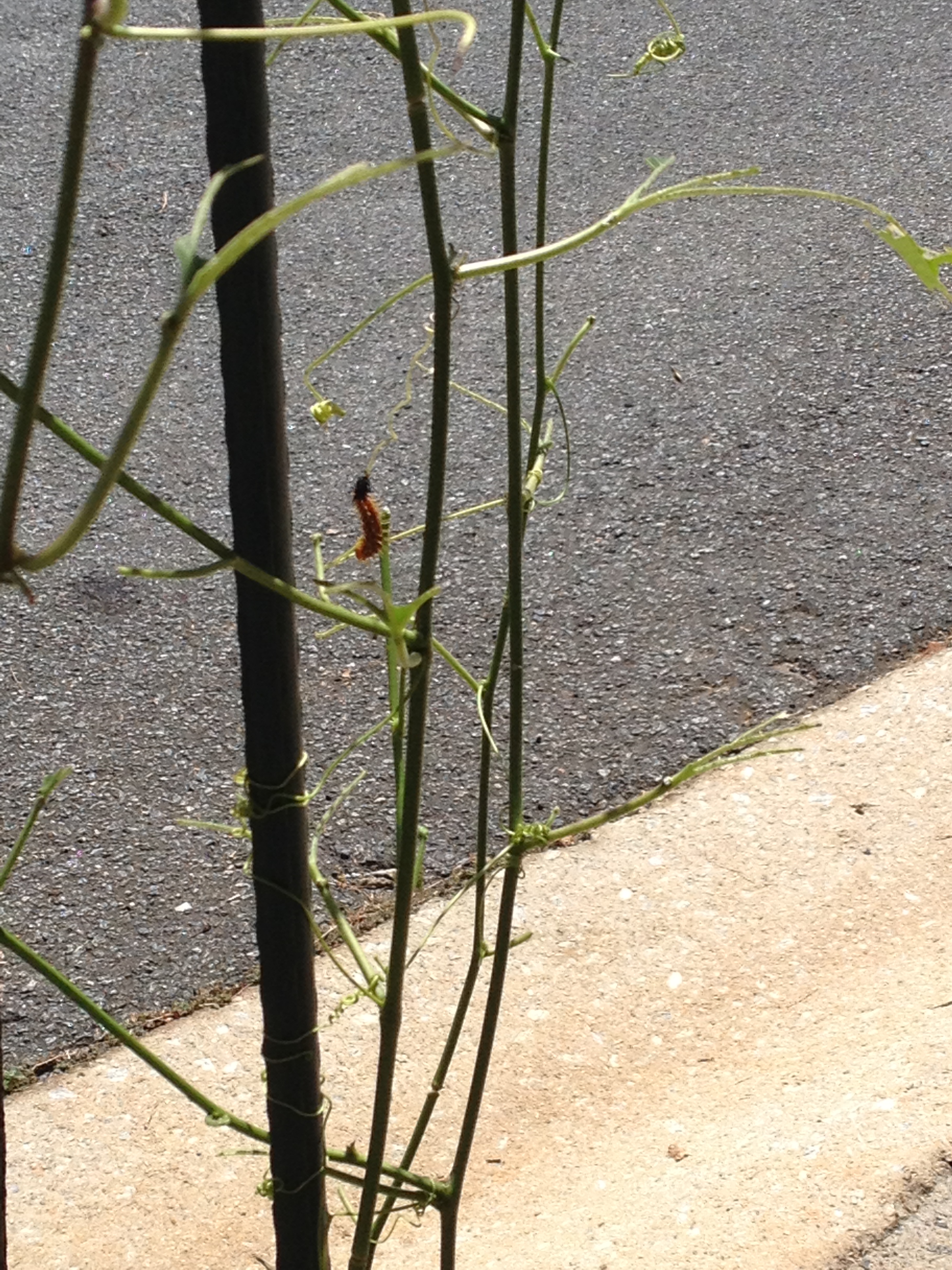
I delighted in watching the caterpillars, checking on them every morning when I went to retrieve my newspaper and every afternoon when I went to the mailbox. Then one afternoon they were all gone. The first group, in its entirety, had disappeared in the four hours or so between my two daily treks down the driveway. Search as I might over the next few days, I couldn’t find any of the chrysalises. Soon more tiny but ravenous caterpillars appeared and started munching their way through the remaining leaves.A late catepillar

Noticing the bedraggled appearance of my vine, a well-meaning friend asked what I was planning to use to “take care of” the voracious intruders. I explained that the caterpillars would turn into butterflies and I was willing to sacrifice my plant so they could complete their life cycle. As a matter of fact, I was rather in awe of the ability of the mother butterflies to find my vine in the first place. It was small (and getting smaller every day), the only Passiflora on my property and possibly the only one for miles around. Yet because of the innate capability God instilled in them, the fritillaries found, and deposited their eggs on, the only genus of plant their caterpillars feed on. After some more cycles of hatching and eating, there were no more leaves (or buds) left on the vine and the subsequent generations were left to eat the stem. As I watched them gnawing away, I could only imagine that the stem was much tougher than the tender leaves.

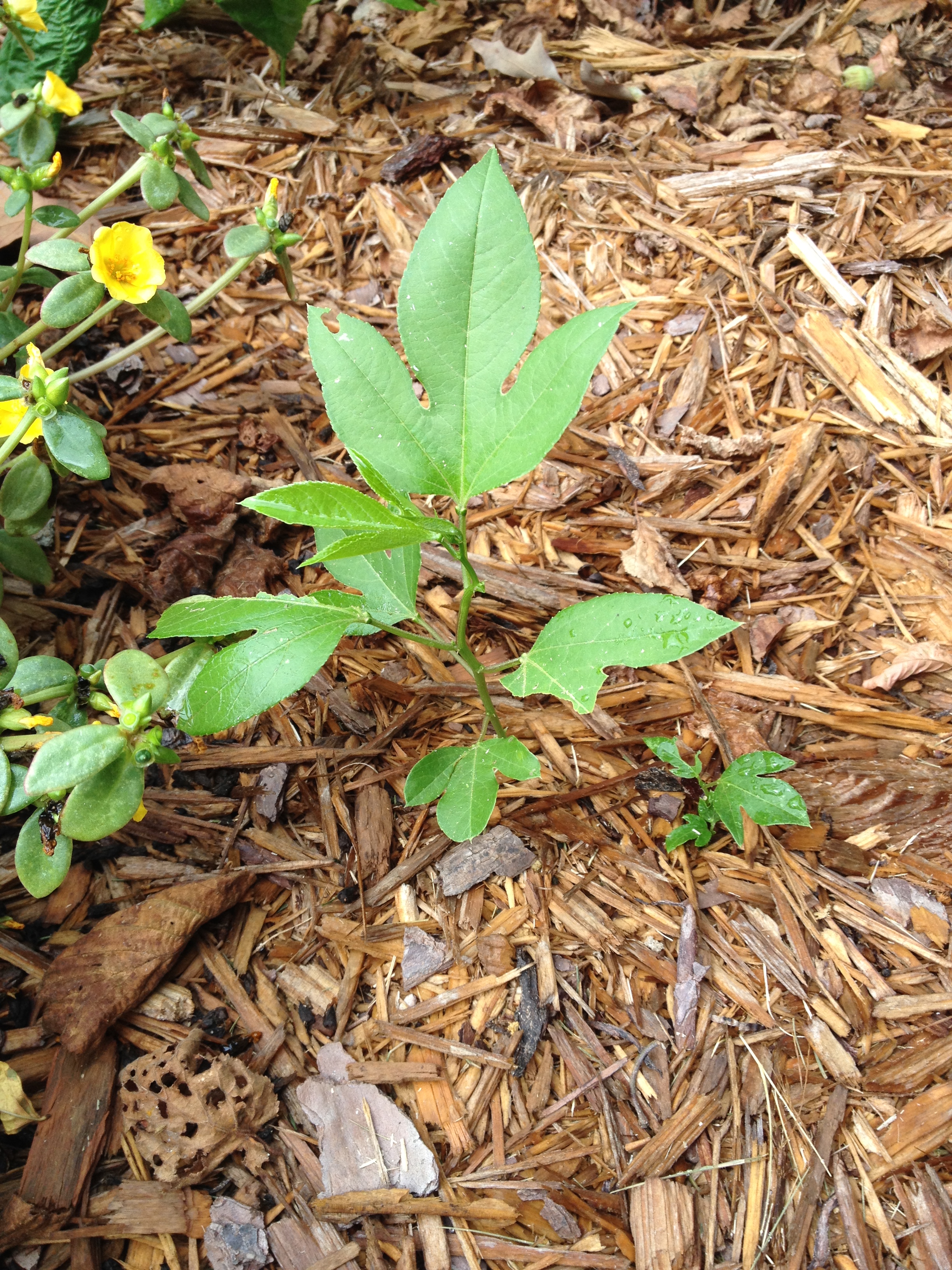
With each successive hatching, there were fewer and fewer caterpillars, probably due to the dwindling food supply. The last hatching yielded only one caterpillar. I checked on him from time to time as I worked in my garden last Saturday afternoon, watching as he valiantly stripped and then ate the outer, green layer of the vine. A couple of days before I noticed a Passiflora seedling had sprouted not too far from the mother plant. After some deliberation, I decided to gently remove the solitary caterpillar from the leafless vine and place him on the seedling, which already had several leaves. I held my breath as I watched him crawl down the short stem of the seedling, hoping I hadn’t confused him when I disrupted his resolute consumption of the tough vine. Fortunately, my fears were unfounded. After a few seconds of exploration he settled in at the base of one of the leaves and resumed eating. I continued to check on him throughout the afternoon, content to see him making headway on the tender leaf.

A tasty last mealThe next morning, when I looked at the seedling, there were two half-eaten leaves but no sign of the caterpillar. I smiled, hoping the leaves had provided a tasty last meal for him before he crawled off to spin his chrysalis.

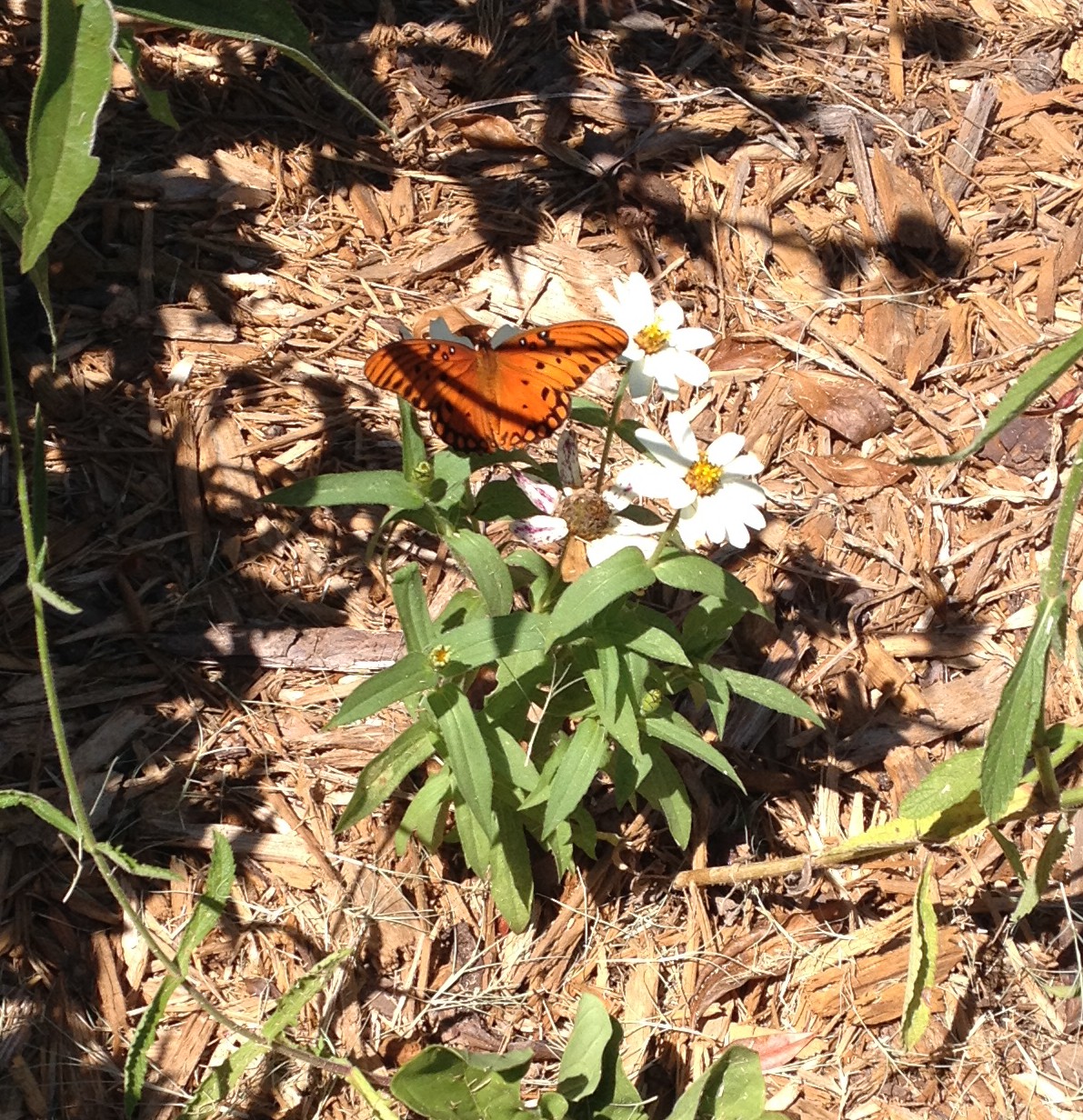
Over the past month, I’ve seen a number of Gulf fritillaries fluttering about in my garden, no doubt the result of some of the caterpillars I took such joy in watching eat and grow. It was worth sacrificing my Passiflora although knowing how that particular vine can spread around and having already found several more seedlings, I’m hoping next year there will be enough to feed a passel of hungry caterpillars AND provide some exotic flowers for me to enjoy!

As I considered how the Gulf fritillaries faithfully laid their eggs on the right plant, thereby providing the proper food for their offspring, I was reminded that God has provided his Word, both written and in the flesh, to nourish us spiritually. Jesus quoted the Old Testament when he resisted Satan’s temptation to “turn stones into bread” so He could satisfy his hunger after forty days and nights in the wilderness, saying, “Man does not live by bread alone, but on every word that comes from the mouth of God”. (Matthew 4:4) Later in his ministry, He referred to himself as the “true bread from heaven”, saying, “I am the bread of life. He who comes to me will never go hungry, and he who believes in me will never be thirsty.” (John 6:35)

My thoughts also turned to the very hungry caterpillar in the beloved children’s book of the same name by Eric Carle. For the first six days of his existence, the storybook caterpillar ate everything that appealed to him, eventually giving himself a stomach ache. It wasn’t until day seven, when he “ate through one nice green leaf” that he felt better. Like the caterpillar in Carle’s book, we are tempted to feed on many things other than the spiritual nourishment God has provided and, similarly, we often find those things to be poor substitutes for the sustenance we need and crave. Instead, may we be as single-minded as the determined Gulf fritillary caterpillars to seek out and consume our designated food, being fully satisfied by the sufficiency of the Word. Gulf fritillary butterfly

This is my Father’s world

“This is my Father’s world, and to my listening ears.
All nature sings, and round me rings, the music of the spheres.
This is my Father’s world; I rest me in the thought
Of rocks and trees, of skies and seas – His hand the wonders wrought.

This is my Father’s world, the birds their carols raise,
The morning light, the lily white, declare their Maker’s praise.
This is my Father’s world: He shines in all that’s fair;
In the rustling grass I hear Him pass, He speaks to me everywhere.”
(Lyrics by Maltbie D. Babcock)

There was a hint of fall in the air, as cooler temperatures, lower humidity and a gentle breeze graced this lovely day. I spent way too much time inside this past week so it was easy to acquiesce to the desire to head outside. Besides, I needed some garden therapy. As I mentioned when I first launched this blog, God often ministers to me through the beauty of his creation. And so it was today as I listened to the twittering of the birds (the original “twitterers”!), felt the warmth of the sun and heard the laughter of the neighbors’ children as they exulted over numerous butterflies flitting around the cul de sac.

After mowing, edging and weeding, I engaged in a tradition my late husband, Ray, and I started years ago. I “walked the property”. Now I must tell you, my property consists of a whopping 1/3 acre in a subdivision, but I take great delight in strolling this small piece of land God has entrusted to my care, seeking out the gifts He leaves for me to find. Not only am I aware of God’s presence, but I feel a connection to Ray as many things he planted continue to flourish. And I sense the love of friends who’ve helped me care for and add to my garden since Ray’s passing. Yes, in spite of its diminutive size relative to more renowned botanical wonderlands, my tiny estate brings me great joy.

Following is a photo gallery of some of the treasures I discovered today. I hope seeing them will bring a smile to your face as they did to mine. And may we say with the writer of I Chronicles, “Great is the LORD and most worthy of praise.”


From the lips of children

One recent morning, I was feeling a bit down. When I logged onto Facebook, the first thing I saw was a post by my daughter, Mary. Upon waking, my grandson, Joshua, had launched into a chorus of “My God is so big, so strong and so mighty, there’s nothing my God cannot do!” It was the encouragement I needed, a reminder of truth. And it was sung by a 3-year old exhibiting the child-like faith Jesus not only commended but commanded.

If we are steadfast in bringing our children up in the nurture and admonition of the Lord (Ephesians 6:4) their faith will be a blessing not only to them, but also to us and to others, just like Joshua’s chorus was to me.

So, I say as the apostle John did of his spiritual offspring, “I have no greater joy than to hear that my children are walking in the truth” . . . grandchildren too! (3 John 1:4)

Family Resemblance

How great is the love the Father has lavished on us, that we should be called children of God!  And that is what we are! 1 John 3:1

Before I got the opportunity to study horticulture, I would look at leaves when trying to identify trees.  Even then I was only familiar with the leaf shapes traditionally associated with plants such as oaks, maples and hollies. I now realize there are many different species in those genera, some with leaf shapes people typically associate with those trees and some fairly dissimilar.  I’ve also learned that even though botanists consider leaves and stems when classifying plants, they use fruit and flowers, the reproductive parts of plants, to group them into families. I don’t know if it’s my eye for detail or my love of family, (maybe some of both!) but I enjoy recognizing similarities in the flower structures of different plants and then checking to see if they’re in the same family.

Just like plants can be identified by their fruit, Jesus told his disciples people would be known by their fruit. Because of the amazing grace of God and Jesus’s sacrifice on our behalf, we’re part of God’s family and, as such, we’re called to resemble Jesus, “the firstborn among many brothers”. (Romans 8:29) Fortunately, we are enabled to become more and more like him through the power of the Spirit, whose fruit is “love, joy, peace, patience, kindness, goodness, faithfulness, gentleness and self-control.” (Galatians 5:22-23)

Not only are we called on to “produce fruit in keeping with repentance” (Matthew 3:8), we’re instructed to impress God’s commands on our children. “Talk about them when you sit at home and when you walk along the road, when you lie down and when you get up” (Deuteronomy 6:7). In other words, telling our children about God, his directives, his covenant and his character should be woven into the daily ebb and flow of life, not just reserved for Sunday school, and we must endeavor to teach by example, not just words.

As is probably true of most parents, when my daughters were young, I used to wish they’d always be as happy and carefree as they were during those pre-school years. At the very least, I yearned to protect them from adversity and pain. I have similar feelings now when I look at my precious grandchildren. Yet I know life can be difficult and no one makes it through without some measure of grief, disappointment, and hardship. But God, in his providence, often uses our most trying times to draw us closer to himself, teaching us experientially that we can trust him no matter what. And that, in turn, is what I most want my children and grandchildren to know. There is a Father who loves us. There is a Son who we are to resemble. There is a world in great need of the fruit we’re called to bear.

In a moment, take 2

“There is a time for everything, and a season for every activity under heaven: a time to be born and a time to die, a time to plant and a time to uproot, a time to kill and a time to heal, a time to tear down and a time to build,  a time to weep and a time to laugh, a time to mourn and a time to dance, a time to scatter stones and a time to gather them, a time to embrace and a time to refrain, a time to search and a time to give up, a time to keep and a time to throw away, a time to tear and a time to mend, a time to be silent and a time to speak, a time to love and a time to hate, a time for war and a time for peace.” Ecclesiastes 3:1-8

The last few months have brought several life-changing moments that, in turn, have led to times shaded by weeping and mourning for me and people close to me. Yet I know there will be times when laughter and dancing predominate again and so I want to reflect upon some past moments which led to great joy.

One such moment occurred on Thanksgiving Day, 2010. Our extended family was sitting around the table, chatting amiably, having enjoyed a delicious meal of smoked turkey and our favorite side dishes. My daughter, Mary, said she and my son-in-law, Justin, had news to share. My heart leapt! Could it be the announcement of an impending birth? Sure enough, Mary passed around an ultrasound photo and confirmed we could look forward to the arrival of a new family member the following July. At that point, Baby was roughly the size of a blueberry, but my eyes still welled up with happy tears knowing there was a new person to love.

The weeks passed and sometime toward the end of January, I got a phone call from Mary and Justin letting me know Baby was a boy.  Later that evening, Mary texted, “We’re going to name him Joshua Patrick.” In that instant, I fell in love with him! Not that I hadn’t been happily anticipating his advent since first peering at the ultrasound photo and trying to figure out exactly where the baby was, but now I knew who I was waiting for and my heart prepared a place for him. Little did I know then how much joy and love Joshua would add to my life or that I would lose my job a few days after receiving Mary’s text, making it possible to spend time with him on a regular basis and bond with him in a way I wouldn’t have been able to if I’d been employed full-time. He became my study buddy from his earliest days, sitting in his little seat by the table while I reviewed notes for plant ID classes and watching intently from his stroller as I collected weed specimens for my pest notebook when we went for walks.

Fast forward to April 20th, 2013 and another family gathering, my dad’s birthday celebration. It, too, would be punctuated by a joyful moment, as Mary and Justin informed us we could anticipate a very special Christmas present – another new family member! This time however, instead of thinking of the baby in gender-neutral terms, I consistently thought of “her” from the start. My premonition was confirmed at Joshua’s birthday party in July when Mary announced Baby was indeed a girl. I was glad Mary had shared the selected name a few days before the party – “IF it’s a girl, Mom, we plan to name her Lyla Ray in memory of Dad” – since even typing that sentence now causes bittersweet tears to spring to my eyes. Similar tears of joy mingled with sorrow flowed when I first held Lyla and longed for her grandfather to be there to cuddle her too.

Today Joshua is a boisterous, intelligent 3-year old with an amazing vocabulary. He assigns me roles in his elaborate make-believe scenarios and warms my heart with detailed recounting of his Sunday school lessons. Lyla is an eight-month old bundle of smiles and determination, happily exploring her world and delighting me with tiny hands that reach for me when I liberate her from her crib after nap time or bend to steady her as she pulls herself up.

Amidst the sorrows and losses of this life, God blesses us with life-changing moments of joy as well as tender occasions that give us glimpses of what we not only long for but are assured of because of another birth announcement 2000 years ago:  “Do not be afraid. I bring you good news of great joy that will be for all the people. Today in the town of David a Savior has been born to you; he is Christ the Lord.” (Luke 2:10-11) That baby grew to be a man of sorrows who was familiar with suffering. He took our flesh upon himself. He understands how hard this life can be and encouraged his followers, saying,“In this world you will have trouble. But be of good cheer! I have overcome the world.” Furthermore, He’s promised to never leave us or forsake us and even now He’s preparing a place for us where there will be no more loss or pain or grief. And so I treasure the moments of joy and love and tenderness we’re allowed to experience here. They remind me of the time when every tear will be wiped away and we will rejoice forever in the presence of the One who loves us more than we can imagine.