Training for Godliness

Train yourself for godliness; for while bodily training is of some value, godliness is of value in every way, as it holds promise for the present life and also for the life to come.
1 Timothy 4:7b-8

Watching the Winter Olympics last month reminded me how fitting the Apostle Paul’s comparisons of spiritual and physical training are.

Helpful Analogies

Like millions of other people around the world, I watched countless hours of coverage. I caught myself holding my breath multiple times, as athletes went hurtling down hills at speeds comparable to those I drive on the interstate, and did flips and tricks that left me mesmerized and marveling that human bodies can even perform such stunts.

As I viewed the various events, I kept thinking about how hard the athletes had to work and how many years they trained to reach the Olympics. You don’t just wake up one morning and master triple toe loops and backflips on an ice rink, or develop the stamina for cross-country skiing and speed skating overnight. 

All this pondering reminded me of Bible passages that call us to apply the same discipline and dedication required of elite athletes to our spiritual development. These two came to mind in addition to the introductory verse:

Do you not know that in a race all the runners run, but only one receives the prize? So run that you may obtain it. Every athlete exercises self-control in all things. They do it to receive a perishable wreath, but we an imperishable. So I do not run aimlessly; I do not box as one beating the air. But I discipline my body and keep it under control, lest after preaching to others I myself should be disqualified.
1 Corinthians 9:24-27

Therefore, since we are surrounded by so great a cloud of witnesses, let us also lay aside every weight, and sin which clings so closely, and let us run with endurance the race that is set before us, looking to Jesus, the founder and perfecter of our faith, who for the joy that was set before him endured the cross, despising the shame, and is seated at the right hand of the throne of God.
Hebrews 12:1-2

Key Parallels

There are several parallels between physical and spiritual training:

  • Discipline: Just as athletes need ongoing physical discipline in areas like diet and exercise, those who follow Jesus also require discipline in spiritual practices such as prayer, Bible study, and worship. Serious athletes wouldn’t think of eating a steady diet of junk food or going for days without practicing. Likewise, we must feed on God’s Word, pray, and participate in corporate worship, not occasionally or when we “feel” like it, but consistently.
  • Endurance: The Christian life is often compared to a marathon. Having seen my daughter train to run that distance several times, I know it requires not only physical preparation but also mental toughness. Jesus is our ultimate example of endurance. He persevered through all of the trials set before Him, including death on the cross, remaining focused on the joy that awaited. Because of His work on our behalf, we can be confident that we, too, will finish the race and be seated in the heavenlies (Ephesians 2:4-6).
  • Fans: Athletes receive support from devoted fans and enthusiastic followers, including fellow athletes who have competed in the past. Believers have a great cloud of witnesses who testify to God’s faithfulness (Hebrews 12:1). Their lives serve as examples of what faith and perseverance in hardship look like. I imagine them cheering us on toward certain victory in Christ (Philippians 1:6).
  • Coaches: Skilled coaches who know their sports and can teach and motivate their athletes are priceless. Similarly, those who are further along in the Christian walk can exhort and encourage those who are younger in their faith; in fact, they are instructed to do so (Titus 2:1-8), and there are multiple examples in Scripture, such as Moses and Joshua, Naomi and Ruth, and Paul and Timothy. What’s more, we have the Holy Spirit, the ultimate coach, who counsels and empowers us (John 14:26).

Key Differences

  • Effect: Because of the Fall, our physical bodies will wear out over time. No matter how much training we do, fitness and strength will decline. Not so with spiritual training, which helps us become more and more like Christ and produces eternal fruit (2 Corinthians 3:18; Galatians 5:22-23).
  • Prizes: In sports competitions, only one athlete or team wins. Even then, the medals and trophies will eventually tarnish and decay. But every child of God will receive an imperishable prize of far greater value than a gold medal: eternal life with Him!

Though we will never achieve perfection in this life, we must continue practicing, training, and pressing on toward the prize of the upward call of God in Christ Jesus (Philippians 3:12-14), knowing that we do not strive alone. We are surrounded by a great cloud of witnesses, empowered by the same Spirit that raised Christ from the dead, and accompanied by a perfect Savior who has promised never to leave or forsake us.
Put Off and Put On

For those he foreknew he also predestined to be conformed to the image of his Son, so that he would be the firstborn among many brothers and sisters. And those he predestined, he also called; and those he called, he also justified; and those he justified, he also glorified.
Romans 8:29-30 CSB

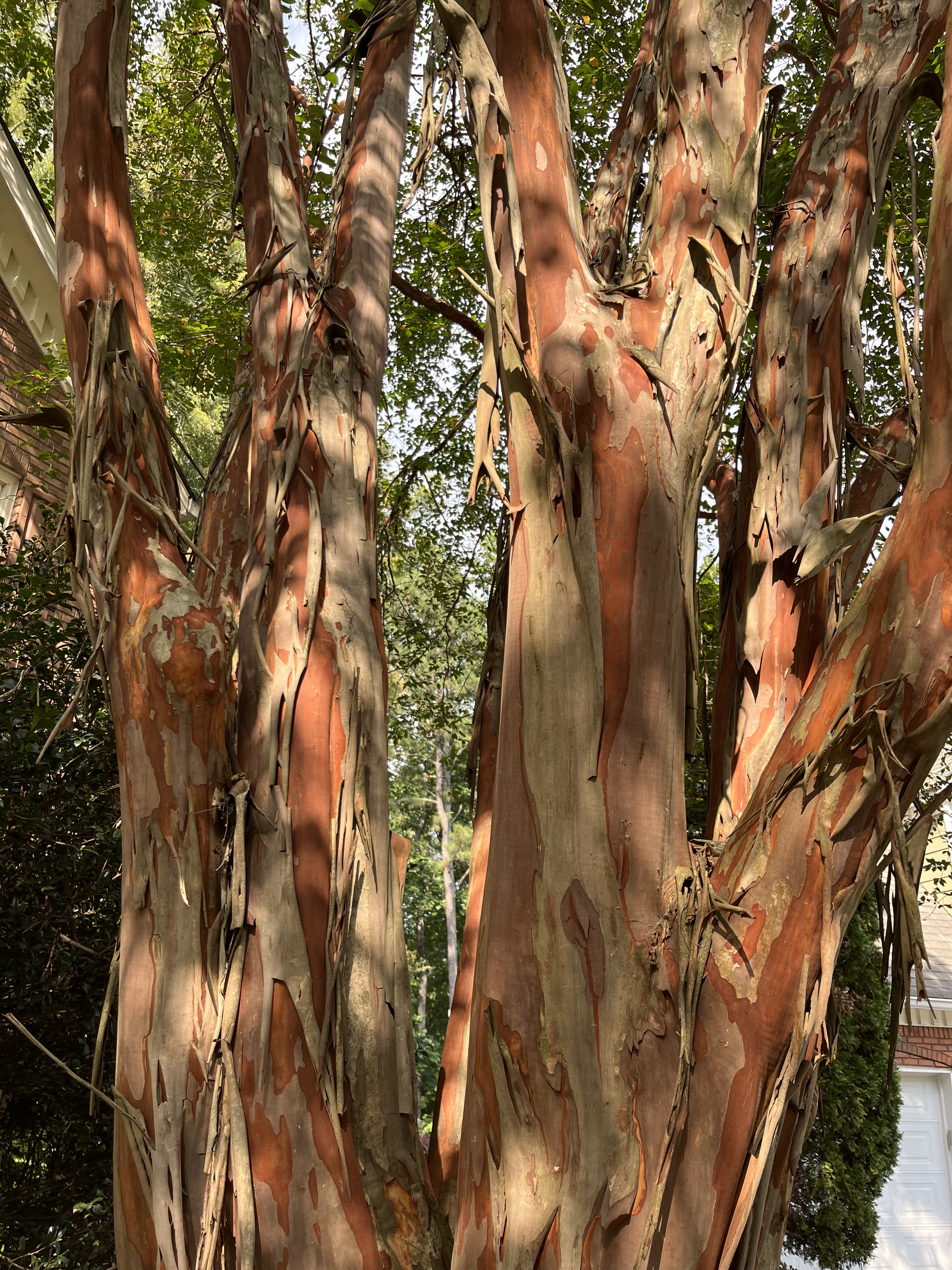
About this time each year, my crape myrtle starts falling apart. At least that’s what it looks like to those who don’t realize the exfoliating bark is one of the cherished characteristics of these beautiful trees. Watching the process reminds me of one of my favorite spiritual principles, that of putting off and putting on. So, once again, I will share it with you, dear readers.

Color Harmony

Throughout most of the years I worked for a large corporation, I held the role of colorist. As such, I developed, named, and presented new carpet color options to our customers. After all the time spent honing my skills at work, I relished the opportunity to choose the interior and exterior colors when we built our home in Georgia.

My late husband’s specialty was horticulture, an equally creative endeavor. When I chose a terra cotta color scheme for the bricks and shutters of our house, I didn’t realize how challenging it would be for him to select the must-have southern plant on our list – a crape myrtle.

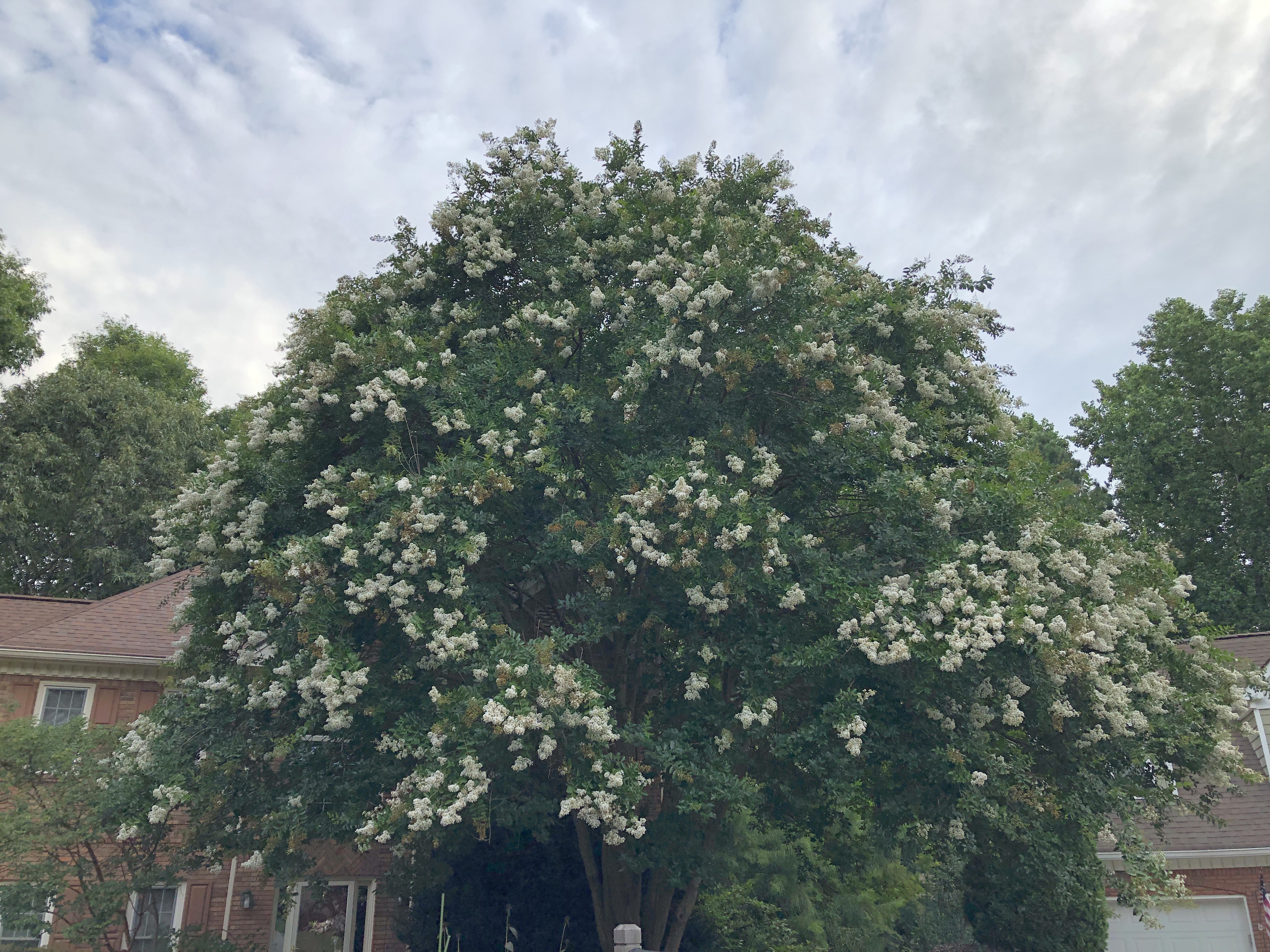
Even so, being a skilled horticulturalist, Ray made an excellent choice. Unlike other cultivars whose pink or purple flowers would have clashed with our cinnamon-colored exterior and offended my color sensibilities, the creamy-white blossoms of the now-stately Natchez create a harmoniously floriferous cascade each summer. But the brilliance of Ray’s choice is most apparent in the fall, for it is then that the annual process of exfoliation occurs.

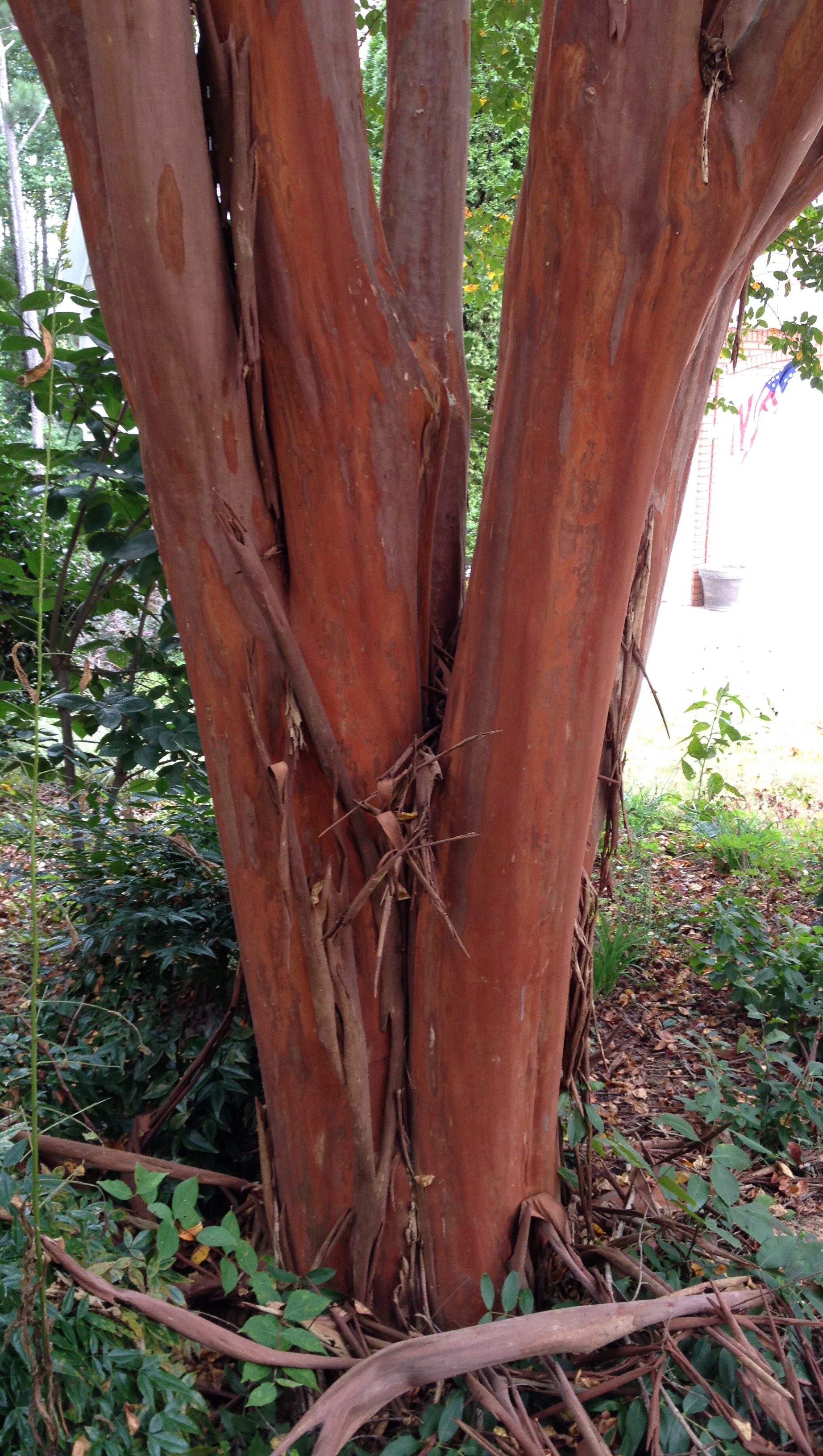
As summer wanes, cracks appear in the bark along the mighty trunk, signaling the coming changes. Soon, the cracks become fissures as the old skin lifts away from the tree before finally letting go entirely, falling to the ground in long, jagged shards. To the uninitiated observer, this series of events may be unsettling. How could such an extreme shedding of bark possibly benefit the plant? Yet that very act allows the trunk to increase its girth and grow stronger. Best of all, it reveals the most magnificent cinnamon-colored covering.

Ray saw the potential in the sapling he planted so long ago. He knew what it could become.

Putting Off, Putting On

There are several concepts that I consider to be spiritual touchstones. One such idea is that of putting off and putting on. In His analogy of an unclean spirit leaving a man only to return to its neat but empty former abode, Jesus made it clear it’s not enough to make a show of getting rid of sinful thoughts and behavior (Matthew 12:43-45). Instead, our repentance must be true, the kind that produces fruit in keeping with our profession of faith (Matthew 3:8), as we put on right thinking and conduct pleasing to God.

The Apostle Paul affirms this teaching in his letter to the Romans, where he encourages his readers not to conform to the world but to be transformed by renewing their minds (Romans 12:2). In his letter to the Ephesians, he goes even further. After admonishing them to “put off your old self, which belongs to your former manner of life and is corrupt through deceitful desires and to be renewed in the spirit of your minds, and to put on the new self, created after the likeness of God in true righteousness and holiness” (Ephesians 4:22-24), Paul goes on to provide specific examples of behavior to put off as well as corresponding replacements:

  • Put away falsehood and speak the truth. (vs. 25)
  • Let the thief no longer steal but perform honest labor. (vs. 28)
  • Do not use unwholesome language, but that which benefits and builds up those who listen. (vs.29)
  • Put away all bitterness, wrath, anger, and every form of malice. Be kind to one another, forgiving one another as God in Christ forgave you. (vs. 31-32)

Refined By the Spirit

Because of Jesus’ sacrifice on our behalf, God already counts us as righteous (2 Corinthians 5:21), but the renovation process is far from complete. We are not yet holy as He is Holy, nor will our makeover be complete until Jesus returns. The Spirit is at work in us, transforming us with the same mighty power that raised Jesus from the dead (Ephesians 1:18-20).

At times, our refinement is painful as God strips away bits of our old nature. Our Savior suffered much (Isaiah 53:3-6). How better to know Him than to endure loss, sorrow, and persecution as He did (Romans 8:17)? Such challenges may cause outside observers or even believers themselves to question God’s methods, but we can trust the One who made us has a perfect plan to work all things together for our good and His glory (Jeremiah 29:11; Romans 8:28).

Just as Ray knew what the crape myrtle could become, given sufficient time and proper care, God knows who He created us to be (Ephesians 2:10). Furthermore, He’s promised to complete the work He’s begun in us (Philippians 1:6) and never to leave or forsake us at any point in the process (Deuteronomy 31:8). The Helper will be with us to remind us of His promises, empower us to do His will, and enable us to persevere to the end (John 14:16-17, 26). On that glorious day when Jesus returns, our transformation will be complete. All vestiges of our sinful selves will disappear, and we will gather around the throne, our new selves robed in white, to forever praise our Redeemer King (Revelation 7:9-17).

Dear Lord, thank You that You are in the process of making all things new, including Your children. Thank You for sending Your all-powerful Spirit who is transforming us from one degree of glory to another until the day we fully resemble our elder Brother, Jesus (2 Corinthians 3:18).

Exfoliation, Reprise

Do not be conformed to this world, but be transformed by the renewal of your mind, that by testing you may discern what is the will of God, what is good and acceptable and perfect.
Romans 12:2

Color Harmony

Throughout most of the years I worked for a large corporation, I held the role of colorist. As such, I developed, named, and presented new carpet color options to our customers. After all the time spent honing my skills at work, I relished the opportunity to choose the interior and exterior colors when we built our home in Georgia.

My late husband’s specialty was horticulture, a no-less creative endeavor. When I picked a terra cotta color scheme for the bricks and shutters, I didn’t realize how challenging I’d made it for him to select plants. This was especially true when choosing the must-have southern plant on our list – a crape myrtle.

Nonetheless, being a skilled horticulturalist, Ray made an excellent choice. Unlike other cultivars whose pink or purple flowers would have clashed with our cinnamon-colored exterior and offended my color sensibilities, the creamy-white blossoms of the now-stately Natchez create a harmoniously floriferous cascade each summer. But the brilliance of Ray’s choice is most apparent in the fall, for it is then that the annual process of exfoliation occurs.

As summer wanes, cracks appear in the bark along the mighty trunk, signaling the coming changes. Soon, the cracks become fissures as the old skin lifts away from the tree before finally letting go entirely, falling to the ground in long, jagged shards. To the uninitiated observer, this series of events may be unsettling. How could such an extreme shedding of bark possibly benefit the plant? Yet that very act allows the trunk to increase its girth and grow stronger. Best of all, it reveals the most magnificent cinnamon-colored covering.

Ray saw the potential in the sapling he planted so long ago. He knew what it could become.

Putting Off, Putting On

There are several concepts that I consider to be spiritual touchstones. One such idea is that of putting off and putting on. In His analogy of an unclean spirit leaving a man only to return to its neat but empty former abode, Jesus made it clear it’s not enough to make a show of getting rid of sinful thoughts and behavior (Matthew 12:43-45). Instead, our repentance must be true, the kind that produces fruit in keeping with our profession of faith (Matthew 3:8), as we put on right thinking and conduct pleasing to God.

The Apostle Paul affirms this teaching in his letter to the Romans, where he encourages his readers not to conform to the world but to be transformed by renewing their minds. In his letter to the Ephesians, he goes even further. After admonishing them to “put off your old self, which belongs to your former manner of life and is corrupt through deceitful desires and to be renewed in the spirit of your minds, and to put on the new self, created after the likeness of God in true righteousness and holiness” (Ephesians 4:22-24), Paul goes on to provide specific examples of behavior to put off as well as corresponding replacements:

  • Put away falsehood and speak the truth. (vs. 25)
  • Let the thief no longer steal but perform honest labor. (vs. 28)
  • Do not use unwholesome language, but that which benefits and builds up those who listen. (vs.29)
  • Put away all bitterness, wrath, anger, and every form of malice. Be kind to one another, forgiving one another as God in Christ forgave you. (vs. 31-32)

Refined By the Spirit

Because of Jesus’ sacrifice on our behalf, God already counts us as righteous (2 Corinthians 5:21), but there is much refining left to be done. We are not yet holy as He is Holy, nor will our makeover be complete until Jesus returns. Nonetheless, the Spirit is at work in us, transforming us with the same mighty power that raised Jesus from the dead (Ephesians 1:18-20).

At times, our refinement is painful as God strips away bits of our old nature. Our Savior suffered much (Isaiah 53:3-6). How better to know Him than to endure loss, sorrow, and persecution as He did (Romans 8:17)? Such challenges may cause outside observers or even believers themselves to question God’s methods, but we can trust the One who made us has a perfect plan to work all things together for our good and His glory (Jeremiah 29:11; Romans 8:28).

Just as Ray knew what the crape myrtle could become, given sufficient time and proper care, God knows who He created us to be (Ephesians 2:10). Furthermore, He’s promised to complete the work He’s begun in us (Ephesians 1:6) and never to leave or forsake us at any point in the process (Deuteronomy 31:8). The Helper will be with us to remind us of His promises, empower us to do His will, and enable us persevere to the end (John 14:16-17, 26). On that glorious day, our transformation will be complete, and all vestiges of our former selves will disappear. We will gather around the throne, our new selves robed in white, to forever praise our Redeemer King (Revelation 7:9-17).

Signs of Life, Reprise

I have been crucified with Christ. It is no longer I who live, but Christ who lives in me. And the life I now live in the flesh I live by faith in the Son of God, who loved me and gave himself for me.
Galatians 2:20

Let All Creation Sing

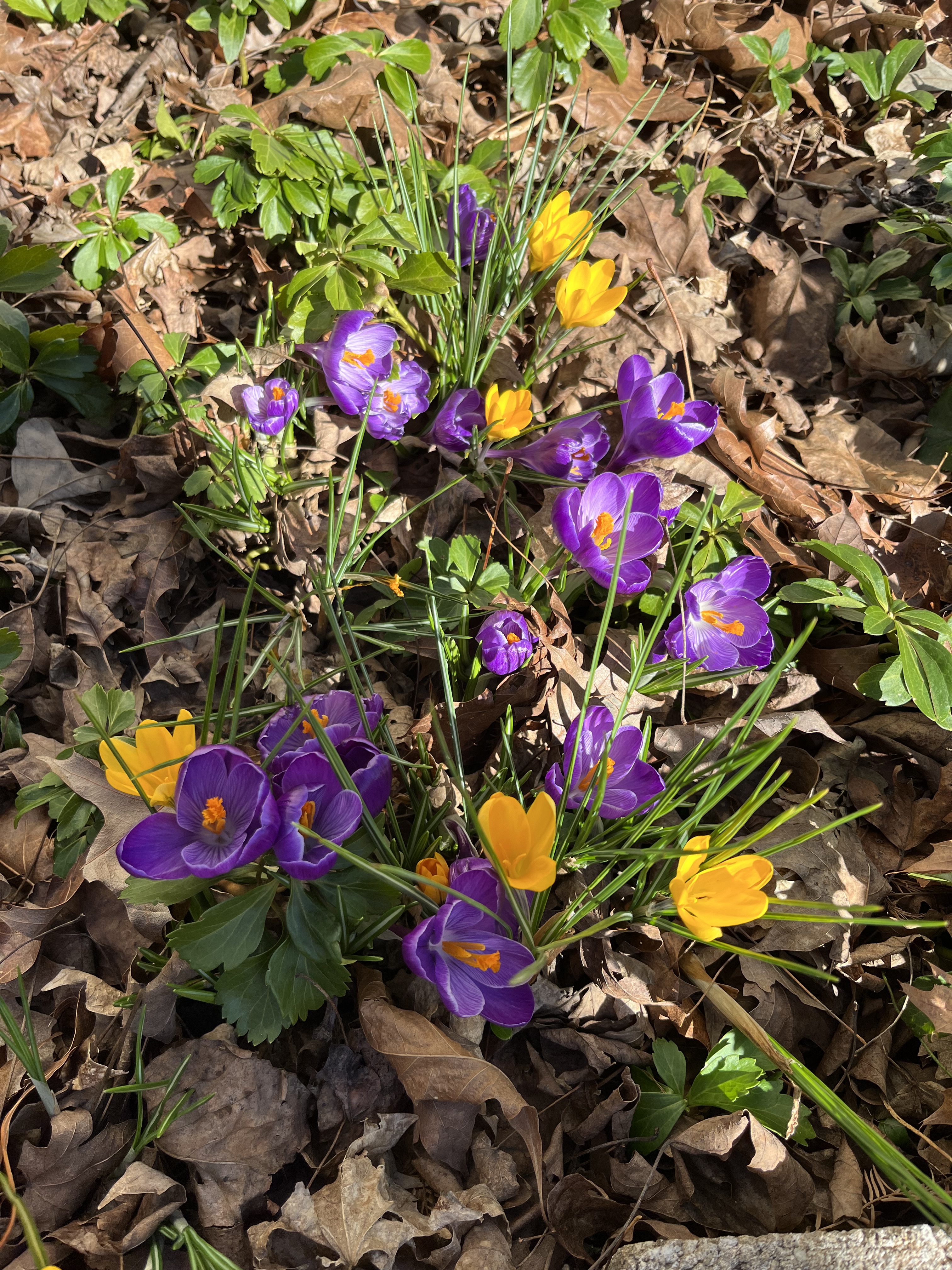
Some years ago, I attended a horticulture conference where one of the speakers began her talk by saying, “Summer, fall, and winter are seasons. Spring is a miracle!”

I often think of her comment when we’re on the cusp of spring, anticipating the glorious bursting forth of foliage and flowers when all creation joins in a chorus of praise to the Creator, pointing us to Jesus’ resurrection.

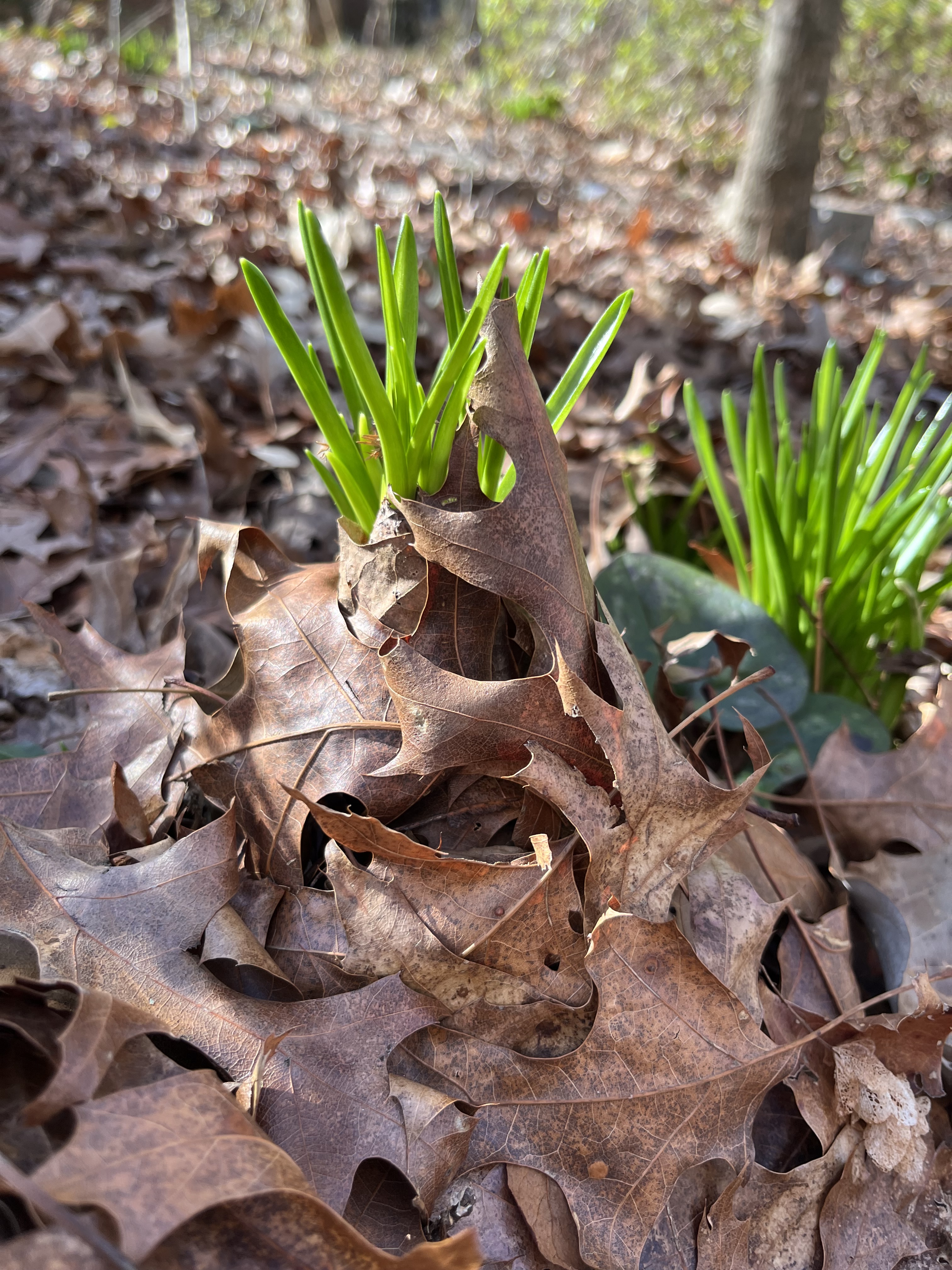
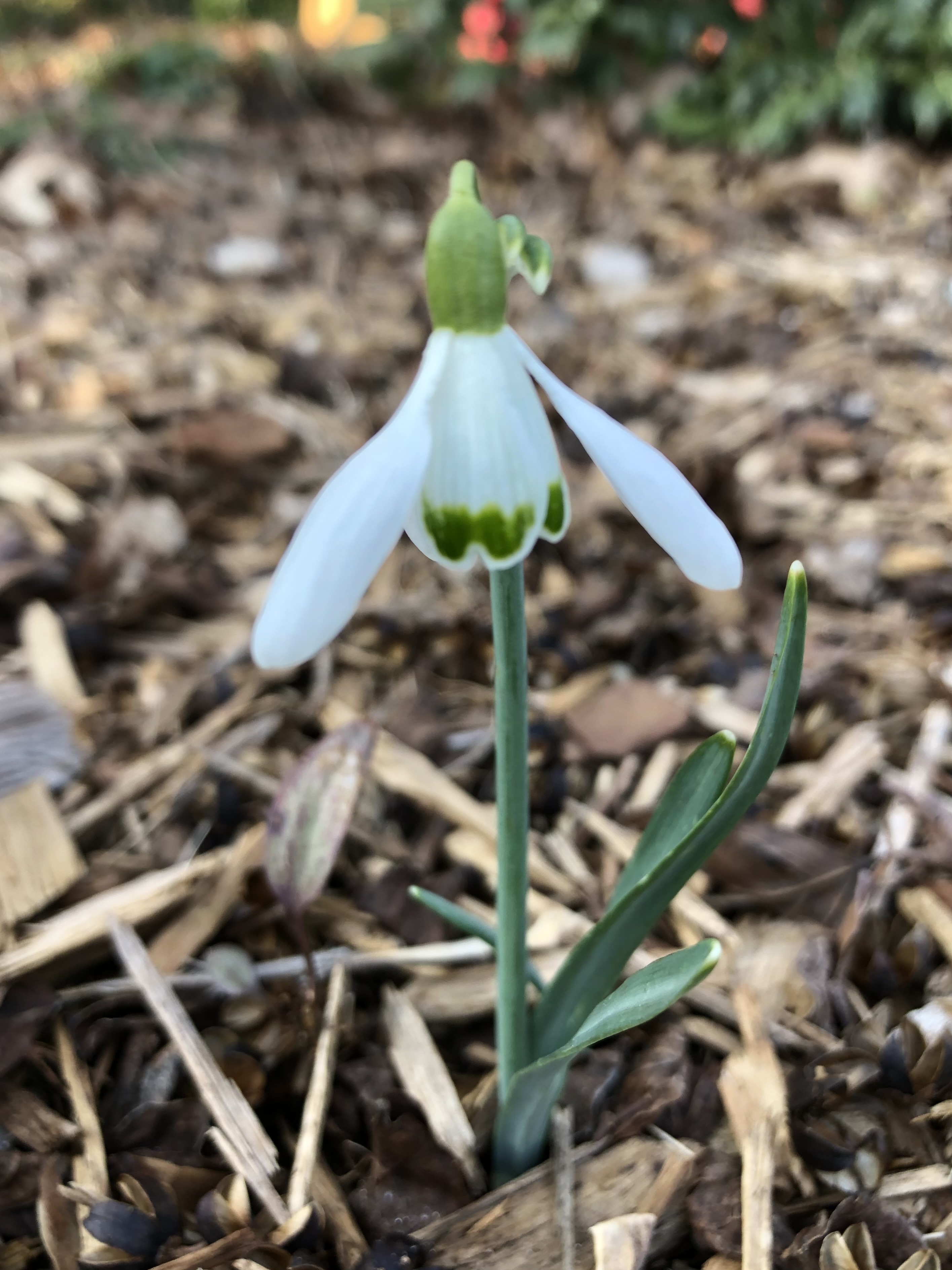
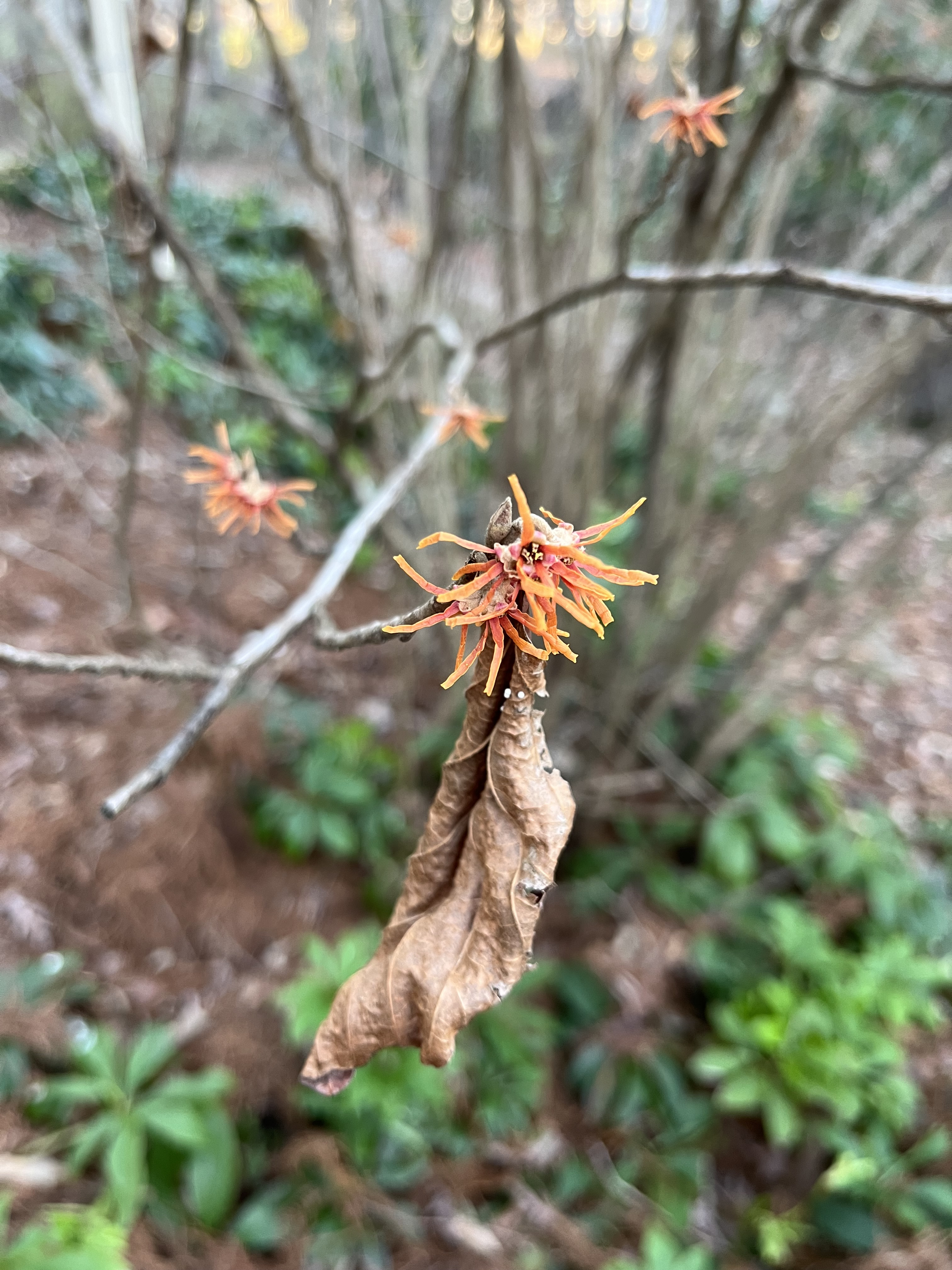
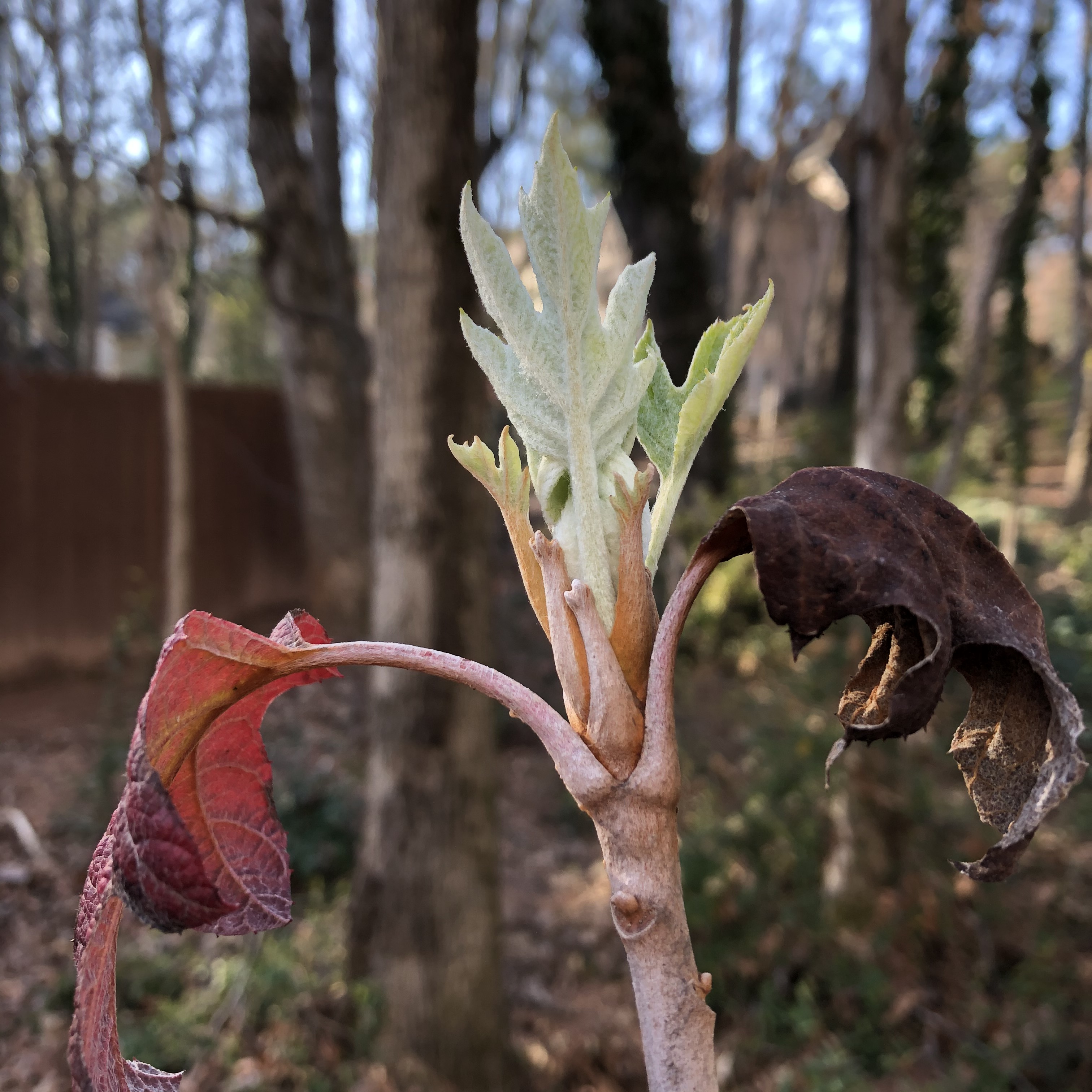
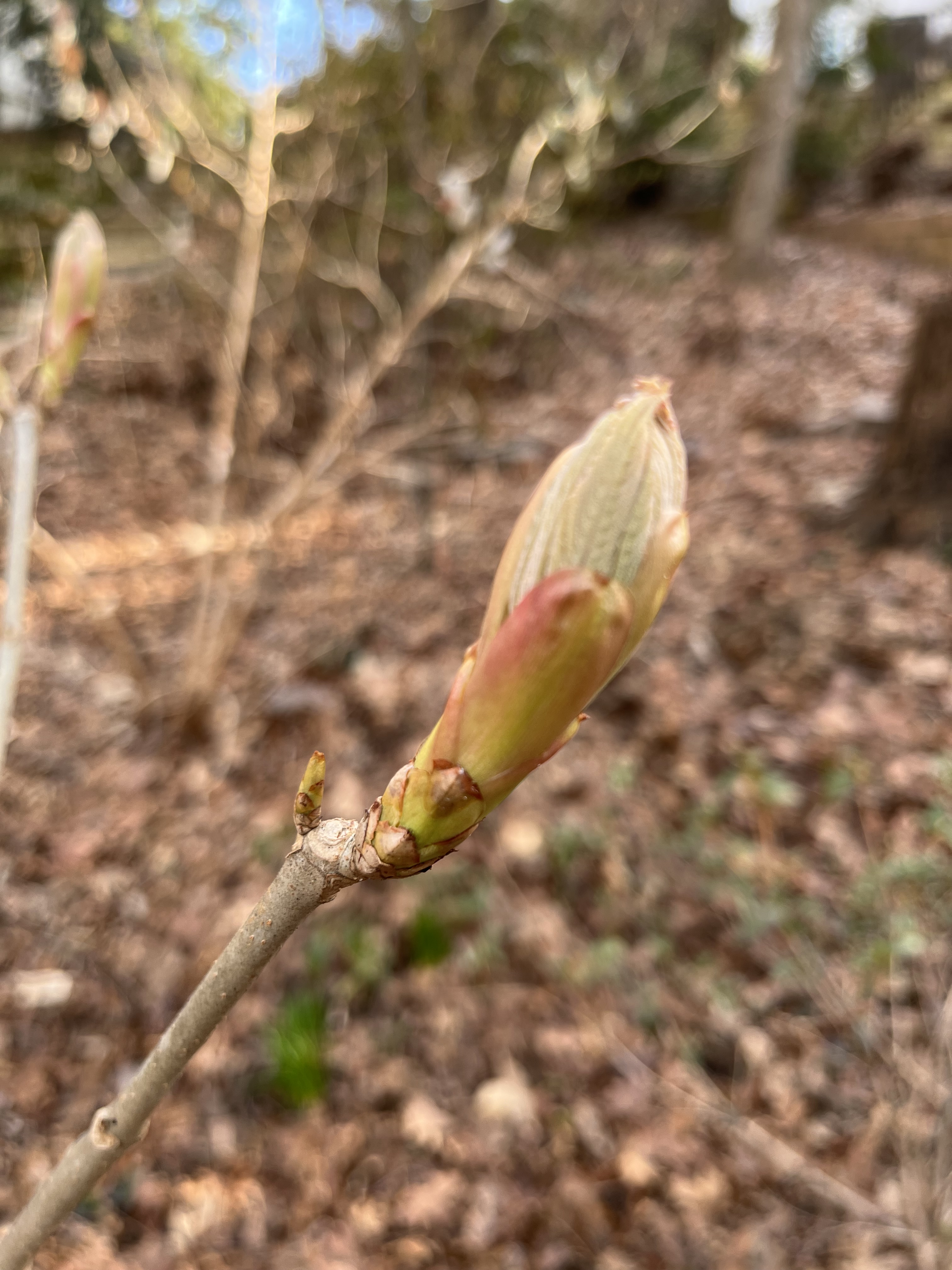
Yet, even when I stroll my garden in the winter, weeks before the magnificent display of new life, I find signs of what will be. Leafless branches sport tiny buds, which will become the next season’s greenery. Flowering shrubs often set their buds months before they bloom. They sit patiently, awaiting the time of their awakening. After years of watching the cycle repeat, I confidently look forward to the beauty to come.

I find bulbs and seeds to be equally remarkable. They don’t look like much, but each holds the promise of what it will become. Given time and the proper conditions, even the tiniest of seeds will produce a towering tree with branches to provide shelter for nesting birds (Mark 40:30-32).

His Life in Us

The introductory verse above from Galatians affirms the status of those who believe in Christ as Savior. We are alive in Him. And though we will continue to struggle with sin as long as we’re in the flesh, God already counts us righteous because of Jesus’ sacrifice. The Spirit is at work within us, with the same power that raised Jesus from the dead (Ephesians 1:19-20), transforming us more and more into the image of the Son.

Just as the promise of what will be resides in buds and bulbs and seeds, we have the assurance that He who began a good work in us will see it through to completion (Philippians 1:6).

Aspirations

The first half of Acts chapter 4 describes an occasion when Jewish religious leaders arrested Peter and John, then summoned them to give an account of healing a crippled man (Acts 4:1-22). No matter how much the leaders threatened them, they boldly proclaimed the power of Jesus and His resurrection, giving Him full credit for their ability to heal.

Verse 13 has always inspired me:  Now when they saw the boldness of Peter and John, and perceived that they were uneducated, common men, they were astonished. And they recognized that they had been with Jesus. (Emphasis mine.)

That’s me, common and ordinary, nothing of my own to boast about (Ephesians 2:8-9), but I want to look different – to captivate others with the beauty and aroma of Christ – because I’ve been with Him. 

Blessed to Be a Blessing

God chose a people for Himself, not to take them out of the world immediately, but to join Him in reconciling the nations to Himself (2 Corinthians 5:17-19).

While we live as sojourners between the now and not yet, we’re called to manifest signs of the life of Christ in us, always ready to give a reason for our hope (1 Peter 3:15). Paul tells us we’re God’s workmanship in Christ and that He prepared good works for us to carry out (Ephesians 2:10). According to James, good works provide evidence of a faith that’s alive and well (James 2:14-26).

Likewise, the fruit of the Spirit – love, joy, peace, patience, kindness, goodness, faithfulness, gentleness, and self-control –  reflects our abiding dependence on the One who makes all things new, including us.

So, dear readers, won’t you join me in endeavoring to embrace and embody who we are in Christ so that our lives might bear much fruit for Him?

Dear Lord, what a gift You give us in the beauty of springtime when reminders of Jesus’ resurrection are all around us. Thank You for the assurance we have in Him that we, too, will be raised to eternal life. Until then, please help us exhibit unmistakable signs of His life in us to a world in need of hope.

New Year’s Resolution

Therefore, if anyone is in Christ, he is a new creation. The old has passed away; behold, the new has come.
2 Corinthians 5:17

Making New Year’s resolutions is a tradition for many of us. Something about opening up a new planner full of blank pages waiting to be filled in or turning the calendar to January 1 inspires us to make changes in ourselves. Sadly, despite our best intentions, breaking those resolutions is about as common as making them in the first place.

But what if we were to resolve to do something that we knew for sure we’d accomplish? There is something, but we can’t do it on our own.

When we endeavor to become more like Christ, we can be certain of accomplishing our goal because it’s God’s will for us, and the process is all of Him. Reflect on these assurances:

  • God chose us in Christ before the foundation of the world, that we should be holy and blameless before him (Ephesians 1:4).
  • Those (God) foreknew he also predestined to be conformed to the image of His Son so that he might be the firstborn among many brothers (Romans 8:29).
  • We are being transformed into his image from one degree of glory to another (2 Corinthians 3:18) by the power at work within us, the same power that rose Jesus from the grave (Ephesians 1:19-20).
  • For it is [not your strength, but it is] God who is effectively at work in you, both to will and to work [that is, strengthening, energizing, and creating in you the longing and the ability to fulfill your purpose] for His good pleasure (Philippians 2:13, AMP).
  • Ask anything according to His will, and He’ll do it for us (1 John 5:14-15).

Isn’t that encouraging?

When we think of resolution, most of us think of the primary definition: a firm decision to do or not to do something.

But if you keep reading through the list of definitions, you’ll come to this one: the degree of detail visible in a photographic or television image. That description reminds me of a statement made by my spiritual mother, Susan Hunt, “We become what we behold.” The more we look into God’s word – living, active, sharper than a two-edged sword –  the more precise our picture of His character, His promises, and His will for our lives becomes (Hebrews 4:12).

Let’s consider again the initial verse from 2 Corinthians 5, continuing to the end of the chapter: Therefore, if anyone is in Christ, he is a new creation. The old has passed away; behold, the new has come. All this is from God, who through Christ reconciled us to himself and gave us the ministry of reconciliation; that is, in Christ God was reconciling the world to himself, not counting their trespasses against them, and entrusting to us the message of reconciliation. Therefore, we are ambassadors for Christ, God making his appeal through us. We implore you on behalf of Christ, be reconciled to God. For our sake he made him to be sin who knew no sin, so that in him we might become the righteousness of God (1 Corinthians 5:17-21).

Our pastor often reminds us that we are Christ’s ambassadors as we live in the now-and-not-yet, in between Jesus’ first coming, when He ushered in God’s new kingdom, and His second, when that kingdom will be fully consummated. We’re already counted righteous in Christ, seated in the heavenly places with Him (Ephesians 2:5-7), but we still struggle with sin (Romans 7:19-20). However, given our new nature and our new citizenship, we’re to embrace, embody, and extend to others the goodness and grace we’ve experienced because of God’s work in our lives, being salt and light (Matthew 5:13-16).

Later this year, I’ll celebrate the 50th anniversary of my baptism and public profession of faith. In those five decades, the Spirit has done a mighty work – chiseling, sanding, polishing – making me more into the image of Jesus. I’m not the same person I was then, and by His grace, I won’t be the same person I am now when I turn the calendar to January 2025. The same can be said for all God’s children, be they baby saints just beginning their journey with Him or seasoned saints drawing ever closer to Home.

Our transformation won’t be complete until Jesus returns, but we can be confident that He who began a good work in us will see it through to completion (Philippians 1:6). Then, in a moment, in the twinkling of an eye, we will be changed (1 Corinthians 15:52-53)!

For now, may we heed  God’s charge and resolve to be kingdom representatives, endeavoring to live up to what we’re already counted to be in Christ, knowing we’re not laboring alone or in our own strength.

The Aroma of Christ

Therefore be imitators of God, as beloved children. And walk in love, as Christ loved us and gave himself up for us, a fragrant offering and sacrifice to God.
Ephesians 5:1-2

A Familiar Fragrance

I’ve begun the difficult task of going through my parents’ things in preparation to sell their house, the site of countless dinners, family gatherings, and celebrations over the past 25 years. Myriad emotions accompany my almost-daily visits, which I continued after Dad moved into assisted living so I could keep an eye on things. Some days I can complete my rounds and remain detached, while others find me in tears before I even exit my car.

I walked the property several days ago to ensure nothing was amiss outside. As I rounded the back corner of the house, a familiar fragrance wafted toward me. I stopped and turned toward the gardenia bush, so full of flowers that its branches bent beneath the load.

Memories of Mom and past summer evenings came flooding back. Many nights during gardenia season, I would arrive for dinner and be greeted with Mom’s cheerful, “Look what I got for us, Babe!”[1]

She would point toward a glass or vase holding multiple stems of the sweet-smelling flowers – some for her to keep and some for me to take home.

The Perfume of Selflessness

As the season waned and the blossoms became less plentiful, Mom always wanted to make sure I had some for my house, even if it meant only a sprig or two for her. Humble and with a servant’s heart, Mom exemplified Philippians 2 as she considered others’ needs before her own, even in things as small as sharing flowers.

Mom’s generosity included food of all kinds. She not only made dinner for me most nights, but she also encouraged me to take leftovers home or pick something from the fruits and vegetables she purchased in the summertime. She always wanted me to have the juiciest peach or the ripest tomato. I can hear her saying, “Not that one! It’s got a bad spot.” Or, “That’s not enough! Here, take another one.”

It became a joke between us, and I finally stopped trying to choose for myself. I’d laugh, hand Mom the bag, and say, “Why don’t you go ahead and pick for me?”

Remembering those exchanges, representative of Mom’s sweet spirit, makes me smile.

A Pleasing Aroma

One of our former pastors used to tell us, “When you see ‘therefore,’ you need to ask ‘What’s the therefore there for?”

In the case of the introductory verses above, “therefore” links the directive that follows to Paul’s description in the previous chapter regarding our status as new creatures in Christ (Ephesians 4:21-24). Paul gets specific with the requisite put-offs and put-ons associated with our old and new natures, respectively (Ephesians 4:25-32). He then delivers summary instructions: because of our new life in Christ, we’re to be imitators of God, to walk in love, and to live so our lives will be an aroma pleasing to Him, just as Jesus’ sacrificial life was.

As our pastor has taught through this portion of Ephesians, he’s repeatedly encouraged us to be conduits of God’s love and grace. Sadly, as we live between the now and not yet (eternally saved, yet still in the flesh), we sometimes slip into the extremes of self-righteousness or self-condemnation instead.

I know there are times when my scent is more off-putting than welcoming, more sweaty than sweet. But, praise God for the power of His Spirit at work in His children, transforming us more and more into the image of Christ and enabling us to spread His pleasing aroma.

A Lingering Fragrance

I cut a dozen stems off the gardenia and brought them home. I placed some in a vase upstairs and the rest in a container on my kitchen counter. Soon the lovely fragrance was drifting through my house, reminding me of Mom. The essence of her beautiful life lived for Christ remains in the lives and memories of those she touched with His love, just as the fragrance of the gardenia blossoms lingers in my home.  

May it be the same with ours.

Dear Lord, thank You for the sacrificial love of Jesus and the power of Your Spirit at work within us. Please help us embrace, embody, and express the love and grace You’ve shown us so that we might spread a fragrant aroma that is pleasing to You and attractive to others.


[1] Babe was my grandfather’s pet name for Mom, the youngest of his eight children. She frequently used it with me and my daughters.

Signs of Life

I have been crucified with Christ. It is no longer I who live, but Christ who lives in me. And the life I now live in the flesh I live by faith in the Son of God, who loved me and gave himself for me.
Galatians 2:20

Let All Creation Sing

Some years ago, I attended a horticulture conference where one of the speakers began her talk by saying, “Summer, fall, and winter are seasons. Spring is a miracle!”

I often think of her comment when we’re on the cusp of spring, anticipating the glorious bursting forth of foliage and flowers when all creation joins in a chorus of praise to the Creator, pointing us to Jesus’ resurrection.

Yet, even when I stroll my garden in the winter, weeks before the magnificent display of new life, I find signs of what will be. Leafless branches sport tiny buds, which will become the next season’s greenery. Flowering shrubs often set their buds months before they bloom. They sit patiently, awaiting the time of their awakening. After years of watching the cycle repeat, I look forward with confidence to the beauty to come.

I find bulbs and seeds to be equally remarkable. They don’t look like much, but each holds the promise of what it will become. Given time and the proper conditions, even the tiniest of seeds will produce a towering tree with branches to provide shelter for nesting birds (Mark 40:30-32).

His Life in Us

The introductory verse above from Galatians affirms the status of those who believe in Christ as Savior. We are alive in Him. And though we will continue to struggle with sin as long as we’re in the flesh, God already counts us righteous because of Jesus’ sacrifice. The Spirit is at work within us, with the same power that raised Jesus from the dead (Ephesians 1:19-20), transforming us more and more into the image of the Son.

Just as the promise of what will be resides in buds and bulbs and seeds, we have the assurance that He who began a good work in us will see it through to completion (Philippians 1:6).

Aspirations

The first half of Acts chapter 4 describes an occasion when Jewish religious leaders arrested Peter and John, then summoned them to give an account of healing a crippled man (Acts 4:1-22). No matter how much the leaders threatened them, they boldly proclaimed the power of Jesus and His resurrection, giving Him full credit for their ability to heal.

Verse 13 has always inspired me:  Now when they saw the boldness of Peter and John, and perceived that they were uneducated, common men, they were astonished. And they recognized that they had been with Jesus. (Emphasis mine.)

That’s me, common and ordinary, nothing of my own to boast about (Ephesians 2:8-9), but I want to look different – to captivate others with the beauty and aroma of Christ – because I’ve been with Him.  

Blessed to Be a Blessing

Both the current sermon series at our church[1] and a Bible study[2] I’m in have included the message that God chose a people for Himself, not to take them out of the world immediately, but to join Him in reconciling the nations to Himself.

While we live as sojourners between the now and not yet, we’re called to manifest signs of the life of Christ in us, always ready to give a reason for our hope (1 Peter 3:15). Paul tells us we’re God’s workmanship in Christ and that He prepared good works for us to carry out (Ephesians 2:10). According to James, good works provide evidence of a faith that’s alive and well (James 2:14-26).

Likewise, the fruit of the Spirit – love, joy, peace, patience, kindness, goodness, faithfulness, gentleness, and self-control –  reflects our abiding dependence on the One who makes all things new, including us.

So, dear readers, won’t you join me in endeavoring to embrace and embody who we are in Christ, that our lives might bear much fruit for Him?

Dear Lord, what a gift You give us in the beauty of springtime when reminders of Jesus’ resurrection are all around us. Thank You for the assurance we have in Him that we too will be raised to eternal life. Until then, please help us to exhibit unmistakable signs of His life in us to a watching world.


[1] “Our Shared Life and Mission in the Peacemaking Christ, A Sermon Series in Ephesians,” Pastor David Donovan, Grace Covenant Church.

[2] “From Garden to Glory,” Courtney Doctor, Committee on Discipleship Ministries, 2016.

Inside Job

Do not let your adorning be external—the braiding of hair and the putting on of gold jewelry, or the clothing you wear— but let your adorning be the hidden person of the heart with the imperishable beauty of a gentle and quiet spirit, which in God’s sight is very precious.
1Peter 3:3-4

A Reasonable Request

As longtime readers of my blog know, I have a number of treasured plants on my small suburban property, many of which were planted by my late husband, Ray. Although it’s impossible for me to pick a favorite, my beautiful crape myrtle ranks high on the list. This isn’t the first post inspired by the beloved plant and probably won’t be the last.[1]

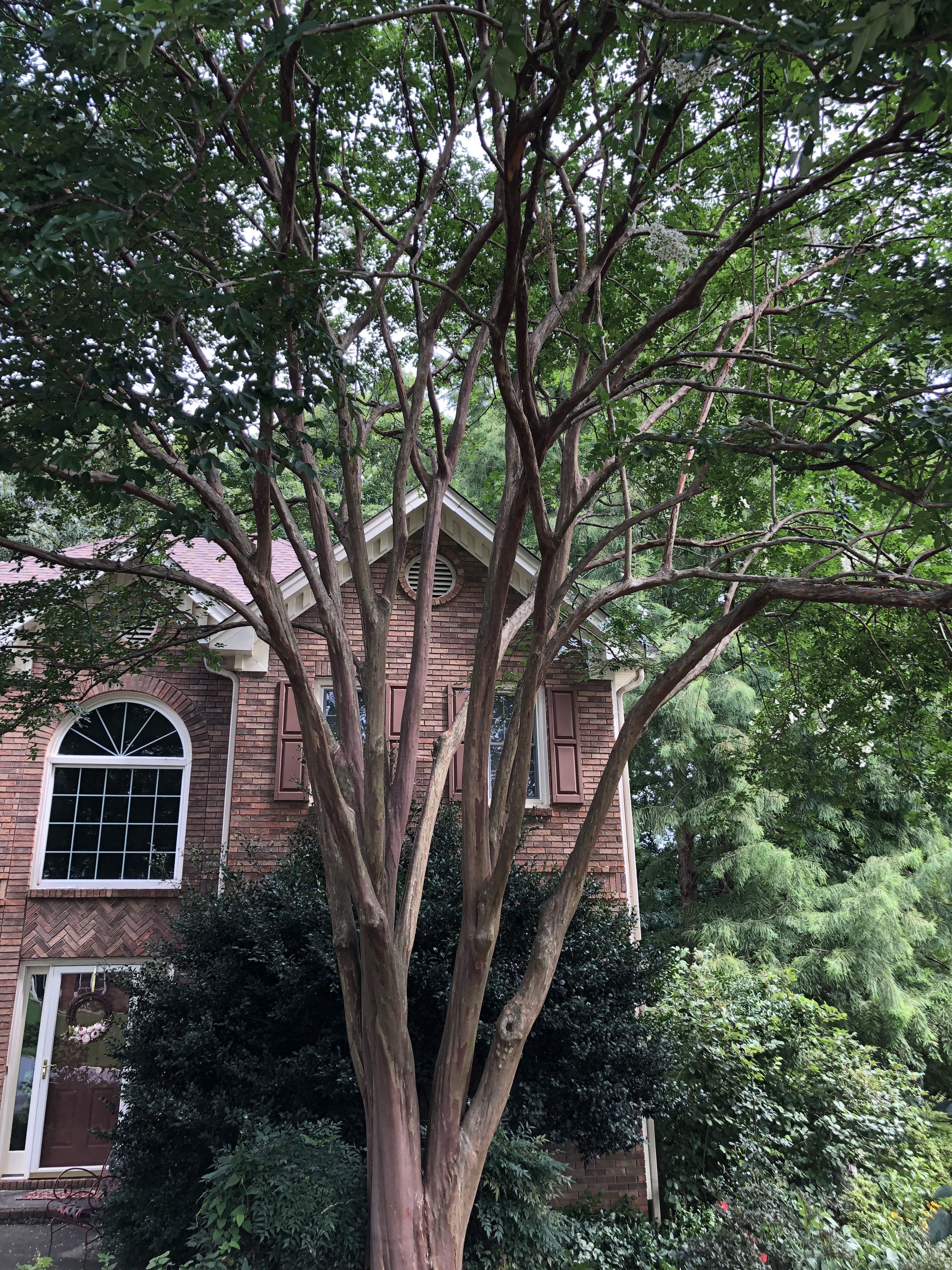
The stately ‘Natchez’[2] was a mere toddler when Ray planted it over 25 years ago. It now reaches the roofline of my two-story house, and its canopy is almost as wide as the tree is tall. My neighbors have been patient with branches that grew over the property line, only to drop tiny white blossoms on their driveway each summer. But, alas, they received a letter from our HOA about a related matter, which led them to kindly request that I have the offending limbs removed.

As one who’s known far and wide for my annual late-winter plea, “No crape murder!”, I could feel panic rising within me upon hearing my neighbor’s request.  I calmly assured him I would take care of it, but my thoughts were churning. Who could I trust to do the necessary work without maiming my beautiful tree? I had to find someone who would respect the tree and understand its intrinsic value. I needed an arborist.

Professional Help

I called a reputable company whose client list includes the Atlanta Botanical Garden. The first thing their associate said as he exited his vehicle and strode toward me boosted my confidence. Surveying the array of plants in my front garden, he declared approvingly, “I can see you don’t have a typical neighborhood property.” When he proceeded to call one of my unique specimen plants by its proper name, I knew I’d contacted the right people.

Even though our subsequent conversations further allayed my fears, an undercurrent of anxiety developed as pruning day approached. The 3-person crew arrived promptly at 8 a.m. My cheerful greeting belied the angst I was feeling, but it was evident the young man carrying the chain saw had been briefed not only on the work to be done but also on the tree’s significance.

I went inside, leaving the arborist and his helpers to their work. Even though they labored for nearly three hours, I resisted the urge to go back outside. I occasionally peeked out windows instead to check on their progress. I prayed for their safety – and that I’d still recognize my tree when they were finished.

I finally ventured out, preparing myself for whatever I might encounter. The sight of my tree left me speechless. It was gorgeous. I imagined the majestic tree, relieved of its extra weight and ragged branches, sighing in relief, much as I did after my first post-Covid-shutdown haircut.

As I stood next to the sturdy trunk, gazing up into the magnificent canopy, I realized much of the work had taken place on the inside. Before the pruning, anyone viewing the crape myrtle from the street would have seen its lush, flower-laden canopy. But what they couldn’t see were the dead branches, crossed limbs, and water shoots[3], which were neither attractive nor beneficial.

In the Master’s Hands

As frequently happens when I’m working in my garden, the Lord brought to mind a spiritual connection – in this case, the type of beauty we’re called to cultivate. It’s right to care for our bodies and be good stewards of our physical selves. Yet we often spend an excessive amount of time and money making sure our outsides are beautiful while neglecting the seat of true beauty, our hearts.

Sometimes we’re blind to the ugliness within. Then again, we recognize it and attempt to cover it up. Or,  we may apply pitiful bandaids to our deep heart wounds, seeking to heal ourselves in ways that are temporary at best or harmful at worst. But, just as the crape myrtle outgrew me long ago, making it impossible for me to do the necessary pruning, there’s no way for us to cultivate the beauty of the soul that’s precious in the Lord’s sight without the sanctifying power of the Spirit.

Praise God for blessing believers with that very power! First, the Spirit enlightens the eyes of our hearts that we might see aright (Ephesians 1:16-18). Then the same power that raised Jesus from the dead continues to work in us (Ephesians 1:19-20) to will and do His good pleasure (Philippians 2:13). Though our outer selves decline with age, our inner selves are renewed day by day (2 Corinthians 4:16), becoming increasingly beautiful as we are transformed more and more into the image of Jesus (2 Corinthians 3:18).

Though the transformation process may be rigorous at times and require significant pruning (John 15:1-2), we can trust the One Who loves us more than we can comprehend (Ephesians 3:18-19). He knows what it will take to bring out the beauty He already sees in us and will be faithful to finish what He’s begun (Philippians 1:6).

Dear Lord, thank You for the gift of Your Spirit at work within us to create imperishable beauty. May that beauty be evident in quiet, gentle spirits that bless others and draw them to You.  


[1] I included several as devotions in my book, Be Still, Quiet Moments With God in My Garden. See for example, “Prudent Pruning” (Archives, October 2020), “Exfoliation – Reprise” (Archives, September 2020), and “Bearing All Things” (Archives, February 2017).

[2] Lagerstroemia indica x fauriei ‘Natchez’

[3] Water sprouts or water shoots are shoots that arise from the trunk of a tree or from branches that are several years old, from latent buds.

Prudent Pruning

I am the true vine, and my Father is the vinedresser. Every branch in me that does not bear fruit he takes away, and every branch that does bear fruit he prunes, that it may bear more fruit (John 15:1-2).

Pruning requires skill and an understanding of the plant being pruned. Some plants bloom on old wood, others on new. Some require severe pruning to increase fruitfulness, while such treatment will stunt, disfigure, or kill others.

As much as I decry the practice of crape murder,[1] I recognize the need for proper pruning. Done correctly, it is an essential part of maintaining a specimen’s health and enhancing its aesthetic value. After some years of practice, I feel more confident when it comes time to trim my trees and shrubs, yet I still approach the task with a measure of trepidation. What if the results of my efforts look more like a bad haircut? Or I snip off next year’s buds? Or I accidentally remove the flowering branch instead of the dead one next to it because the shrub was so thick I didn’t have a clear view? Yep, I’ve found myself in those situations – more than once.

And I’ve learned to call for professional help when the job is too big or too complicated for me to handle.

The introductory verses above from the Gospel of John are familiar. Removing dead branches and those that aren’t bearing fruit seems reasonable—but pruning the fruitful ones to make them more fruitful? Increasing by taking away sounds counterintuitive until you understand the science behind the analogy. Without delving too deeply into the details, pruning stimulates plant growth at the point of the cut by removing growth-inhibiting hormones present in the tips of branches and stems.

So what might pruning look like in the spiritual realm given we’re to produce fruit in keeping with repentance, fruit that provides evidence of our faith?

  • Loss leads to empathy for others experiencing similar losses. I’ve often said before Ray died, I was genuinely sorry for those who lost a beloved spouse, but after losing him, I became intimately acquainted with the sorrow associated with such a blow. My sympathy became empathy, which in turn has allowed me to comfort others with the comfort I’ve received from the Lord (2 Corinthians 1:3-4).
  • Trials produce patience and strengthen our faith as we wait on the Lord.  As the Apostle Paul wrote in his letter to the Romans, “we rejoice in our sufferings, knowing that suffering produces endurance, and endurance produces character, and character produces hope, and hope does not put us to shame” (Romans 3b-4). That’s a bountiful harvest of desirable traits! Furthermore, we can encourage others by stewarding our stories well, sharing examples of God’s love and faithfulness.
  • Discipline engenders repentance, which yields the fruit of righteousness and, later, humility. We recognize no one is righteous apart from Christ (Romans 3:10). We’re to take the log out of our own eye before dealing with the speck in others’, and to forgive as God has forgiven us (Matthew 7:3-5; Colossians 3:13).

How about you? Are there areas in your life where God has removed something or someone, resulting in an abundance of spiritual fruit? Love, joy, peace, patience, kindness, goodness, faithfulness, gentleness, self-control (Galatians 5:22-23).

Proper pruning, even the most severe that leaves the plant looking like a shadow of its former self, doesn’t hurt the plant. Fortunately, we belong to the Master Vinedresser, not a weekend warrior wielding a chainsaw. He determines exactly where and how to make the required cuts to enable us to bear more fruit for Him. Sometimes the pruning is relentless, and the process is painful, but we can always trust Him. He knows us by name and loves us far more than we can imagine. He’s tenderly transforming us into who He created us to be. 

O Lord, trials, loss, discipline – the very thought makes us tremble. But we know we can trust You to bring joy from suffering, beauty from ashes, and life from death.


[1] A term used to describe the act of severely pruning crape myrtles, sometimes back to their main trunks.

Exfoliation – Reprise

(You) were taught in him, as the truth is in Jesus,  to put off your old self, which belongs to your former manner of life and is corrupt through deceitful desires,  and to be renewed in the spirit of your minds, and to put on the new self, created after the likeness of God in true righteousness and holiness (Ephesians 4:21b-24).

Throughout most of the years I worked for a large corporation, I held the role of colorist. As such, I developed, named, and presented new carpet color options to our customers. After all the time spent honing my skills at work, I eagerly embraced the opportunity to select the interior and exterior colors when we built our home in Georgia.

Ray’s specialty, horticulture, was an equally creative endeavor. I didn’t realize how I’d narrowed his flowering plant possibilities when I picked a terra cotta color scheme for the bricks and shutters, especially when it came to choosing the requisite southern plant on our list – a crape myrtle.

Nonetheless, being a skilled horticulturist, Ray made an excellent choice. Unlike other cultivars whose pink or purple flowers would have offended my color sensibilities as they clashed with our cinnamon-colored exterior, the creamy-white blossoms of the stately Natchez create a harmoniously floriferous cascade each summer. But the brilliance of Ray’s choice is most apparent in the fall. For it is then that the annual process of exfoliation occurs.

As summer wanes, cracks begin to appear in the bark along the mighty trunk, signaling the coming changes. Soon the cracks turn into fissures, and the old skin lifts away from the tree, before finally letting go completely, falling to the ground in long, jagged shards. To the uninitiated observer, this series of events may be unsettling. How could such a process possibly be beneficial for the plant? Yet that very act allows the trunk to increase its girth and grow stronger. Best of all, it reveals the most magnificent cinnamon-colored covering. Ray saw the potential in the sapling he planted so long ago. He knew what it could become.

There are several concepts that I consider to be spiritual touchstones. One such idea is that of putting off and putting on. In Jesus’ analogy of an unclean spirit leaving a man only to return to its neat but empty former abode, He made it clear it’s not enough to make a show of getting rid of sinful thoughts and behavior  (Matthew 12:43-45). Instead, our repentance must be true, the kind that produces fruit in keeping with our profession of faith, as we put on right-thinking and conduct pleasing to God.

The Apostle Paul affirms this teaching in his letter to the Romans.  He encourages his readers not to conform to the world but to be transformed by the renewing of their minds (Romans 12:2). And in his letter to the Ephesians, he goes even further. After urging them to put off the old self and to put on the new in the introductory passage above, Paul goes on to provide specific examples of behavior to put off as well as corresponding replacements:

  • Put away falsehood and speak the truth (v. 25).
  • Let the thief no longer steal but perform honest labor (v. 28).
  • Do not use unwholesome language, but that which benefits and builds up those who listen (v.29).
  • Put away all bitterness, wrath, anger, and every form of malice. Be kind to one another, forgiving one another as God in Christ forgave you (vv. 31-32).

Because of Jesus’ sacrifice on our behalf, God already sees His righteousness when He looks at us (2 Corinthians 5:21), but there is much refining left to be done. We are not yet holy as He is Holy, nor will our makeover be complete until He returns. Nonetheless, the Spirit is at work in us, transforming us with the same mighty power that raised Jesus from the dead (Ephesians 1:18-20).

At times our refinement is painful as the Helper strips away bits of our old nature. Our Savior suffered much. How better to know Him than to endure loss, sorrow, and persecution as He did (Romans 8:17)? Such challenges may cause outside observers or even believers themselves to question God’s methods, but we can trust the One who made us to have a good and perfect plan and to work all things together for good (Jeremiah 29:11; Romans 8:28).

Just as Ray knew what the crape myrtle could become, given sufficient time and proper care, God knows who He created us to be. Furthermore, He’s promised to complete the work He’s begun in us (Ephesians 1:6) and to never leave or forsake us at any point in the process (Deuteronomy 31:8). The Helper will be with us to empower us to do His will and to persevere to the end (John 14:16-17, 26).

O Lord, how I look forward to Your return! On that glorious day, our transformation will be complete and all vestiges of our former selves will be gone. We will gather around Your throne, our new selves robed in white, to forever praise You, our Redeemer King.