Do not let your adorning be external—the braiding of hair and the putting on of gold jewelry, or the clothing you wear— but let your adorning be the hidden person of the heart with the imperishable beauty of a gentle and quiet spirit, which in God’s sight is very precious.
1Peter 3:3-4
A Reasonable Request
As longtime readers of my blog know, I have a number of treasured plants on my small suburban property, many of which were planted by my late husband, Ray. Although it’s impossible for me to pick a favorite, my beautiful crape myrtle ranks high on the list. This isn’t the first post inspired by the beloved plant and probably won’t be the last.[1]
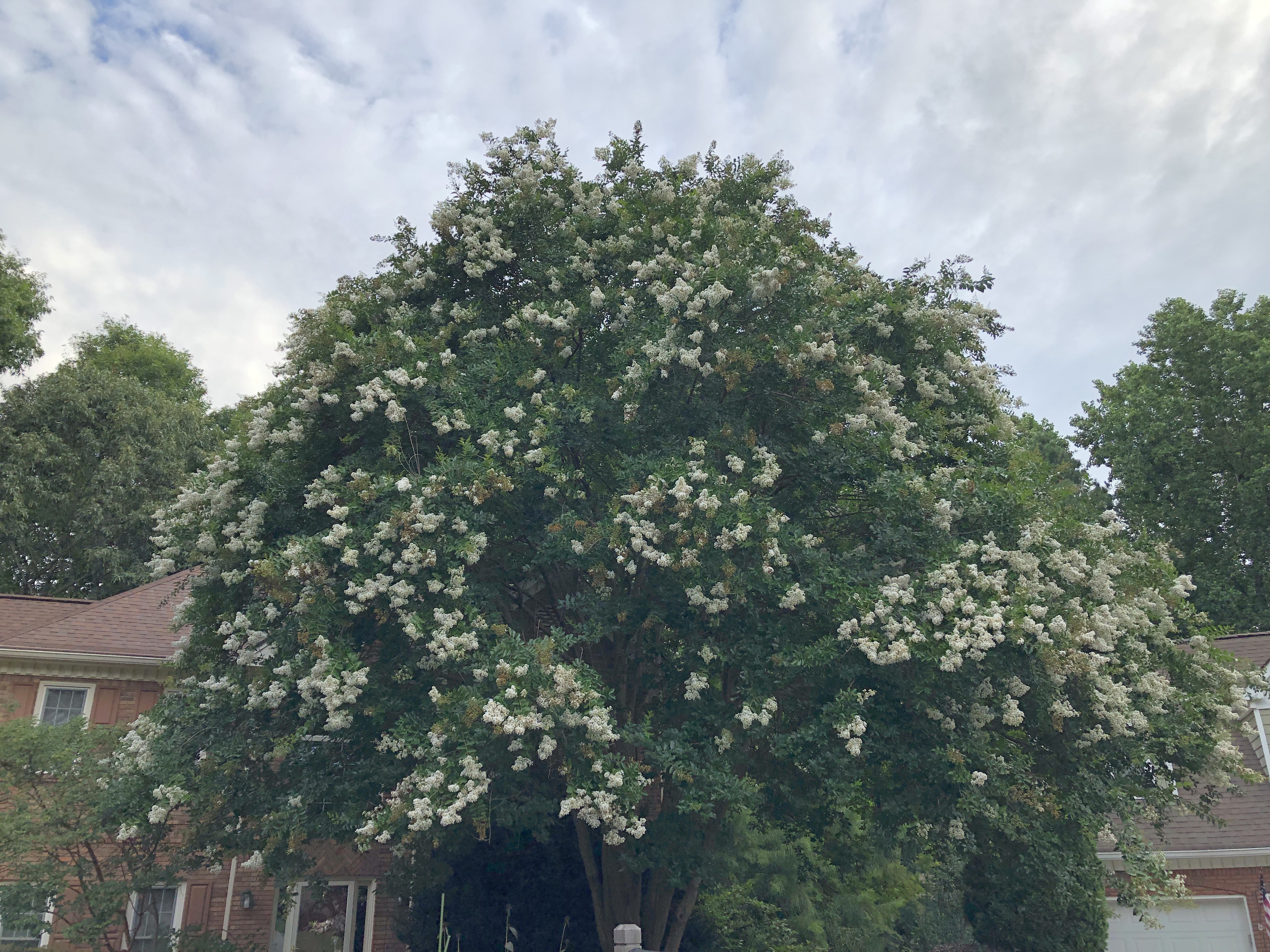
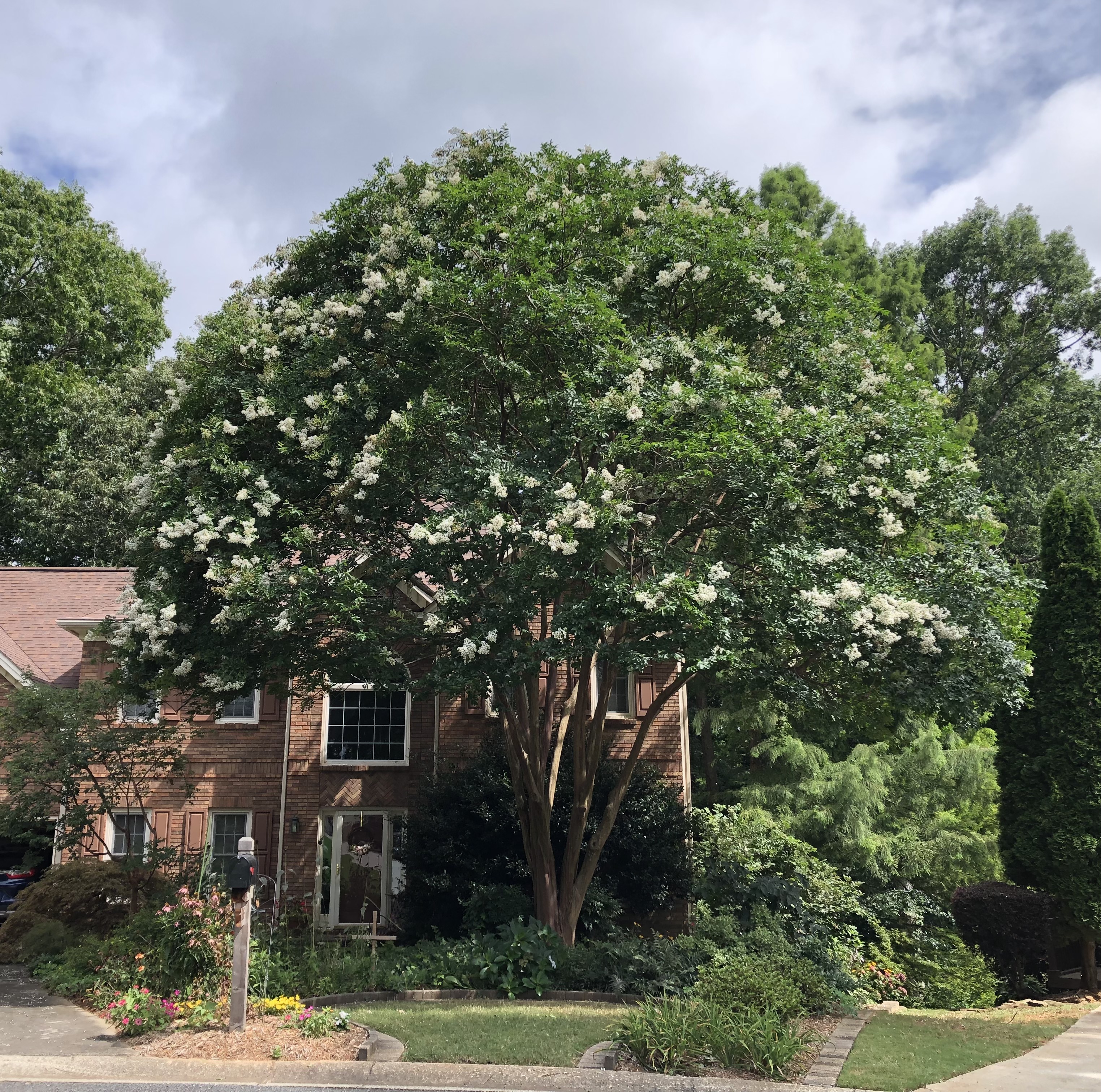
The stately ‘Natchez’[2] was a mere toddler when Ray planted it over 25 years ago. It now reaches the roofline of my two-story house, and its canopy is almost as wide as the tree is tall. My neighbors have been patient with branches that grew over the property line, only to drop tiny white blossoms on their driveway each summer. But, alas, they received a letter from our HOA about a related matter, which led them to kindly request that I have the offending limbs removed.
As one who’s known far and wide for my annual late-winter plea, “No crape murder!”, I could feel panic rising within me upon hearing my neighbor’s request. I calmly assured him I would take care of it, but my thoughts were churning. Who could I trust to do the necessary work without maiming my beautiful tree? I had to find someone who would respect the tree and understand its intrinsic value. I needed an arborist.
Professional Help
I called a reputable company whose client list includes the Atlanta Botanical Garden. The first thing their associate said as he exited his vehicle and strode toward me boosted my confidence. Surveying the array of plants in my front garden, he declared approvingly, “I can see you don’t have a typical neighborhood property.” When he proceeded to call one of my unique specimen plants by its proper name, I knew I’d contacted the right people.
Even though our subsequent conversations further allayed my fears, an undercurrent of anxiety developed as pruning day approached. The 3-person crew arrived promptly at 8 a.m. My cheerful greeting belied the angst I was feeling, but it was evident the young man carrying the chain saw had been briefed not only on the work to be done but also on the tree’s significance.
I went inside, leaving the arborist and his helpers to their work. Even though they labored for nearly three hours, I resisted the urge to go back outside. I occasionally peeked out windows instead to check on their progress. I prayed for their safety – and that I’d still recognize my tree when they were finished.
I finally ventured out, preparing myself for whatever I might encounter. The sight of my tree left me speechless. It was gorgeous. I imagined the majestic tree, relieved of its extra weight and ragged branches, sighing in relief, much as I did after my first post-Covid-shutdown haircut.
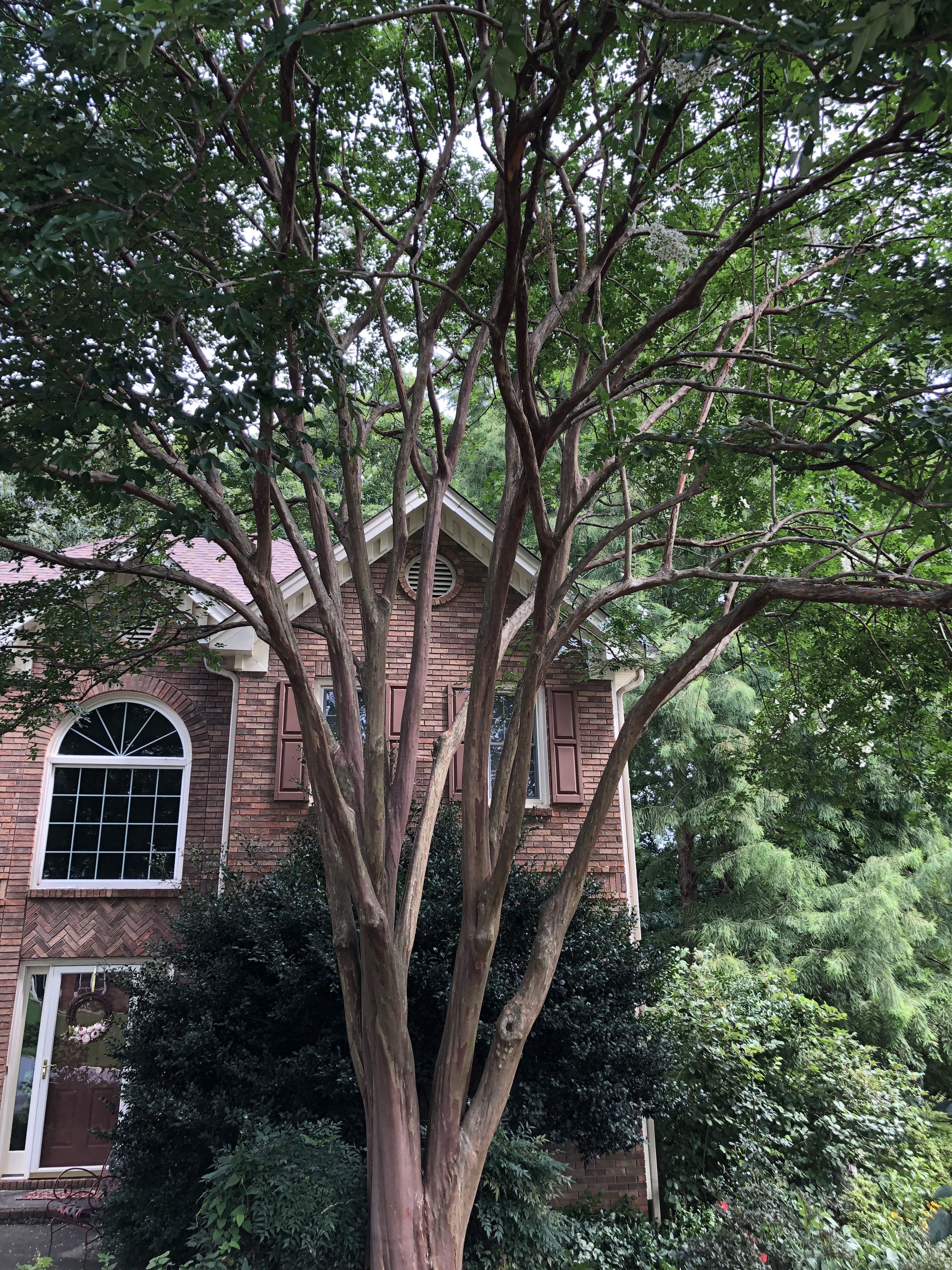
As I stood next to the sturdy trunk, gazing up into the magnificent canopy, I realized much of the work had taken place on the inside. Before the pruning, anyone viewing the crape myrtle from the street would have seen its lush, flower-laden canopy. But what they couldn’t see were the dead branches, crossed limbs, and water shoots[3], which were neither attractive nor beneficial.
In the Master’s Hands
As frequently happens when I’m working in my garden, the Lord brought to mind a spiritual connection – in this case, the type of beauty we’re called to cultivate. It’s right to care for our bodies and be good stewards of our physical selves. Yet we often spend an excessive amount of time and money making sure our outsides are beautiful while neglecting the seat of true beauty, our hearts.
Sometimes we’re blind to the ugliness within. Then again, we recognize it and attempt to cover it up. Or, we may apply pitiful bandaids to our deep heart wounds, seeking to heal ourselves in ways that are temporary at best or harmful at worst. But, just as the crape myrtle outgrew me long ago, making it impossible for me to do the necessary pruning, there’s no way for us to cultivate the beauty of the soul that’s precious in the Lord’s sight without the sanctifying power of the Spirit.
Praise God for blessing believers with that very power! First, the Spirit enlightens the eyes of our hearts that we might see aright (Ephesians 1:16-18). Then the same power that raised Jesus from the dead continues to work in us (Ephesians 1:19-20) to will and do His good pleasure (Philippians 2:13). Though our outer selves decline with age, our inner selves are renewed day by day (2 Corinthians 4:16), becoming increasingly beautiful as we are transformed more and more into the image of Jesus (2 Corinthians 3:18).
Though the transformation process may be rigorous at times and require significant pruning (John 15:1-2), we can trust the One Who loves us more than we can comprehend (Ephesians 3:18-19). He knows what it will take to bring out the beauty He already sees in us and will be faithful to finish what He’s begun (Philippians 1:6).
Dear Lord, thank You for the gift of Your Spirit at work within us to create imperishable beauty. May that beauty be evident in quiet, gentle spirits that bless others and draw them to You.
[1] I included several as devotions in my book, Be Still, Quiet Moments With God in My Garden. See for example, “Prudent Pruning” (Archives, October 2020), “Exfoliation – Reprise” (Archives, September 2020), and “Bearing All Things” (Archives, February 2017).
[2] Lagerstroemia indica x fauriei ‘Natchez’
[3] Water sprouts or water shoots are shoots that arise from the trunk of a tree or from branches that are several years old, from latent buds.

 And then there were rocks to deal with, some too big to dig up, others temporary yet annoying obstacles. The distinct clank of the shovel hitting their unyielding surfaces accompanied Ray’s efforts to install carefully-chosen plants.
 Born and raised in South Dakota farm country, Ray was accustomed to soil so rich it’s nearly black. When we lived in Delaware we would occasionally get a load of mushroom compost to top dress the yard – smelly, but effective when it came to adding nutrients to the soil. These experiences plus his horticulture degree informed Ray there would be no shortcut when it came to improving the hardpan he’d been left with. Thus he began the tedious process of amending the clay by tilling in top soil and compost.
 My ruminations on the power of our words brought to mind the scene in “Bambi”
 Knowing they were plenty tired and would go to sleep quickly if they gave themselves a chance, I replied, “You don’t have to go to sleep, but you do have to lay down and be quiet.” Further protests greeted my statement, which I repeated more sternly as I turned off the light and crossed the hall to tuck Joshua in.
 Until then, may we avail ourselves daily of the comfort and protection God has provided, confident that we have nothing to fear because the Lord goes before us (Ephesians 6:10-18; Deuteronomy 1:30). His steadfast love never ceases. His mercies are new every morning (Lamentations 3:22-23). And His grace is sufficient to meet every need (2 Corinthians 12:9).
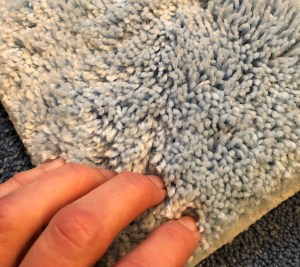 Even though over three decades have passed, I clearly remember a customer meeting where we were requesting input on a developmental fiber. I touted its attributes and started a single sample on its journey around the conference room table. It never made it beyond the owner of the company. Like a child with a pet bunny, he stroked the sample repeatedly, exclaiming over its softness. I passed out other samples featuring styling suggestions for existing fibers. He’d finger them, comment, then pass them along, all the while retaining possession of his far-superior prize.
 The same story played out at the rehab facility, as Mom became an instant favorite with the staff. When the long-awaited day arrived for me to collect her and bring her home, it took the better part of an hour for all the goodbyes to be said. Mom wanted to thank everyone who’d helped her. They in turn didn’t want to miss giving Miz Thelma a farewell hug and wishing her the best.
