Two years ago our church leaders decided it would be good to form a Welcome Team to greet visitors and members alike on Sunday mornings. I wasn’t surprised to see Gene Hunt’s name on the list of volunteers for the new team. Gene, a longtime pastor, was retired by then. Nonetheless, I clearly recall how he visited me and my husband, Ray, soon after we first attended Midway Presbyterian Church, where he served as assistant pastor, in July 1992. From that early encounter and across the ensuing years I came to know Gene as a natural when it came to welcoming others – genuine, warm, and caring.
Thus it also came as no surprise that Gene would be in the narthex greeting people even on Sundays when he wasn’t officially assigned to the task. Those of us within hearing range would smile when we heard him heartily exclaim, “Hey, this was great! Let’s do it again sometime. How about next Sunday?”, as he shook hands with visitors after morning worship.
 Gene entered his heavenly Home last month. I had the privilege of attending his memorial service. The sanctuary of our small church overflowed as several hundred people from all stages of Gene’s life gathered to celebrate by worshiping the One he faithfully served, for we do not grieve as those who have no hope. (1 Thessalonians 4:13-18)
Even so, tears mingled with laughter as various speakers shared reminiscences about our beloved brother because death does bring about a time of separation until Jesus’ promised return. I blotted at intermittent tears until one of my fellow congregants described a heavenly scene where Gene was greeting others, complete with the signature phrase I described above. That did it – my tears escaped and spilled down my cheeks. I sorely sensed the void Gene’s passing would leave on Sunday mornings.
One of Gene’s grandsons spoke next. His comments included a recounting of his grandfather’s testimony – how he’d been born into a non-Christian family, to parents who made no effort to take him to church. But after Gene’s dad died, God providentially placed his family in a neighborhood where he became friends with a little boy whose family was greatly involved in the life of the local Presbyterian church. Sonny would drag Gene along because he didn’t want to go alone. In Gene’s words, “I was enfolded into this community of believers and moved among them as if I belonged. It never occurred to me that I was an outsider. It all seemed perfectly natural and normal. Now I see that it was supernatural. It was the Gospel of grace being lived out in daily life.”[1]
I’d heard Gene’s testimony before, but it wasn’t until that moment I clearly recognized the connection between the tag-along boy, loved and accepted by a long-ago church family, and the man I was blessed to know, who genuinely loved others and welcomed them as he’d been welcomed. He never forgot what it meant to be included even though he “had no resources to contribute to the church.”[2]
Sound familiar? This storyline should resonate with every believer: For by grace you have been saved through faith. And this is not your own doing; it is the gift of God, not a result of works, so that no one may boast. (Ephesians 2:8-9) Furthermore, the Gospel itself is welcoming. Once we were separated from Christ, strangers to the covenants of promise. But now in Christ Jesus we have been brought near by the blood of Christ . . . So we are no longer strangers and aliens, but fellow citizens with the saints and members of the household of God. (Ephesians 2:12-13, 19)
I was one of the greeters last Sunday. After the worship service, a couple of folks asked if I’d had a chance to talk to our visitors (yes, briefly). Then one of us began to recite Gene’s phrase and the three of us finished in unison, “Let’s do it again. How about next Sunday?”, agreeing we need to add his words to our exit lines. We shared a laugh, warm with the memory of the man who showed us how to love others as we’ve been loved.
I expect God assigned Gene to the varsity greeting team as soon as he arrived on the other side. I like to imagine the day I’ll get to see him again, welcoming me with a big smile and another of his classic phrases, “Ain’t God good?!” Oh yes, Gene, so very good! I pray He will enable me to serve Him and others joyfully as you did, from the overflow of a grateful heart.
[1] Susan Hunt, “Your Home A Place of Grace”, (Wheaton, IL, Crossway Books, 2000) pp. 26-27
[2] Ibid, p. 27
 Surely one of the earliest and most endearing games we play with babies involves disappearing behind our hands only to reappear moments later, smiling and exclaiming, “peek-a-boo!” We repeat the sequence of movements multiple times, rewarded with baby’s surprised chuckles.
 Before long, infants turn into mobile toddlers, able to participate in the hiding aspect of the game. In fact, hide-and-seek becomes an oft-requested favorite, complete with random-number counting and much laughter while scurrying to find the perfect hiding spot. Shrieks are just as likely to accompany finding as being found.
 Sometimes the hiding isn’t all that effective. For instance, even though most of the tiny body is covered up, a foot may remain visible. Or, try as I might, I can’t fully wedge myself between the wall and the recliner when the little people are hunting me.
 I trudged to the waiting room and slumped into a seat, longing for the arrival of my family. But I knew there were other reinforcements to call on – our church family. Almost as soon as I sent the prayer request e-mail, I heard a chime alerting me to an incoming message. Recognizing the urgency of the situation, our prayer chain coordinator forwarded my note to the congregation as soon as she received it.
 These and similar interactions between the siblings give me ample opportunities to play referee on Grammie days as we cycle from harmonious play to sob-laced outbursts and back multiple times. As the hours pass, my reserves of patience often diminish. And so it was one recent afternoon when Joshua inadvertently knocked Lyla’s special colored pencils off the kitchen table, scattering all 24 of them on the floor.
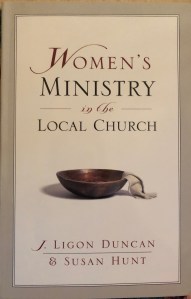 The committee was in transition late last year when I was asked to join. The remaining members were dedicated to the ministry and each other, but tired from trying to do it all, especially when the assigned tasks didn’t fit their gifts. Fortunately, our pastor asked long-time women’s ministry leader and member of our church, Susan Hunt, to mentor us. With Susan’s guidance, and using the five foundational principles outlined in Women’s Ministry in the Local Church
 One recent Grammie day
 Now that I’ve finally resurfaced, I’ve skimmed some of the articles and reviewed “Royalty” in light of them. Fortunately, the analogy in my previous post remains pertinent. In fact, coverage of the duchesses’ squabbles amplified one of my key points: people are always watching, evaluating, commenting. Sadly, some prefer drama over harmony. Some may even be looking for a reason to criticize or reject.
 I’m playing catch-up. December descended, as it always does, with its attendant whirlwind of activities. I’m one of those who revel in the festivities, from sending and receiving cards to plotting gift strategy with family members to savoring special meals with loved ones. But, as I’m enjoying the merriment the season has to offer, day-to-day chores and responsibilities start to pile up and about now, as the celebrations wind down, I realize just how far behind I am. I don’t regret my decision to enjoy the season, since it comes but once a year, while chores persist year-round. But I know I now need to pick up the reins and get the more mundane aspects of life back in order. As much as I relish celebrating, I also look forward to returning to a normal schedule.
 Just as I benefitted greatly from learning Spanish in a Spanish-speaking country, Christians thrive best when we’re part of God’s visible church. Scripture is clear that each of us has an important, God-ordained place in His body (1Corinthians 12:12-30) and that we should not neglect meeting together. (Hebrews 10:24-25) Furthermore, God’s family is composed of members of varying ages, abilities and spiritual maturities, just like biological families. We are called to do life together in compassionate covenant communities, where we rejoice with those who rejoice, mourn with those who mourn and come alongside each other to teach, support and encourage according to the gifts we’ve been given. (Romans 12:3-21)
 I enjoy coloring with my young granddaughters. A recent art session found me recreating myself and my daughters on the page. When I saw the title of the book the page was pulled from, I smiled. “Picture me a Princess”. Why, yes, I will! Because God calls me His child, I am a princess, a daughter of the King!
 Back 2 the Garden