 I suppose I should begin with a confession: I’m an equal-opportunity crier. My eyes are just as likely to well up in moments of joy as in sorrow – while reading sweet sentiments in Hallmark cards, watching heartbreaking news stories, attending weddings or funerals, even when leading Bible study as the magnitude of God’s grace and mercy floods over me. Yes, from a barely-there trickle to gut-wrenching sobs, I’ve shed my share of tears and expect to shed plenty more.
A quick search on Google reveals three different types of tears. Basal tears keep our eyes lubricated, while reflex tears pop up in response to irritants like slicing onions or having a pesky gnat flit into your eye. And then there are psychic tears, those associated with our emotions, distinct from the other two in that they contain stress hormones.[1] No wonder we often feel better after shedding them. They’re like an overflow valve for the soul.
Even so, our attempts to comfort others are often accompanied by, “Don’t cry!”
The Bible has much to say about tears and the circumstances surrounding them. Consider for example:
- Loss of a loved one by separation or death
- David grieved the loss of his closer-than-a-brother friend, Jonathan, first from necessary distancing and then by death (1 Samuel 20:41; 2 Samuel 1:12).
- Mary and Martha bemoaned Lazarus’ death. Seeing their bereavement, Jesus wept too, even though He knew his Father would hear his prayer to raise him. Jesus had compassion on the sisters in their time of loss and He has compassion on us as well (John 11:31-35).
- Jesus’ followers were bereft and befuddled after His death in spite of the many times He’d told them what was to come (Luke 18:31-34; 36:13-49).
- Disappointments of various sorts
- Esau wept over the loss of his birthright, when he realized how his brother had tricked their father (Genesis 27:30-38).
- Hannah’s unfulfilled desire for a child, exacerbated by her rival’s provocation and her husband’s lack of understanding, led to her fervent, tear-stained prayer for relief (1 Samuel 1:1-10)
- Sorrow for sin
- Three of the four Gospels recount Peter’s tear-punctuated dismay when Jesus’ statement that he’d betray Him came to pass (Matthew 26:75; Mark 14:72; Luke 22:62).
- James says we should be wretched and mourn and weep over our transgressions, humbly drawing near to God for forgiveness and restoration (James 4:8-10).
- Worship and Gratitude
- The penitent woman who wet Jesus’ feet with her tears, wiped them with her hair, and anointed them with ointment was motivated by her love for her Savior.
- Joyous reunion
- Though bitterness marked their estrangement and Jacob feared the worst from Esau, the brothers’ reunion was accompanied by joyful tears (Genesis 33:4).
- I’m taking some liberty here because none of the translations I consulted mention crying, but I’ve got to believe the prodigal son’s compassionate father had tears of elation streaming down his face as he ran to greet his returning son (Luke 15:20).
Even though these passages and others make it clear psychic tears are part of our God-given emotions, we’re quick to admonish, “Don’t cry!” Could it be others’ tears make us uncomfortable or tearful ourselves? Or worse, might we believe God’s children aren’t supposed to cry because we know the end of the story?
Mournful tears have dotted my days this past month. They sneak up on me as the reality of the COVID-19 pandemic breaks through my carefully-constructed mantle of Truth. Woven together from precious promises and reliable assurances found in Scripture it protects me from despair and hopelessness.[2] Nonetheless, people are hurting on a worldwide scale for myriad reasons. Closer to home, I miss seeing my children and grandchildren, worshiping in person with my covenant family. And so tears flow as I grieve the loss and brokenness.
The women who witnessed Jesus’ crucifixion no doubt wailed at the sight of their beloved son, teacher, friend, bloodied and beaten, being nailed to a Roman cross. The innocent One, put to death for the sins of others. Isaiah 53 is one of my most cherished passages, but also one which I can rarely get through without tears. Man of sorrows, acquainted with grief. Despised. Rejected. Wounded for our transgressions, crushed for our iniquities. My transgressions. My iniquities.
We are so blessed to live on this side of the Resurrection. No matter how dark the days or how great the losses, we know Jesus’ atoning sacrifice ensures our own resurrection and eternal security. Furthermore, as we go through difficulties in this life, we know He is seated at the right hand of God, interceding for us. Nothing can separate us from His love (Romans 8:31-39).
The One who keeps track of every tear (Psalm 56:8) has promised to return, to usher in a new heaven and a new earth, to wipe every tear from our eyes (Revelation 21:1-4). Until then, may we rejoice with those who rejoice and weep with those who weep, unafraid of our tears.
O Lord, how I thank You that You hear our cries for help. Though weeping may last through the night, joy comes with the morning (Psalm 30). You have shown your great mercy in sending Jesus to die for our sins and will turn our mourning into gladness. For we know this momentary affliction is preparing an eternal weight of glory beyond all comparison (2 Corinthians 4:17). May we sing your praise forever!
[1] “What are the three different types of tears found in our eyes?”, http://www.sharecare.com
[2] Please see previous posts, “It is Well” and “Pollen Season”.
 Similar thoughts accompanied me as I strolled my woods exclaiming over the latest plant finds. Jesus’ declaration that we need not worry because the God who cares for the birds and the lilies will watch over His beloved children, who are much more precious, is among my most cherished (Matthew 6:25-34). It’s also one of the reasons I find so much solace in my garden since I see the truth of His statement played out repeatedly.
 You may argue that the birds and flowers aren’t capable of worrying since they don’t know what we know or reason as we reason. But God says the same about us. Even though we’re created in His image, His ways and His thoughts are higher than ours, beyond our finite minds (Isaiah 55:8-9). He is Sovereign. We aren’t. And it often takes events that are obviously out of our control to remind us, even though every breath we take is a gift from God.
 My late husband, Ray, long-suffering when it came to my foibles, drew the line at fast food orders. In the days before “have it your way” became a slogan, I’d request a cheeseburger, lettuce, tomato, no mayo, no onions. Minutes drug past while they made my special order.

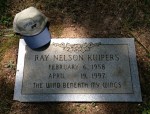 I grieved, not as a sports fan, but as a widow who knows what it’s like to bid your beloved husband goodbye on an ordinary day, never to see him alive again. Because Ray was called Home at age 39, long before most of the relatives whose loss we anticipated grieving together.
 I don’t know about you, but in spite of my best intentions to remain calm and focused on the real reason for the season, I unravel at some point in December. I experience inevitable episodes of middle-of-the-night sleeplessness wondering if I’ll ever get everything done in time. Similarly-distressing thoughts creep into my waking hours. My and my granddaughter’s back-to-back birthdays less than a week before Christmas add to the myriad festivities and to-dos. However, it also means there’s lots of shared joy and family time.
 forever Home (John 14:2-3). The Apostle Paul wrote: nothing can separate us from the love of God in Christ Jesus, not even death (Romans 8:38-39). In fact, to be absent from the body is to be present with the Lord (2 Corinthians 5:6-8).
 But there is hope, dear reader, now and eternally. Having found comfort in the promises of the One who’s vowed to never leave or forsake us (Deuteronomy 31:8), I dispatched my erstwhile visitor. Furthermore, I can reaffirm all I said in the podcast and wrote in my last post. The bottom is good.
 Knowing they were plenty tired and would go to sleep quickly if they gave themselves a chance, I replied, “You don’t have to go to sleep, but you do have to lay down and be quiet.” Further protests greeted my statement, which I repeated more sternly as I turned off the light and crossed the hall to tuck Joshua in.

 I dedicated myself to raising my daughters, completed a 30-year career at a large corporation, went back to school to study horticulture, became “Grammie” to three precious little ones. All the while, the calendar pages kept turning with increasing velocity until that distant speck became an entry, “me – 60!!” Once again, I gathered important documents and made my way to the Social Security office. Thoughts of the former trip accompanied me, as did so many similar emotions, which became barely-contained tears as I resolutely recounted my story to the kind agent who entered my claim.
 church in memory of my beloved husband. In view of the timing of Resurrection Sunday, this year’s floral offering was also given to the praise and glory of our Risen Savior.
 In spite of my valiant efforts, the taunting thoughts multiplied and threatened to overtake the more reasonable ones. I almost convinced myself it was time to move into an over-55 community where upkeep was someone else’s responsibility. But then, two hours into my plumber’s return visit, as I gazed at strategically-placed tarps and tubs and several holes in my ceiling, one of my grandmother’s sayings came to me, “Nothing’s so bad it couldn’t be worse.”

