This has been one of those weeks. You know, the kind dotted with numerous reminders things aren’t the way they’re meant to be. I’m not even talking about national or global events. No, just in my little corner of the world, the consequences of the Fall have been abundantly evident. From broken relationships to childish misbehavior to my own selfishness. Add in the effects of my precious parents’ aging, as well as mine – my  hands have made it clear they’re not happy with the repeated gripping and lifting required to set up my beloved Dickens Village – and the final enemy, death, which paid an unexpected visit to one of our church families. The weight has grown heavy indeed.
I suppose the world was every bit as dark, with sin and sorrow pressing in all around, when God sent His one and only Son, the Light of the world, full of grace and truth to that lowly manger in Bethlehem. The most precious gift ever given came packaged as a tiny baby, grew to be a man who lived a sinless life and took our sins upon Himself, that we might have hope now and eternal life in God’s very presence.
So, dear friends, whether you, too, have had one of those weeks or if you simply need to step back from the busyness of the season and refocus on the reason for our celebrations, I offer these passages, some of my very favorites. May they speak peace into our lives as we reflect on the coming of God’s promised Messiah and look forward to His equally-certain return.
The people who walked in darkness have seen a great light; those who dwelt in a land of deep darkness, on them has light shone . . . For to us a child is born, to us a son is given; and the government shall be upon his shoulder, and his name shall be called Wonderful Counselor, Mighty God, Everlasting Father, Prince of Peace. Of the increase of his government and of peace there will be no end, on the throne of David and over his kingdom, to establish it and to uphold it with justice and with righteousness from this time forth and forevermore. The zeal of the Lord of hosts will do this. (Isaiah 9:2, 6-7)
In the beginning was the Word, and the Word was with God, and the Word was God. He was in the beginning with God. All things were made through him, and without him was not any thing made that was made. In him was life, and the life was the light of men. The light shines in the darkness, and the darkness has not overcome it . . . And the Word became flesh and dwelt among us, and we have seen his glory, glory as of the only Son from the Father, full of grace and truth. (John 1:1-5, 14)
He was despised and rejected by men, a man of sorrows and acquainted with grief; and as one from whom men hide their faces he was despised, and we esteemed him not. Surely he has borne our griefs and carried our sorrows; yet we esteemed him stricken, smitten by God, and afflicted. But he was pierced for our transgressions; he was crushed for our iniquities; upon him was the chastisement that brought us peace, and with his wounds we are healed. All we like sheep have gone astray; we have turned—every one—to his own way; and the Lord has laid on him the iniquity of us all. (Isaiah 53:3-6)
But this I call to mind, and therefore I have hope: The steadfast love of the Lord never ceases; his mercies never come to an end; they are new every morning; great is your faithfulness. “The Lord is my portion,” says my soul, “therefore I will hope in him.” The Lord is good to those who wait for him, to the soul who seeks him. (Lamentations 3:21-25)
Come to me, all who labor and are heavy laden, and I will give you rest. Take my yoke upon you, and learn from me, for I am gentle and lowly in heart, and you will find rest for your souls. (Matthew 11:28-29)
Since then we have a great high priest who has passed through the heavens, Jesus, the Son of God, let us hold fast our confession. For we do not have a high priest who is unable to sympathize with our weaknesses, but one who in every respect has been tempted as we are, yet without sin. Let us then with confidence draw near to the throne of grace, that we may receive mercy and find grace to help in time of need. (Hebrews 4:14-16)
Then I saw a new heaven and a new earth, for the first heaven and the first earth had passed away, and the sea was no more. And I saw the holy city, new Jerusalem, coming down out of heaven from God, prepared as a bride adorned for her husband. And I heard a loud voice from the throne saying, “Behold, the dwelling place of God is with man. He will dwell with them, and they will be his people, and God himself will be with them as their God. He will wipe away every tear from their eyes, and death shall be no more, neither shall there be mourning, nor crying, nor pain anymore, for the former things have passed away.” (Revelation 21:1-4)
O, Lord, thank You for your great love and faithfulness, the assurance that every one of your promises finds its Yes in Jesus. (2 Corinthians 1:20) Please help us to never lose heart, remembering that the afflictions of this world are light and momentary compared to the eternal weight of glory You have prepared for us. (2 Corinthians 4:16-17) May we ever praise You for your incomparable gift of Life, not only at Christmastime, but throughout the year, with joyful, grateful hearts.
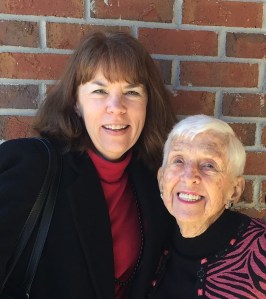 Though petite in stature, Mom’s my biggest cheerleader and most dependable defender. We all need someone who’s unconditionally, unreservedly in our corner. I’m so thankful Mom’s in mine. She’s my rock because she consistently points me to the Rock and reminds me His everlasting arms are securely holding all who belong to Him in an eternal embrace. (Deuteronomy 33:26-27a) O LORD, please help me to do the same for my precious children and grandchildren. Thank You for the priceless blessing of a godly mother!
 Just as I benefitted greatly from learning Spanish in a Spanish-speaking country, Christians thrive best when we’re part of God’s visible church. Scripture is clear that each of us has an important, God-ordained place in His body (1Corinthians 12:12-30) and that we should not neglect meeting together. (Hebrews 10:24-25) Furthermore, God’s family is composed of members of varying ages, abilities and spiritual maturities, just like biological families. We are called to do life together in compassionate covenant communities, where we rejoice with those who rejoice, mourn with those who mourn and come alongside each other to teach, support and encourage according to the gifts we’ve been given. (Romans 12:3-21)
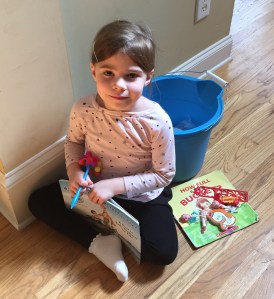 Joshua read the books to us after lunch. They were all about how we fill or empty each other’s imaginary buckets by being kind or being mean. Furthermore, the books pointed out we’re doing one or the other all the time. The narrative went on to say that by filling up others’ buckets, we’re filling up our own as well since being helpful, obedient and thoughtful makes situations better for everyone involved. Bucket-fillers, buoyed by the results of their good deeds, are much happier than bucket-dumpers, whose actions contribute to continued strife.
 My mom was the baby of her family, the youngest of eight siblings and her father’s darling. He called her “Babe” and warmed her clothes by the fire for her before she went off to school on cold mornings. Occasionally my grandmother, a bit more stern in her demeanor, would delegate the task of disciplining a wayward child to my grandfather. He would take the offending party outside beyond her view and tell the child to cry out while he used the switch on some inanimate object instead of their legs.
 “Mr. Jim”, as the people around town knew him, was a man of faith, a deacon in the tiny country church where he worshiped. He embodied the fruits of the Spirit – love, joy, peace, patience, goodness, kindness, faithfulness, gentleness, self-control. (Galatians 5:22-23) When he suffered a heart attack a few months before he died, the doctor told him he had to limit his physical activities. For a man who loved his garden and was used to being outside, it was like a death sentence. He’d sit in the kitchen of the home he shared with my grandmother, his wife of 55 years, turn his gaze toward the little church and comment he’d rather be in the cemetery than just sitting around.
 The house on Dewalt Road was to be our long-term, raise-the-kids residence, but DuPont decided to move my entire work group to Georgia so we could be closer to our customers in the carpet industry. Once again we were faced with selling a house, this time one filled with toys and accessories parents of toddlers are used to stepping over and around. I dreaded the process of keeping the house picked up and ready to show at any moment. After Ray and I signed a contract with our realtor the day before I left for a weeklong business trip to California, I told them, “Ok, you two. I want you to find a buyer before I get back.” (Cue laughter.) But God graciously provided a young family, much like our own, who could no doubt imagine their own children’s toys strewn across the playroom and parked in the yard. They were ready to make an offer by the time I returned home.
 As summer wanes, cracks begin to appear in the bark along the mighty trunk, signaling the coming changes. Soon, the cracks turn into fissures as the old skin lifts away from the tree, before finally letting go completely, falling to the ground in long, jagged shards. To the uninitiated observer, this series of events may be unsettling. How could such a shedding of bark possibly be good for the plant? Yet that very act allows the trunk to increase its girth and grow stronger. Best of all, it reveals the most magnificent cinnamon-colored covering. Ray saw the potential in the sapling he planted so long ago. He knew what it could become.
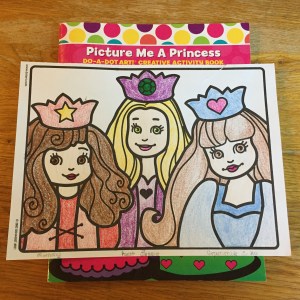 I enjoy coloring with my young granddaughters. A recent art session found me recreating myself and my daughters on the page. When I saw the title of the book the page was pulled from, I smiled. “Picture me a Princess”. Why, yes, I will! Because God calls me His child, I am a princess, a daughter of the King!
 The incongruence between the old post and new mailbox continued to grate on me, so I gave in and contacted the HOA-approved mailbox supplier. He came to rectify the situation yesterday. Even though I returned home after dark last night, I breathed a sigh of relief when the new post-new mailbox ensemble appeared in the light of the street lamp. Ahh, the incompatibility was gone.
 Back 2 the Garden